




Apr 242022
 

Yana Ross

Short interviews with mean men – 22 types of loneliness reviews 2022

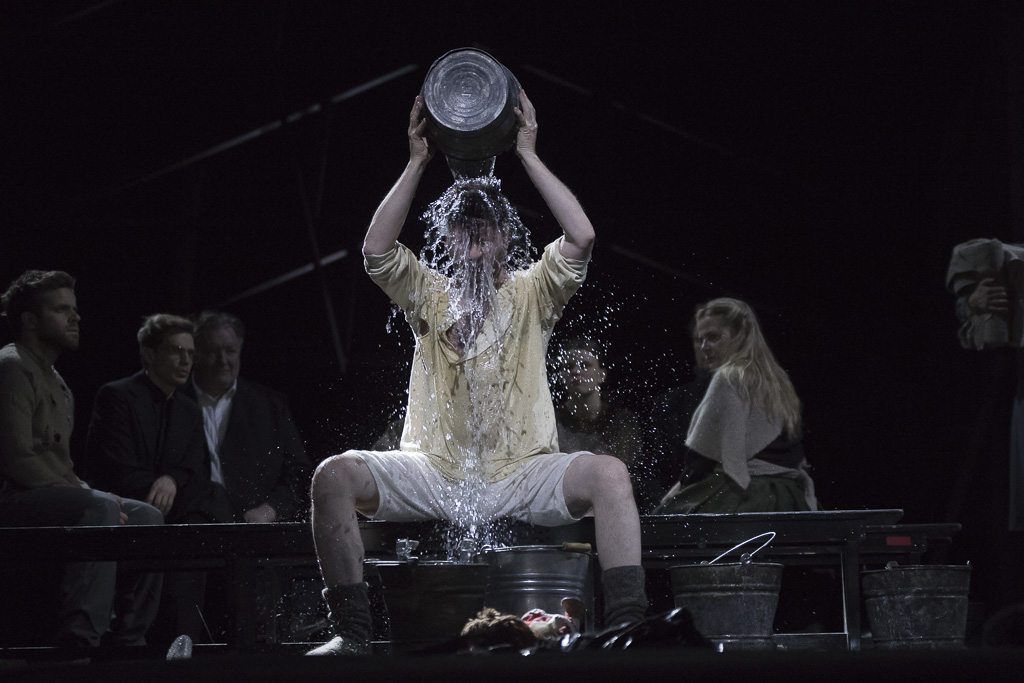
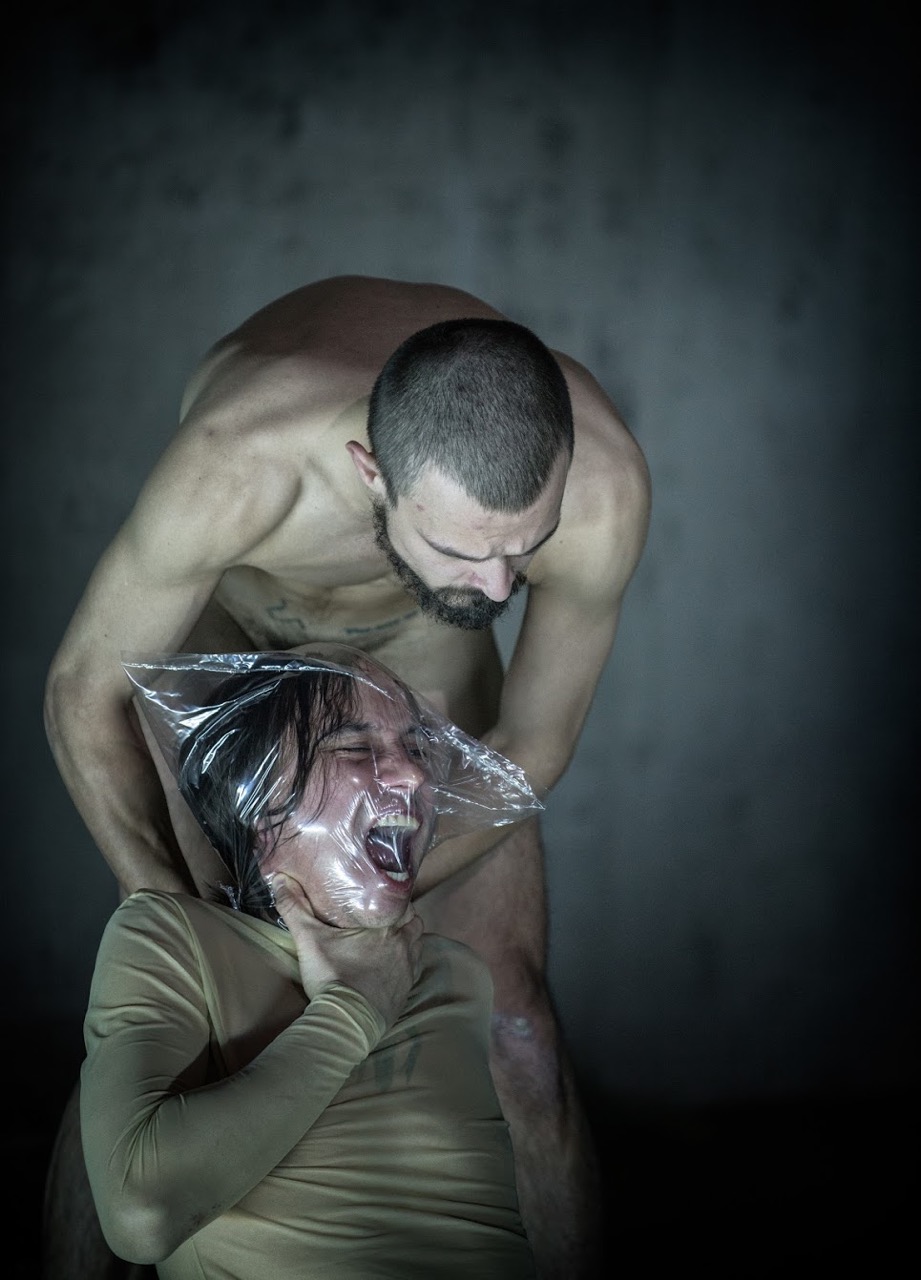
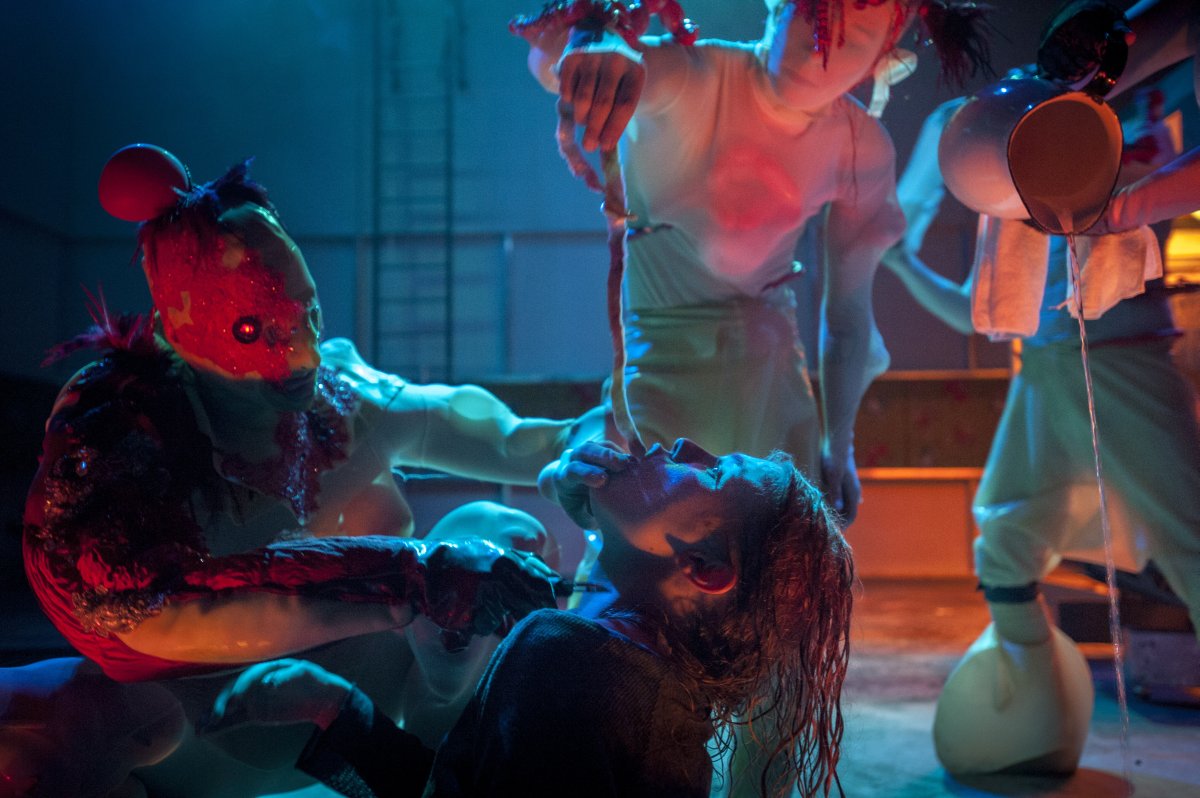
“There is an express warning against this theater: «Verbal violence and live sex» occur here. The audience could leave the performance at any time. But first everyone wants to get in, to the premiere of «Short interviews with nasty men – 22 types of loneliness», based on a book by cult author David Foster Wallace. On Saturday evening, the guests in the shipbuilding department listened to the corona safety regulations with a slight impatience until they are finally channeled through the entrance and right through the stage.
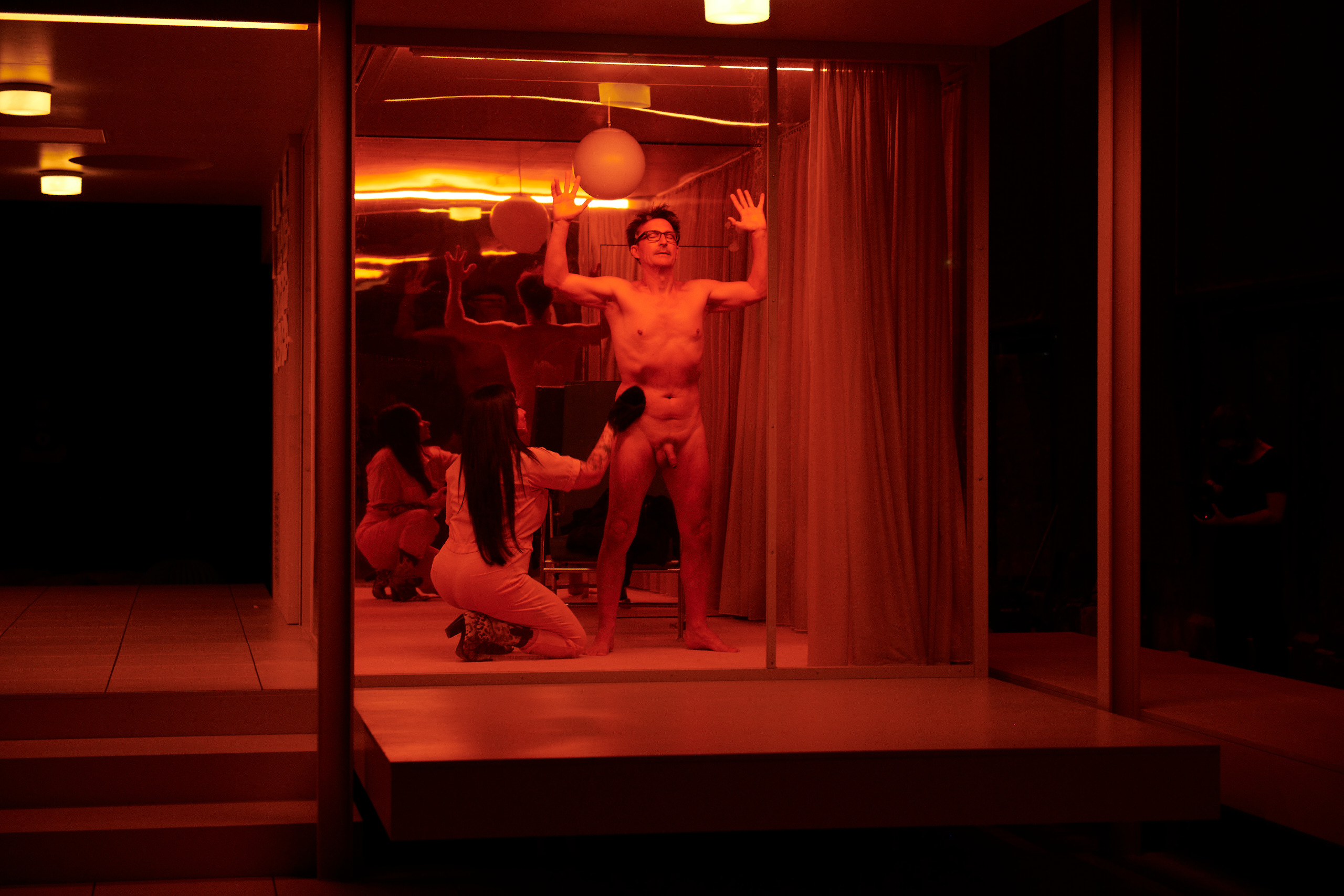
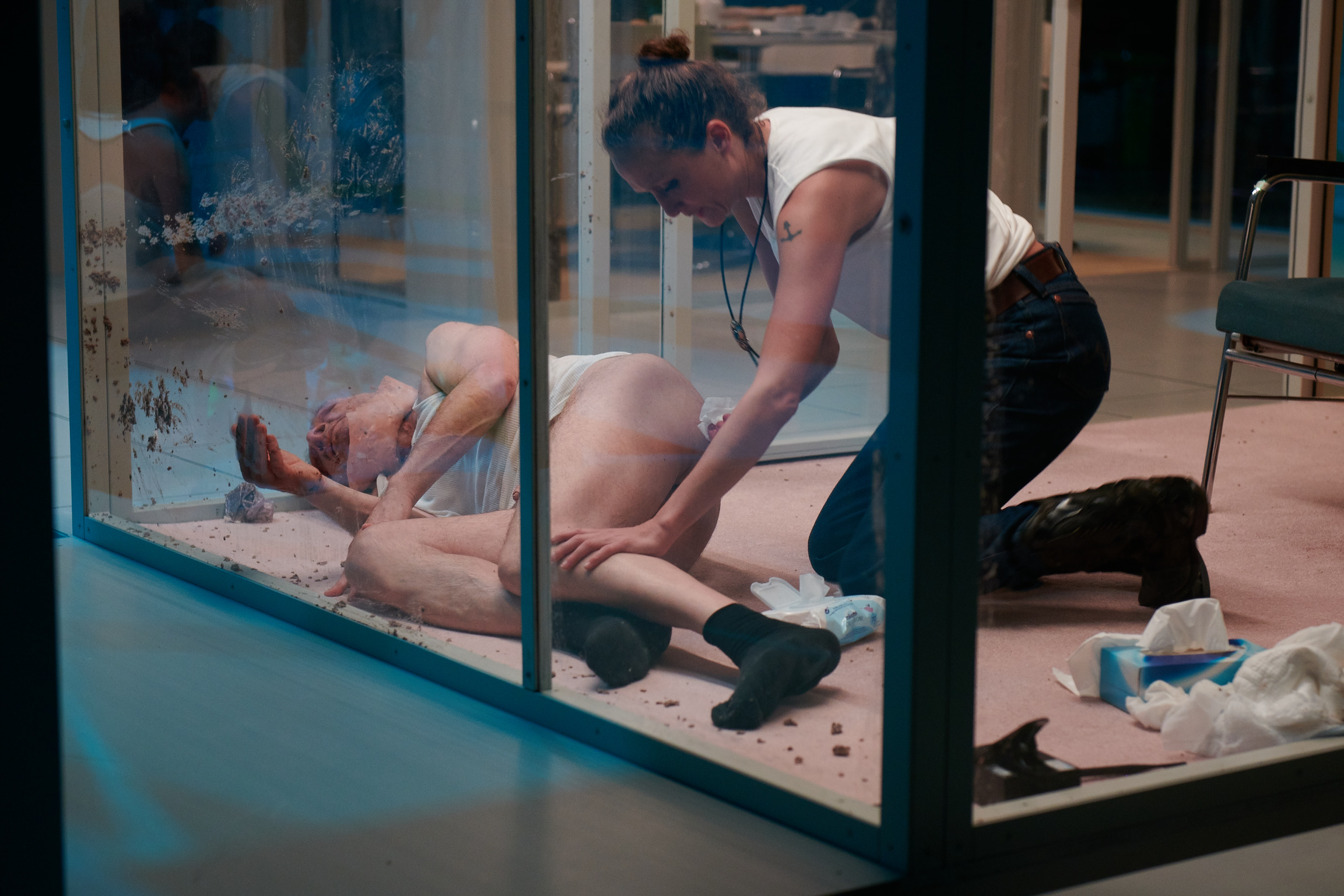
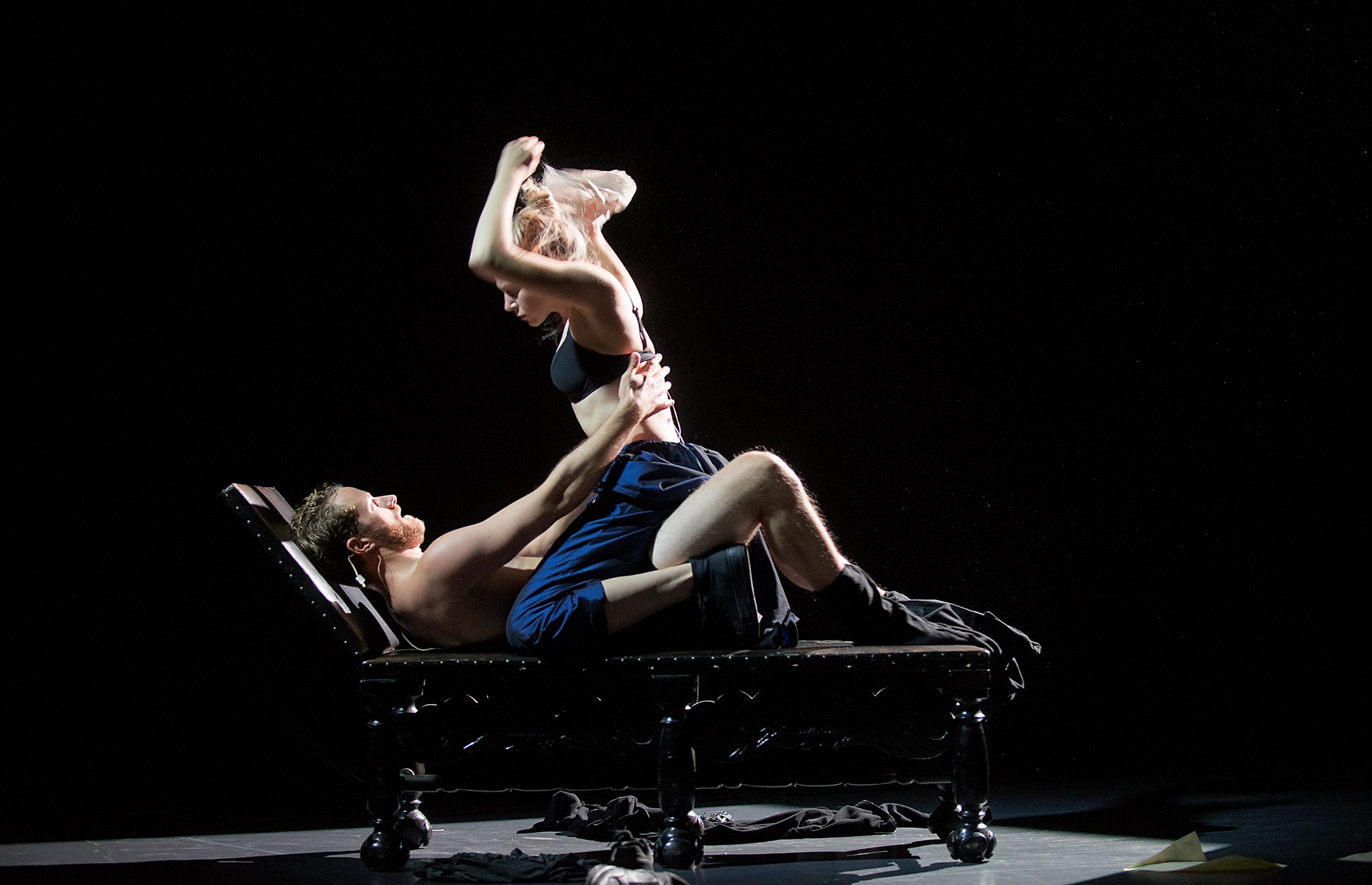
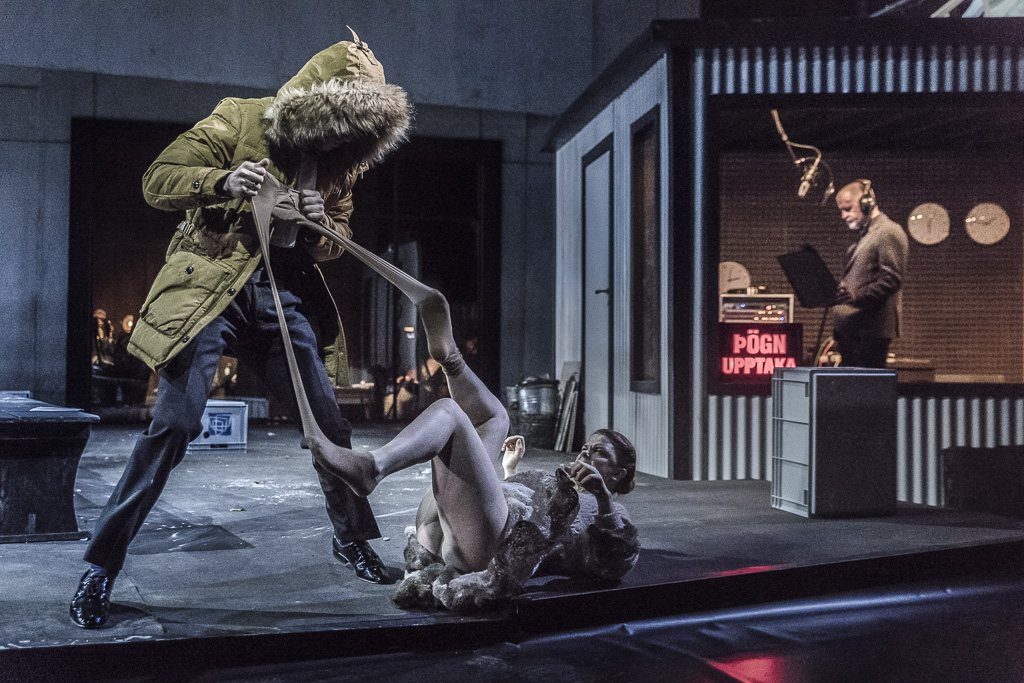
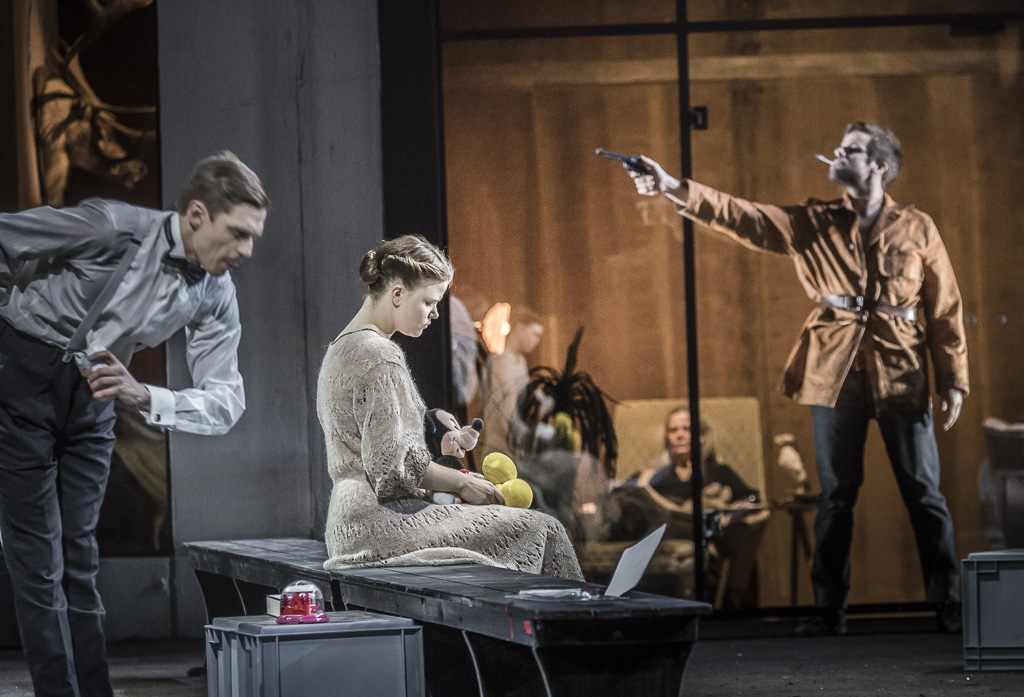
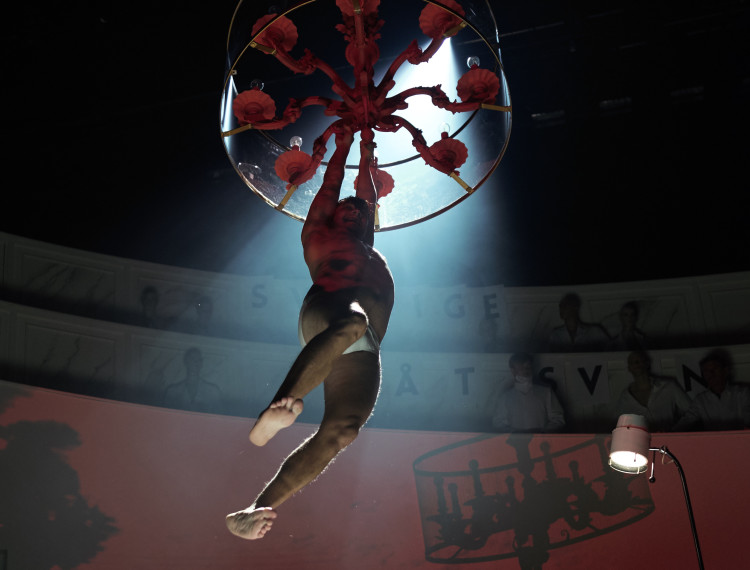
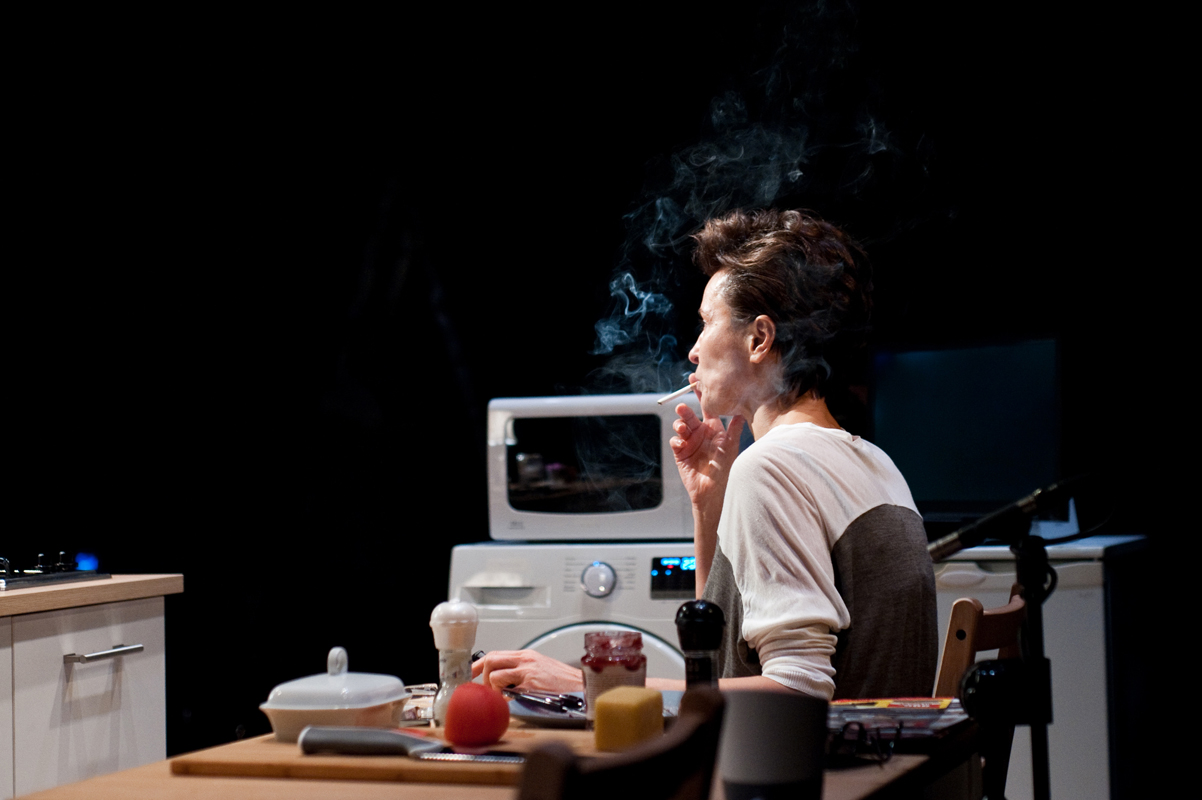
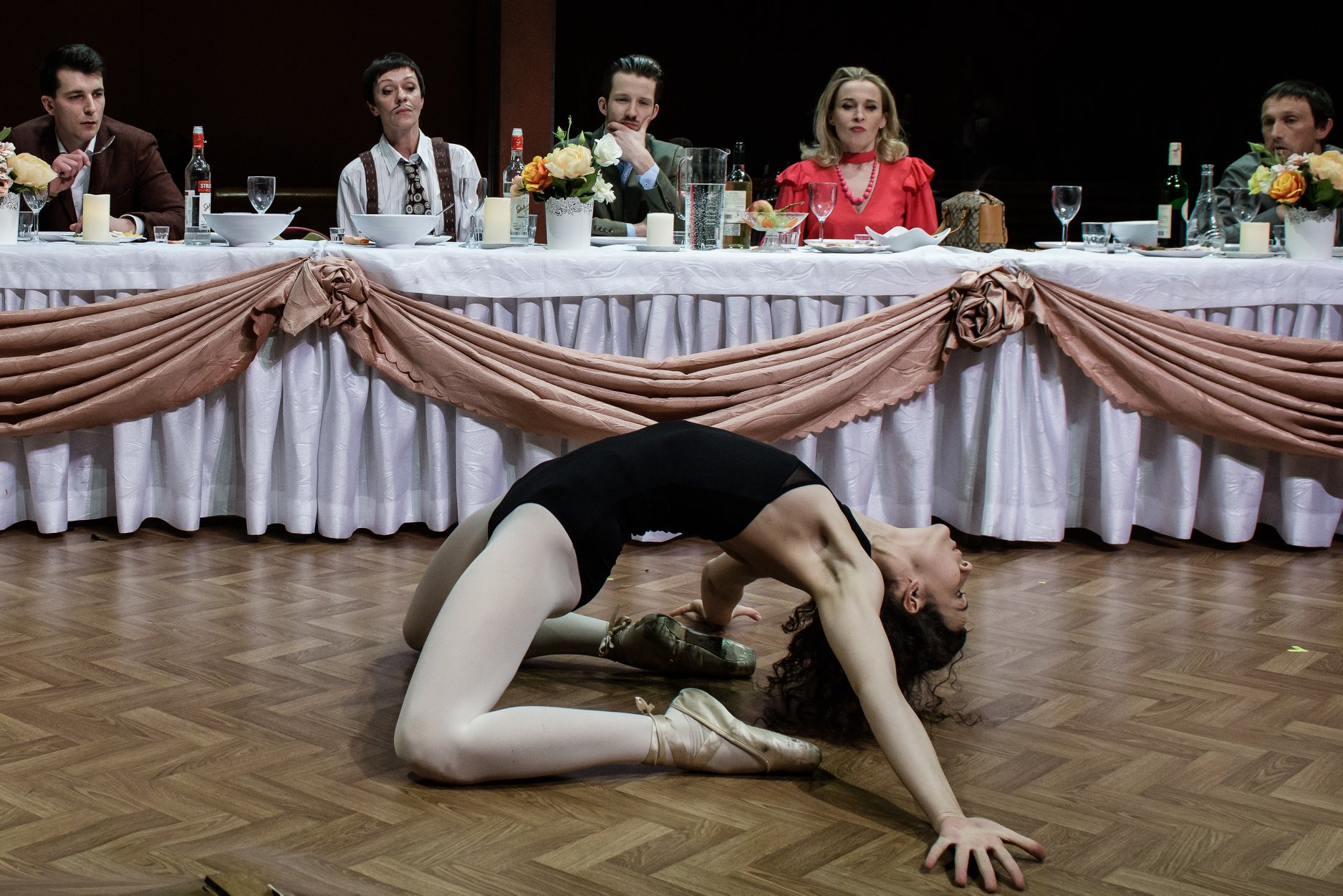
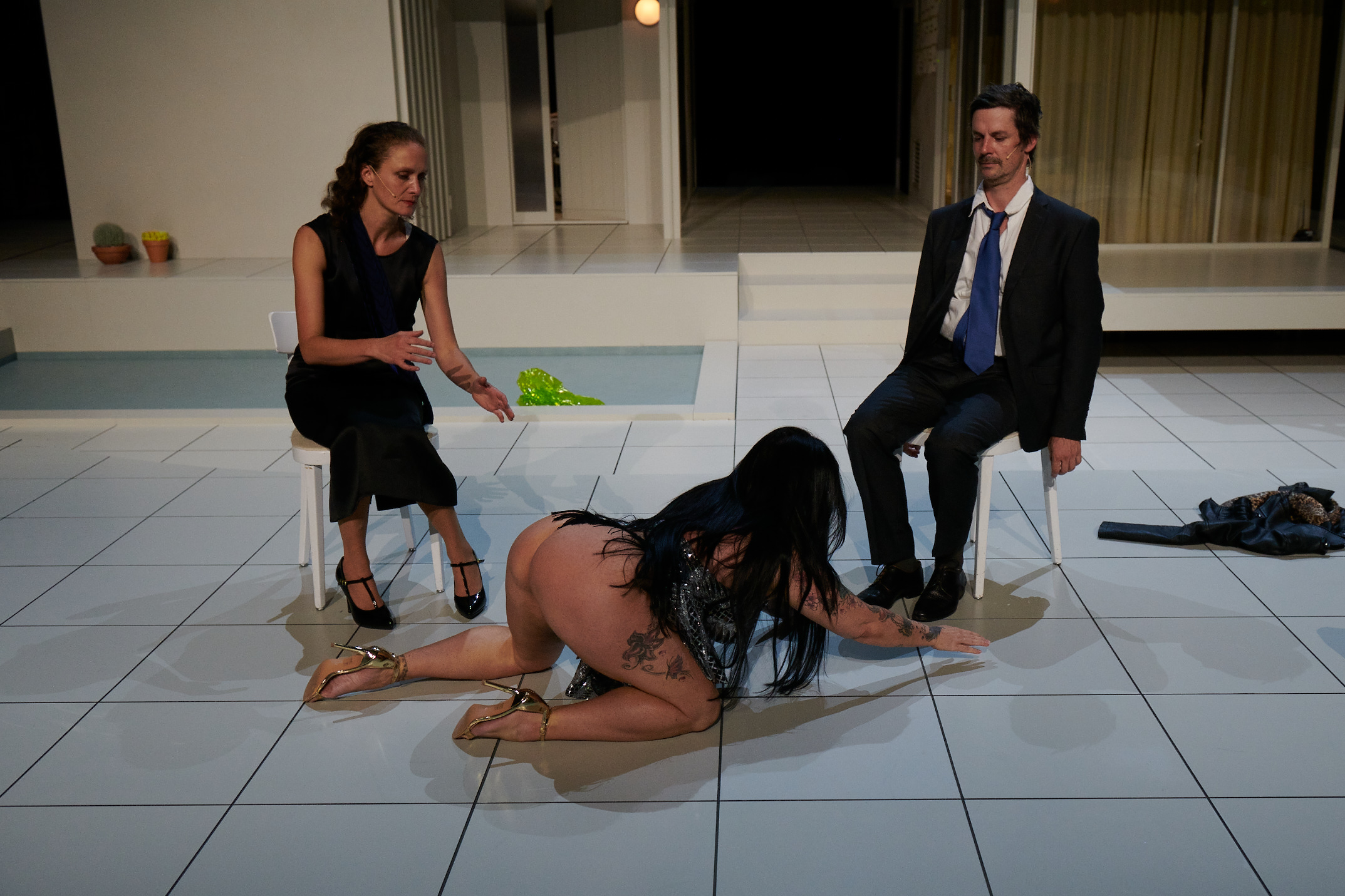
It’s getting down to business before I’ve even found my seat. The porn actors have already positioned themselves in a glass box: Katie Pears (48) and Conny Dachs (57) are performing: in and out, from the front, from behind, from the side. Looking away is not possible! The two do it with stoic equanimity, toneless and listless. The term “getting down to business” takes on an oppressive reality – it shows the dehumanization in the most private sphere.
Personally, I consciously don’t watch porn because I don’t want these images of emotionless intimacy in my head cinema. Every day, porn is clicked millions of times on the Internet, what we see here is a fraction of it. Director Yana Ross (48) is holding up the mirror of our cultural psyche to us. For her, theater is a form of therapy, and pornography is on the couch this evening. “Sex is mild compared to what Wallace said!” She says. Incidentally, anyone who was happy to enjoy one sex performance after the other will be disappointed. Live sex is limited to the first ten minutes.
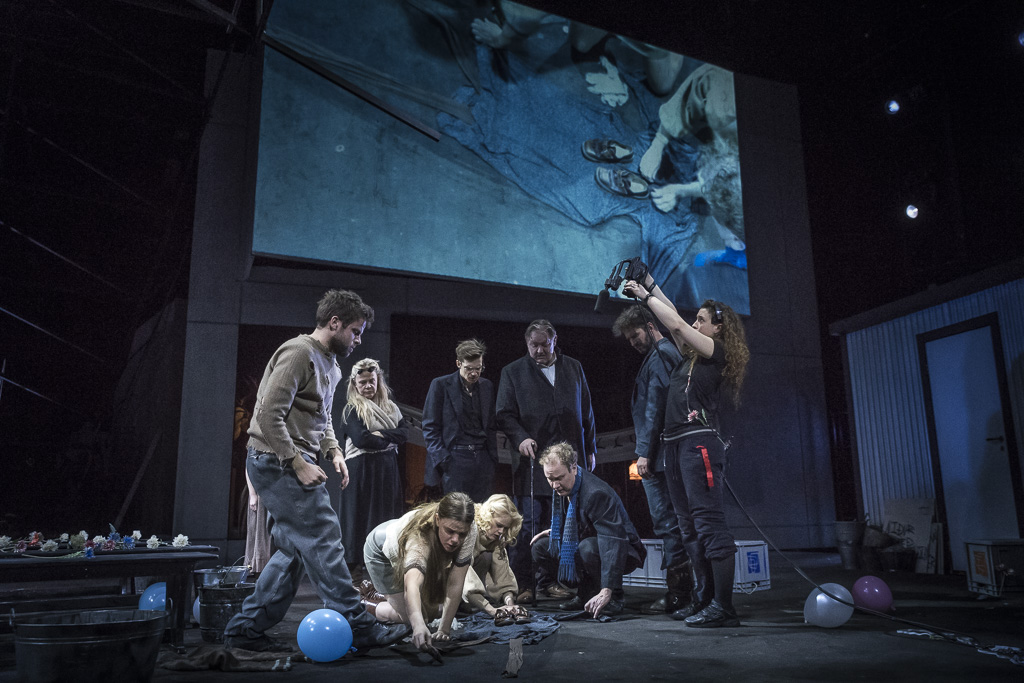
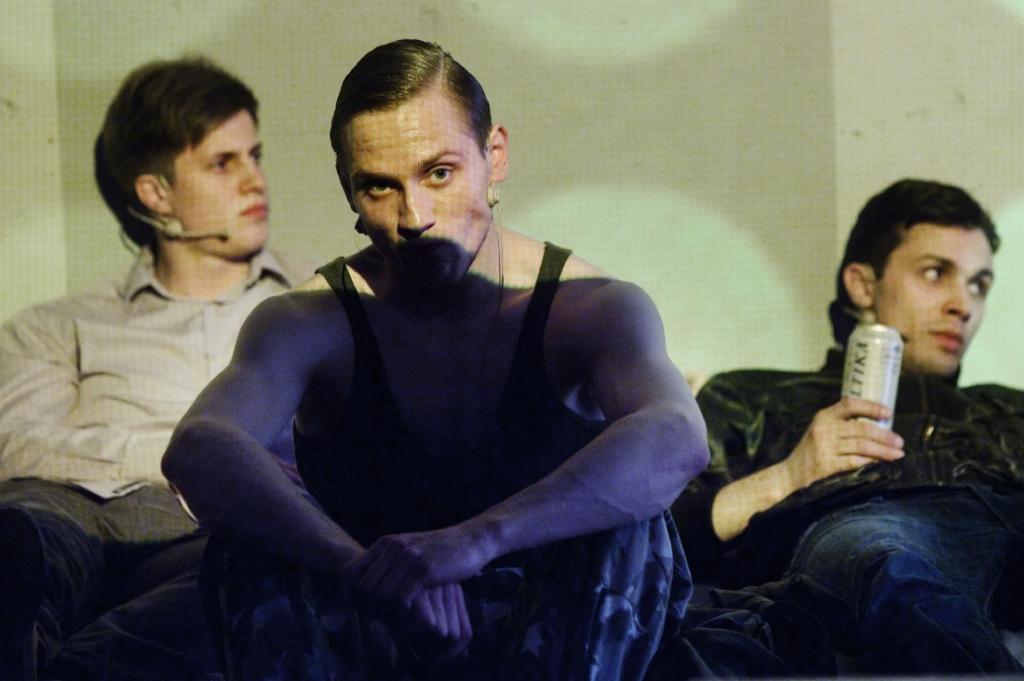
The texts of the American writer David Foster Wallace (1962–2008) are a collection of male voices; a lot is about sex and the fear of women, which leads to everyday sexism and sexualised violence. Wallace, who suffered from depression and committed suicide, also describes this male view on his own initiative, relentlessly, directly and yet with humor. The director stages the play as a journey through time with a group of cowboys in pastel colors – the ensemble also includes the Bernese actor Michael Neuenschwander (59), known from the SRF series «Wilder».
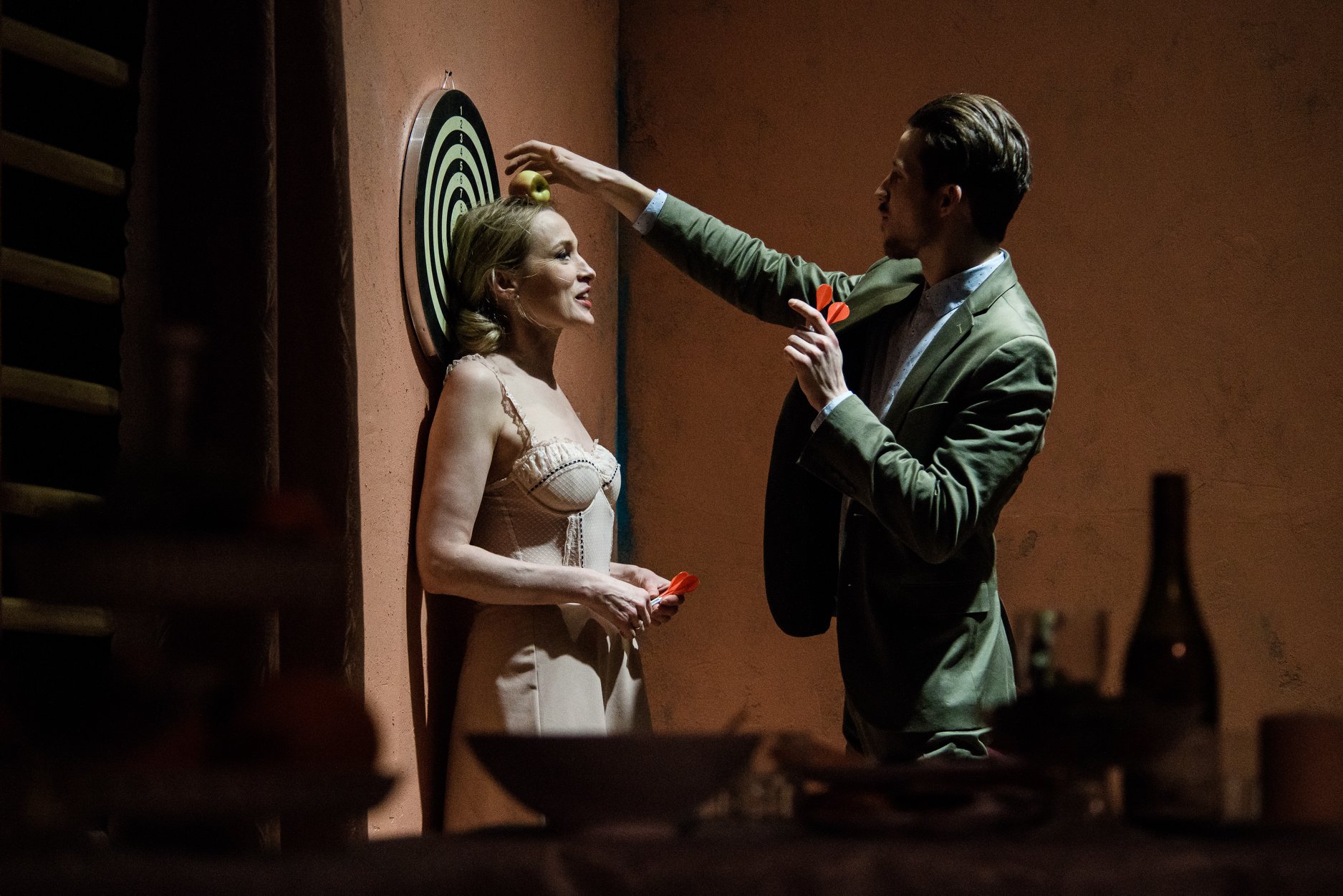
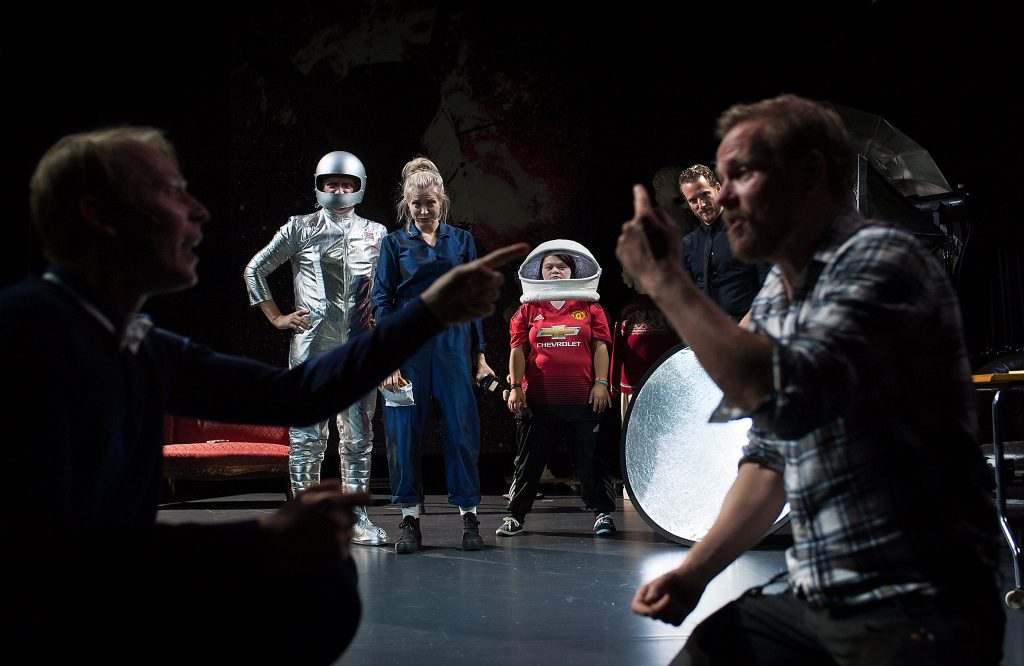
The interaction between the classic actors and the porn actors goes like clockwork. Katie Pears has her first appearance after a quarter of an hour – with text! If she resembles the cliché of an erotic actress with her smoothly ironed hair and tattoos, her presence, this clear voice and total self-confidence surprises. She teaches the cowboys a lesson in female pleasure. Everyone is given a peach to practice giving oral pleasure to a woman. And actor Conny Dachs also mingles with the ensemble, sings and plays like one of them – there are encounters at eye level.
A highlight is the parody of the show “Sternstunde”, which discusses “What women really want”: revealing and with absurd humor, the chauvinistic cowboys are finally “shot” by the presenter with a hairdryer – then they ride Women with relish on the back of a stuffed bison.
There is nothing more to laugh about than repeatedly reciting the text about the rape of a young woman. Wallace’s words are brutal, it feels like the whole hall is holding its breath. This is difficult to digest food. So difficult that now a spectator leaves the hall. Incidentally, my very personal enthusiasm belongs to Katie Pears. The erotic actress taught me a lesson too, in terms of prejudice: I want to see and, above all, hear more from her.”

Blick


“Can a porn actor have cellulite on his buttocks? Is there a maximum breast weight that a sex worker can still carry? And, are you even allowed to ask yourself that? Because you don’t wallow these thoughts in a porn cinema, in some so-called dirty corner that would be easy to visit not far from the shipbuilding. You don’t brood about such things in one of the city’s “execution boxes”, around the corner, so to speak, where sex can be officially bought unofficially and boy shooting is the order of the day.
On the contrary, they bought a ticket for the noble high culture and want to see the work of the in-house director Yana Ross in the shipbuilding hall in Zurich: “Short interviews with nasty men”, based on the novel by David Foster Wallace. The theater had already warned its clientele before the premiere. Young people under the age of 18 were excluded from the premiere. As part of the staging, according to the organizers, a sex worker and a porn actor would not only perform “life sex”, but (if possible) carry it out in real life.
And for a simple reason: In the novel, Wallace describes fictional interviews with men about their tricks and games to lay women down. Because the worst, the most devastating, the most wretched dehumanization, according to the author – and no relevant empirical value and no related advice center will contradict this – takes place in private.
As a spectator, you sit in front of the copulating couple (with stage names Conny Dachs and Katie Pears) who do what they were supposed to do behind glass – and first register the imperfections of their bodies. It is not the nudity itself that seems to be the scandal here; it appears offensive and the act appears because it is performed by unadorned bodies.
As if we didn’t know, this is where you are reminded. Hollywood serves us the trained and operated, the perfectly made-up and perfectly illuminated naked, and even that is digitally post-processed. Here, however, the affront lies in watching everyday people doing everyday things. Nothing about it is radical, just banal. It is also interesting: the forced constellation turns the viewer into a voyeur – a participant and co-responsible for what is happening. Can contemporary theater make the role of the spectator clearer?
In any case, the couple who were arguing next to me about exactly where the male part is looking – at what is happening on the stage or at the mechanically copulating couple – without question saved themselves an hour with the marriage counselor.
Does sex belong on the stage? Do naked bodies belong on display? The debate is old. And that she is so old that she now has a beard, because she is a double-moral one, proved at the weekend with no ifs or buts. We live in a sexualized society, (historical) paintings of naked women are worth millions, and the Vatican can only afford advertising without sex. The theater as a laboratory for alternative schools of thought and attitudes, also as a shelter, is the ideal place to invite your (voluntary) audience to take a look. Especially when in the setting the executor is not the ensemble required by a director, but professionals in their field.
What Yana Ross and a dazzling ensemble with furor and playfulness and gender swap in their cowboy grotesque about male (violence) fantasies – not only concerning women – brought to the boards is simply convincing. It is devilishly intelligent and implemented in a heart-rending, human-loving way. And, in terms of content, it is brushed up with Swiss references (to court judgments and criminal justice processes). Every single one of these sad male monsters – played by women as well – is worth a date – as part of an escorted courtyard walk, of course.
Because they are all screwed up, misogynistic, damaged, just like a large part of humanity. Ilknur Bahadir as Virgin Mary with a knitting vagina, Urs Peter Halter as a divorce winner, Michael Neuenschwander as a senile misogynist who laughs at their parents’ abuse of power by infants, Lena Schwarz as a horny “Arena” presenter. Yana Ross managed acting theater from the brightest. She has converted the premonition of a scandal, which is carelessly decried as a blood and testicular theater, into a lesson in humanity. Those involved rightly deserved the standing ovations at the weekend. And note: an unclothed woman with silicone breasts can look more clothed than a clothed woman with natural breasts.”

TAGEBLATT


“The Schauspielhaus Zürich is showing an explosive new production of “Short Interviews with Nasty Men” based on David Foster Wallace. Director Yana Ross sees Wallace’s preoccupation with pornography in the book in good hands, especially in the theater.
In his book “Brief Interviews with Nasty Men”, the American writer David Foster Wallace had men tell in relentless clarity about their mostly toxic relationships with women, about sex fantasies and obsession with power, but also about loneliness, depression and self-disgust.
A new production of the material directed by Yana Ross can now be seen at the Schauspielhaus Zürich. The house clearly warns of verbal violence and live sex on stage and only allows people of legal age to enter. It is also possible to leave the performance at any time.
The book has accompanied her for a long time and simmered to herself, says director Yana Ross. “At the Schauspielhaus Zurich we now had the feeling that the material could be suitable to look at the tectonic shifts in our society through the dense language of a great thinker like David Foster Wallace.”
The core of the material is the human inability to communicate. “It’s about that feeling of paralysis when you have a great desire but you realize that something is broken and you can’t connect with another person because of it. There is great loneliness in it at a time when everything has become so incredibly loud and noisy, ”says Ross.
She sees no danger of simply reproducing toxic masculinity on stage in the explicit access to the topic – with verbal, emotional and sometimes also physical violence against women.
“On the level of art, I should have the ability to distance myself and the ability to critically examine. It gives us the chance to explore the taboos and dark sides of our society, but in a very safe and amicable way. “
Researching this piece led to the conclusion that Wallace’s book can also be read as a radical feminist perspective, according to Ross. “Nevertheless, we are very careful with this production to issue a content warning that is also openly communicated everywhere.” It is not about surprising or shocking someone, but about the agreement among adults that there is theater here.
Wallace writes very explicitly about intimacy, loneliness and the broken male psyche and sexuality. “It becomes a kind of literary porn for him. The experience of reading the book is similar to that of watching pornography. It’s fascinating and repulsive at the same time. And for me, live sex on stage was an honest way of preparing the audience for this literary porn, this ‘mind fuck’. Because it is actually much more disturbing than the sex itself. “
Ross sees pornography as a “phenomenal tool to describe our social presence”. Pornography almost mirrors society and there is a lot of overlap. “Think of the porn directors who are now making music videos or the rap stars who are now running their own adult entertainment channels. And it actually bothers me that we don’t want to look at it more analytically. “
The theater in particular is a suitable and safe place for this. “Our collaboration was strongly shaped by the work of our intimacy coach. With her, we always had someone in the background who knew how to de-sexualise our language and who could help us with it. At the same time, the relaxation and naturalness with which the two porn actors acted was very inspiring for us. They have a clear understanding of what they can do on stage and what we shouldn’t be doing. And vice versa.””

Deutschlandfunk Radio


“When the man’s soul is fermenting, it releases toxic fantasies. In contrast, pornographic contortions seem harmless
Live sex in the Zurich Schauspielhaus may provoke some irritation. But in “Interview with nasty men – 22 types of loneliness” he only forms the backdrop for the dull monologues of instinct-driven contemporaries.
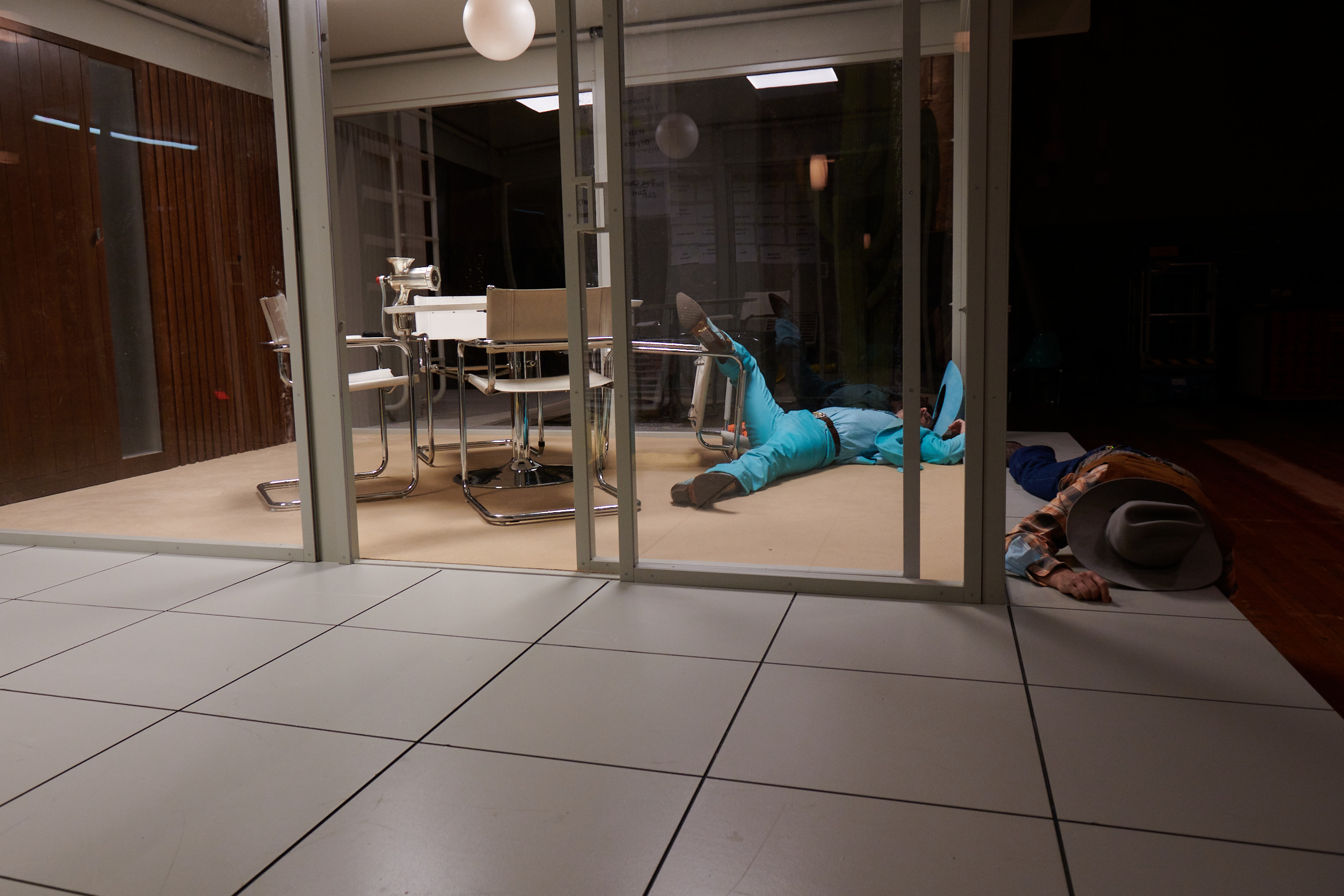
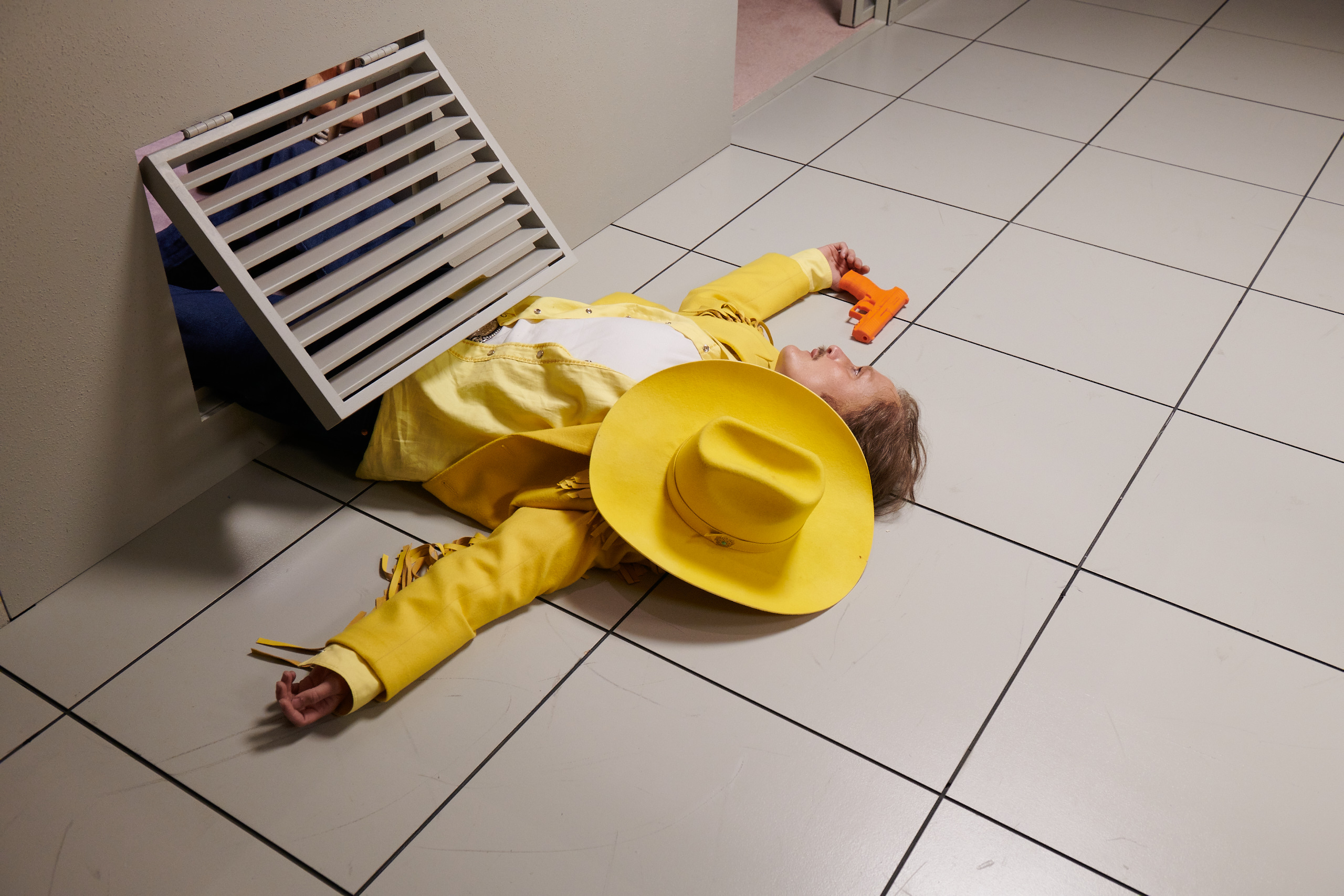
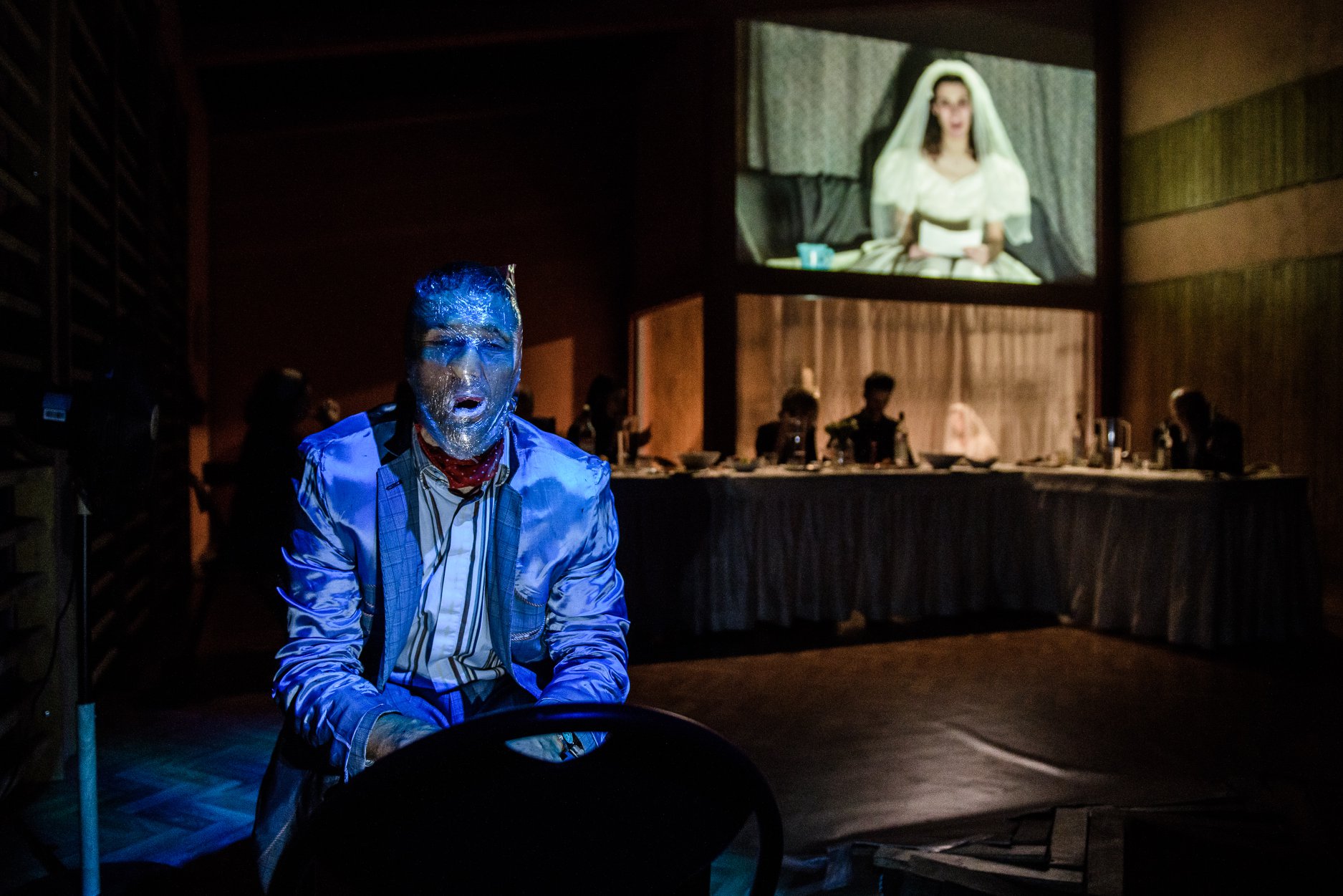
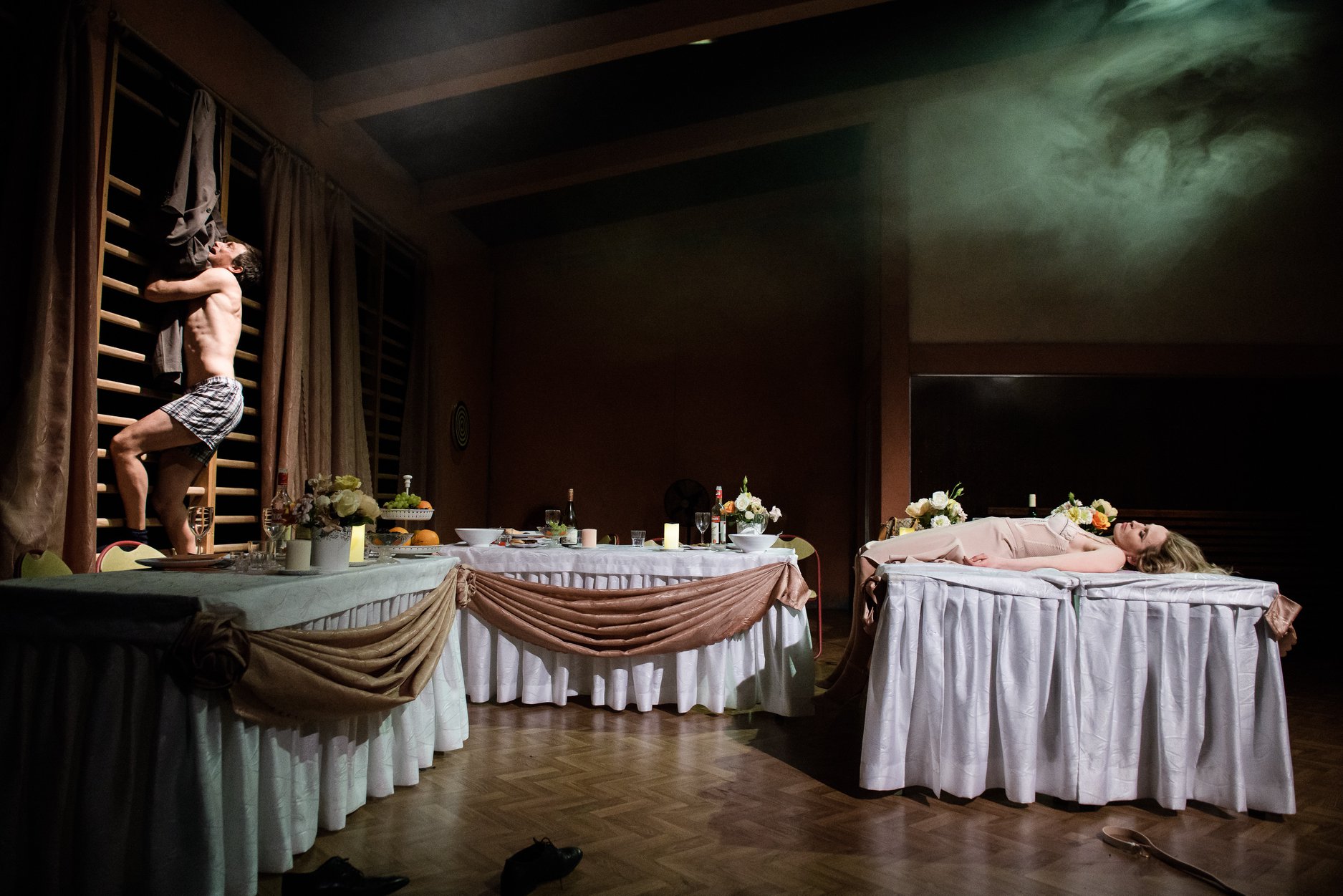
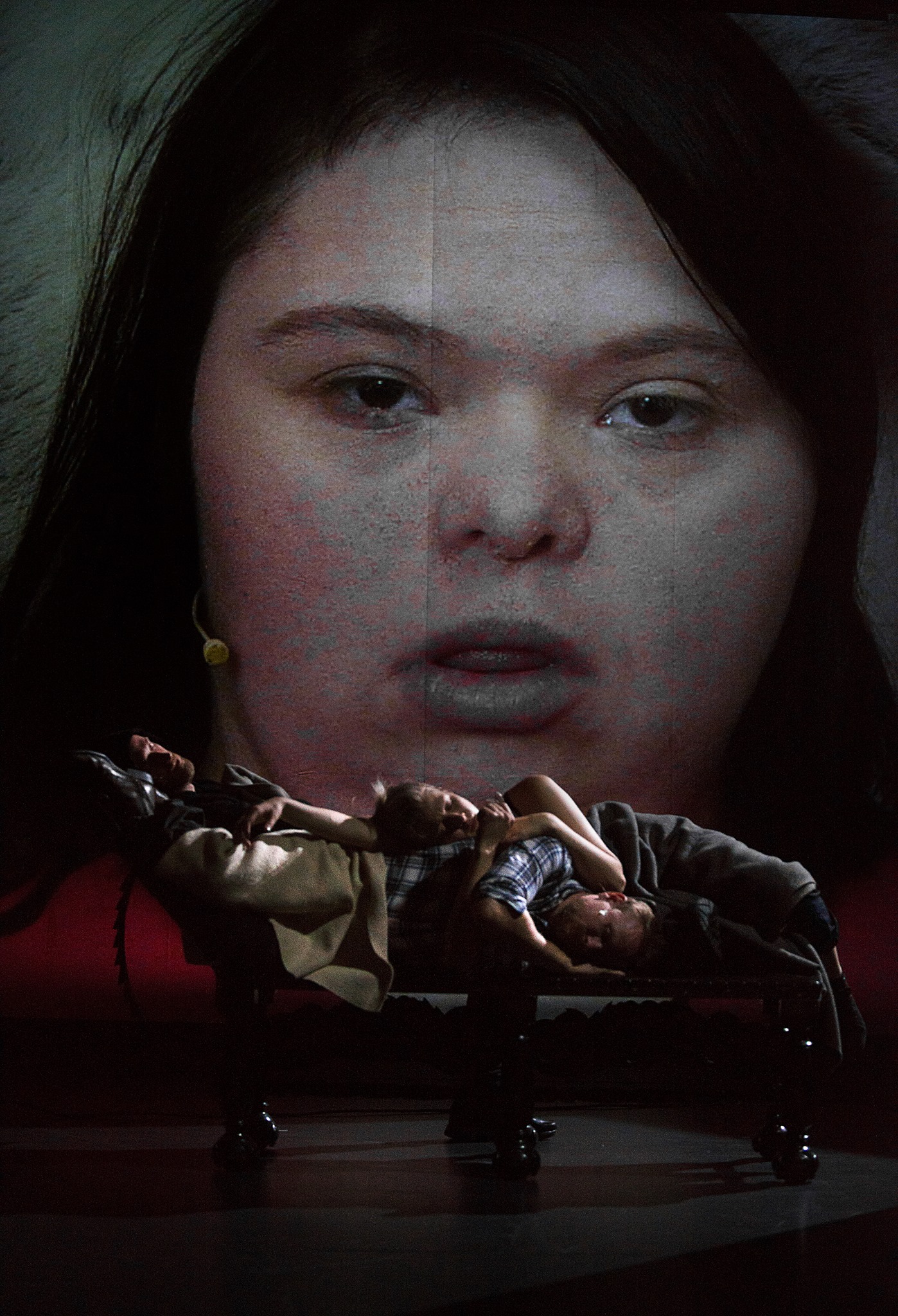
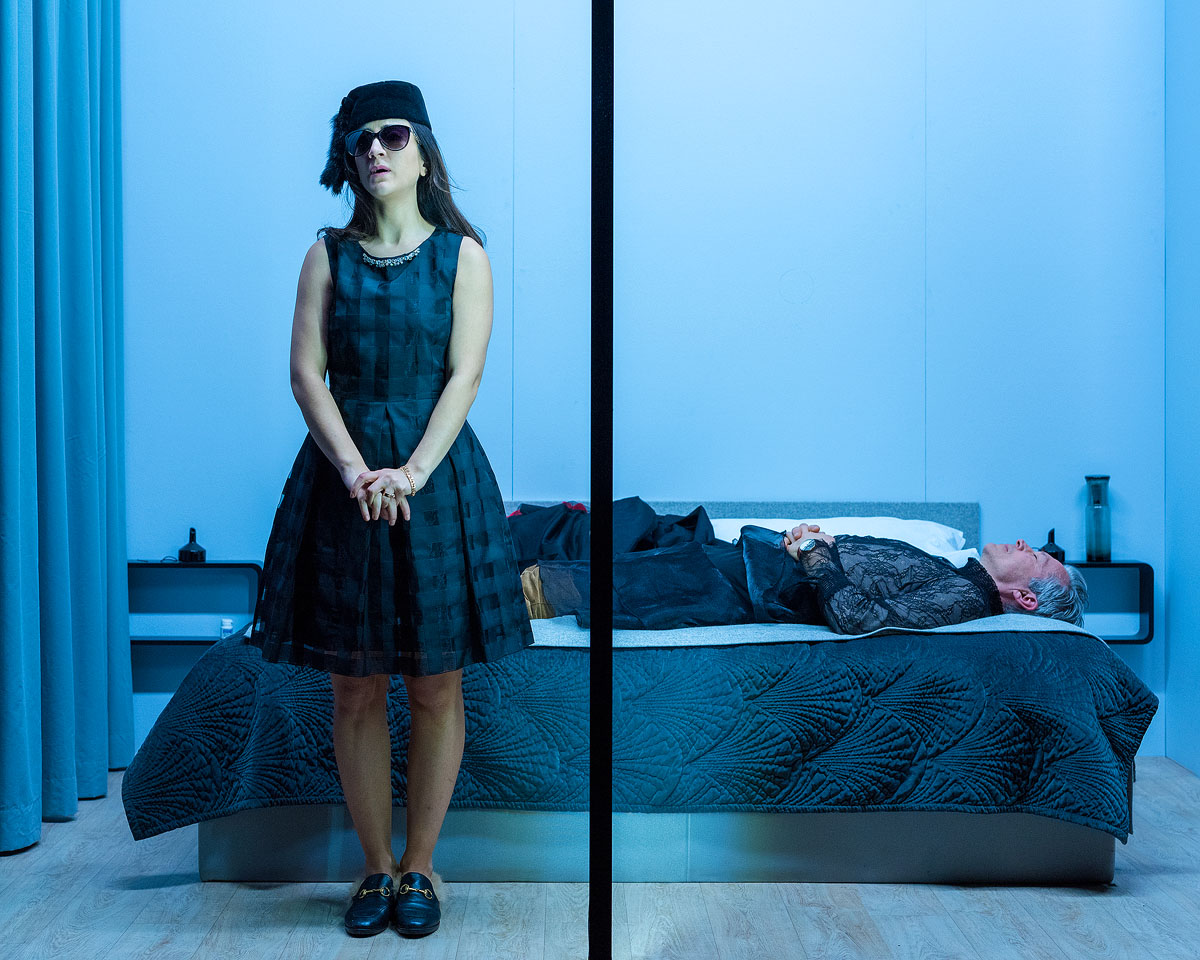
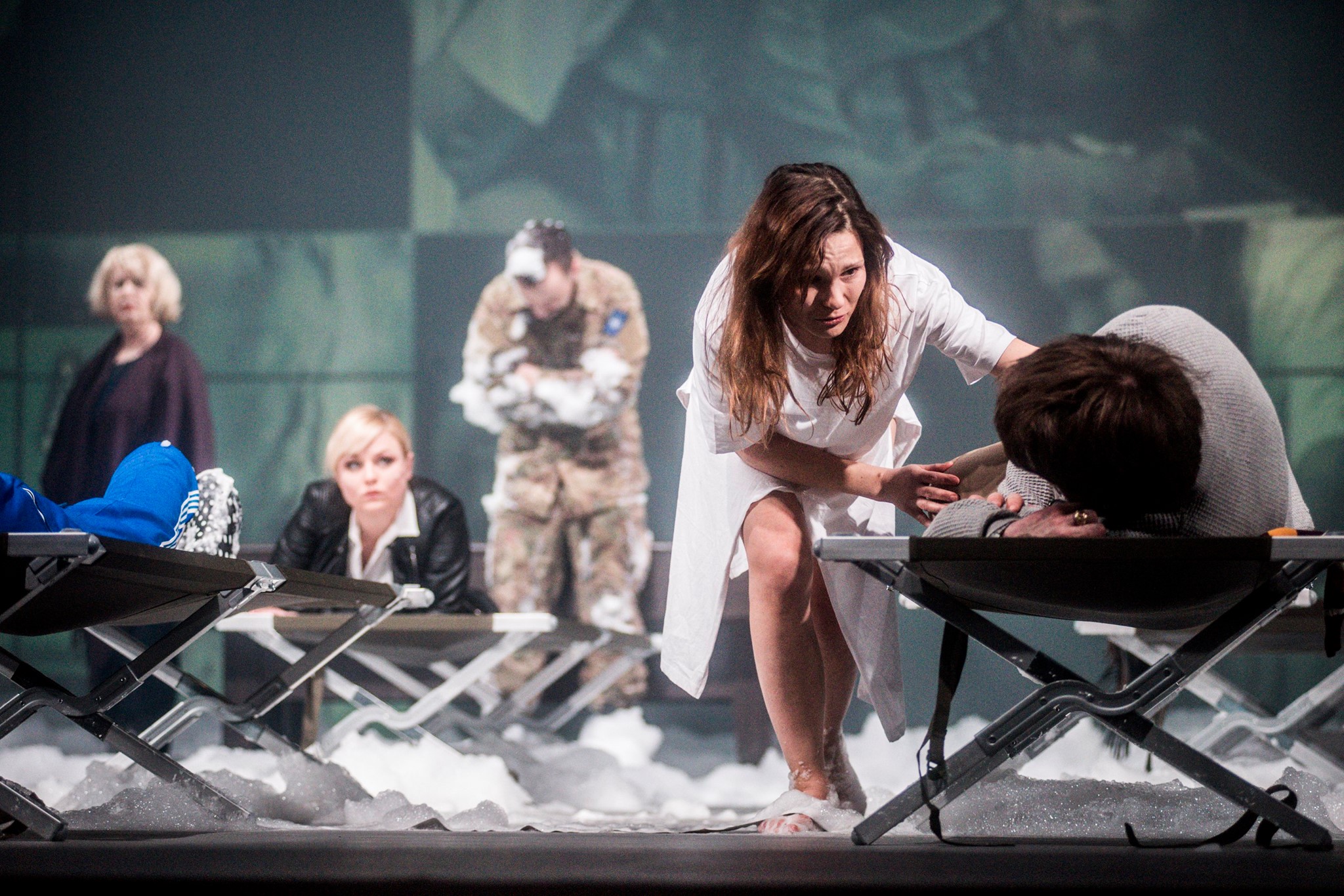
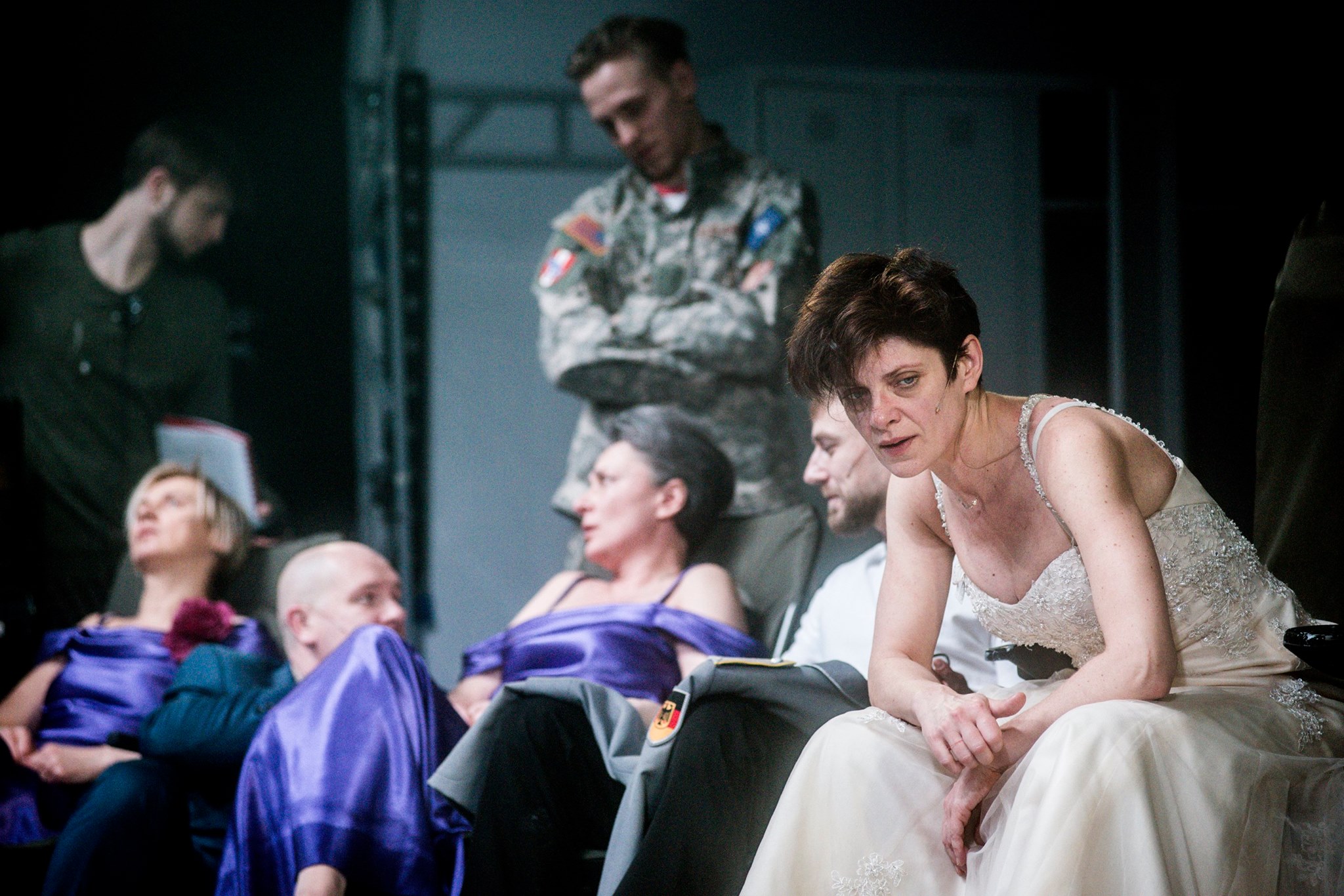
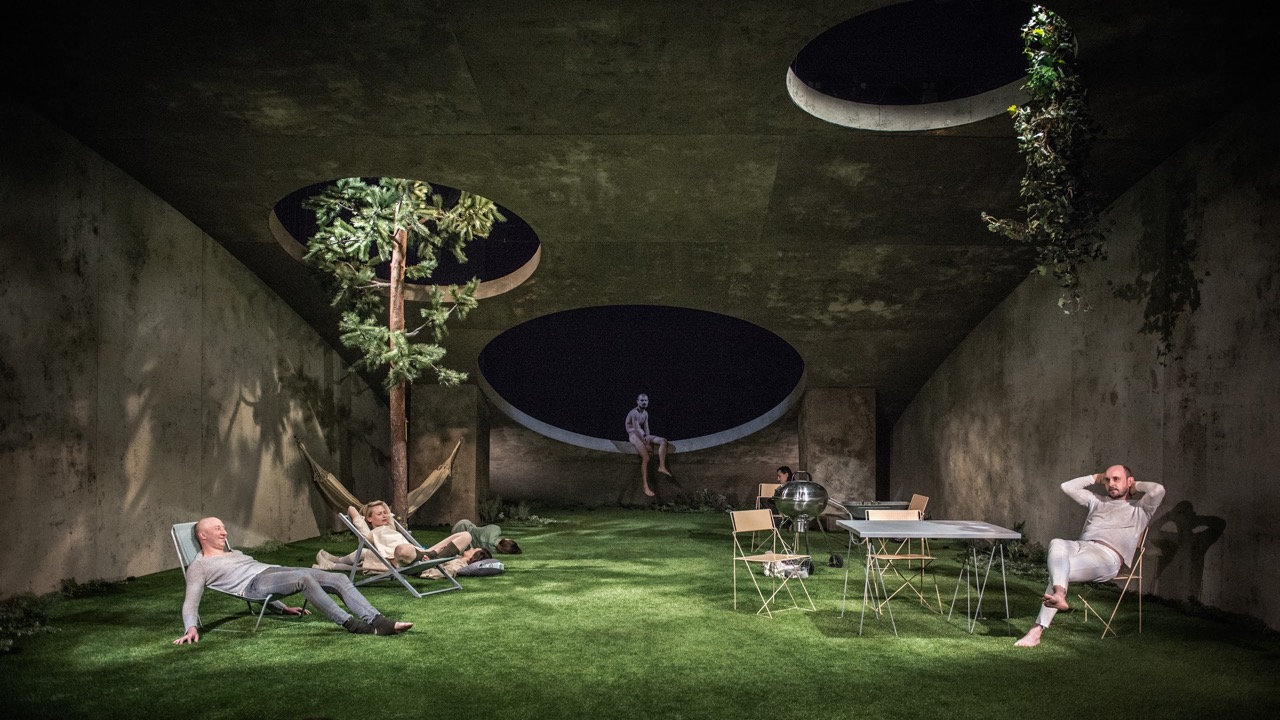
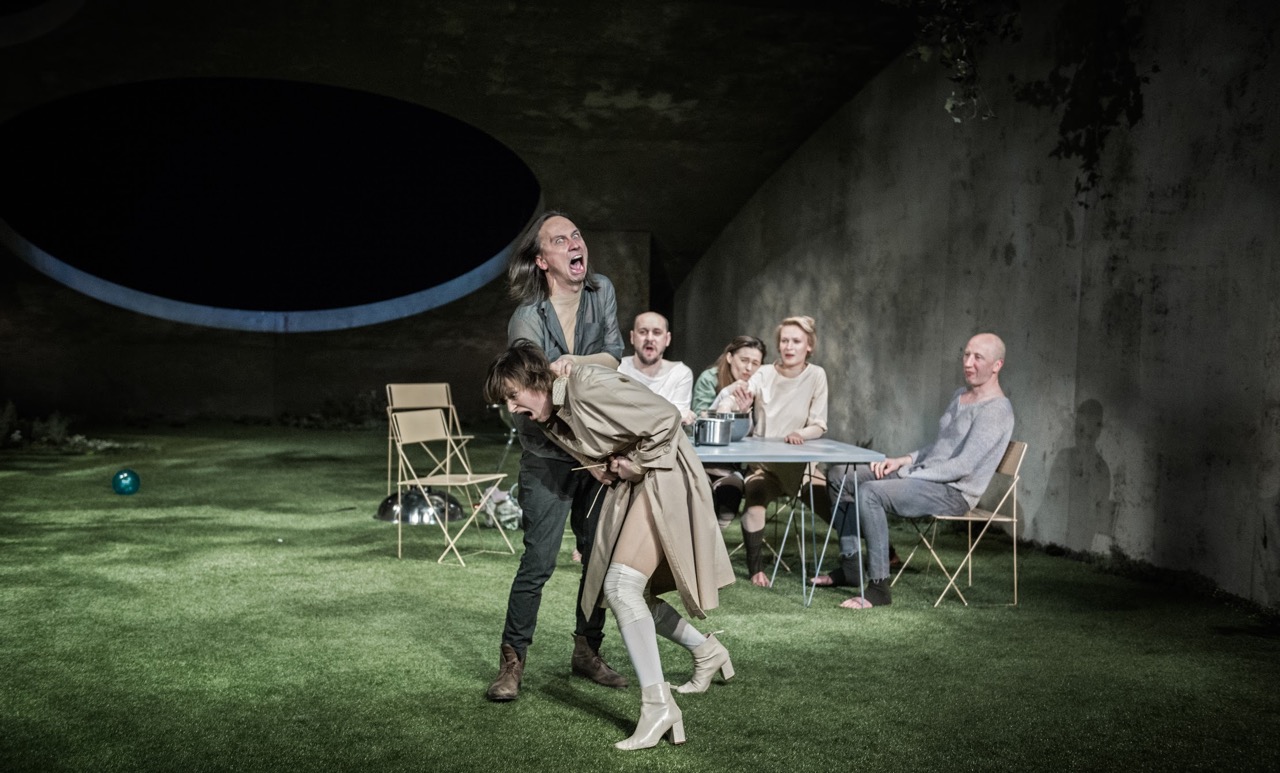
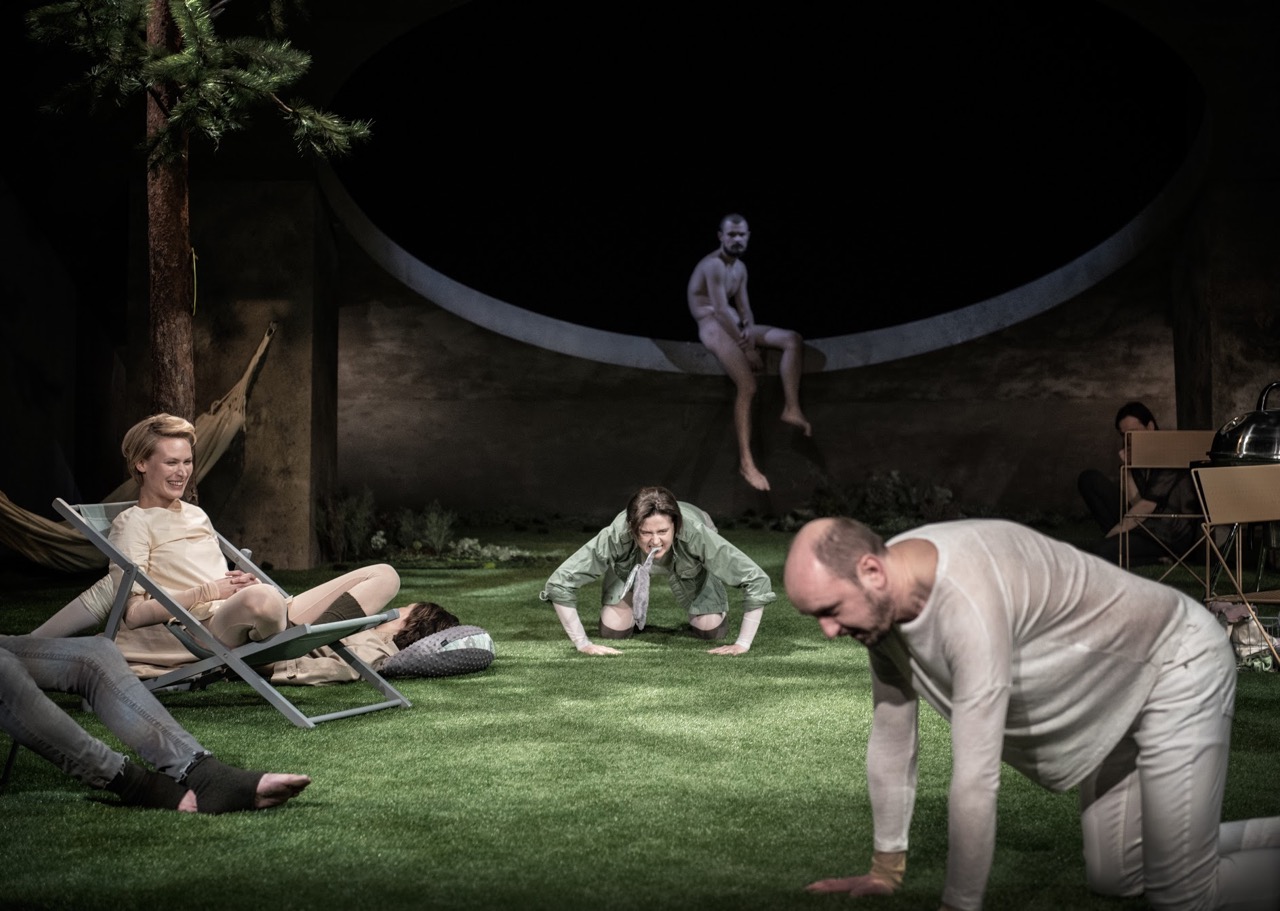
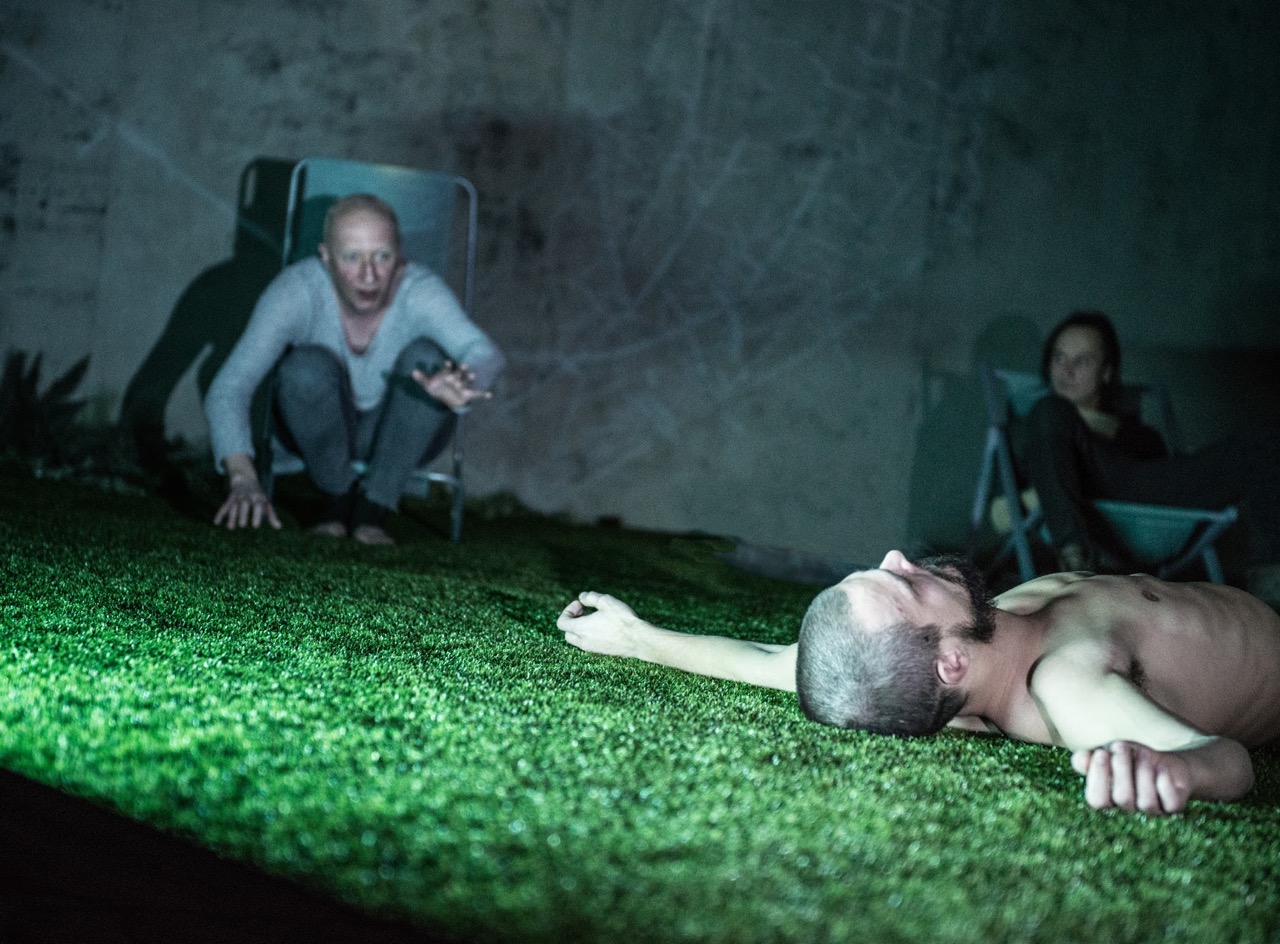
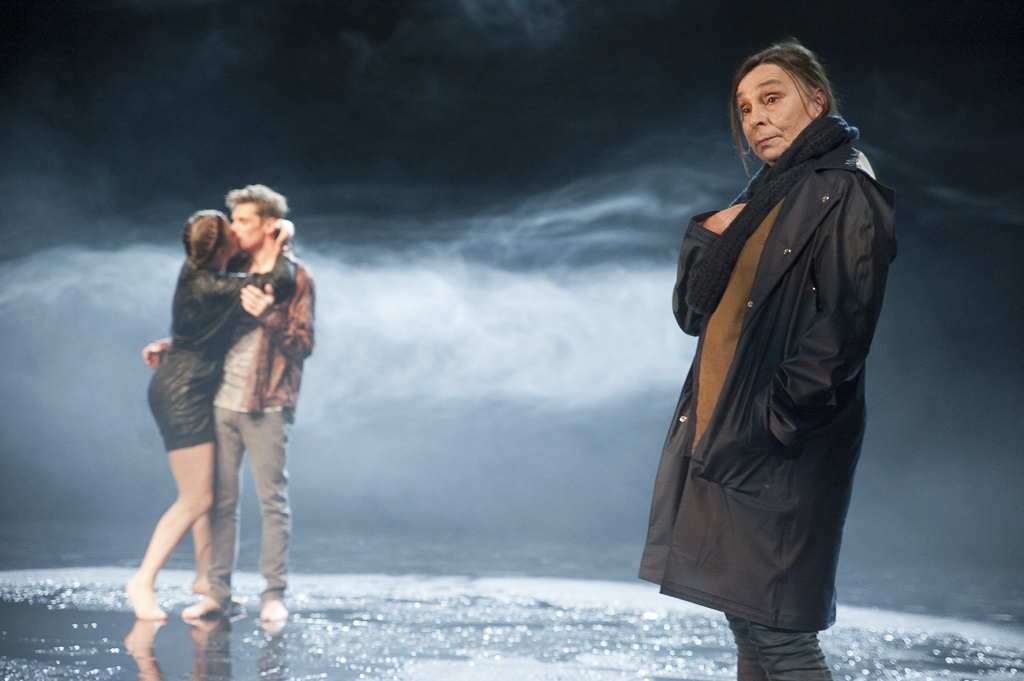
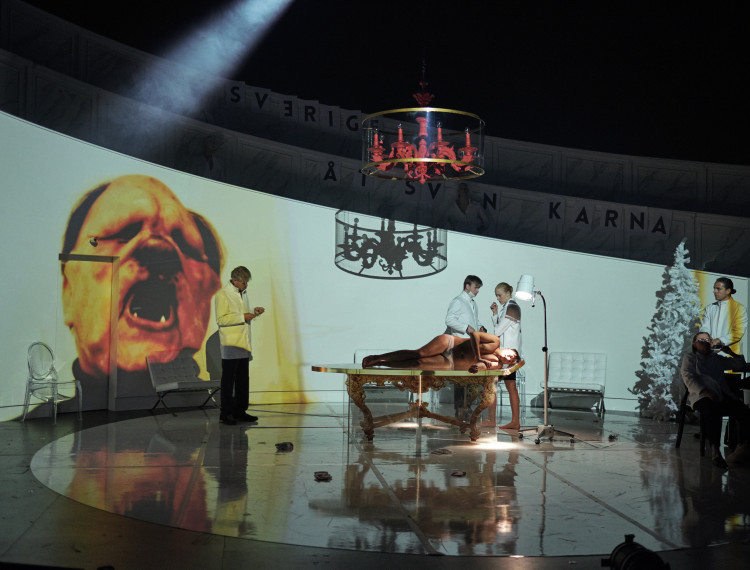
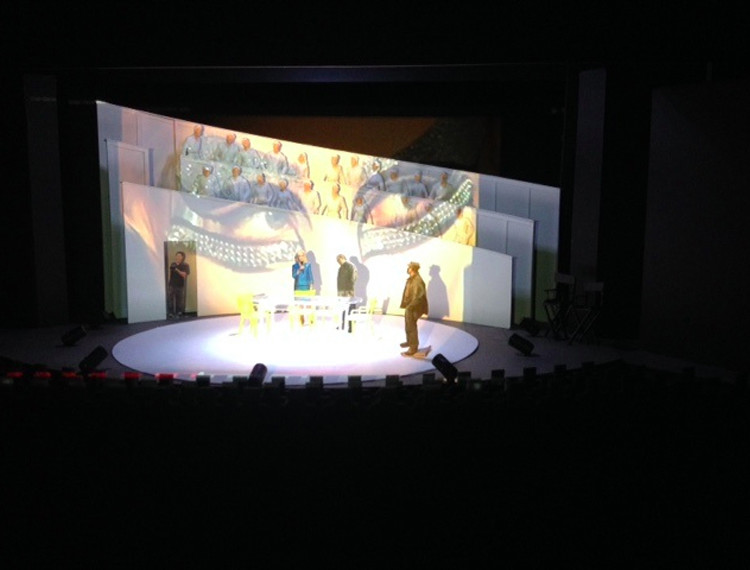
To get straight to the point: This production is also about pornography. Porn becomes fleshly concrete here, even before the piece has even started. The way to the stands leads across the stage. As a viewer, you don’t feel welcome here per se, and the scenery also has the impression of an uncomfortable crime scene. Cowboys are lying around, dead or asleep. A naked person and a naked person move in a glass compartment. You blink in – aha, they really do – and move on.
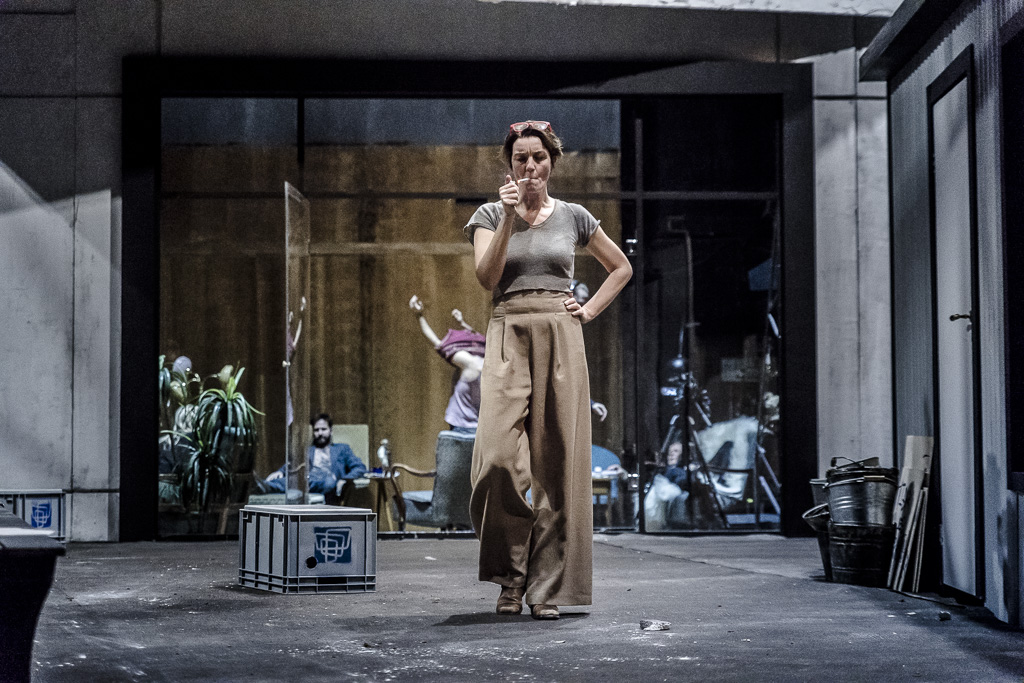
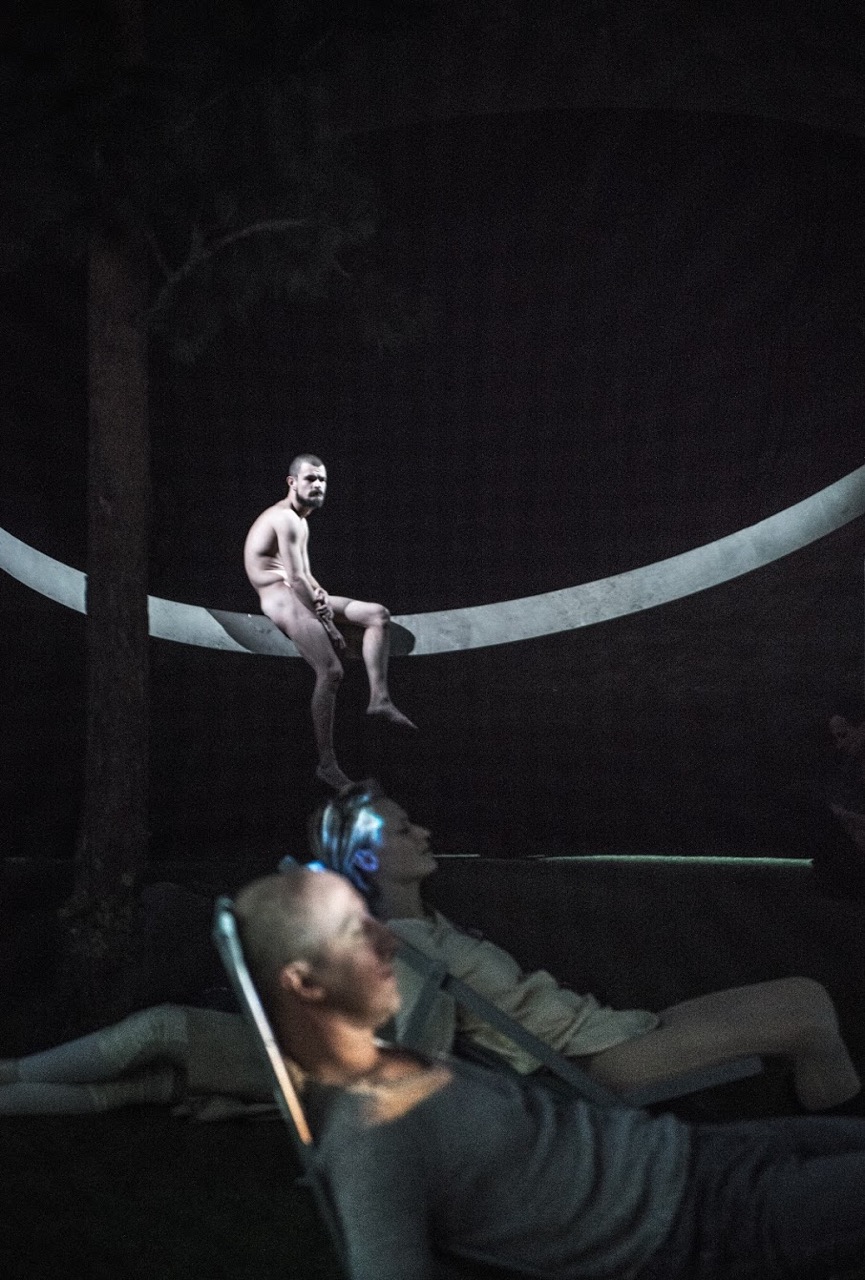
If you then look down on the stage from the stands, you can see simple architecture including the pool and roof terrace. There is still copulation in the glazed cabin, business-like, professional, so to speak. It is uncomfortable to be absorbed as a viewer of the scene. But in the theater, porn probably automatically turns into art?

Watch out, sex!

The program for “Interview with nasty men – 22 types of loneliness” warns against live sex. It is expressly stated that you can leave the performance again. Isn’t that always the case? One could almost think that the theater is excited about the potential scandal.
However, Yana Ross, who staged “Interview with Nasty Men” based on texts by the American writer David Foster Wallace, will be aware of the callousness and serenity of the contemporary theater audience. The fact that she integrates a porn couple into the playhouse production serves as a provocation and promotion. But this also creates a lush, dirty atmosphere in which the “nasty men” actually fit in perfectly.
David Foster Wallace only recorded the answers in his «interviews», the questions have to be reconstructed in retrospect. As a result, monologues are also interpreted on stage. In the long, sometimes manic recitatives of the seven cowboys and cowgirls, you get to know the suffering of men who are no longer capable of love and passion. Drive-controlled and phallically directed, they are fixated on copulating, which cannot really succeed without feeling. Their speeches become all the more absurd and aggressive. And sometimes the frustration is dissipated in aggression.”

Ueli Bernays, NZZ


“BZ plus Yana Ross directs David Foster Wallace’s “Short Interviews with Nasty Men” at the Schauspielhaus Zürich – not entirely suitable for young people. Cowboys alone with their manhood.

As far as we could see, nobody went straight home. The audience, only admitted from the age of 18, has to pass a copulating couple in Zurich’s Schiffbau in order to get to their seats. You can’t not look. Out in, out in, legs apart, the woman on a chair, the man standing in front of it – like in a porn show. But we’re not on a porn show. We are in the theater, in a premiere by the American-Lithuanian director Yana Ross. The couple who perform the sexual act with the greatest objectivity, however, come from the industry. Katie Pears and Conny Dachs have been active as porn actors for decades. What are you doing there in high culture?

This question leads to the core of Yana Ross’ staging of “Short Interviews with Nasty Men” by David Foster Wallace, the genius of American literature of the 90s and 2000s, author of the cult novel “Infinite Fun”, on which the translator Ulrich Blumbach takes ten Tennis player and author who – as the program booklet puts it, not without (involuntary) cynicism – “succeeded” in suicide in 2008, at the age of 48. Wallace, an intellectual genius, had to fight the most severe depression throughout his life. His stories “Brief Interviews with Hideous Men” were published in the USA in 1999, and in 2002 in German translation.

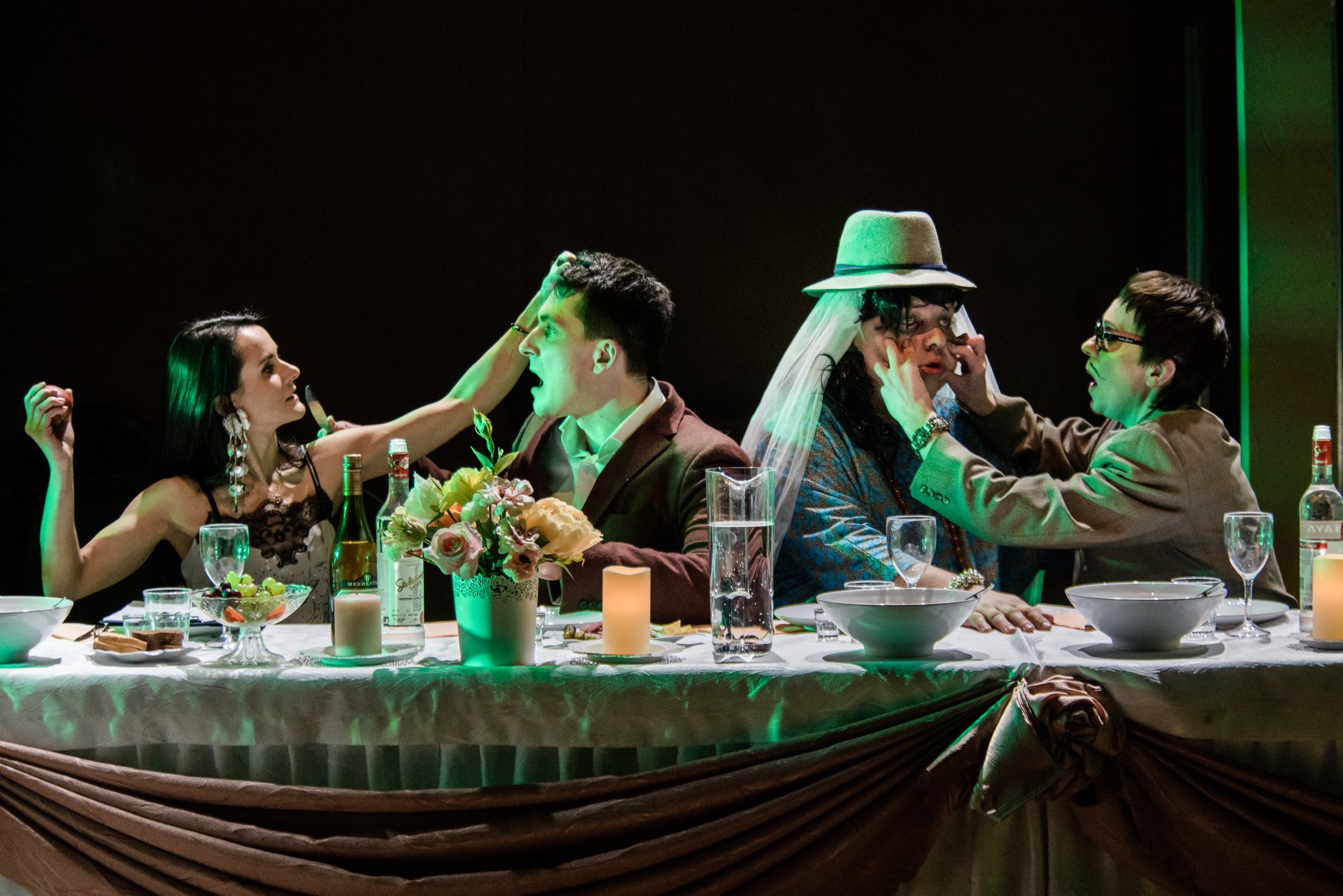
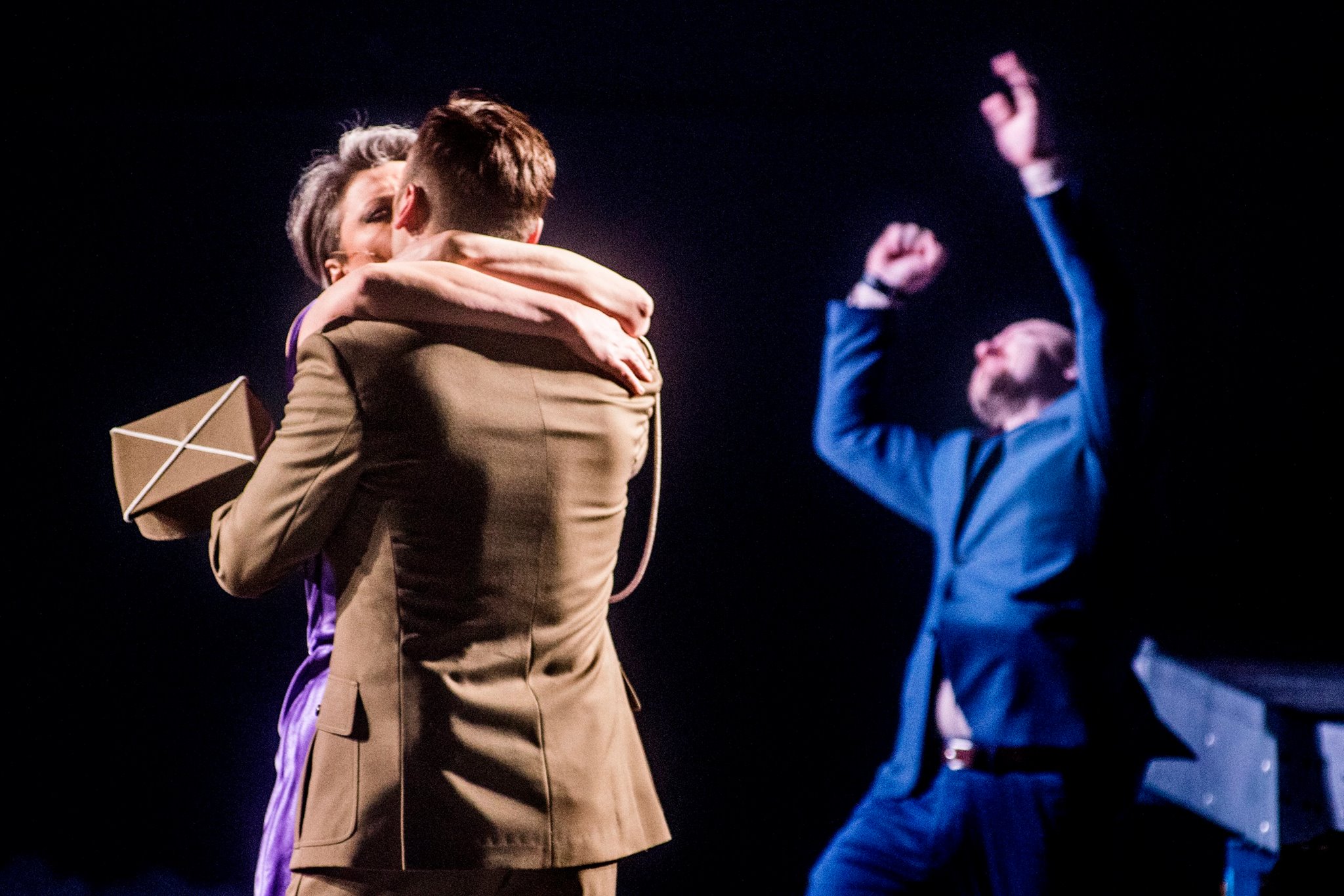
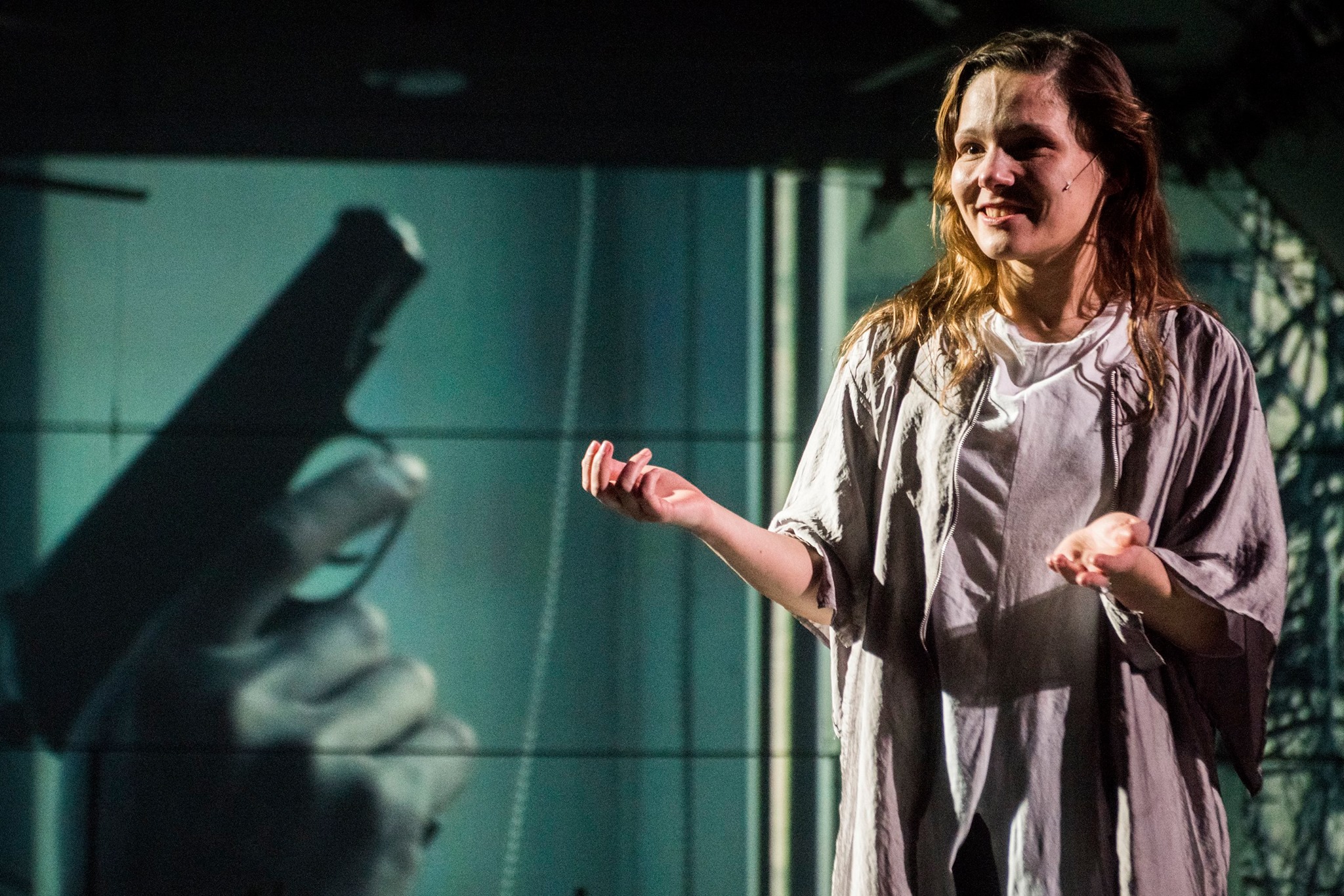
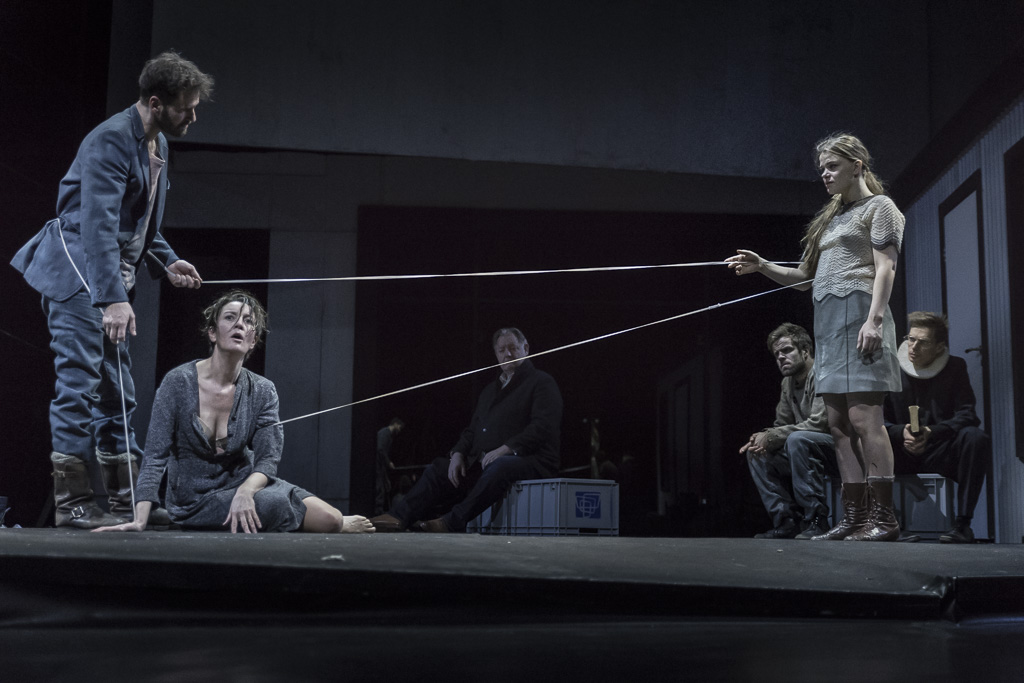
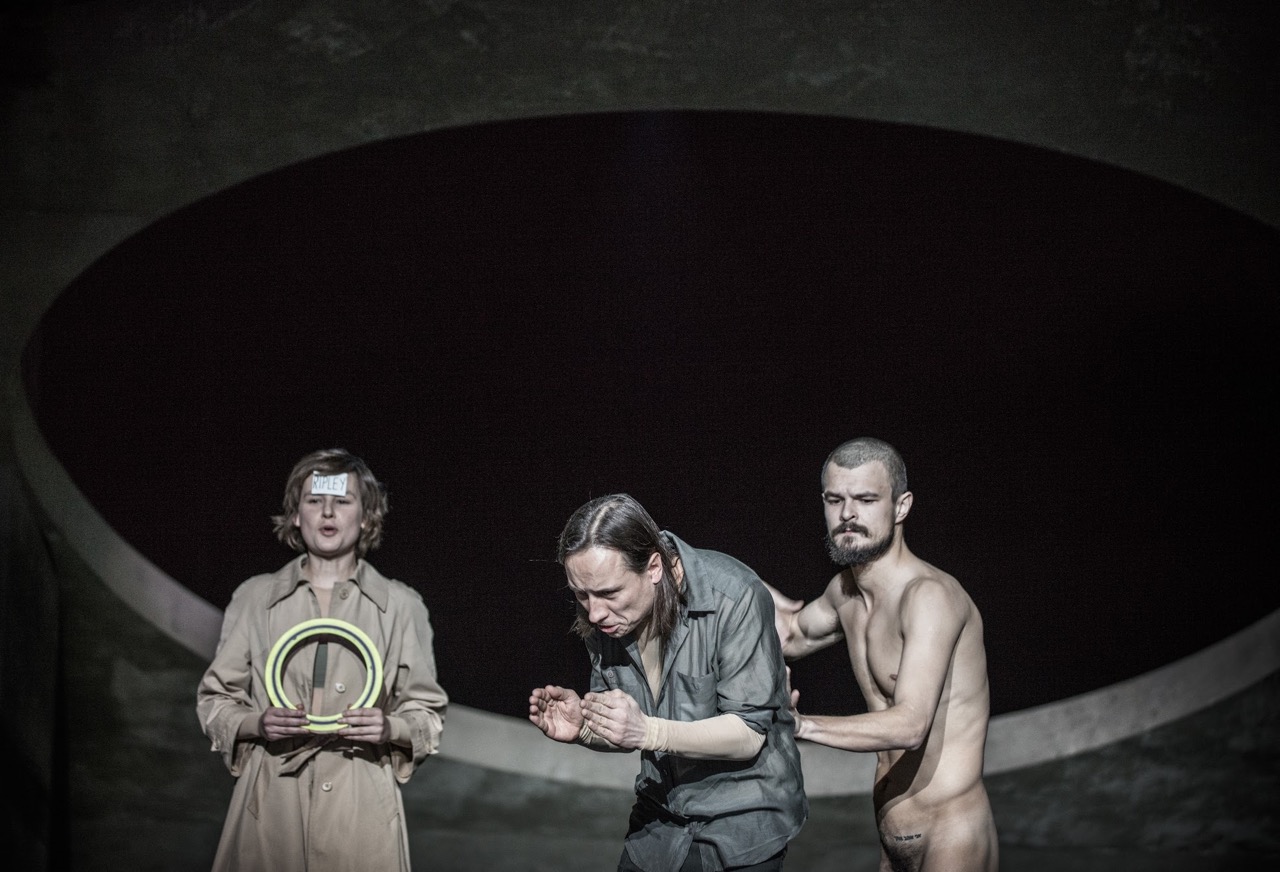
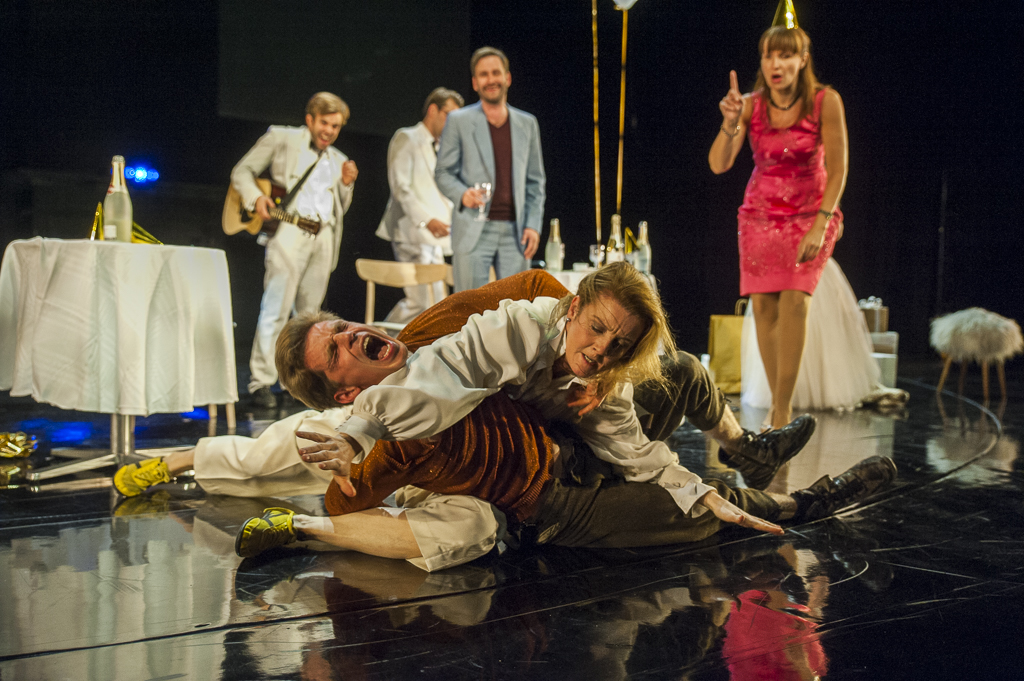
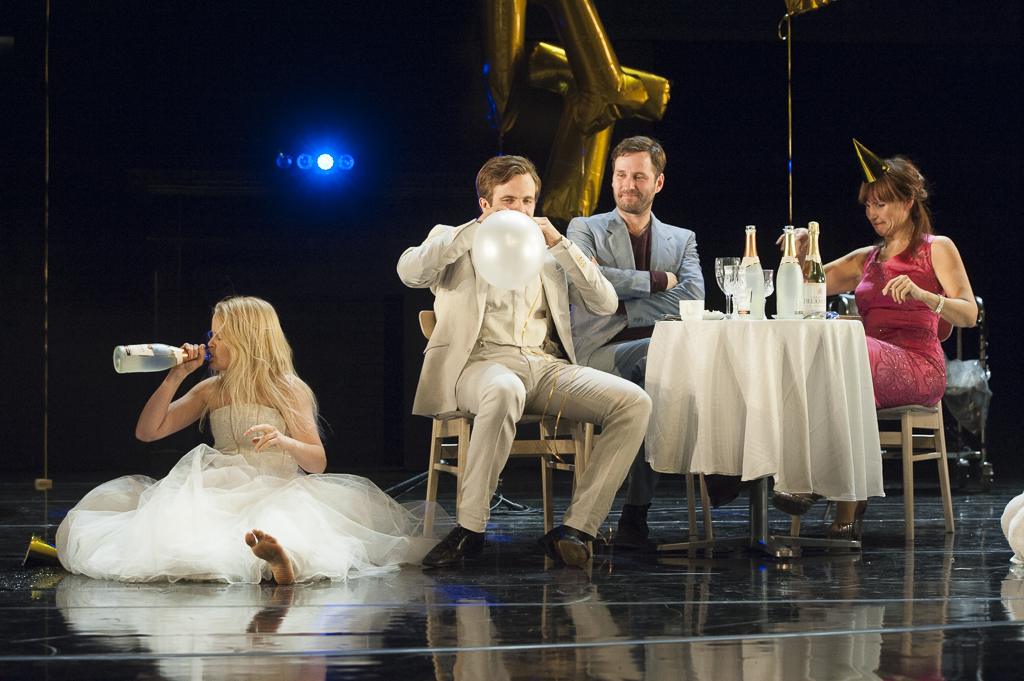
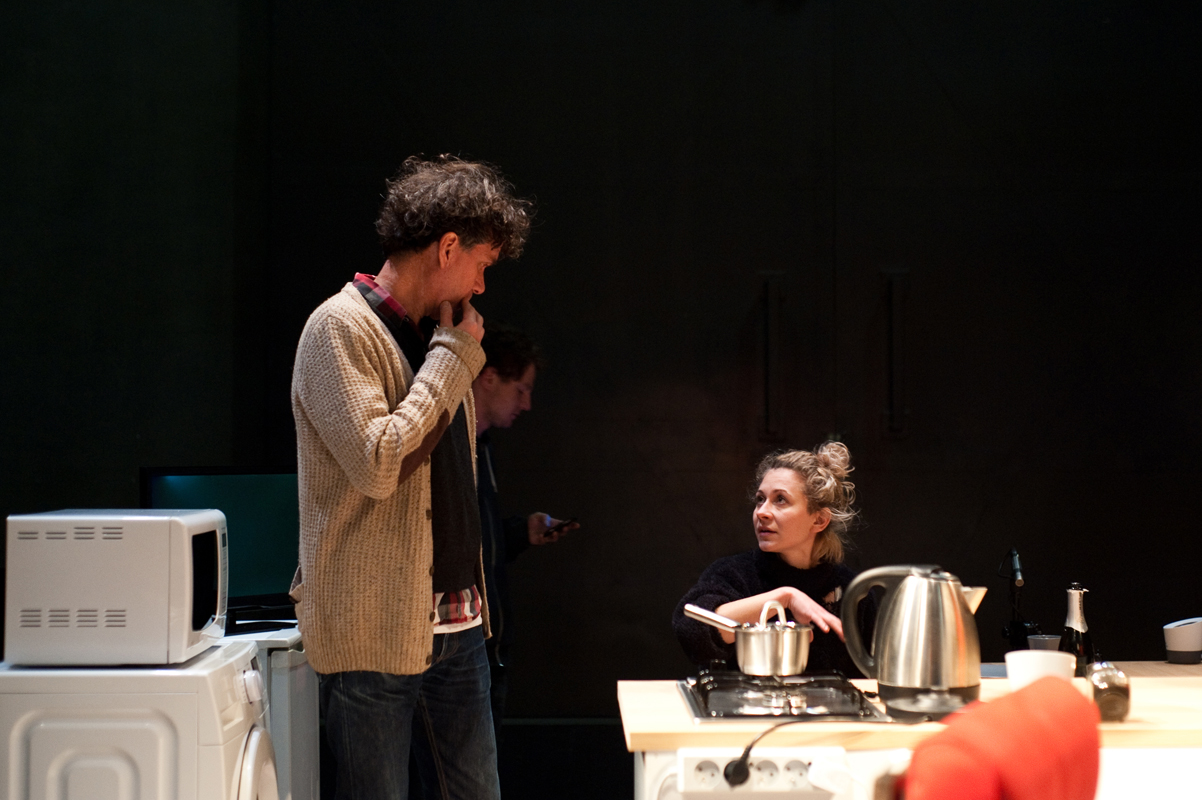
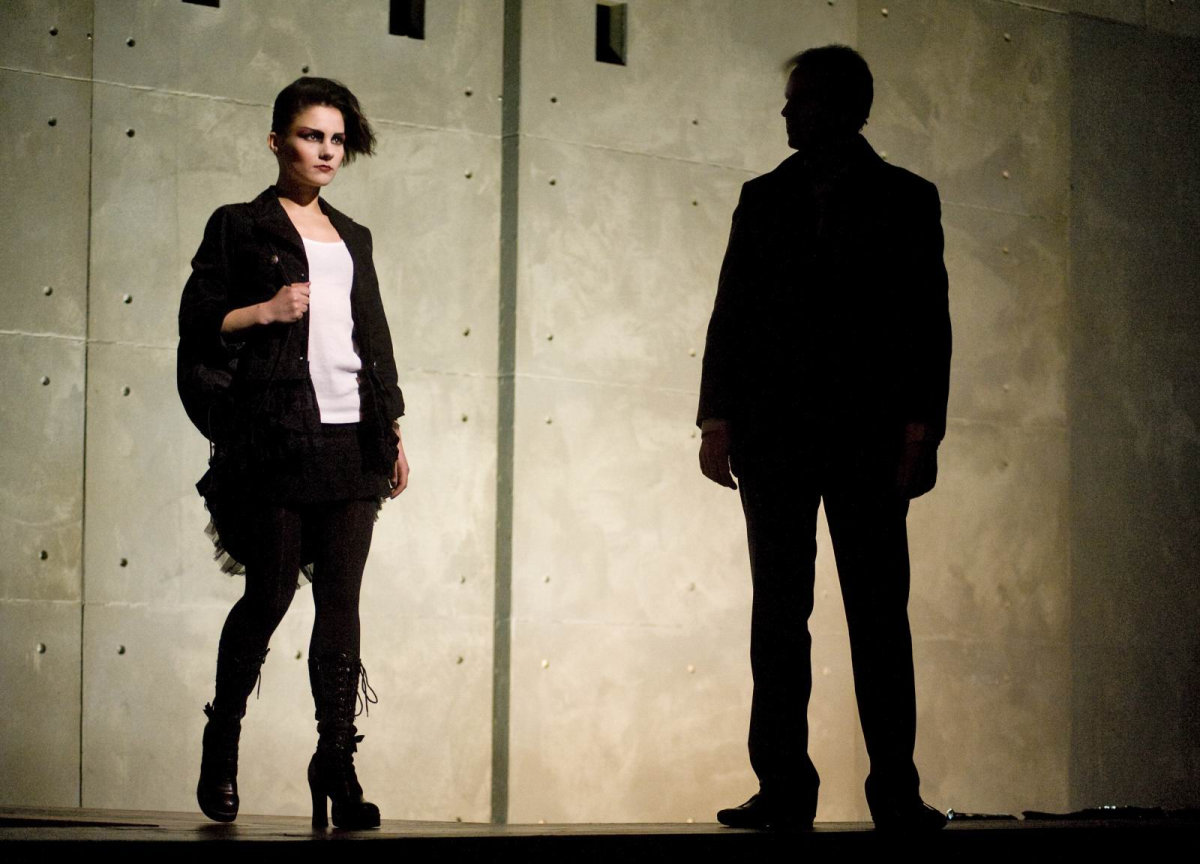
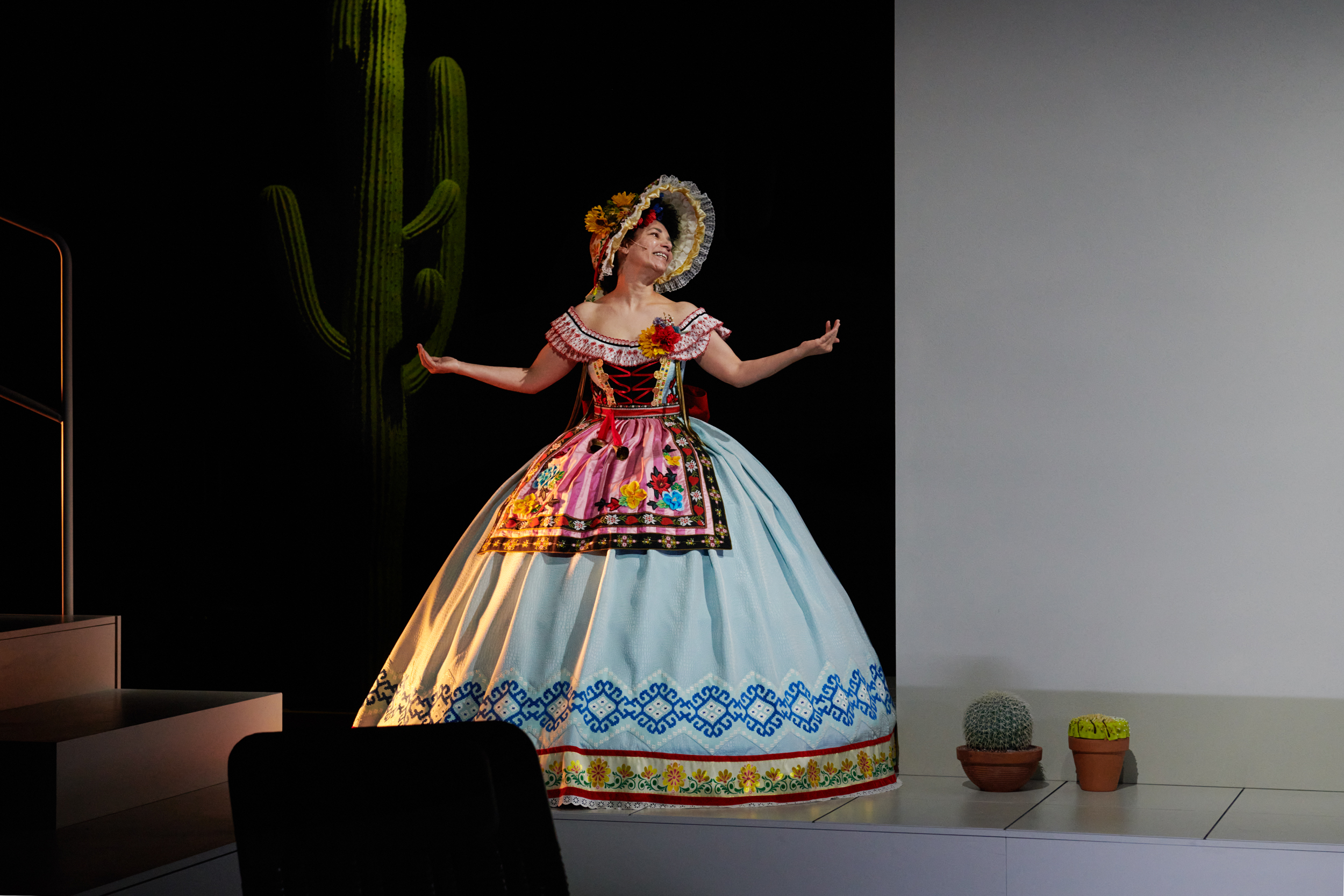
So now, on the 20th anniversary of 9/11 – she witnessed the attack up close – the fearless Yana Ross dared to bring the “nasty” – today they are called toxic – men on stage. Men who give information in fictional interviews about their sexual experiences, about their helplessness towards women, which turns into violence, men who swarm so as not to have to admit to themselves how lonely they are. Ross’ costume designer Zane Philstrom has the men in pastel colored cowboy costumes – pink and light turquoise! – Tucked in huge hats and pointed boots: they are the most ridiculous parodies of Western myth that one can imagine. And when they slip into coarse-checked shirts, Swiss manhood peeps out of them at the same time. Fits to,

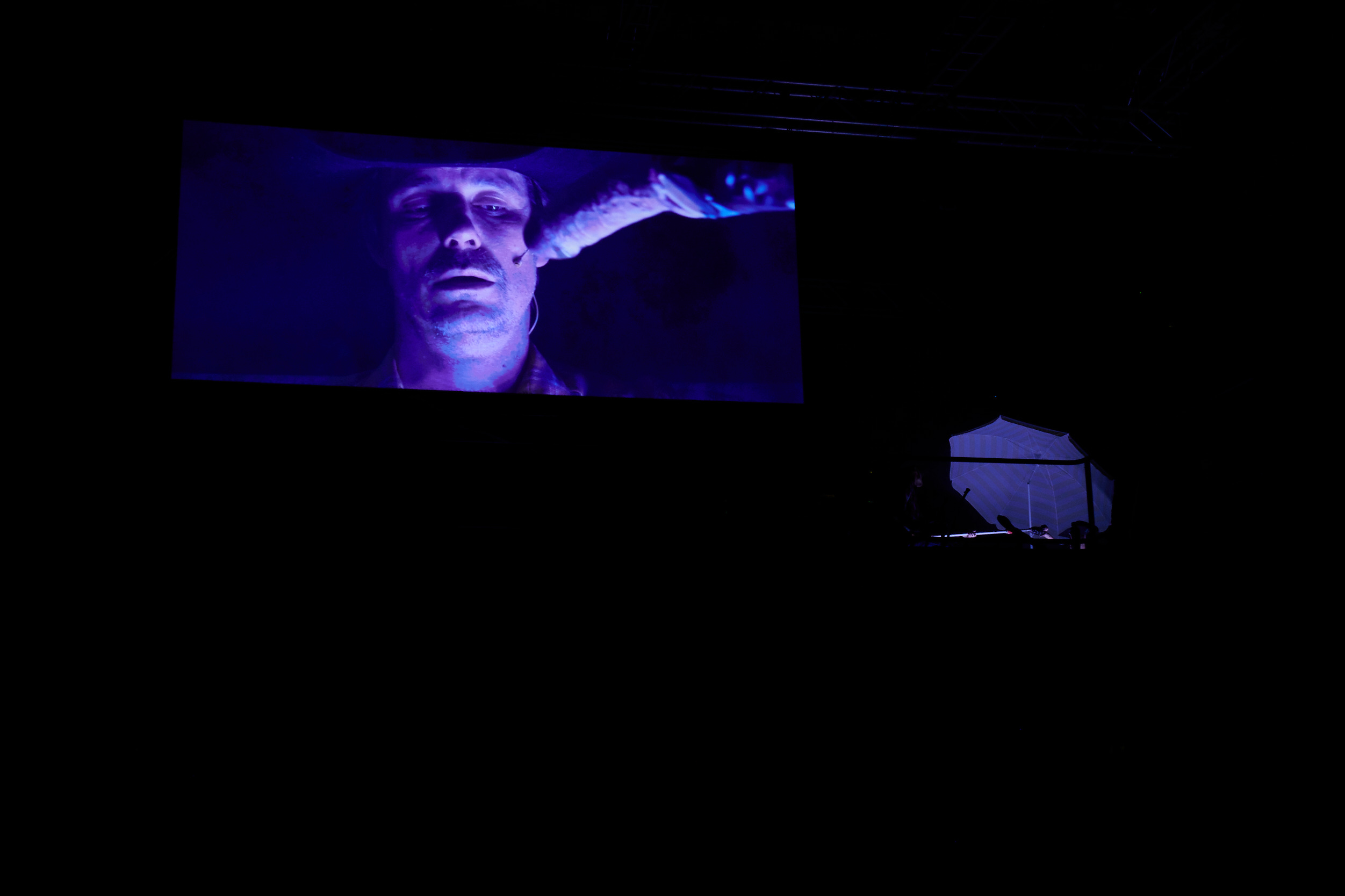
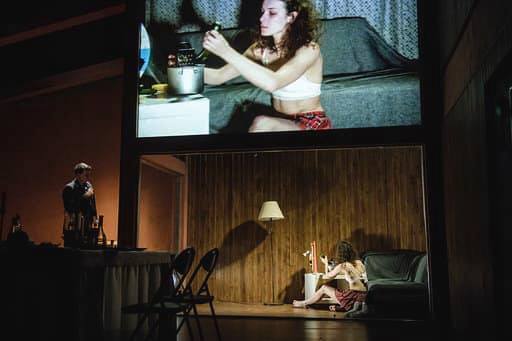
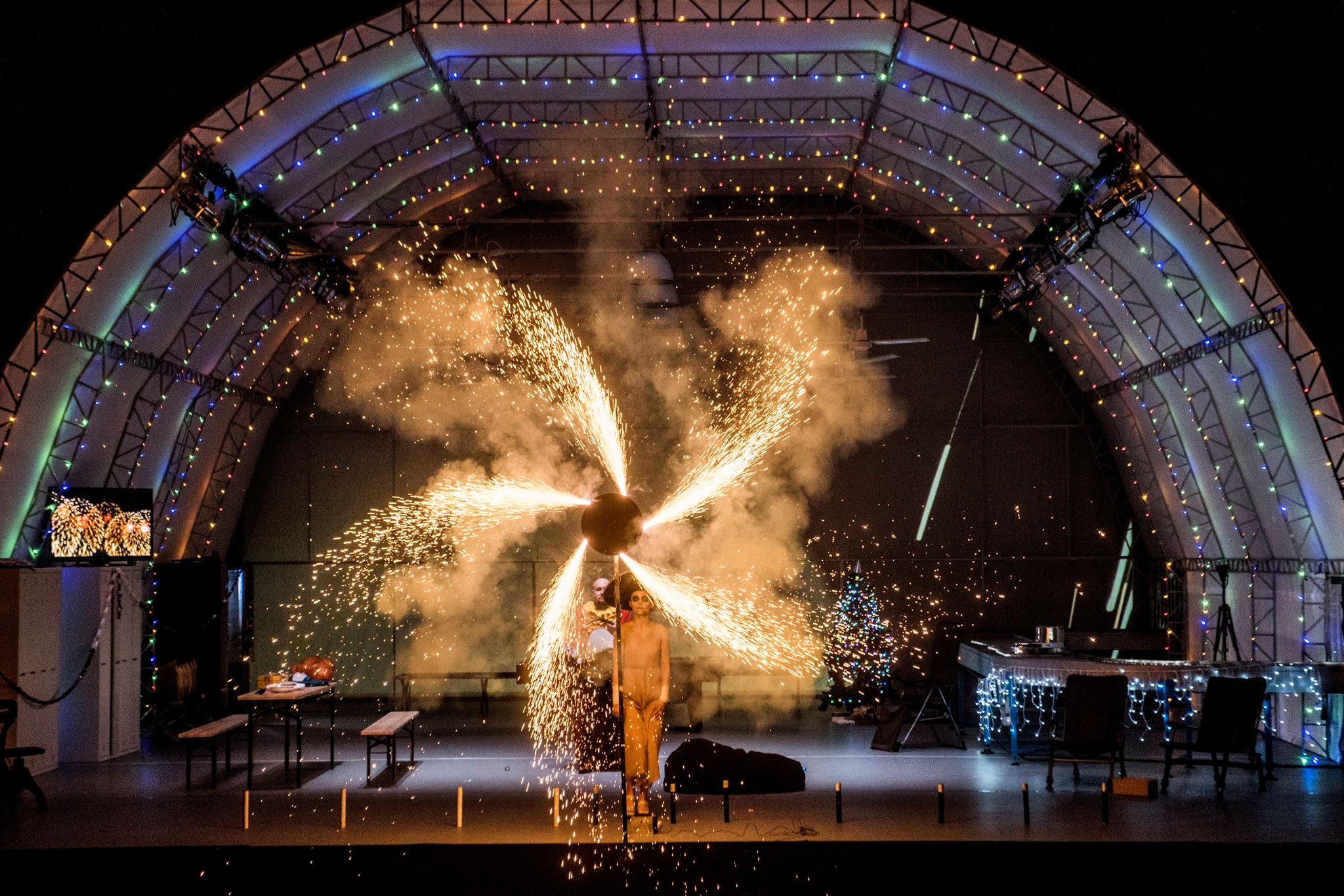
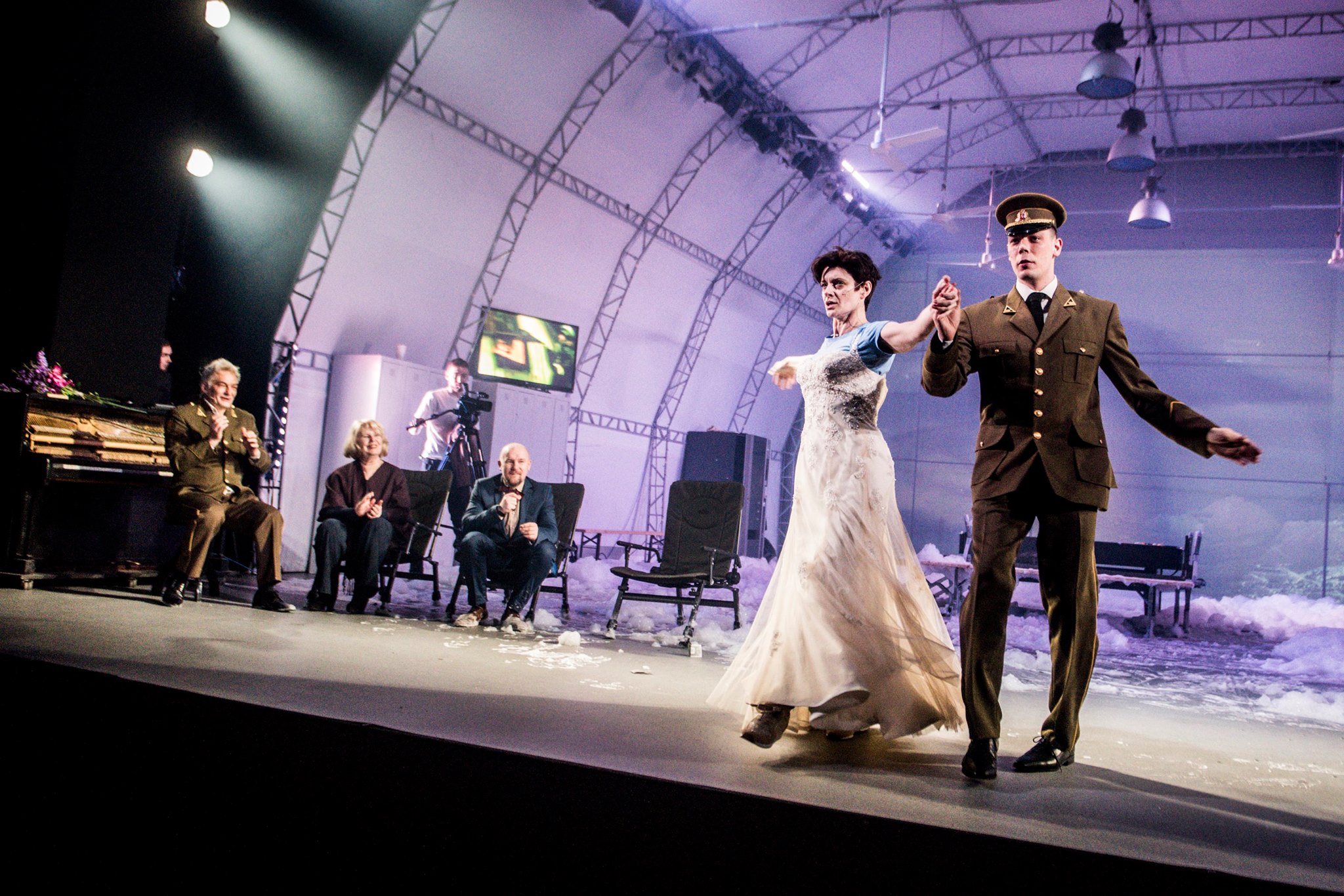
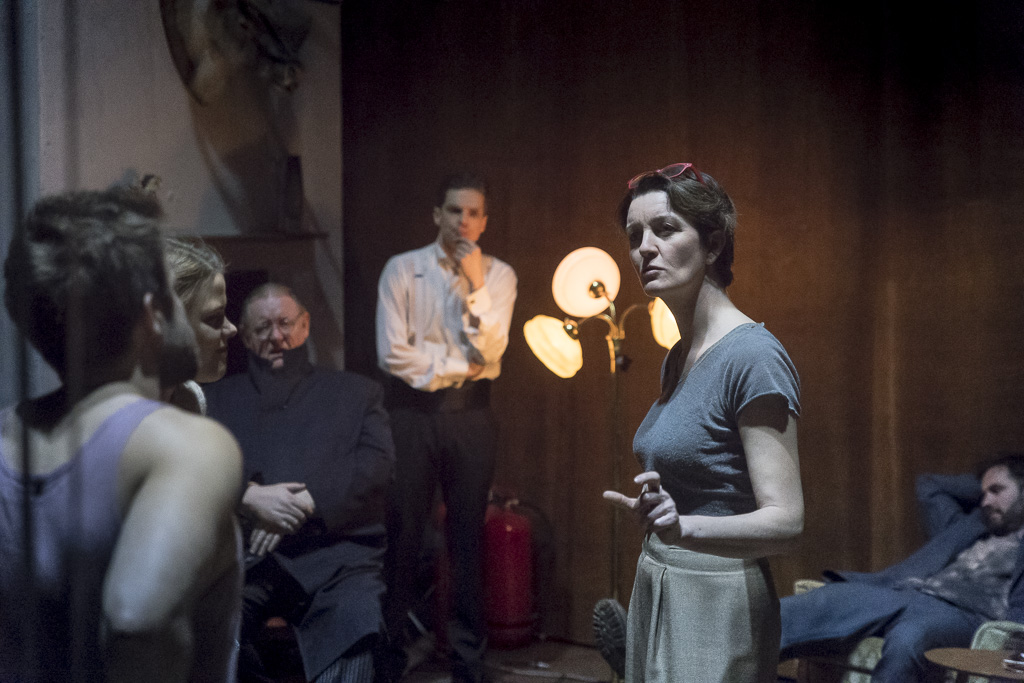
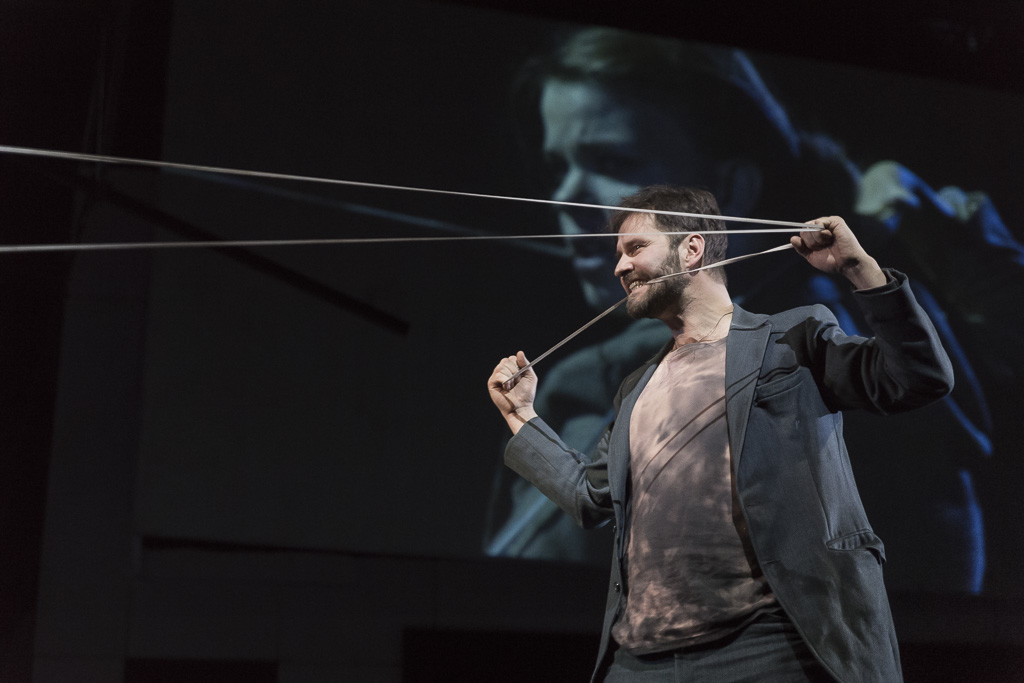
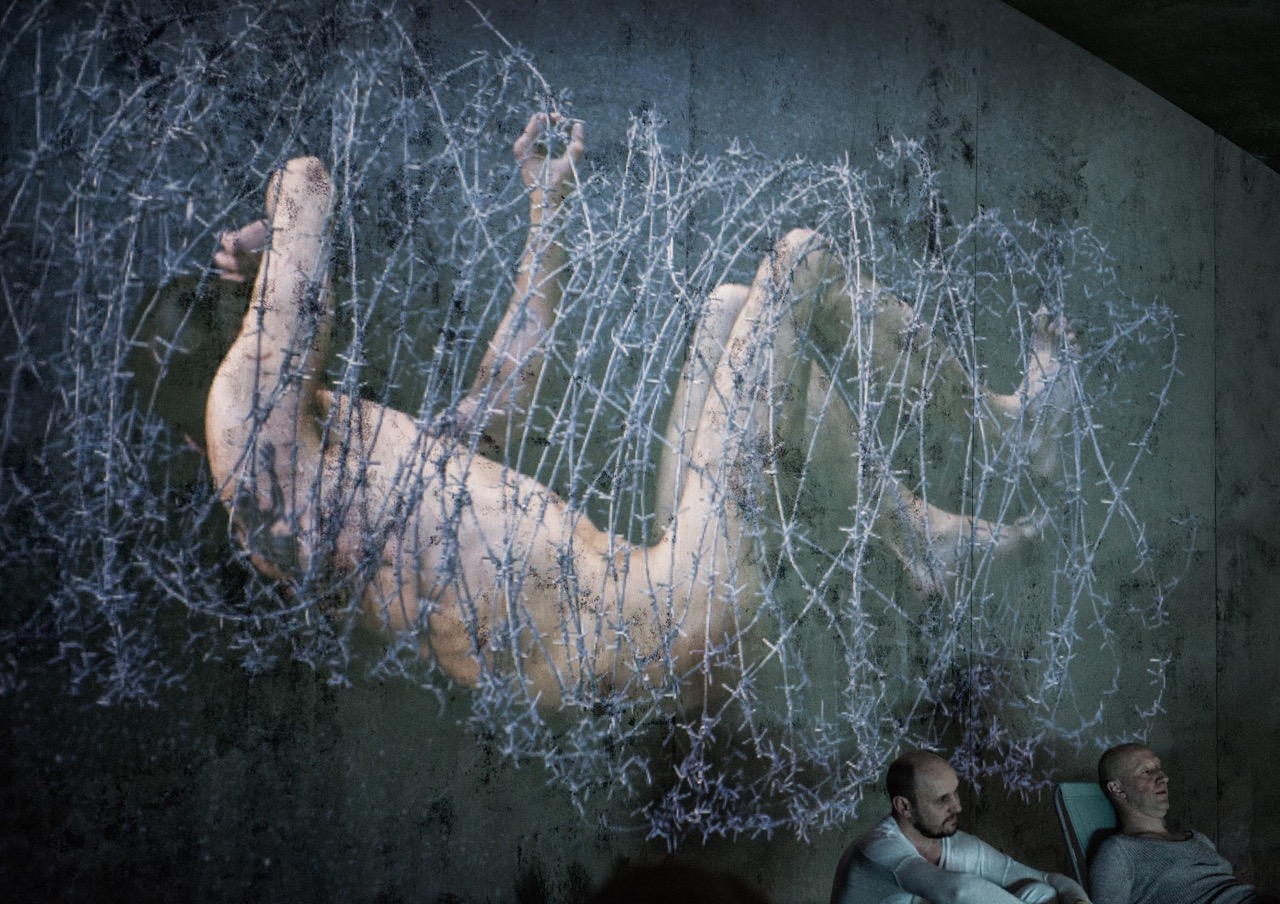
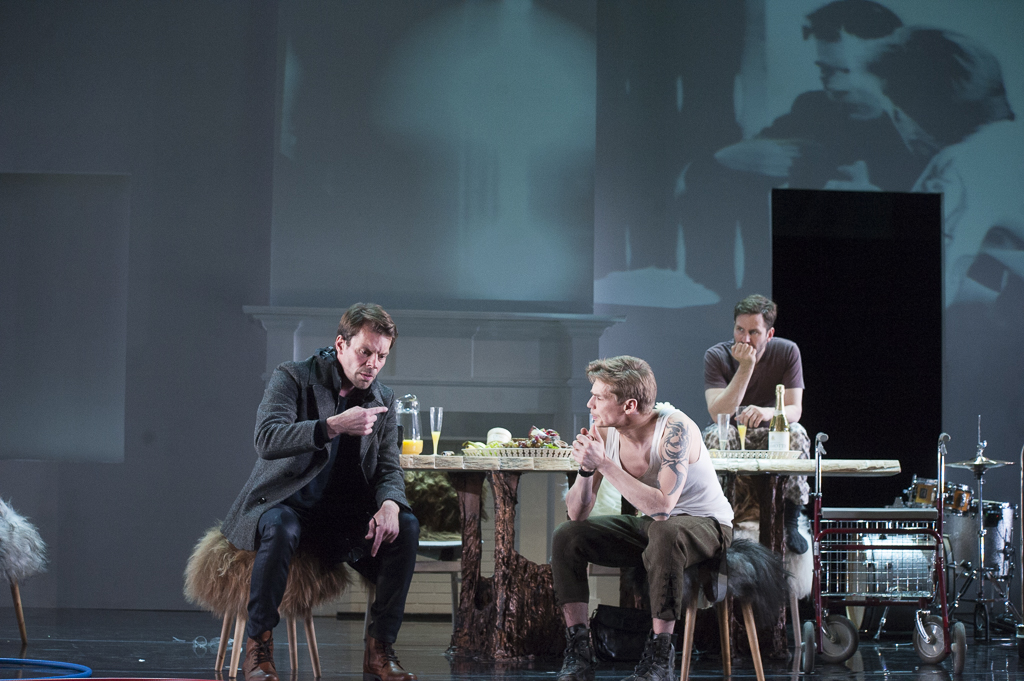
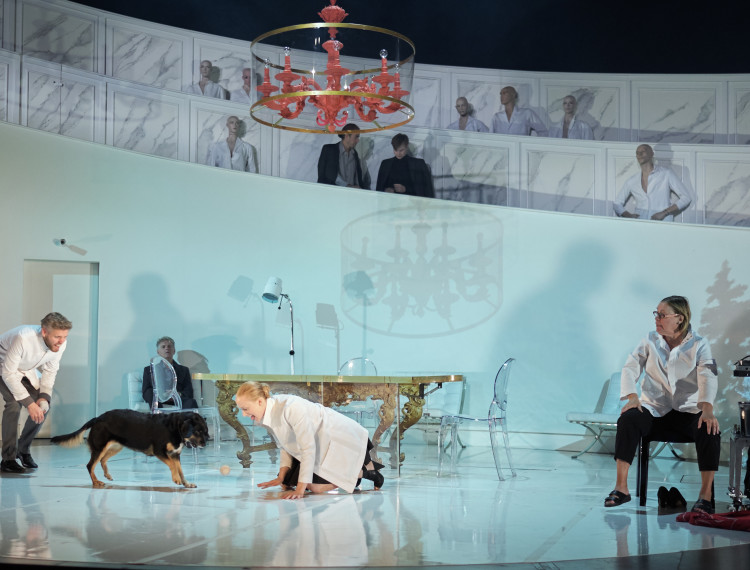
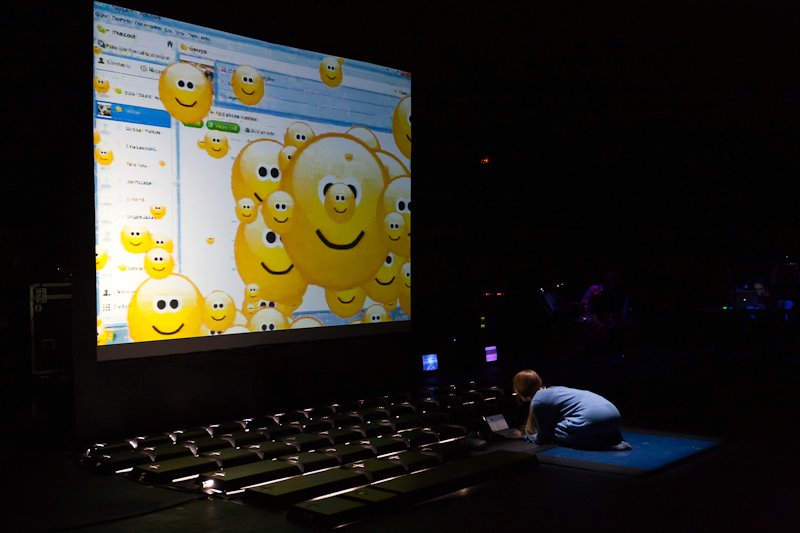
Foster Wallace’s texts are heterogeneous, chattered, crystal clear, astute and direct without taboos. You burst with wit and suddenly plunge into the abyss of unrealistic knowledge. They are not considerate. Yana Ross makes them speak, which works without any problems because they are designed to be dialogical. The glazed white bungalow with a roof play area and a rising semicircular spectator stand, which Karolien De Schepper and Christophe Engels have placed in the middle of the shipbuilding, holds the “short interviews” together: the episodes play sometimes above, sometimes below, sometimes the webcam follows them In a closed room, sometimes you can see what is going on in the glazed booth in which the porn people do their job.

Katie Pears occasionally mingles with the fabulous ensemble of four (Ilknur Bahadir, Urs Peter Halter, Michael Neuenschwander, Lena Schwarz) and gives tips for improved sexual practice – the perfect coitus, the perfect kiss – but the two groups of actors don’t really grow together . This is best shown towards the end, when Katie Pears strips down in front of two uptight Swiss people.

You never know whether to laugh or be concerned

Scandal? Nope. Rather, there is a certain perplexity. Sure: In pornography, body and feeling are decoupled, sex is traded as a commodity. And of course: The men at David Foster Wallace are unable to relate and treat women as objects – also out of ignorance of what women want. There is a great terrible silence between the sexes in these texts, which is only delivered with psychoanalytic discourses – as in the wonderful scene in which three men are extremely elaborate about feminism, while Lena Schwarz writhes in erotic flushes.

In the course of the two non-stop entertaining hours, you never know whether you should laugh or be concerned, whether it is a grotesque or a tragedy. The seriousness of the situation of toxic masculinity comes to a head towards the end – in that scene in which the Holocaust is short-circuited with gang rape. Neuenschwander dances and bobs with his cowboy boots, probably to take the weight off the sentences. The core method of fascist rule is being negotiated: taking people away from being human, making them an object with which one can do anything, including torturing and killing them.

David Foster Wallace refers to the experiences of the psychiatrist Viktor Frankl in the concentration camp. How can a person manage to evade becoming material? And can there be any benefit for his personality from this? Who knows hell can grow from it? Can this apply to a woman who is a victim of mass rape? At that point one feels quite uncomfortable. This feeling persists when Neuenschwander finally appears as a helpless, diapered old man: here as a bundle of misery, as something reduced to the excretions. Is that what remains of the human being? So Yana Ross’ playful staging ends in absolute blues. Perhaps it can best be understood as an offer for discussion; In three accompanying events, the Schauspielhaus Zürich offers the opportunity to reflect on toxic masculinity, empathy with the victims of sexual violence, the design of other role models and non-violent communication. But art cannot be reduced to socio-political discourses.”

Bettina Schulte


“Sex sells. Even in the theater. And now in Zwinglian Zurich. In shipbuilding, which is used as a second theater by the Zurich Schauspielhaus. The productions here often have an experimental character, while the main building “Pfauen” offers more classic, less provocative theater.

But who else does sex provoke? Yana Ross, director of the short story collection “Short interviews with nasty men. 22 Kinds of Solitude ”according to David Foster Wallace, sends professional porn stars onto the stage. Katie Pears and Conny Dachs then do what they usually do in front of the camera: sex. Live sex. In Zurich for 25 seconds according to the script. Or short. An average quickie, that is, spontaneous, quick sex, lasts three long minutes. This is what it says in the sex column of a respected Süddeutsche Zeitung.

In-house director Ross felt she had to open the play with the physicality of a sexual act in order to prepare the audience for whatever comes after. How concerned. “The performance contains content for adults and is only permitted for viewers aged 18 and over,” says the theater. No photos may be taken during the performance. And if you are fed up with the action after 25 seconds, you can leave the hall.

To ensure that everything really goes right – during sex in the glass cage, Dachs stands visibly, but joyless his husband – the theater had hired an “intimacy coach”. In this function, Karin Sbestow accompanied the production, which is a novelty within the Swiss theater landscape. Yes, the German-speaking theater is changing: questions about power and abuse of power reach the public beyond the borders of theTheater bubble out.

But what comes after the supposed-

a quickie? Verbal eroticism. And nothing that you haven’t seen or heard on ARD or ZDF after 10 p.m. “This is how you lick a pussy,” explains Katie, wearing a cowboy look and holding a peach, smiling at the audience. In another scene she lectures on the best practice in anal sex, wishes “have fun trying it out”, in a third she strips. Well, she tries.

Verbal violence that has been warned about? It can get worse. When one of the guys (Michael Neuenschwander) prances to monologue about the consequences of mass rape; if in the act of violence with Viktor Frankl, who survived the Holocaust, he finds beginnings that such an experience could have an interesting downside, namely an existential experience of the most extreme kind; if he intensifies this thinking in the sentence: “What does not kill you makes you stronger”, then it becomes in the shipbuilding style. The hard-breathing dancer knows what it’s all about, power. And reasoned: “If you manage to see someone else merely as an object, then you can do anything with them, all barriers are lifted.” Eichmann would have agreed.

Later a woman (Lena Schwarz) quotes from a court judgment,

which caused protests in Switzerland. A sexual offender was certified as having “medium fault” because the victim had sent the wrong signals. The victim is not even in therapy. Switzerland is (almost) everywhere.

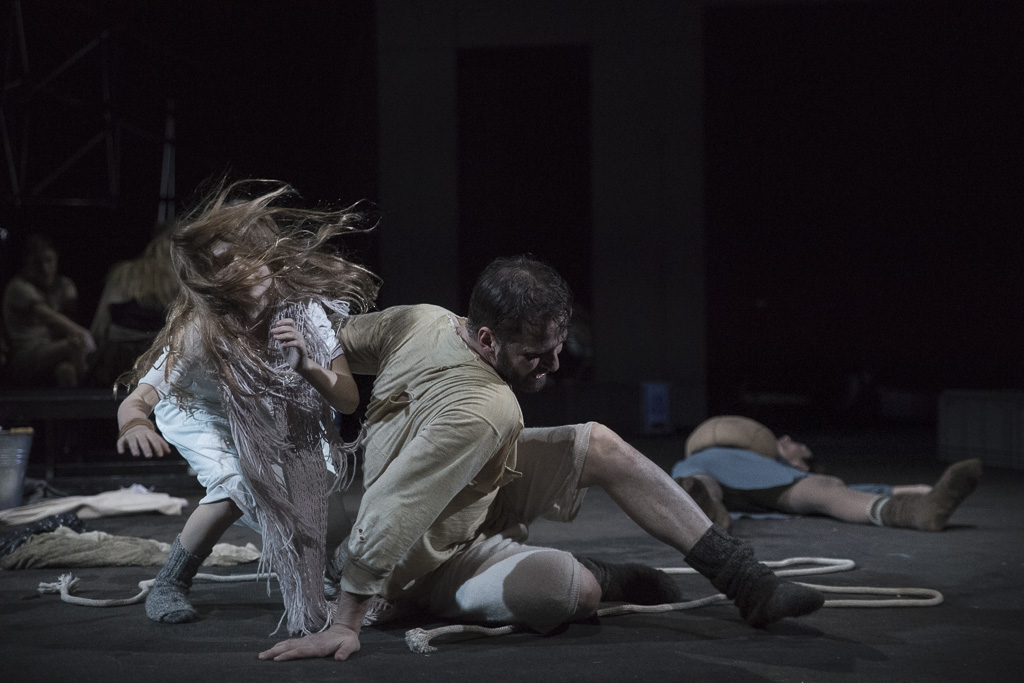
The verdict is not in the Wallace interviews, but it fits into this collage. Ross uses the collection as a quarry, takes what she needs. Gentler stories also come into play. A woman (Ilknur Bahadir) talks about her father, who worked as a toilet man in a luxury hotel, then there is laconic talk of the moaning of prostate symptoms, poetic of hissing washbasins. Elsewhere, however, from the sexual abuse of the child by grandpa. Grotesque is the “pool boy” who reports about fear of failure in bed and at the climax obsessively exclaims “Victory for the forces of direct democracy”. Finally, the “nasty man” as an old man, helplessly wrapped in diapers, with the word “bitch” in his mouth, is questionable. Embarrassing, disgusting.

While Wallace develops actions in his novels, in his protocols of underhanded egos actions essentially take place as speech acts. That poses problems for the director. Ross delivers action-packed images that are accompanied by music, but they sometimes seem forced. This includes the wild west scenery including bison as a sex object. A bungalow with a pool (stage Karolien De Schepper / Christophe Engels) is less suitable. In contrast to the original, Ross grants women and miscellaneous people an appearance, which lets the image of the “nasty”, “lonely” man and his toxic relationship with the opposite sex appear in a (still) different light. The evening – a game with an open end and great actors (Urs Peter Halter is still mentioned). Nobody took photos or disrupted the performance; only one elderly lady left the performance prematurely. Much applause at the end.”

Sudkurier


“In «Short interviews with nasty men – 22 types of loneliness» by David Foster Wallace, the toxic sexuality of men is discussed. In his book, the American author Wallace let men tell in relentless clarity about their mostly toxic relationships with women, about sex fantasies and obsession with power, but also about loneliness, depression and self-disgust.
In-house director Yana Ross used the material to create a theatrical montage without a linear narrative. The Schauspielhaus warns clearly against verbal violence and live sex on stage and only allows admission of adults. It is also possible to leave the performance at any time, which only a few did on the evening of the premiere.
Ross sees pornography as a “phenomenal tool to describe our social presence”. In her staging she does this with cowboys chatting about their sexual fantasies and being lost in a Bauhaus bungalow with a passage, swimming pool and terrace on the roof. There are also two real porn actors who practice the announced live sex in a glass-enclosed room. The sex tips that the porn woman teaches to the audience placed in the semicircle are amusing. Otherwise a gloomy mood dominates, traumatized characters act who tell their stories without emotion. It gets lighter when the cowboys are armed with angry masks and talk nasty stuff. We refrain from describing individual narrative threads.
The six actors, above all Michael Neuenschwander and Lena Schwarz, strive for a fun and fast-paced game, act with a lot of irony, sometimes biting, sometimes bored. Overall, a two-hour performance is offered, which offers quite a few highlights, but is mostly rather perplexing.”

Seniorweb.ch

Premiere September 11, 2021
Team
Director: Yana Ross
Stage: Karolien De Schepper and Christophe Engels
Set and Costume Designer: Zane Pihlstrom
Music: Knut Jensen
Video and Live Camera: Algirdas Gradauskas
Light:Christopher Kunz
Intimacy Coach: Kasia Szustov
Dramaturgy: Laura Paetau
Audience Development: Elsa Horstkoetter
Touring & International Relations: Sonja Hildebrandt
Production assistance: Samuel Petit
Stage Assistant: Anka Bernstetter / Karl Dietrich
Costume Assistant: Mona Eglsoer
Stage manager: Michael Durrer and Aleksandar Sascha Dinevski
Soufflage: Janos Stefan Buchwardt
Surtitle Translation: Sinikka Weber
May 182019
 
Yana Ross

Horvath gradually came to the conclusion that human beings must feel guilt for their coldness of heart, for their inability to love. Evil doesn’t prevail because evil people are too numerous or powerful, but rather because good ones become pragmatically cynical and do not resist, choosing to keep silent. Horvath translates history into genealogy by representing the bourgeois family as a site where middle-class values are disseminated and preserved and where the public and the private intersect. Thus the story effectively reveals the self-deceptive jargon of ideology within the institution of the bourgeois family. 

Tales from Vienna Woods reviews 2019

Tales from Vienna Woods is Ödön von Holváth’s scathing depiction of Vienna’s Kleinbürgertum, the petite bourgeoisie that played their own crucial role in the ‘demise of the Weimar Republic and the subsequent rise of National Socialism’ in the interwar period. Yana Ross recently adapted this text for the State Youth Theatre in Vilnius to a contemporary Lithuanian context, provocatively turning the deprivation and humiliations following the loss of the First World War into the ‘victorious’ period following Lithuania’s regained independence in 1991. The binaries of winning and losing that frame the source text are tested to their limits in these cultural conditions. While Horváth’s Austrian characters argue that they surely would have won WWI if only the conflict had lasted two more weeks, in Ross’ adaptation Robertas (the Captain) complains that he would have been given an honourable discharge from the Soviet military if only independence had been delayed. At the same time, the widow Valerija (Valerie) exclaims that it was independence that made her rich. Thus, from the outset, Ross exposes the broad (and often ambiguous) spectrum of social consequences of Independence, for both its seeming victors and its obvious losers.  

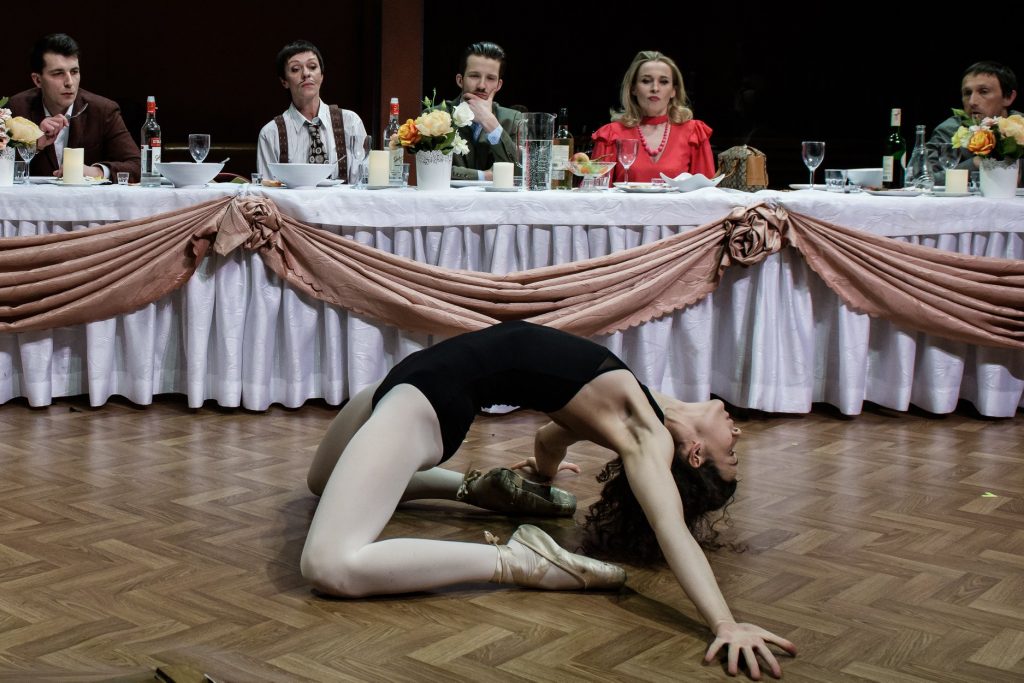
The eponymous ‘Vienna Woods’ is transformed into a former gymnasium that can now be rented for parties, funerals or weddings. The set is a downtrodden interior of functional Soviet-era architecture, which draws attention to the pomposity of the former system and the austerity and dispossessions of the current one. The pink paint on the walls has been hurriedly and inaccurately applied to slouching walls and the parquet floor bubbles from flooding that signals broken pipes and poor heating systems. The opening scene revolves around a funeral, which is repeatedly interrupted by the entrance of new characters who are either unsure how to participate – ‘Lovely funeral!’ one mumbles – or are overly concerned with their own problems – ‘Where are my socks?’ another grumbles. (When a member of the audience’s phone rang in the middle of this scene on the night I attended the performance the disruption added to the dark humor of the play – rather than drawing attention away from the stage world we felt even more perversely implicated in it.) The grim but humorous ritual is punctuated by the tinny sounds of an electric keyboard that also resists participating in the gravity of the ceremony by blurting out its prerecorded cheerful, high-pitched tunes to the pianist’s great chagrin. This world is a patchwork that barely holds together. One tries but never quite gets it right. Life in this place accumulates as a series of exhausting, comical and humiliating rituals (parties, funerals and weddings). And it is clear that there is nowhere else for these people to go. Even when characters exit the stage you sense them hovering in the wings, lost, directionless. 

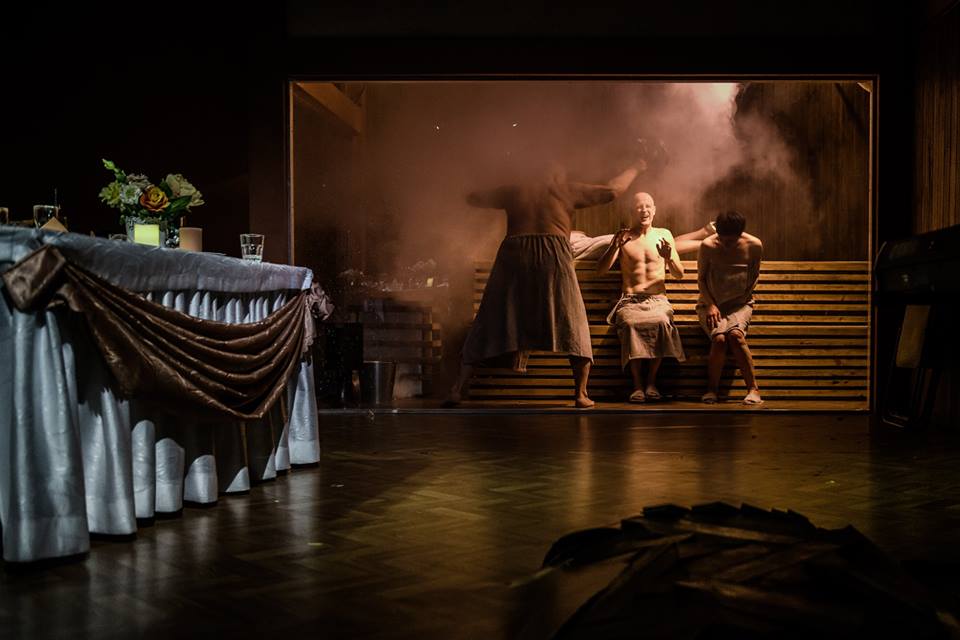
What Ross shares with Horváth is the primary scene of conflict: Marytė’s (Marianne) rejection of the man her father has chosen for her, the financially stable butcher Oskaras (Oskar), in favour of a pecuniary figure of her romantic interest Alfredas (Alfred). Ross stages the initial wedding between Marytė and Oskaras as the background to her seduction of Alfred, thus creating the necessary tension in a contemporary relationship while, at the same time, offering a disturbing take on beloved Lithuanian customs. After announcing that ‘our nation is famous for cutting life short,’ one wedding guest suggests that her fellow celebrants indulge in ‘hanging the matchmaker’. Tradition requires the matchmaker (usually a male in Lithuania) to be sentenced to death because he has lied to the bridegroom about the bride’s dowry. The bride is supposed to rescue the matchmaker before the execution, and the guests are invited to hang his effigy instead. This apparently benign ‘game’ turns unexpectedly violent, and the matchmaker is left stripped and unconscious beneath a table laden with nuptial meats. While the guests then participate with lascivious ferocity in another beloved ritual, the sauna, Marytė defies her father, her fiancé and her society and chooses to pursue her own object of desire, the youthful and intensely sexy Alfredas, which causes total havoc and mass anxiety in her community.  

The world conspires to bring Marytė back into the frame of male domination. After giving birth to their son, Marytė is convinced to leave the child with Alfredas’ mother outside of the city, in a village where the air is cleaner. The mother, horrified by her son’s inappropriate match, quickly takes the opportunity to convince Alfredas to leave Marytė to pursue his own interests and a more prosperous future as an economic migrant in Norway. Horváth carefully crafted the dangerous eruptions of nationalist fervor in a scene that begins in a pub and drunkenly ends in a cabaret, where Marianne works as an erotic performer after Alfred abandons her. In this adaptation, Marytė take up online pornography as a means of supporting herself and her child. Ross’ brilliant turn here is to expose the internet as a space of capitalistic voyeurism and inverted shame (which invites some critical re-readings of the cabaret form). The patriarchal violence that produces the status quo in Horváth’s text is imaginatively applied to the digital sphere, which demonstrates how the reach of patriarchy today extends far beyond one’s geographical borders. In the back of the stage, there is a room sealed off by a pane of glass, a voyeuristic world in which we first encounter the semi-naked bodies of the wedding guests in the steamy sauna, and where later Marytė is forced to play with multiple phallic vegetables (organic dildos) in front of a live camera. The man watching her turns out to be the old military captain, who invites Marytė’s own father to become a fellow spectator of her streamed performance. Like the inevitable chain of a chemical experiment, this produces a string of reactions whose violence is multiplied with each new event that begins with the father’s enraged attack on the captain and ends in Alfredas’ mother leaving Marytė’s son by a window so that he catches pneumonia and dies. In a small but heartbreaking move, the bubble in the parquet floor becomes the child’s grave. The funeral and the lack of any alternatives leaves Marytė with the only choice she has left, to marry Oskaras, the man her father had chosen for her. 

If Horváth deploys schmaltzy and nostalgic music such as Johann Strauss’ waltz that appears in the play’s title and calls to mind the cream-cake version of Austria, Ross turns to Swan Lake, Tchaikovsky’s intensely loved ballet that revolves around a story of sublime love and moral vindication. The crushing difference between the German/Russian fairytale and Marytė’s reality offers a brutal glimpse into the structures of Lithuania’s social economies that also calls into question forms of national belonging. It should be no surprise that Horváth, who was himself multilingual and multinational in the old Hapsburg sense, should be so critical of national claims to ethnic integrity and cultural singularity. In the source text, Erich stands for the new Prussian influence that dwells within the heart of the Nazi movement. Ross turns him into Erikas, a lean, blond man who fetishises the purity of the Lithuanian nation when he reveals an enormous tattoo on his back that he calls a ‘Hippocentaur’, a centaur with a snake in place of a tail. This ridiculous creature, which features on both Lithuanian and Polish coats of arms (though Erikas claims it as ‘pure’ Lithuanian), proves that ‘our strength is in the glory of our past’. Audronis Liuga, artistic director of the Youth Theatre, suggested that the production asks spectators to consider how they reflect on the past in their everyday lives. Valerija sums up the whole of Lithuanian history in two sentences: ‘One thousand years ago we slaughtered Bruno of Querfurt. And from then on, everyone is slaughtering us.’ History is thus a source of pride and anxiety, and the persistent return to history in conversations throughout the play reveals how the very emblems of nationalism are simultaneously sources of nationalist defensiveness. One of Ross’ most controversial (and brave) choices was to question the role of Lithuanian partisans, who waged a guerilla war against the Soviets between 1944-53. These are heroic figures – whose deaths are still problematically characterized as a form of genocide in Vilnius’ Museum of Occupations and Freedom Fights – that form the pinnacle of Lithuanian patriotism. When one woman recalls the sexual violence perpetrated by the partisans she is quickly silenced and told that she is selfish and ungrateful for their sacrifice.    

In the final scene, the community stands together to have their portrait taken by a photographer. Defeated and punished for her disobedience, Marytė takes her spot beside Oskaras in the line-up. The theatre plunges into darkness. When we see the flash, the camera is facing us, the audience. We too are frozen in our own historical moment, which is once again magnified by the threat of fascism in Europe. What is most unsettling about this play is our knowledge that this ‘tale’ precipitated the Second World War. Horváth was virtually forgotten in the postwar era and was only resurrected in the late 1970s, and though he is now considered one of the foremost German-language playwrights of the twentieth century (Peter Handke claimed that he deserves more recognition than his contemporary Bertolt Brecht) his work remains difficult to classify as a specific movement or genre. Perhaps this is what makes his texts such rich ground for experimentation for our most talented and boundary-shifting directors, such as Yana Ross. This production can be seen within a broader trajectory of performances that have interrogated Lithuania’s difficult pasts over the past few years at the Lithuanian National Drama Theatre, where Liuga was formerly artistic director. These include Ross’ staging of Tadeusz Słobodizanek’s Our Class and Krystian Lupa’s production of Thomas Bernhard’s Heldenplatz, which both reveal the stakes and legacies of fascism. Whenever Tales from Vienna Woods is staged – a rare event in Lithuania – the play signals a cautionary warning. By looking back to the past for stability and clinging to the status quo ante, what horrifying aspects of history might we also be reanimating?

Bryce Lease, The Theater Times


Premiere February 14, 2019

Team
Adaptation: Mindaugas Nastaravičius and Yana Ross
Set design: Justyna Elminowska (Poland)
Costume design: Juozas Valenta and Flore Vauvillé (France)
Sound design: Gintaras Sodeika
Live film director: Algirdas Gradauskas
Light designer: Vilius Vilutis
Assistants: Saulė Norkutė, Goda Januškevičiūtė, Uršulė Bartoševičiūtė
 
 
Cast:


Matas Dirginčius, Sergejus Ivanovas, Irmantas Jankaitis, Aleksas Kazanavičius, Janina Matekonytė, Dalia Morozovaitė, Vidas Petkevičius, Aušra Pukelytė, Simonas Storpirštis, Dovilė Šilkaitytė, Paulina Taujanskaitė
May 182019
 

Wild Duck reviews 2018


I don’t want to give away the deeply shocking and disturbing finale, but it must be said that director takes a radical step turing sacrificial ending into merciless revenge fantasy. Ross is staying true to Ibsen’s irony, she sets the tongue-in-chic ending to gorgeous operatic aria, “a prayer for peace” from Bellini’s opera Norma. It has been debated endlessly who has the right to twist the original writer’s intentions, but with the birth of director’s theater over a 100 years ago, those questions are still rise up once in a while, and artistic freedom sometimes raises too many eyebrows. But to me it is valid if the adaptation opens ups new important inights.


The live-video feed of the gorry and extra bloody finally is bringing associations of American shooting dramas and our very own Breivik tragedy. I think one of the messages director is sending to us is that the cause and effect of bad parenting can be truely horrifying: there are many injured villains and many neglected children around the world – here you see why they take revenge on their own.

The second, bold approach is that the director has chosen a person with Down’s syndrome to play Hedvig, who in Ibsen’s version is becoming blind. Does this function? The answer is: yes, absolutely brilliantly. Some years ago, Marte Wexelsen Goksøyr did an excellent performance in the play I answered a dream. Now Anne So e Kvalvik succeeds in interpreting 14-year-old Hedvig. In a conversation with Gregers – which we now understand is Hedvig’s half-brother – Kvalvik manages to mediate the grief that his father is not fond of her anymore because she is not his daughter. It’s a heartbreaking scene.

Much in Ross’s performance follows Ibsen faithfully. It starts as festive dinner party welcoming home a progidous son, pickled herring and dessert wine, but ends in a rage that can remind of the Danish clasic Festen. Gregers himself is an injured child who thinks his father Håkon is digusting- “you with your whores” – you drove my mother to suicide.” It’s hard for him to accept and forgive his father’s new found happiness with Berta.

Ross also lives up to the mix of tragedy and comedy Ibsen put in, and the actors do a brilliant job. The scene where old Werle and his new bride will take wedding photos in Ekdal’s photo studio, is precious and wide-ranging with irony against the happiness of the new marriage.

Then Ross builds up to the errifying reinterpretation – that it is not Hedvig, but the adults around her who are punished with death for their neglect and sins. Animal faces are projected on the side walls – owls, tiger, rabbits and bears- which then morphs into the faces of the actors on stage. In this way we get an unpleasant reminder of the wild animal inside a civilized man.

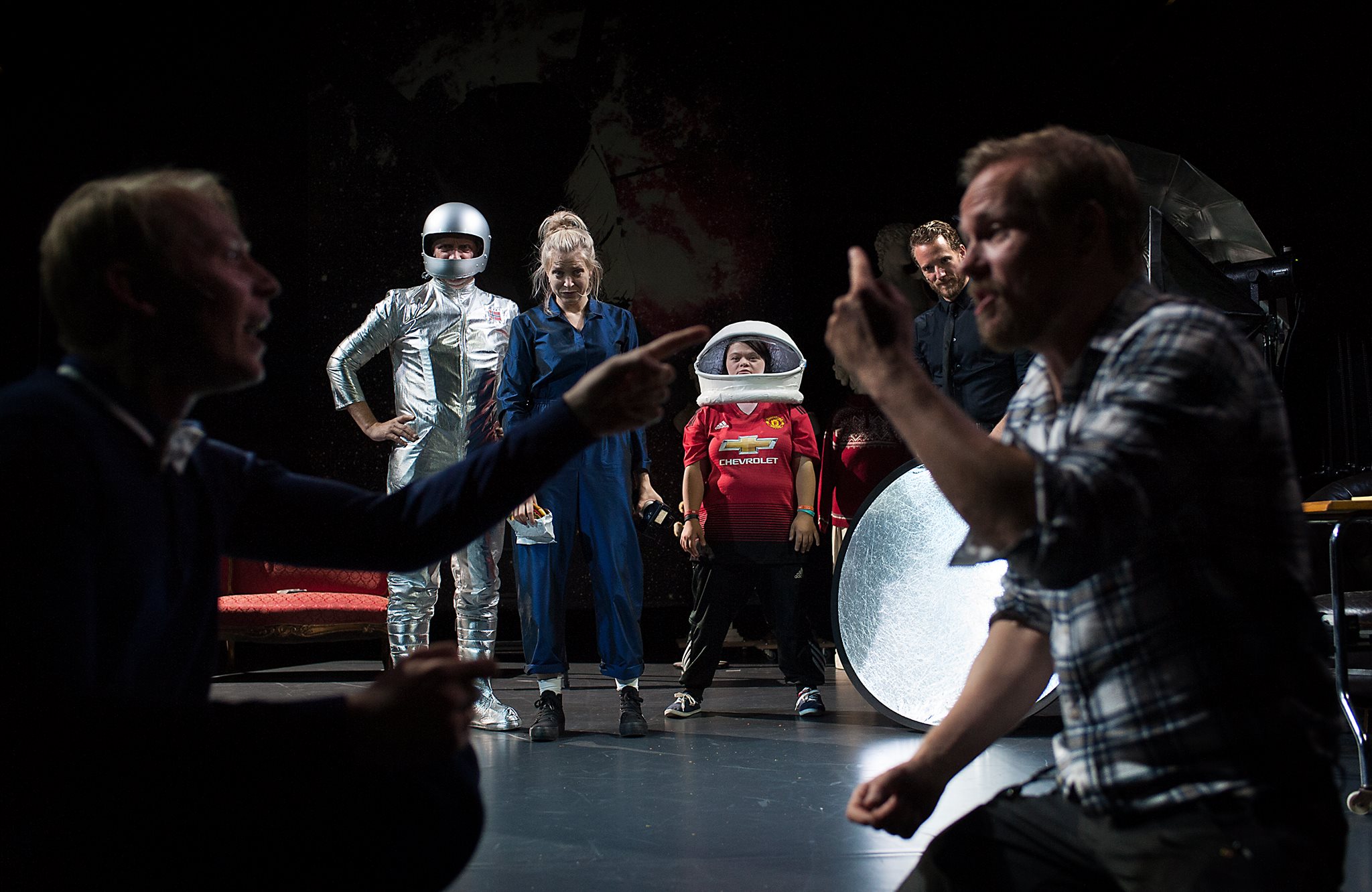
Harry Potter birthday party for Hedvig is hillarious. The down-syndrome Hedvig is unwhilingly humilated with a Voldemort rubber mask, which Hedvig really enjoys but looks like a little monster. All these extra layers and elements work well in the performance. One of the gifts she gets is a magic wand. I wondered if this magic wand had a meaning, a layer— and, it really was a stunning surprise after the masacre, Hedvig faces the audience with her magic wand, whipping away the horrors of her reality, she dances full of radience and joy. Director masterfully gives the audience a realease, room to breathe and ponder and process, while a brave actress dances her heart away. Ross creates an alternative, a dream that parents and children can reconcile with each other and wipe away the evil betrayed – as if with a magic wand!

Kristin Aalen, The Bergen Times


Premiere September 12, 2018

Team
Direction and adaptation: Yana Ross

Set and Costume designer: Simona Bieksaite

Composer: Jonas Redig

Video Designer: Algridas Gradauskas 

Dramaturg: Morten Kjerstad

Light Designer: Ola Bråten


Cast:

Anne Sofie Kvalvik
Susann Bugge Kambestad
Jonatan Filip
Svein Harry Schöttker-Hauge
Frode Bjorøy
Jon Ketil Johnsen
Sigmund Njøs Hovind
Irene Waage
Jun 152018
 

Yana Ross

A marriage contract at the end of the 19th century is a tough pill to swallow, nonetheless, we are still entering a certain contract of moral and financial obligations when we decide to call it a marriage. What does it mean “till death do us part”? Do you take it seriously? Is it a mere ritual, an obligation to the phantom of our parents and grandparents that their surname will live on? Performance plays with Nora as Princess-drama, a narrative of “happily-ever-after” bullshit we are fed from the childhood, fairy-tales, Disney, Elfriede Jelinek’s Princess dramas are ghosts pushing this production forward.


Dollhouse reviews 2018

“Yana Ross’ new production of A Doll’s House (Ett Dockhem) at the Gothenburg Stadsteater has generated enormous interest across Sweden, cementing her influence and popularity in Scandinavian theatre. Ross uses therapy as a framing method for her original rewriting of Ibsen’s canonical text. Rank is reimagined as a psychiatrist who uses role play as a form of analysis. In the opening moments, the audience is led to believe that Rank is Torvald, when in fact he is merely playing the role of Nora’s husband in an imagined scenario. He invites Nora to analyze her choices and attachments; this metanarrative reveals that this is not so much a deconstruction of A Doll’s House as a form of performance analysis, a theatrical essay of sorts. There is a dubious ambiguity to Rank’s role-playing, however, which from the outset demonstrates the compliance demanded of Nora in her role as patient, apparently for her own benefit (psychiatry).

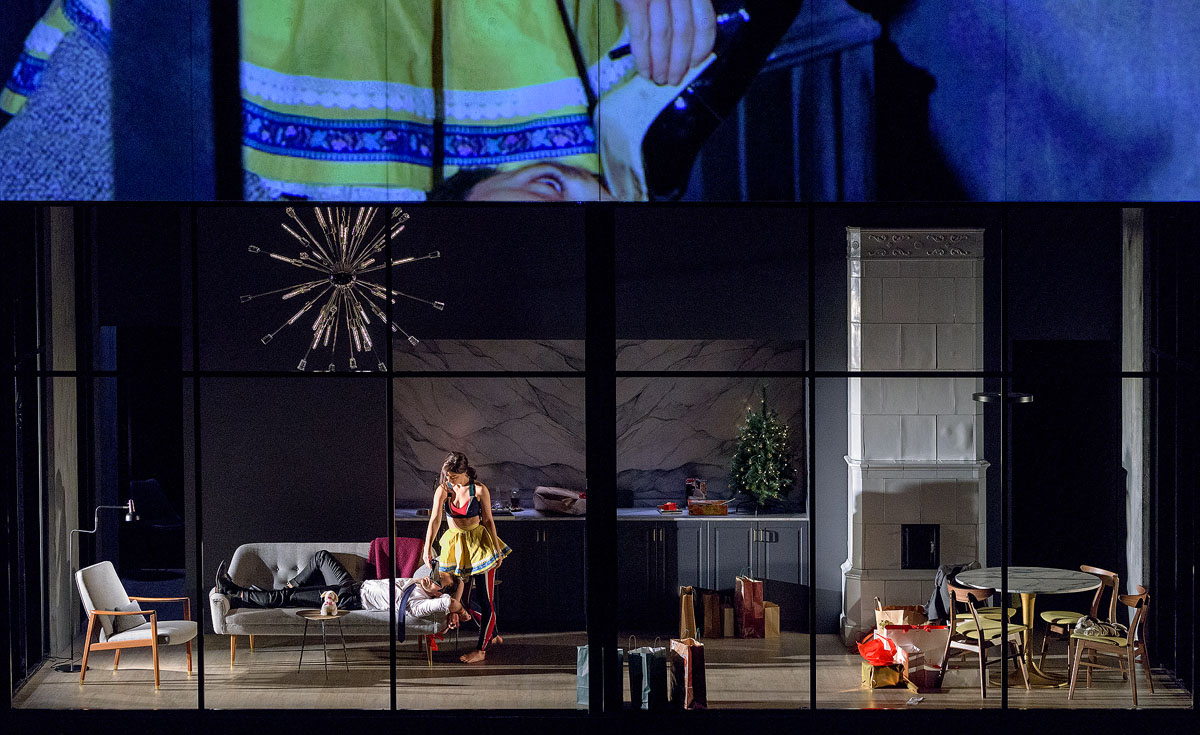
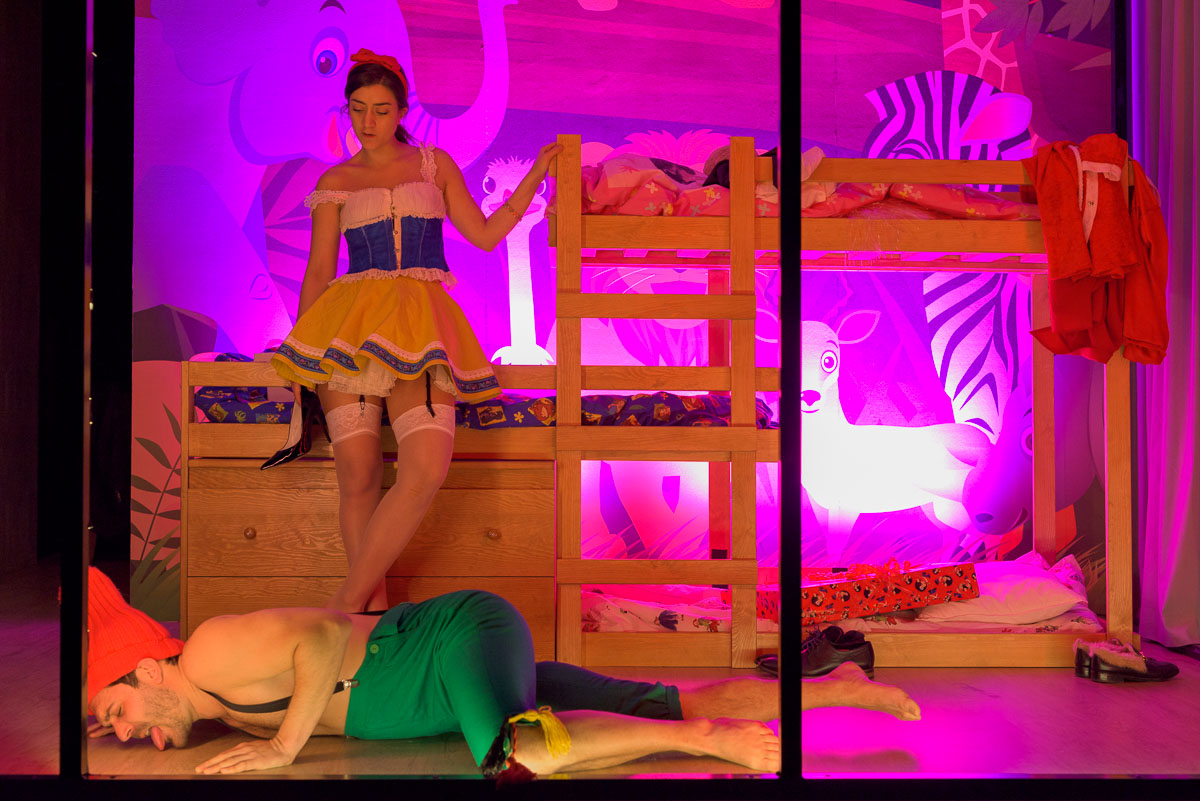
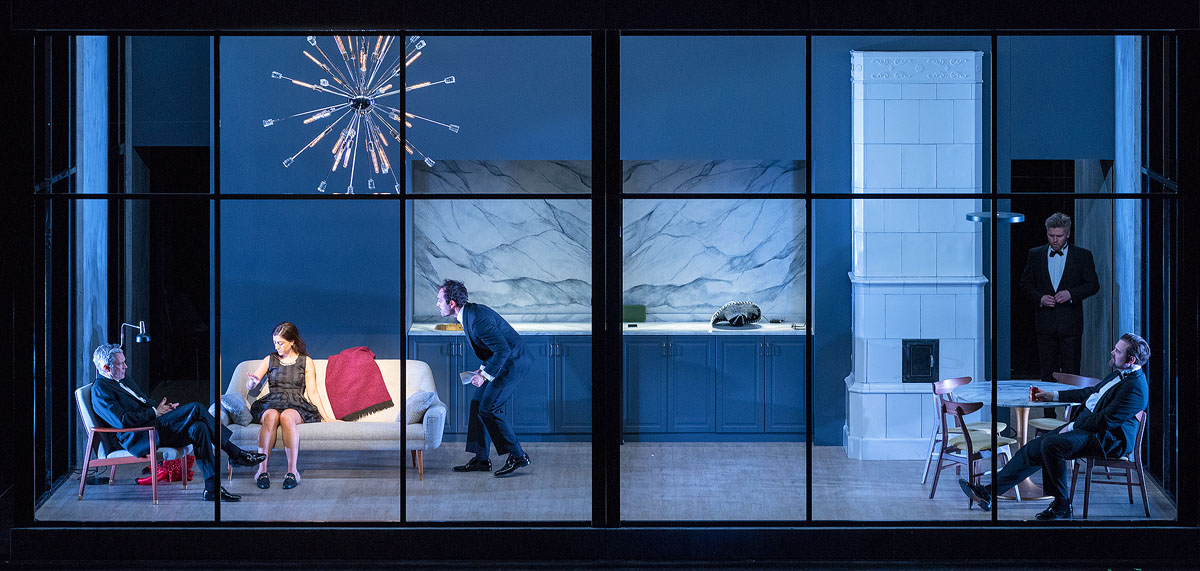
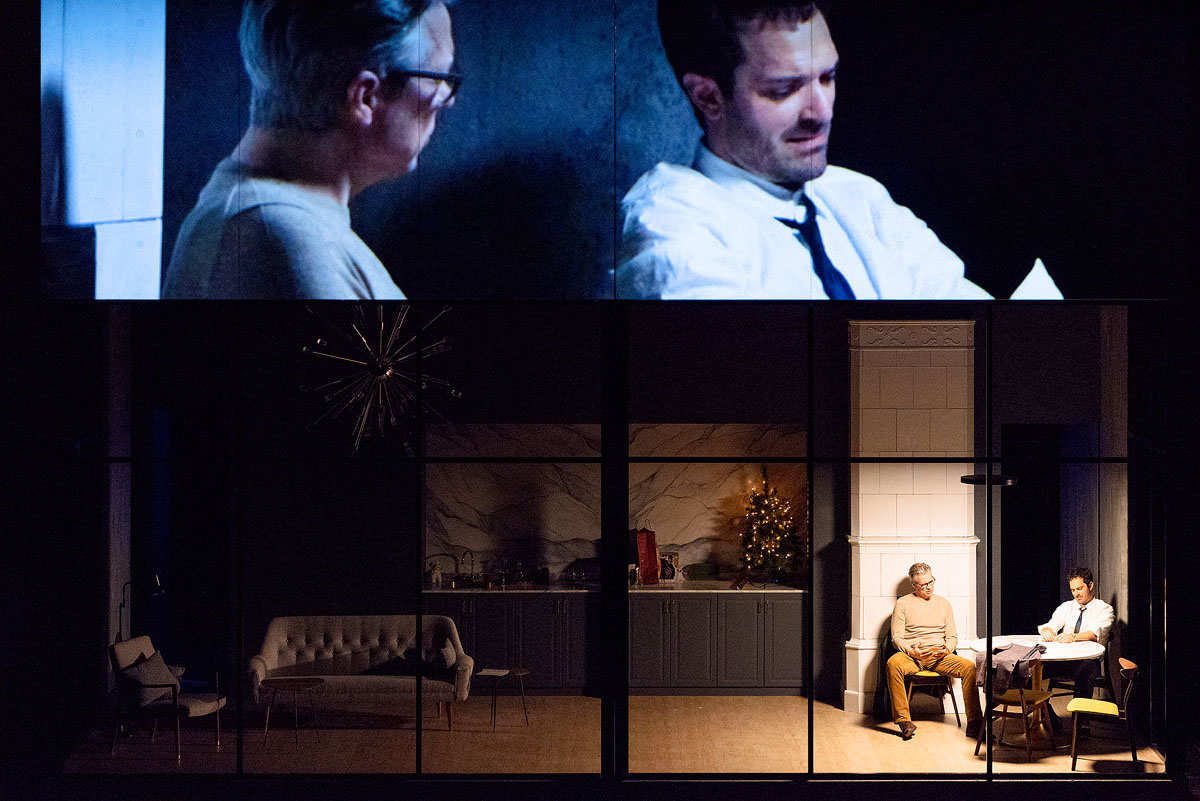
Ross’ doll’s house is a moveable box made of large glass panels with an interior of sleek and simple furniture (“tasteful but not extravagant”) in muted colours that are sharply punctuated by dabs of bright red (a color that Nora will wear later as a reference to Sleeping Beauty or Little Red Riding Hood). The presence of a technician who films the action from outside the house reinforces our sense of being an eavesdropper or voyeur. Despite being enclosed, the crystal clear audio of the actor’s voices is reminiscent of Krzysztof Warlikowski’s (A)pollonia, in which visually we feel distanced or separated from the actors while acoustically we experience their extreme proximity. As the box moves around Gothenburg’s large main stage the bedrooms of the Helmer home are revealed on the opposing sides of the sitting room. The pale white and gray interior of the parent’s bedroom is juxtaposed with the children’s room, whose walls are vividly painted with jungle animals. The children are never present on stage–indeed, we only encounter them briefly through a Facetime call–and yet their bedroom is consistently occupied by drunken and erotic encounters. This misuse of the children’s room strongly reinforces the metaphor of a doll’s house, a structure that encapsulates children’s ideals of a domestic space that coalesce with Ross’ connections between Ibsen and Disney.

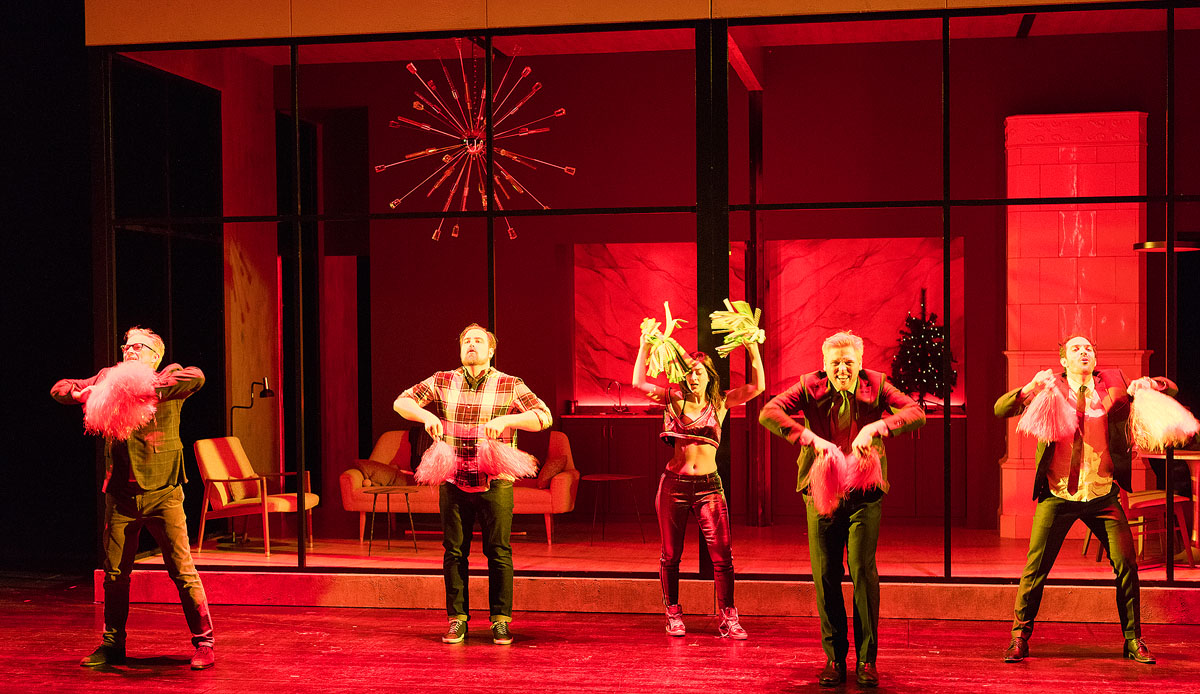
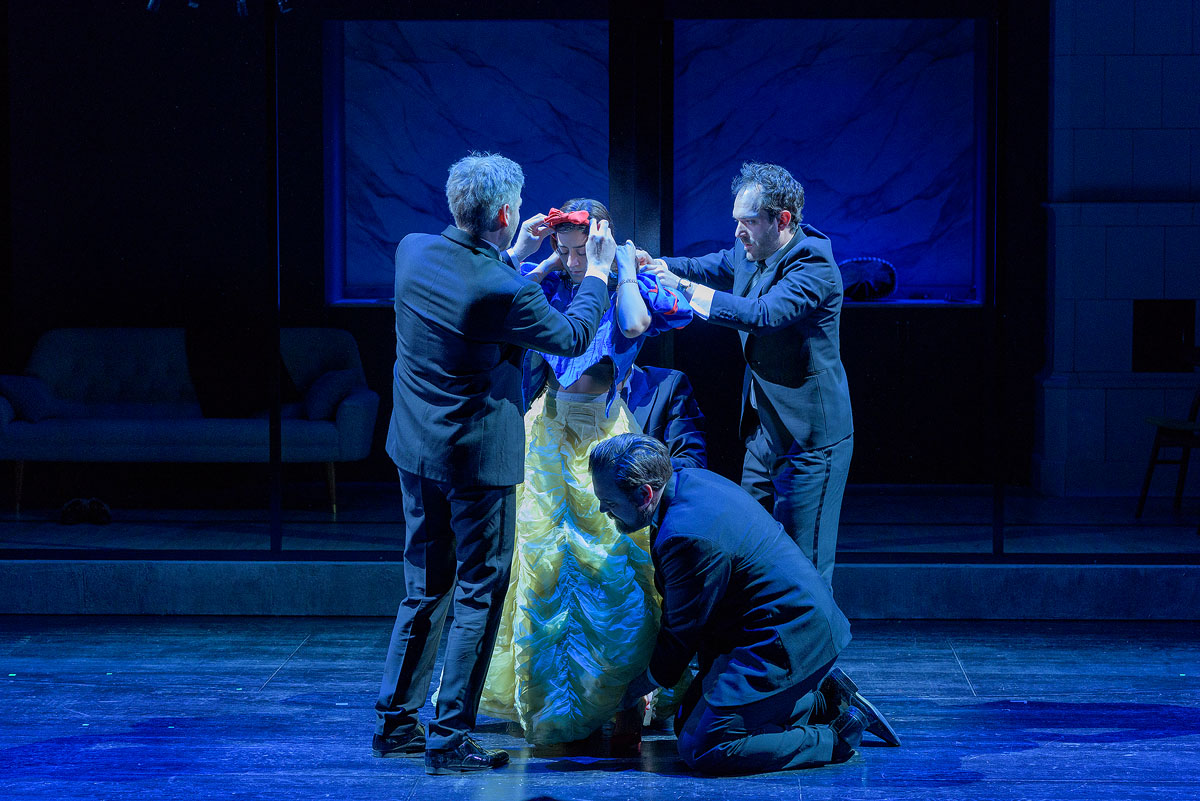
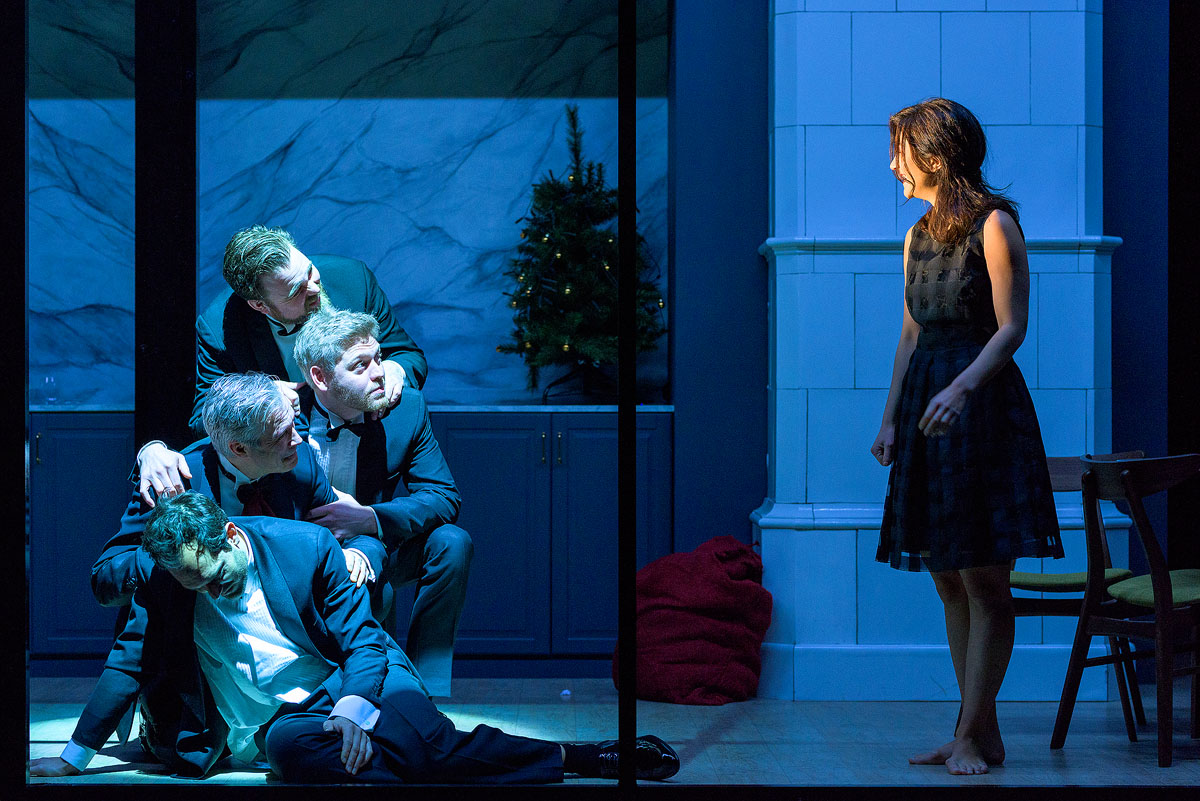
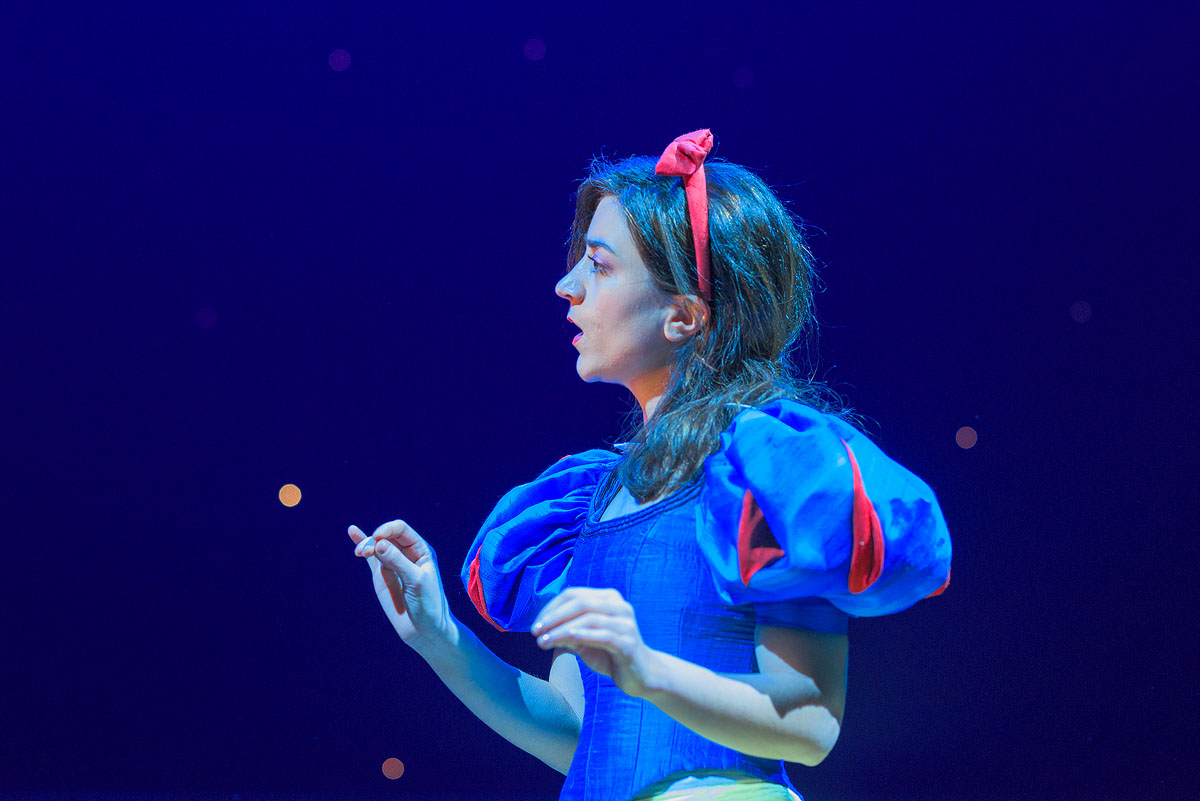
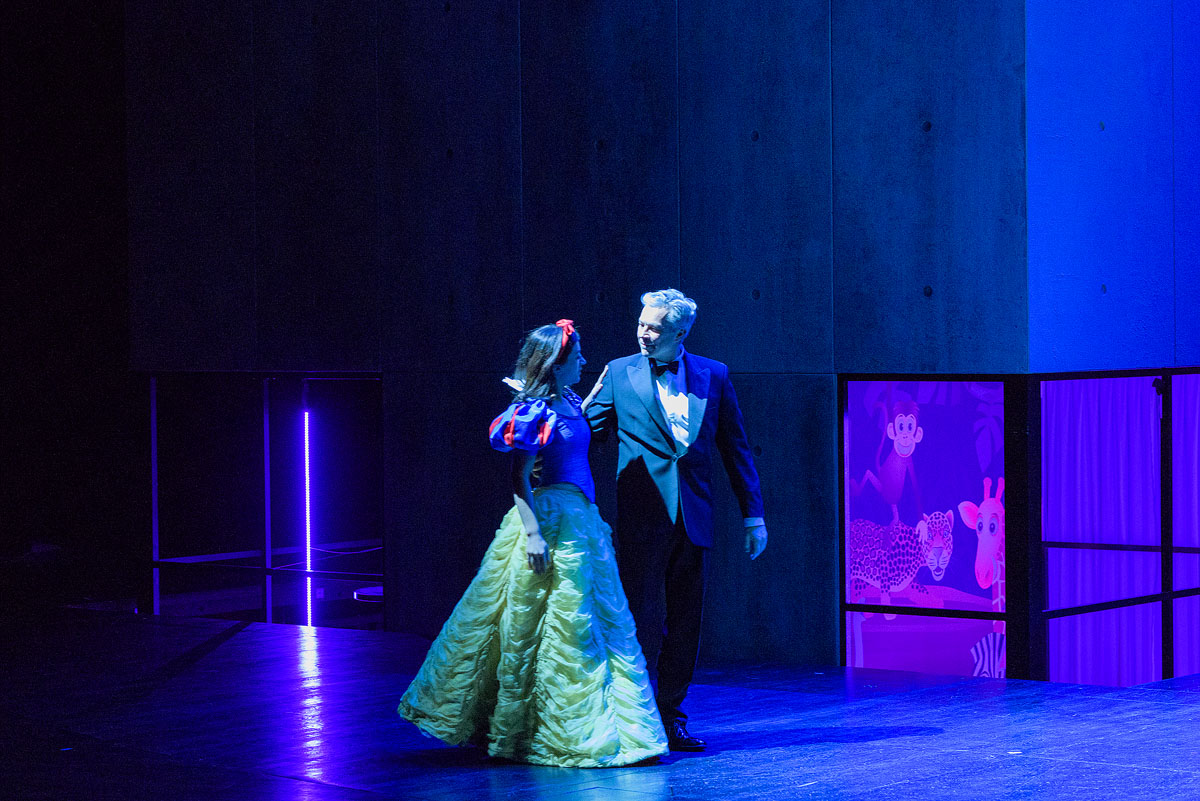
Kristine Linde is made into a man’s role (Kirster Linder), which shifts the gender dynamics of the entire cast. Nora is the only woman on stage, surrounded by a quartet of close male friends (Torvald, Rank, Korgstad, Linde). Her isolation is thus redoubled between her home and social world, which Ross deftly reframes through a Disney fantasy. We first encounter this reference as the house spins on stage and the four men first break the (literal) fourth wall by stepping through the house’s glass walls to move to a contemporary rhythmic rendition of the seven dwarves anthem to the pleasures of manual work, “Hi-Ho, it’s off to work we go!,” that is both suggestive of male sexuality and labor. The concept of role-playing is playfully extended into the Helmer’s sex life when Nora dresses up as Snow White and Torvald as one of her naughty dwarves, who needs to be whipped and punished. The quartet of men all become key players in the fantasy, the dwarves who simultaneously perpetuate the fantasy of the female sublime (a nod to Ewig-Weibliche) and male exclusivity while sexualizing female power. Even if the men compete with one another they form a bond that remains impenetrable to Nora, thus reiterating the distance that separates the collective of workers from the sublime female in Snow White. Even Nora’s binge eating becomes a game that undergirds and reassures male bonding. Ross’ neat turn is here is to sexualize the men themselves. They begin the tarantella, an erotically charged cheerleading routine with pom-poms. Nora joins them, following their lead and rehearsing their moves. Rather than suggesting a critique of gender norms in which women follow the idealized lead set out for them by men, this inverts the question of male sexuality, not only offering a comical take on homo-erotic bonding rituals but also asking to what extent male desire might be caught up in the erotic display of their own bodies. The tarantella thus reveals a side to sexuality that is normally repressed, but (as in the therapeutic role-playing scenes and the Snow White games, or when the men dry hump one another to Beyoncé’s Naughty Girl) it is not Nora’s hidden character that is revealed so much as the male social world she must negotiate.

The whole question of racism is frequently left out of stagings of the play, and Torvald’s offensive line about knitting having a “Chinese effect” is typically cut rather than explored. Ross cast Gizem Erdogan, a Swedish actress of Turkish descent, in the role of Nora. As Theresa Smalec has argued, Nora’s ethnicity is often assumed to be white and Scandinavian, like Torvald’s. Smalec asks: “How does her cultural background make her a different ‘monster’ from her husband?” Ethnicity is carefully interrogated through apparently innocuous slurs that eventually culminate in a racist tirade. Torvald reminds Nora that it is time for her upper-lip wax, thus criticizing her attractiveness and femininity through a veiled reference to ethnicity. When Torvald discovers Nora’s secret loan, however, his suppressed racism surfaces to the top: “You are a crook, a criminal, a total disgrace, calling yourself ‘third generation’ but really you are a dirty Turk!” Economic anxieties and correlated concepts of selfhood are thus racialized. Generational migrant identity, as well as ongoing problems of racism, are topics that continue to dominate Swedish public discourse around national identity, which Ross integrates skillfully into this paradigmatic Scandinavian text. There are other passing references to diversity and social equality, such as Rank’s equation of political correctness with moral decay, and his dismissal of the Swedish “nanny” state, which he condemns as “turning our nation into a hospital.” Later, the audience laughs when Torvald exclaims, “Are you saying I’m not a fucking feminist? That’s ridiculous! I am Swedish, we are all born feminists.” Torvald’s chauvinism and Rank’s conservatism provocatively disturbs easy associations of Swedish society with welfare support, gender equality, peaceful civil society, and tolerance to diversity.

After we learn that Rank is dying of cancer, we see him imagine (play acting as Torvald) a long life with Nora, in which he urges her to have another child. Not only does this suggest that Rank is in denial about his own impending death, it also intimates an erotic triangulation between the psychiatrist and the couple. This impression is strengthened when a potential threesome develops. Nora and Torvald have sex on their couch while Torvald holds onto Rank’s hand and the men share an intimate contact in place of husband and wife. As a result, when Nora is impregnated the psychiatrist is implicated in the creation of this new life (the two men have produced this child). Nora’s refusal to give birth draws attention to mothering as labor and her denial of male entitlement–”it might be a boy”–and (perhaps) a refusal to reproduce a new generation who will also fall victim to racism.

The notion that freedom is sacrificed when one goes into debt is also reinterpreted. The door does not slam behind Nora in this production. Her intention to leave is framed through her refusal to be reflected through the mirror of a man (thus citing the opening role-playing scene in which Nora’s emotional life is reflected through her psychiatrist’s game). However, in the final moments of the performance, the men extract themselves from the home, looking as if they are landing on the moon, walking outside of the gravitational forces of the domestic space. They dress Nora as Sleeping Beauty, an infantilizing gesture that makes her look like one of the children. (What’s more, the whiteness of this fictional character is highlighted as a form of ethnic drag.) The house sinks into the stage as they spin a final dance, reminiscent of an early Hollywood musical, or–more recently–the dream sequence in Damien Chazelle’s La La Land (2016), while lip-syncing to Once Upon A Dream from Disney’s Sleeping Beauty (1959), putting Nora herself to sleep. In a moment of supreme irony for a play that is perhaps best well known for its ending, the final line of the performance (also taken from the animated film) is “Oh, I just love happy endings!” Ross–explicitly referencing Elfriede Jelinek’s rewriting of these fairytales–thus places at risk our own complacency in accepting Nora’s slamming door with naïve optimism as a “happy ending.” The notion of debt–already ambivalent in the original text–linked to Nora’s departure from the Helmer household renders her future economically uncertain. Her departure from her home is thus also highly suggestive of previous acts (and conditions) of migration that precede the story of a “third generation” Swede. Nora’s refusal to give birth to her child also dissipates when she is lulled into dreamless sleep.”

Bryce Lease, The Theater Times


Premiere April 7, 2018

Team
Direction and adaptation: Yana Ross

Dramaturg: Lucia Cajchanova

Set and Costume Designer: Zane Pihlström

Video Designer: Algirdas Gradauskas

Lighting Designer: Vilius Vilutis

Music: Jonas Redig


Cast:

Nora – Gizem Erdogan
Torvald – Jesper Söderblom
Doktor Rank – Johan Gry
Krister – Mattias Nordkvist
Nils – Logi Tulinius

Sep 042016
 

nato lt3

Yana Ross

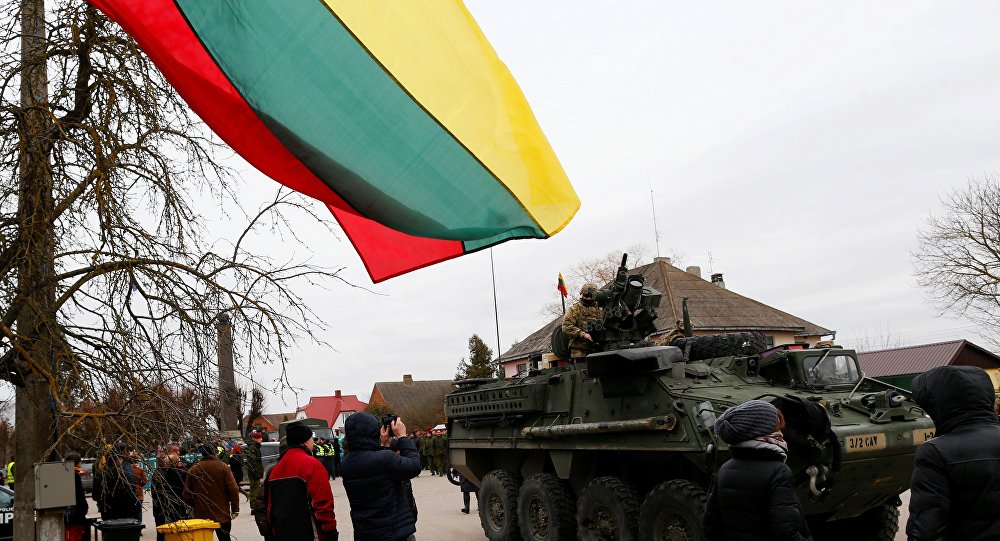
The militarization of Imperial Russia at the start of the 20th century when Chekhov was writing Three Sisters is uncanny parallel to our current frantic mobilization of NATO forces in Central and Eastern Europe as well as the Russian Imperial phantom pains on the border with Ukraine and the Baltics.

Chekhov was looking at the violent intrusion of the military force into civilian routine. He was anticipating World War I and the anxious mood across every class of a modern society.

We look at Central Europe political and ideological landscape and the shift to the intellectual apathy, so similar to Chekhov’s mood at the time of the play.  Our Sisters are stuck in 2017 town of Vilnius and dreaming of Moscow or Bruxelles — and the army marching away towards Poland at the end of the play.


Three Sisters reviews 2017

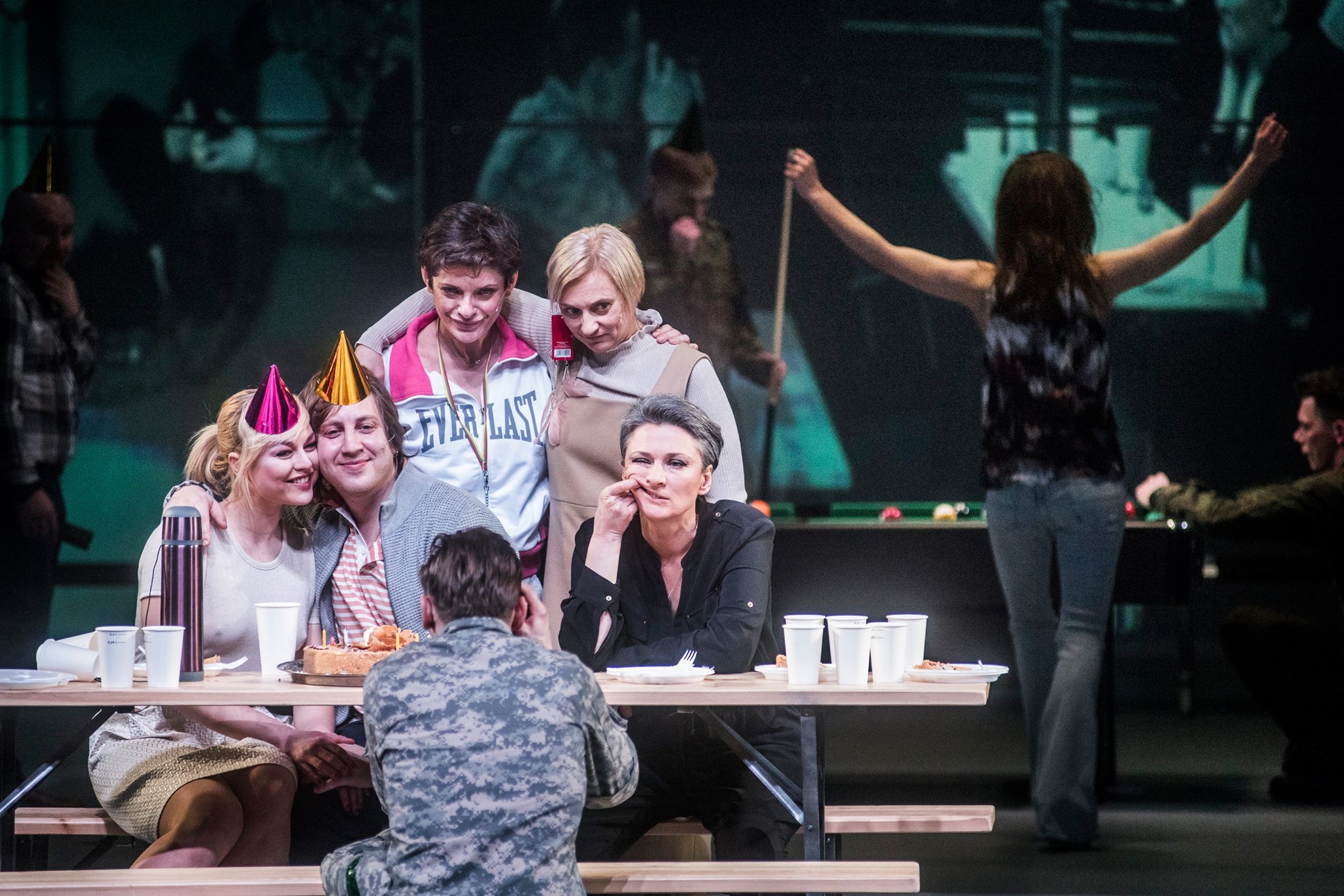
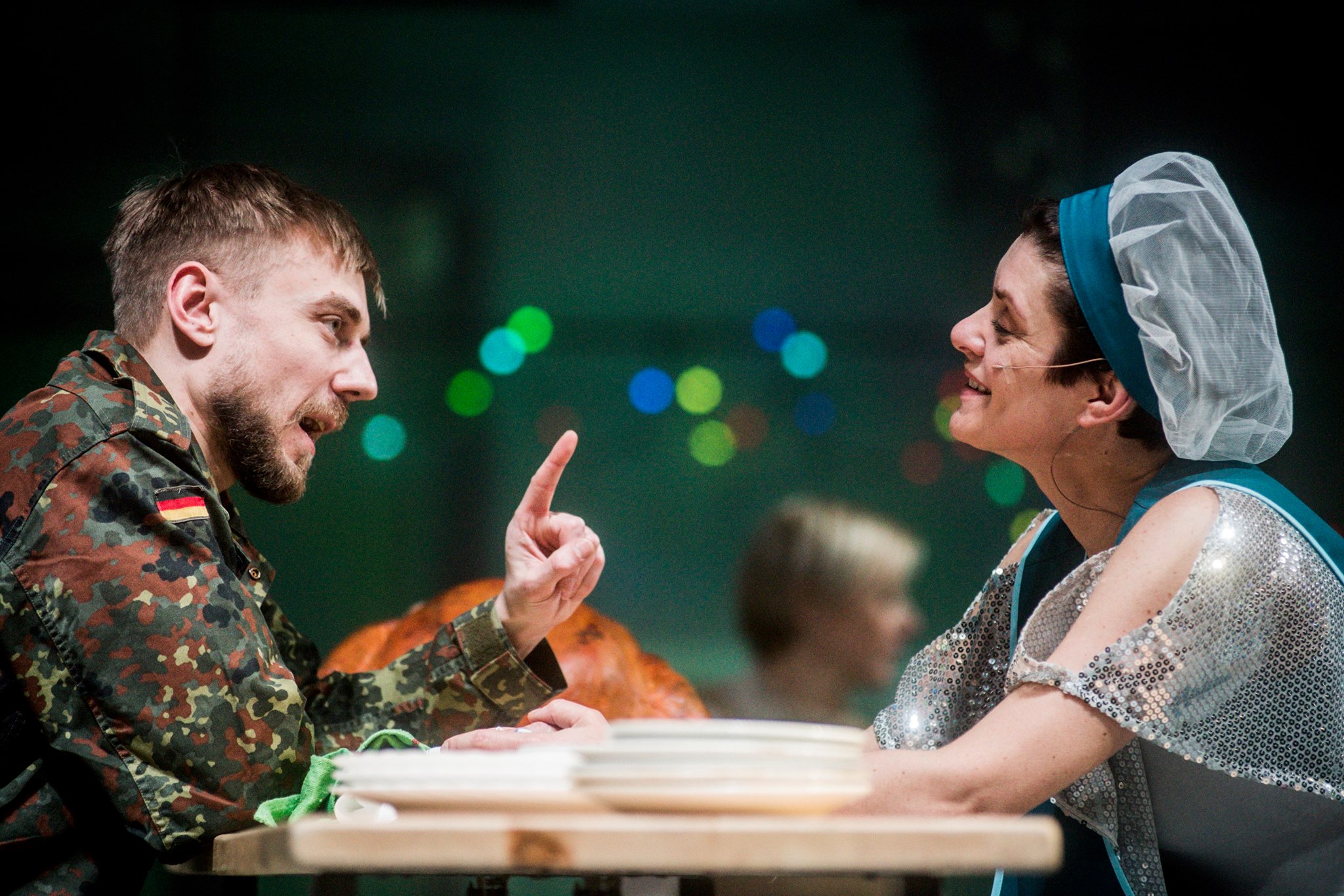
“…Adaptation moves the play to our time: three sisters and a brother Prozorov are ethnic Russians who were forced to move to Lithuanian Socialist Republic in 1984 because of their father’s military service in Soviet Union. These sisters are much older than originals, they are between forty-five and fifty (actress Monica Bičiūnaitė, Vitaly Mockevičiūtė, Rimantė Valiukaitė) and are still connected to military – mingling with deployed NATO troops battalion. Stage design is a huge aircraft hangar, including impressive moving baggage belt, which carries many objects including weapons. A young scenographer Simon Biekšaitė, successfully continues to collaborate with Yana Ross, (Wunschkonzert, TR Warszawa); she moves the action from private Prozorov home into a kind of transit zone, area with a pool and dining tables, festive lights and fireworks. Hangar’s backwall’s live-media is designed by Algirdas Gradauskas feeds an omni-present eye of six surveillance cameras which switch from multi- to a single camera close-ups in moments of tension. When video goes black and white, it reminds us that all images once and forall will become historical and potential long-distance perspective is born: what is happening now, will soon be reviewed as historical evidence. Along those close-ups of military men celebrating New Year, awakens memories of a past world wars.

The final monologue shifts a conceptual focus from the sisters to a new character, Agnieszka Wersynska (in this adaptation a wife of lieutenant colonel wife)  (actress Miglė Polikevičiūtė). The play about Versinina wife only hinted at, and the play it becomes an important character, which not only embodies the widespread society of Tipaza (called the man to the arts, popular spiritual theories and practices clichés suffused thinking and manners, is not sought dividing the left and right pseudofilosofinius tips) but also is a kind of the socium seismometer: mentally unstable, irrational, fragile Agnieszka his “spiritual I caught during (where any pseudo approaches and becomes difficult to be separated from archetipiškos god Silly assertions) near the many platitudes expresses the performance of important insights, and featured in the New year night bandaged wrists, ghost make-up and somnambuliška posture creates our aggressive, militant public offerings image. Actress Miglė Polikevičiūtė exactly feels and conveys his character’s duality, without losing (intervals macabre) humor distance.”

Alma Braskyte, Menufaktura


”In this performance, Ross radically deconstructs and reassembles the play, pushing it to the edge of the 21-st century and the edge is not only geographical, the edge of Europe or the world, the borderline is also symbolic and full of linguistic tension. There are none of the usual “Chekhovian” tones or cliches— everything is adjusted to reflect the moment in time. Ross is considering the responsibility of parents for the fate of their children and vise versa but it yields no sympathy or blame from director, objective, pragmatic and critical stance. […] The military here is multi-national, representing NATO forces and able to communicate among themselves in broken English, German and even Polish, but what unites them most is the constant games (literally and figuratively, the theater of war) which they perpetually play. Games are the substitute and hide latent aggression and readiness, mobility. The sisters are not young or naive— these women, in their late forties, are capable of reconciling with their fears and mistakes, hopes and failures.  Masha is drinking herself to death, Irina slaves away in the kitchen, and Olga is most likely responsible of pushing her younger brother into hastened marriage, just to get away from this triple “mothering.” […] Instead of the long final soliloquy about hope and salvation through labor, director once again (as with her earlier Chekhov productions) turns to the theme o self-destruction. Baron von Tusenbach does not lose his life in a duel, he does use the pistol, facing the trigger himself. Suicide is a brutal ending, but nonetheless Chekhovian to the core.”

Nina Karpova, Theater Journal


[…] one has to remember that Chekhov rote this play while spending his summer in Crimea, part of the Russian Empire at the time. It is crucial for Ross to reflect upon political implication of Russian expansion, specially since Crimea has been annexed by Russia, once again. Not many directors (except for a few in Germany, perhaps) who turn to dangerous and volatile political context, but for Ross it has become inseparable context for most of her performances.”

Thomas Irmer, Berliner Freitag


Premiere March 17, 2017

Team
Director: Yana Ross

Set and Costume Designer: Simona Biekšaite

Video Designer: Algirdas Gradauskas

Light Designer: Vilius Vilutis


Cast:

Rimantė Valiukaitė
Vitalija Mockevičiūtė
Monika Bičiūnaitė
Marius Repšys
Paulius Tamolė
Dainius Jankauskas
Daumantas Ciunis
Toma Vaškevičiūtė
Tadas Gryn
Migle Polikevičiutė
Ramūnas Cicėnas

Sep 032016
 

Salkaposter

Yana Ross

Nobel Laureate Halldór Laxness classic novel from 1930’s Salka Valka is being challenged, probed and adapted to question modern Icelandic society. Iceland’s recently history includes a seismic financial crisis, volcano explosion and tourist boom. But recent confidence  is crushed again by Panama Papers scandal implicating most of the ruling elite in a massive financial fraud suggesting a deep brake within the tight-knit society. This new production is also challenging writer’s gender-bias and political ideology through a modern frame. By staging it as a process of independent filmmaking, director and her team are deconstructing classic cliches and building direct dialogue about current state with the audience.

Laxness originally wrote Salka as a script for a Hollywood film, imagining Gretta Garbo in the leading role. This bridges the original treatment with an adaptation and invites the audience to look at Laxness from here and now, and without revery or a pedestal.


Excerpt from the adaptation:

Why did you decide to make this film?

Halla (film director): I was angry. I was angry that our society is so conservative, so narrow-minded and so much resembles the heard of sheep (which is by the way a good skill we are starting to lose as a nation) in this blinding revery for this pompous misogynistic male voice. It is time to re-evaluate this classic in the context of contemporary world society and see if his statements are still valid.

And what are the means of doing that?

Halla: We can question the sensationalist tools he has used to attract the reader. The classic sexual and erotic tension, the intellectual and physical dominance of male heroes over a simple but strong female. How much does Laxness dwell on the swollen, red and moist Salka’s limbs when she’s confronted with Steintor? She’s always gasping for air, clearly aroused by his body hair, sweat and violence. How dare we propagate the rape culture into the 21st century? How long will it be ok to portray the sexual violence on film and on stage to excite the box office thrill? The audience loves a good rough fuck! The audience will be wet with empathy over a shriveled Salka in the corner of her hut holding a knife but week in her knees.

Do you think he was aware of what he was doing?

Halla: Laxness was a clever man. He had an enormous ambition, somewhere between Falstaff and Macbeth, his soul was trapped in all-consuming desire for fame and fortune. He dreamed of being famous. Of Hollywood glamor, of international publishing, money, travels and luxury good. A sober cynical brilliant talent, he surely knew how to get it. All the possible sensational tricks of the trade wrapped up in unique and powerful literary voice— here’s a recipe for you!

What about the form for your feature?

Halla: It is no secret I admire Lars von Trier. We come from the same film school and were part of Dogma for a while together, so I don’t think it is any surprise that I keep experimenting with form, just like he does. I am interested in blending borders between acting and living, between staging and filming and sometimes it creates incredible tension on the set but I don’t see any other approach.

Is this tension bringing you closer to the truth? About the film or yourself?

Halla: Yes.

Are personal relationships unavoidable in such environment? You are notorious for blending your personal and professional lives as well…

Halla: I don’t plan it, or crave it, if that’s what you’re asking. All I care about is being true to my film.“


Salka Valka reviews 2017

“Instead of wasting energy on recreating a well-known book, or following conventional story-telling, Y. Ross, S. Guðmundsdóttir and entire ensemble decide to share with us thoughts and process ignited by novel. The result touches the intellect, raises goose-bumps and waters the eyes. This performance is not replacing the book, it proves to be powerful and independent, made by people with strong will.”

Þorgeir Tryggvason


“Deconstruction is an interesting performing arts tool, but not in our Icelandic theater. It must stop. Sad to see the audience miss out on the change to feel deep emotions and passions of our beloved characters. Classics should give focus to human emotions. And there’s little room for it here.”

Sigríður Jónsdóttir


A journey through time

“In Reykjavik, a strong direction by Yana Ross transposes a century-old novel of Icelandic literature into a panorama of the modern state after the banking crisis.

Halldór Laxness is one of the great European writers who have measured the twentieth century with all its’ aberrations and tragedies, leaving a work that allows us to look at the present as well. Laxness (1902-1998) received the Nobelpreis in 1955, but above all for his novels which follows the changes of Iceland. This includes “Salka Valka”, published in 1932, which tells the story of a young girl in a small fishing village at the beginning of the last century, turned from a fierce existence in a world full of violence, abuse and social backwardness into a self-assured businesswoman.

The novel shows vividly how modernity engages in a small society: a fish factory produces paid work, its owner, merchant Bogesen also runs the only shop in the village. Thus, progress has its price – Laxness makes a parallel with the developments of his time, the creator of political disputes about the social conditions. What at first glance looks like a political developmental revolution is fundamentally multifaceted and even deep psychological profile of interrelationship between poverty and humanity.

The fragility in the process of modernizing Iceland is reminiscent of the great banking crush of 2008 for 337,000 inhabitants – the worst of world history. Thanks to Laxness’s Nobel Prize, Iceland can lead the world’s largest Nobel Prize laureate per capita.

“Salka Valka” in the version of the Lithuanian-American star Yana Ross is above all a perfect example for the Ross-signature talent in merging past and present. The impetus in the staging is an independent film adaptation which allows director to probe the validity of the novel in current political and social climate. Ross shows the dangers and humor of mass tourism that has been artificially forced after the crisis, renewed corruption of Icelandic institutions in international affairs such as Panama Papers.

Polish stage designer Michał Korchowiec  creates a vast post-industrial space which is dominated by a skeletal sculpture, eminds of a collapsed factory roof. Underneath the sculpture is a series of benches, the formation of which recalls a church. A free associative space on the edge of which is a sound recording booth for the well-known voice over of Gudni Kolbeinsson. His voice narrates between the scenes the strong passages from the novel, giving the audience a chance to savor the original prose language. Behind it, there is also a modern hotel room for the Film crew to rest.

Their occasional penetration into the actual Salka story is so brilliantly plotted and organized that it never loses its intensity.

It is above all,  Blær Jóhannsdóttir as Salka, which captivates our breath: A woman who can not be confused in confused times. The opposite: the traumatized girl she once was, is literally portrayed by a child actor, allowing the powerful associations to run wild regarding taboo of child abuse and paedophelia in Iceland.

Director not only understands how to compensate the complexity of the novel, but also to expand it. When the giant Bogesen (Jóhann Sigurdharson) makes everyone leap over his heavy cane, the several pages of the book are played in front of us with great imagination and versatility of masterful directing and the scene continues to expand with contemporary tourists flooding the stage with their cameras and selfie sticks surprising early industrial characters who were still struggling with modernity.

The historical Salka from Laxness’s time of the capitalist modernization breaks into a journey into the present, with Yana Ross always keeping this classic of the literature at its core. The director developed the idea of the filming on stage from the fact that Laxness himself in 1928 in Los Angeles wrote the 5-page script of this quasi-allegorical figure for a silent film (“A Woman in Pants”). Greta Garbo was, according to his letters, about to play the part. The germ of the novel was thus a never-realized film script from the time before the big stock market crash in America. A factual and associative network that seems to have made a successful match for Yana Ross’ ambitious epic work.”

Thomas Irmer, Theater der Zeit

Premiere December 30, 2016

Team
Director and Text Adaptor: Yana Ross

Text: Haldor Laxness

Dramaturg: Salka Guðmundsdóttir

Set Designer: Michal Korchowiec

Costume Designer: Filippía Elísdóttir

Video Designer: Algirdas Gradauskas

Lighting Designer: Björn Bergsteinn Guðmundsson

Sound Designer: Baldvin Magnússon


Cast:

Björn Stefánsson
Hilmar Guðjónsson
Halldóra Geirharðsdóttir
Hilmir Snær Guðnason
Jóhann Sigurðarson
Þórunn Arna Kristjánsdóttir
Þuríður Blær Jóhannsdóttir
Sigrún Edda Björnsdóttir

Nov 202015
 

the Lake Title

Yana Ross 

The play is a casual daily apocalypse of the Eastern European middle class. This work leaves you stunned and thinking about the responsibility of our passive-aggressive, disengaged society. Durnenkov managed to grasp the casual despair, escalating violence and panic of a disappearing ghost of Europe.

The Lake is clearly in dialogue with Chekhov’s oeuvre. People eat, drink and talk over a weekend on the lake, seemingly nothing happens but you feel the world is spiraling into an abyss at a supersonic speed. Our morals and ethics are tested. Hypocrisy and complacency, pseudo-intellectual superiority and fear of the muscle in the lower classes.

On the surface three couples battle daily issues of betrayal, child rearing and soul searching. Underneath the murky waters of their psyche lie enormous breach of ethics, guilt and fear of a neighboring war.

“Where are you now? And where would you like to be during the apocalypse? I wouldn’t want to be caught in the shopping center, or while eating, on the toilet, dreaming, riding an escalator or sneezing. I wouldn’t want to miss the end of the world while entering a tunnel, diving or making a wish. I wouldn’t want to be brushing my teeth either, to stand in front of the mirror just a second before starting to kiss.”


The Lake reviews March 2016

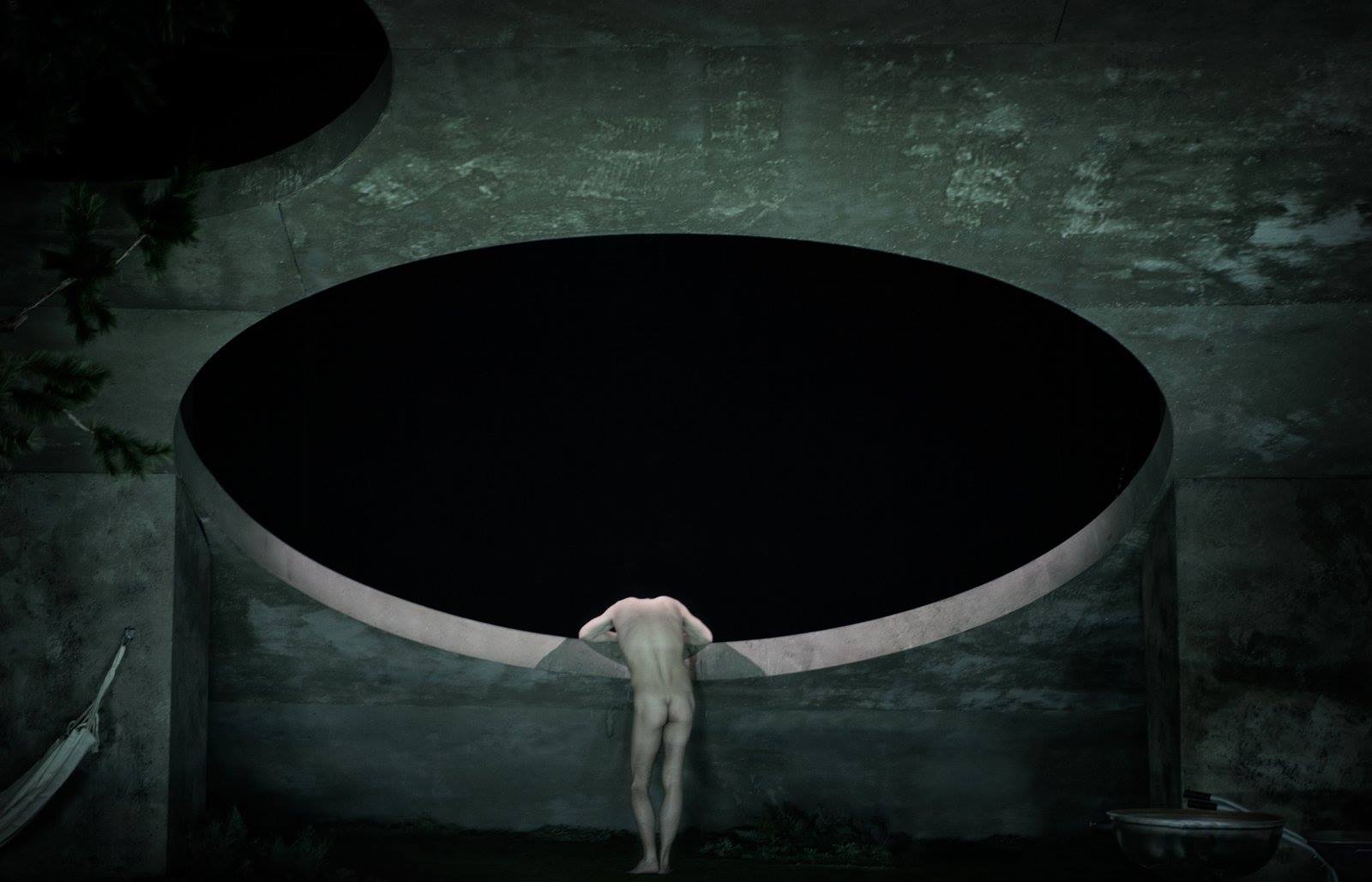
“….In Ross’s performance, key character played by Dawid Ogrodnik is always present on stage and he is baring all his naked skin all the time. Ogrodnik has a double status: he is reflecting Pawel Pawlensky’s presence with his famous actions in the public space, and also torments six characters in their flashbacks and retrospectives as a manifestation of a subconscious nightmare.

Even though his body is completely exposed, no one can really see his nudity. It is a perfect form of questioning tester and sign of the character’s lucid meta-presence. This nudity seems to be different than one by brutalists and also different  from that of the hippies. It is not a symbol of violence or humiliation, nor a manifesto of liberation, an innocent or sincere gesture. Ogrodnik’s body is suppose to be transparent. Ross succeeds to represent a humanity, this act is not a provocation, nor an artistic sign, it is just pure body.”

Lukasz Drewniak


Team
Director: Yana Ross

Text: Mikhail Durnienkow

Translation: Agnieszka Lubomira-Piotrowska

Dramaturg: Wojciech Sobolewski

Stage Design: Justyna Eliminowska

Costumes: Anna Nykowska

Lighting Design: Karolina Gębska

Video: Algirdas Gradauskas

Music: Piotr Domiński

Director’s assistant: Paweł Kulka, Marcin Zawada


Cast:

Agnieszka Podsiadlik
Agnieszka Grochowska
Agnieszka Żulewska
Cezary Kosiński
Rafał Maćkowiak
Dawid Ogrodnik
Adam Woronowicz 


Jun 212015
 

Mávurinn

Yana Ross

At the center of the play there is a struggle of a local artistic community divided by ideology and tradition, commercial threat and vicious competition. A question of artistic freedom and limitations, self-censorship and hypocrisy is exposed in local Icelandic culture. My work always includes a long and intimate ensemble-building process. In this case, because Iceland is such a micro-community– it was a deep connection with people who already are close. It was already a family. Like any family, we tend to say what we think more often and not to be so guarded as we are with strangers. This particular play is extremely personal for actors. You have almost no room to hide behind the character…

The Seagull reviews 2015

“In Reykjavík City Theatre‘s production of The Seagull you find references to the complex bittersweet understanding of European theater of its favorite playwright, such as when all the attention is diverted to Jóhann Sigurðarson in the role of the pensioner Pétur, his loneliness, his sorrow at having never been able to let his dreams come true.

In spirit of Chekhov,  almost a brand new amazing play appears, devised by ensemble, Ross and Eiríkur Örn Norðdahl. It doesn‘t take place in Russia on the brink of a revolution, but in a summer house villa in Iceland in which meaningless party is still going strong, men barbeque in the evening, get drunk, throw a karaoke party at weddings and play silly games at all times; some are famous and part of the clique, others are miserable teachers and pensioners, still others are young and trying to break into the chains of the mainstream or even break out of it and everyone is in love with someone who is not in love with them.

The main conflict in the work is between the actress Írena and her young son Konni, who is a performance artist. Halldóra Geirharðsdóttir plays Írena, and with great skills, she reveals unbelievably many sides to the character: coldness and disdain that often characterizes people who consider themselves superior to others in the social ladder, stinginess and complete lack of understanding of the needs of those other than herself, bare-faced hardness and cunning when she is losing her lover and writer BT into the arms of the young Nína, but most memorable is her love-hate relationship with her son which is crystallized in their literal fight and wrestling. In the beginning of the play, Konni wants to find new means and approaches to dealing with his place in life, his position to the art and the theater, in our distorted world, but the shackles to his mother lead him astray and finally to depression and submission which not even his fame abroad can help with. Björn Stefánsson makes him strangely fascinating person who is neglected and pampered at the same time, pulled apart by his desperate intensity and passion and laughable wretchedness. But Konni‘s fight with his mother stands for something much more, here the new and the old in the theater wrestle on stage and in the end I felt the audience being left with a question: Is the “old habit (to quote the work) of theater not salvageable, is it dead.”  Will it be the fate of Icelandic actresses to fly between major cities for auditions for movies? Zane Pihlström‘s set design supports that feeling, but it pits with great skills the medicine of the new audio-visual and computer age against the decor of the old and traditional theater machine and lets it gradually disappear from the stage until nothing is left but the wet puddle on a black floor.

But this is just half the story, because the production itself, directed by Yana Ross, is really a statement that the theater is not dead because it is not only (again to quote the play), “exactly the same thing, in a thousand variations, always , always, always the same.” No, from the director and her production stream new ideas in unbelievably humorous and uneasy solutions for the actors who have been so well chosen that it is not possible to think of any other playing these parts. The set, Filippía Elísdóttir‘s costumes, the lighting by Björn Bergsteinn Guðmundsson and the music by Gísli Galdur Þorgeirsson, all combine artfully well in this magical theatre.

It has been a long time since I have seen on the Icelandic stage such effortless and yet purposeful and flowing interplay of ensemble, not to mention the work done with femamle actresses, which gives them as much space and physical freedom. Þórunn Arna Kristjánsdóttir showed new and quite unforgettable uninhibited aspects as María who loves Konni, but marries the teacher Símon in order to escape. Nína, who Konni loves, but falls for the old, famous writer is played by Þuríður Blær Jóhannsdóttir so lifelike, unpredictable and unbloomed that she is almost like a young and clumsy foal. Katla Margrét Þorgeirsdóttir plays the co-dependent manager of the estate, who loves obstitrician and draws up an extremely good portrait of a woman who believes herself in control, but who actually resigns herself to everything and perpetuates the dismal situation. Smaller characters, yet very well done, are on one hand, the role of the delicate Thai woman Pattama, played by Waraporn Chanse, who unveils the prejudice of the party to all Asian nations, and on the other hand, the role of older Nína, in the hands of Guðrún Snæfríður Gísladóttir, who comes in the end almost as reality itself put onto the stage.

Jóhann Sigurðarson, as the sad pensioner Pétur, enjoys playing the representative of the old Chekhov. Our star, Hilmir Snær Guðnason resent cliches have been stripped in this performance and he masterfully delivers the role of Casanova and obstetrician Dóri who tries just as hard as Pálína, the manager of the estate, to maintain status quo; Hilmar Guðjónsson makes the  love-sick teacher Símon delightfully pitiable; and Björn Thors, as the egocentric and vain, famous writer BT, succeeds artfully to reveal to us that he is is probably not a good writer but just part of the clique.

I sincerely believe it is not possible for Icelandic theater and Icelandic audiences to have a better wish than that Yana Ross returns to Iceland soon to direct again.”

María Kristjánsdóttir

Team
Direction and adaptation: Yana Ross

Additional text editing: Eiríkur Örn Norðdahl

Set Designer: Zane Pihlström

Costumes: Filippía Elísdóttir

Video Designer: Algirdas Gradauskas

Lighting Designer: Björn Bergsteinn Guðmundsson

Sound Designer: Baldvin Magnússon

Translation: Ingibjörg Haraldsdóttir

Music: Gísli Galdur Þorgeirsson

Cast:
Konni: Björn Stefánsson
BT: Björn Thors
Simon: Hilmar Guðjónsson
Irena: Halldóra Geirharðsdóttir
Dorri: Hilmir Snær Guðnason
Petur: Jóhann Sigurðarson
Polina: Katla Margrét Þorgeirsdóttir
Masha: Þórunn Arna Kristjánsdóttir
Nina: Þuríður Blær Jóhannsdóttir and Guðrún S. Gísladóttir

Mar 172015
 

dog 3

Yana Ross

Bulgakov’s parabale about eugenics experiment gone wrong presents a great hybrid of animal and human gaining momento in the current political arena. Or is it a new messija? Does he promise salvation or distruction and who will take responcibility for bringing him into this world?

Performance shifts focus in a modern adaptation from bloshevik opportunism to the rise of right wing governments in Europe. Dealing with a refugee cricis current government faces a problem of finding housing for all newcommers to Sweden. A housing committee aproaches a famous plastic surgeon to take in a few refugees from Syria until the government decides what to do with them.  Professor keeps his eyes on science and is not interested in either politics or humanitarian relief.

Production questions current values of Western society and our attitude towards the “other”- a question of nature vs. nurture is at the core of performance. Who is responcible for bringing up a human being, does society have a better influence or a private circle of immediate family? What happens when family neglets and ideology imbraces? Is there a chance for reabilitation or is the process of forming personality an irreversible catastrophe?


Heart of a Dog reviews 2016

“…To take on a subject of refugee crisis BEFORE the crisis unravels — one must have a “dog’s nose” to smell the danger before it spreads to the streets full of rallies, the impasse at the boarders and pictures of the dead Aylan Kurdie all over the news. The intuition is not enough to shine a new light on current European politics, one must also have a cunning intelligence to present a new vision. Yana Ross, the director of “Heart of a Dog” produced at Uppsala Stadsteater, Sweden succeeds in this complex maneuver when she turns her predominant discourse on refugees. To expose a camouflage of racism and complacent European policies we are faced with a parable of a dog transformed into a human via medical experiment.  […} Walking home after performance I couldn’t decide where exactly the fury was rising from– I was suddenly angry with all the ignorant fellow social media bourgeois helping spread the photograph of a dead boy washed by waves and his fate hared by the next wave of dead kids or the whole of the mankind in a mad race of ideologies legitimizing animal cruelty.”

Pola Sobaś-Mikołajczyk, Didaskalia Journal #131, 2016


Team
Director: Yana Ross

Text: Mikhail Bulgakov

Translation: Kajsa Öberg Lindsten

Assistant director: Marcin Zawada

Dramaturg: Marie Persson Hedenius

Set and costume design: Zane Pihlstrom

Music: Jonas Redig

Video: S Katy Tucker

Make up: Per Åleskog

Lights: Mats Öhlin

Choreography:: Halla Ólafsdóttir


Cast:

Anna Carlson
Crister Olsson
Mathias Olsson
Lukas Orwin
Francisco Sobrado
Logi Tulinius
Emelie Wallberg
Dogs: Chila, Djingis Kahn, Sixten, Svante


Jan 212015
 

concert 1
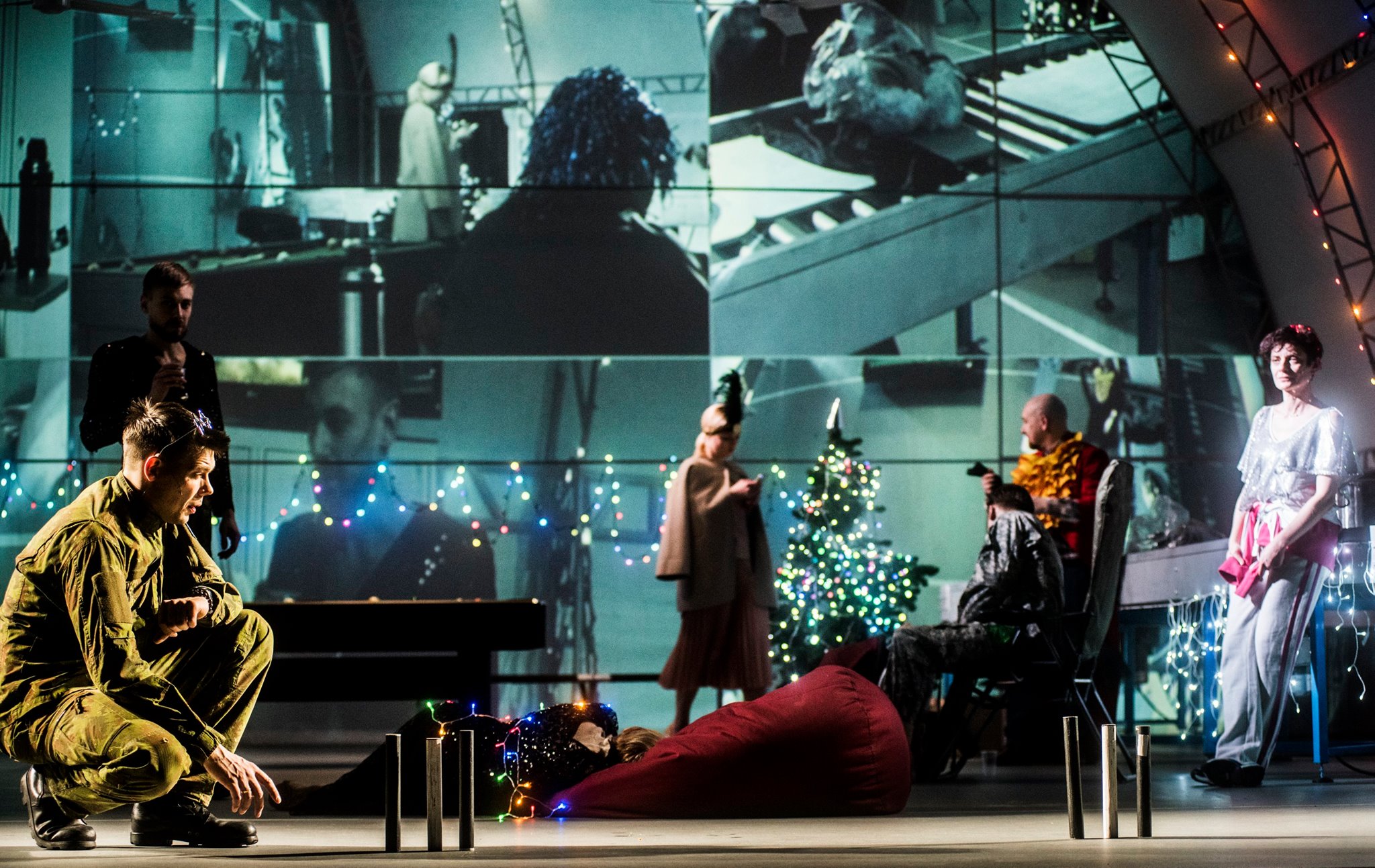
Yana Ross

I don’t like monodramas. I think it is pretentious for one actor to draw all attention and drag out monologues. I don’t see Request Concert a mono-performance. There is a clear partner present. A radio host. He’s very real. They are in conversation together, even though she doesn’t say a word. This play is a great challenge for a mega-actress and a stubborn director. Everything has to be subtle, almost hidden. Hints, cues, clues and references are planted in every corner, but it is up to the audience to read their own story through them.

Language is a strong partner in theater, so is an actor ensemble. Working on Wunschkonzert I wanted to challenge these tools I often use and discard them in search for a different type of communication. How to work with human energy? Space between vocal communication? I wanted to highten our sense of intuitive presence. I wanted to give the audience freedom to choose how to process and watch the performance. For a major star, an actress of world fame, a big challenge, to give up the most powerful tool – her voice, was also a thrill and experiment. Can her power still reach the audience, can she communicate the rich and complex inner-world of her character without whispering one sound? How honest can we be facing each other in rehearsal without any other partner to lean on?

Intimacy was vital. We worked in this private apartment, rented for us to mimic the setting and we spent hours in each corner of it exploring her presence. Kitchen with radio, laptop and cup of tea. Bathroom ritual.

To respect the dramaturgy one must scrutinize and examine every single line and question its relevance to our generation, to the audience which comes to see the performance. For example, Kroetz gives Ms. Rausch a hobby… she is knitting a rug. She is actually about to finish her creation but the audience is not supposed to notice that the rug is done. We’ve spent a long time looking for her equivalent hobby. Not many modern women knit. Also, the internet did not exist in 1970s when the play was written but now, the online presence is overwhelming. We burn the midnight oil on facebook and online shopping. Danuta and I started to explore the possibilities of her internet presence. Would she be on the dating site? Is she interested in finding someone? Does she shop online. Does she have a porn addiction? We played for hours in such scenarios and discovered all possible clichés and had to kill these ideas one by one until we discovered Simms. A game, which allows someone to create an identity and a family and we thought this is something Frau Rasch could get in to. She started slowly by playing a few hours a day, creating a perfect husband and a daughter, a job and hobby as well. It gave a routine pleasure for the character to come home to this virtual family and to complete some tasks. Just like Kroetz writes that the rug is finished but the audience doesn’t notice, so does our heroine finished playing the Simms. She pops the disk out and puts it away for good. Relationship with this game returns at the end of the performance when the audience might feel they were part of someone else’s “Sims” game.


Request Concert reviews 2015

“Request Concert is new and unique language in the Polish theater, proposing radical subject and aesthetics different to our fashionable mainstream. Yana Ross crosses seamlessly into interdisciplinary. You have to go toward a hybrid of forms, on the border between performance art and minimalism, to escape the stage of verbose acting ejaculations. Even for a moment.”

Lukasz Drewniak, teatralny.pl


“Request Concert” with a mega-star Danuta Stenka, is a suspense which feels like a Hitchcockian thriller. ”

Lukasz Maciejewski, “Wprost” 


“The well-known radio host reads out letters from his listeners and announces songs dedicated to them in his typical ironic style. For the main character, the radio program is another way to suppress the feeling of loneliness within her four walls.  After a while, spectators notice the grotesque gap between the stories of listeners who are happily in love and the main character who is left to herself. Romantic narratives gradually encircle the lonely woman. She looks as though she was defying orders to “look for the other half” and “smile despite the circumstances”. She feels left behind but also hounded by the “romantic idyll” orders. This peculiar anti-monodrama is filled with poignant emptiness. It is such an accurate representation of the daily grind that it is hard to bear. If you want to bear it, it is mainly because of the main (and only) actress.

Legendary Danuta Stenka is within the audience’s reach, standing by the kitchen sink or sitting on the lavatory. Her personality influences the mode of watching the performance to a large extent. The empathy felt for the lonely character turns into voyeurism and watching the star in a closed environment.

Working on the new adaptation of Kroetz’s play, Ross is establishing extreme intimate relationship with the audience. is Fascinating to watch not only Stenka but also the audience and their radically different responses to the scenic asceticism. It is also fascinating to watch Ross herself, standing among spectators and trying to spot their complex reactions. A demiurge whose creation may get out of control anytime.”

Lukasz Badula, 2015


“A daily show with the Kardashians family and The Sims game compensate for the loneliness to which the woman is doomed. Digital characters she creates refer to her past. She manipulates and lives in the world created by herself. Not being able to find her place in the real world and fully enjoy her life, she experiences the virtual world as if she were actually part of it.”

Ilona Warzywniak


“Request Concert is the diagnosis of contemporary human condition. The performance directed by Yana Ross examines loneliness without asking if it is by choice or coincidence. However, it suggests that no products from catalogues, healthy nutrition choices or substitutes for human interaction like  simulation games could ever replace the genuine contact with another human being. The main character’s suicidal act is an attempt to “correct” her own life, which, ironically, turns out to be partly successful as she is thrown out of the empty apartment into the crowd.”

Cecylia Pierzchała, 16 October 2015

Team
Director: Yana Ross

Text: Franz Xavier Kroetz

Dramaturg: AŚKA GROCHULSKA

Music: AŚKA GROCHULSKA, TOMASZ WYSZOMIRSKI

Set And Costume: SIMONA BIEKŠAITĖ

Lights: MATS ÖHLIN

Project Curator: MARCIN ZAWADA

Stage Manager: WOJCIECH SOBOLEWSKI


Cast:

Danuta Stenka
Wojciech Mann (radio voice, Poland)
Ernst Grissemann (radio voice, Austria)


more info: http://trwarszawa.pl/spektakle/koncert-zyczen/