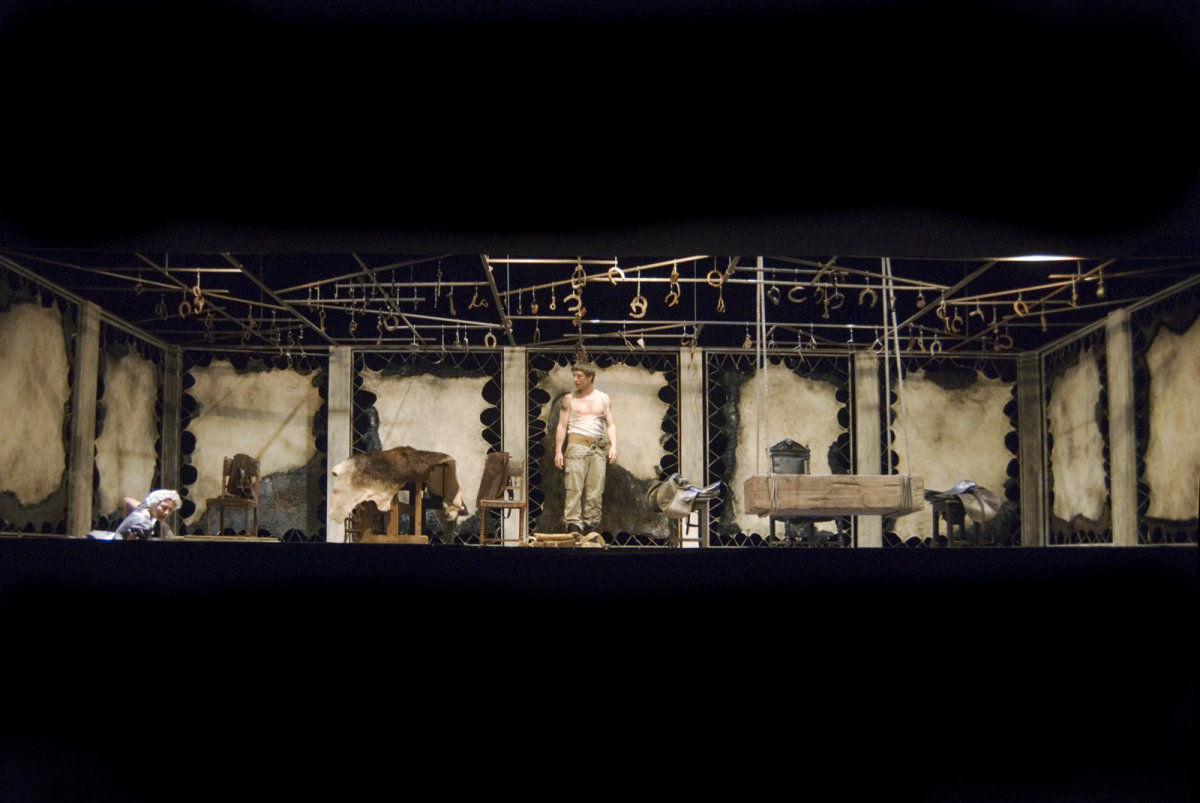
Jan 082009
 

Published in Theater magazine 36.1
Elfriede Jelinek interviewed by Gitta Hoenegger


I have to start from the beginning. How did they come about. Did the project start with the short essay you wrote in response to the death of Princess Diana?

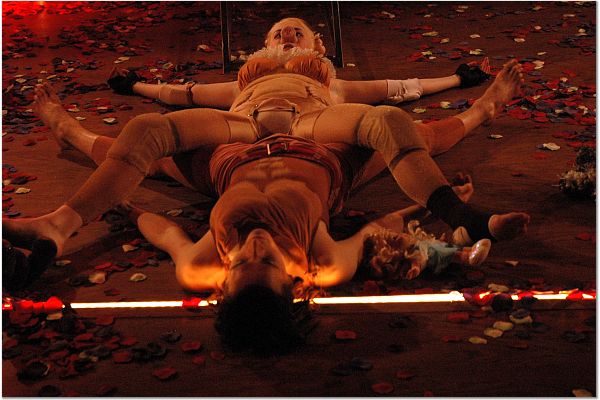
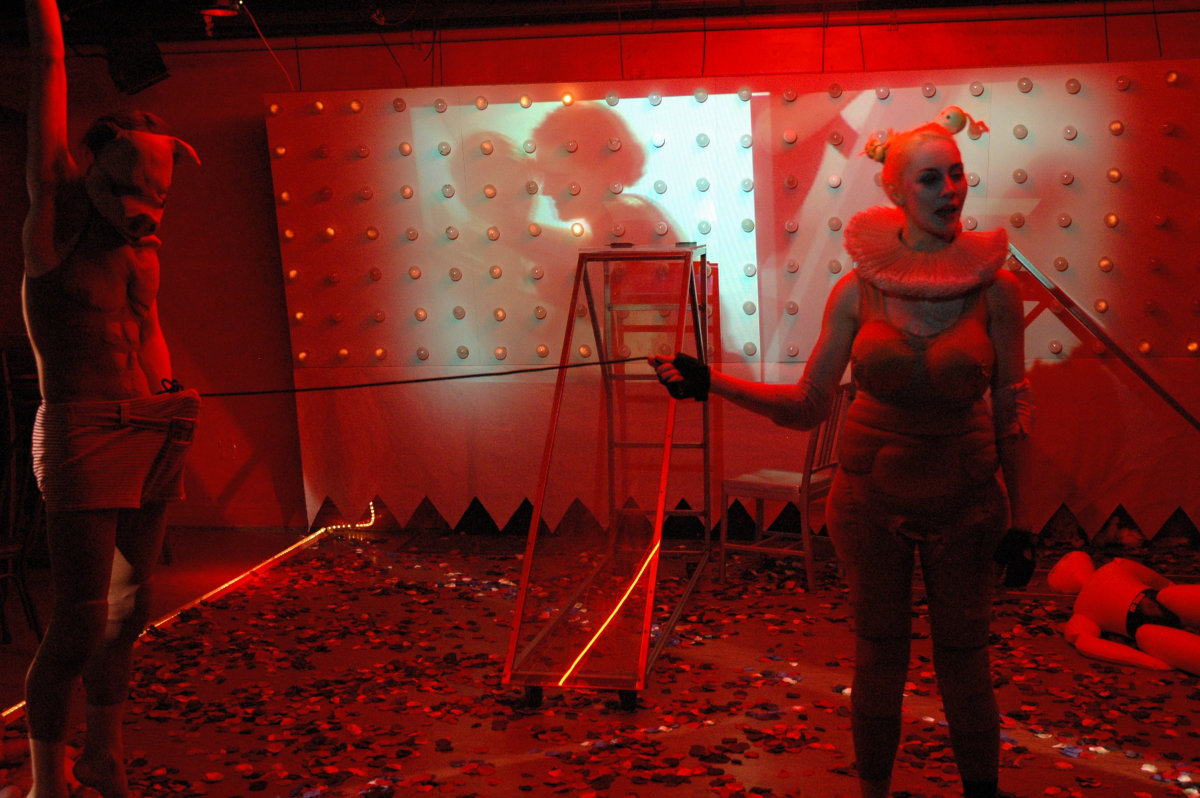
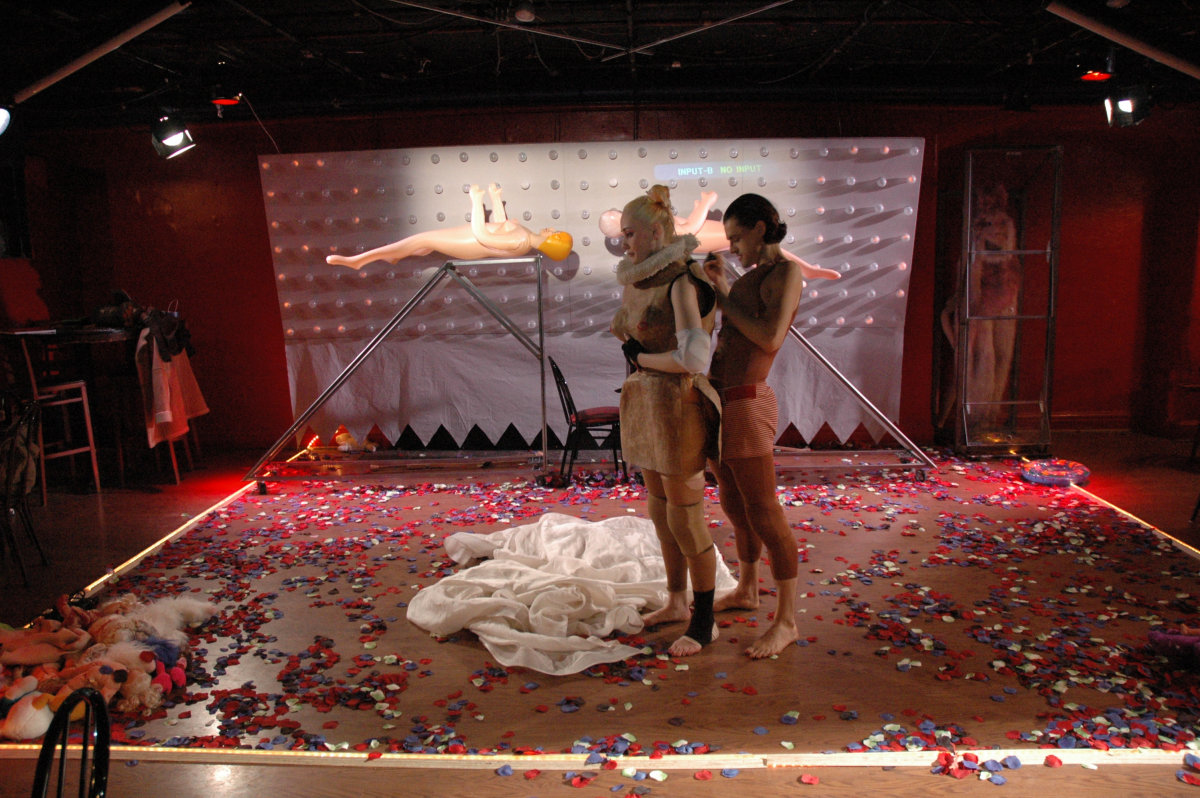
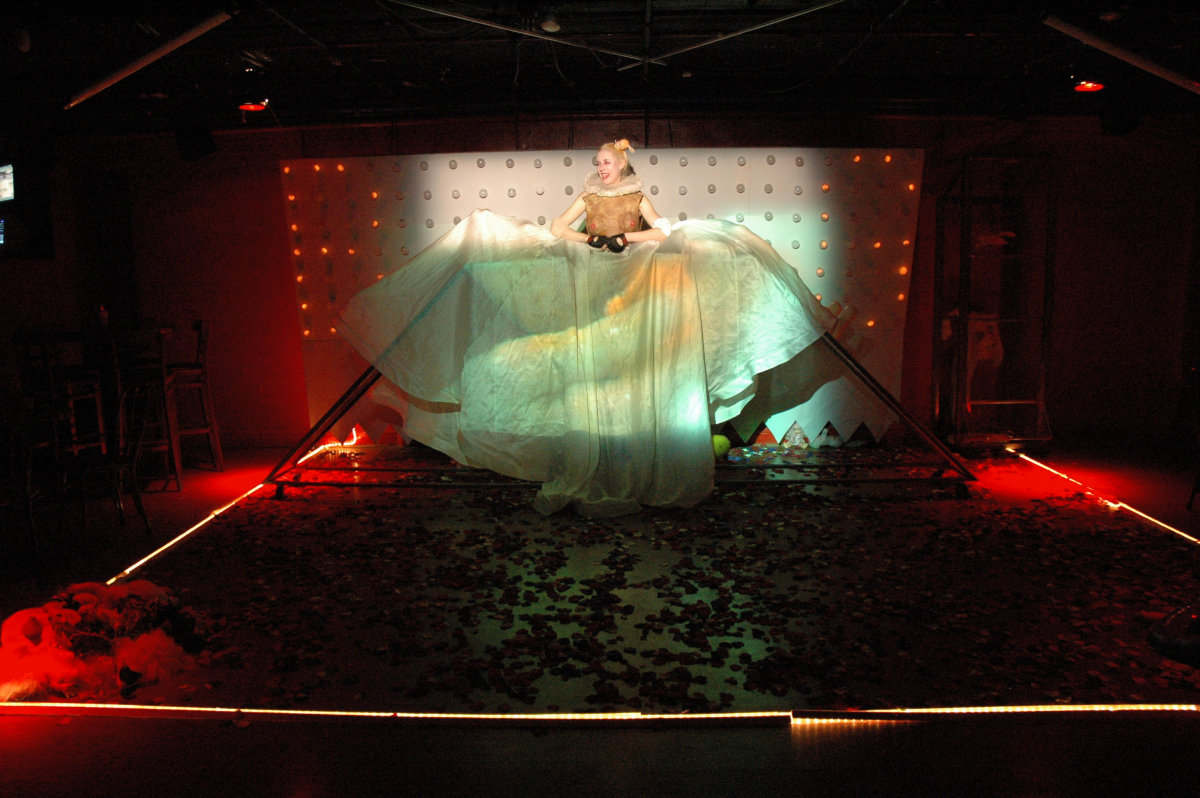
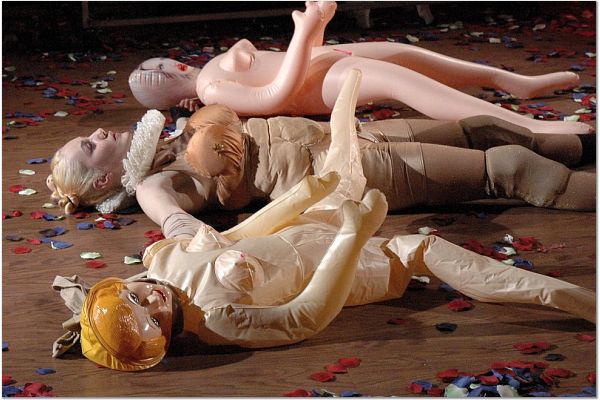
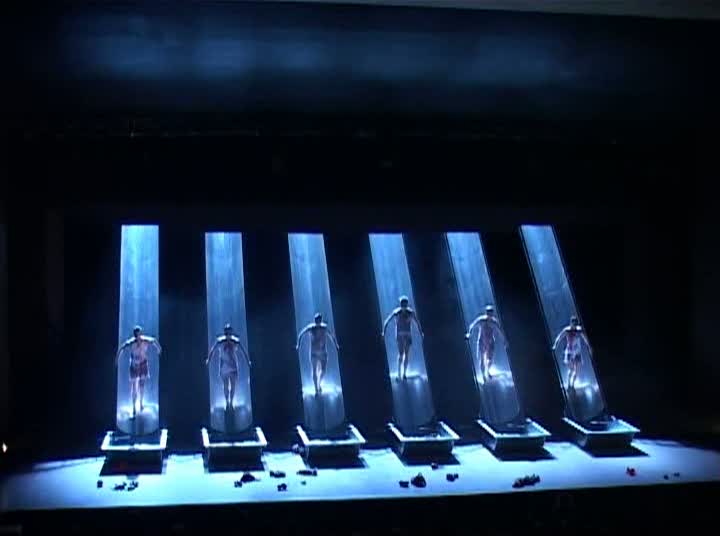
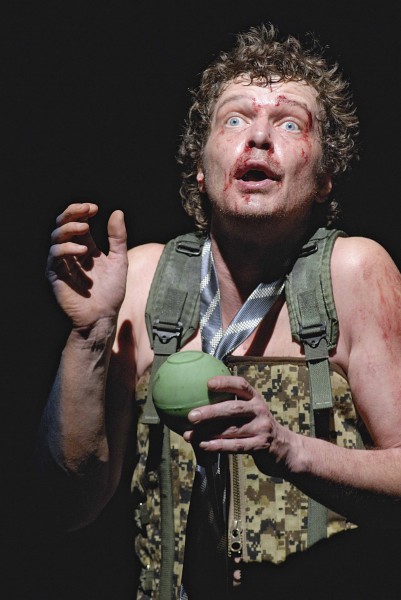
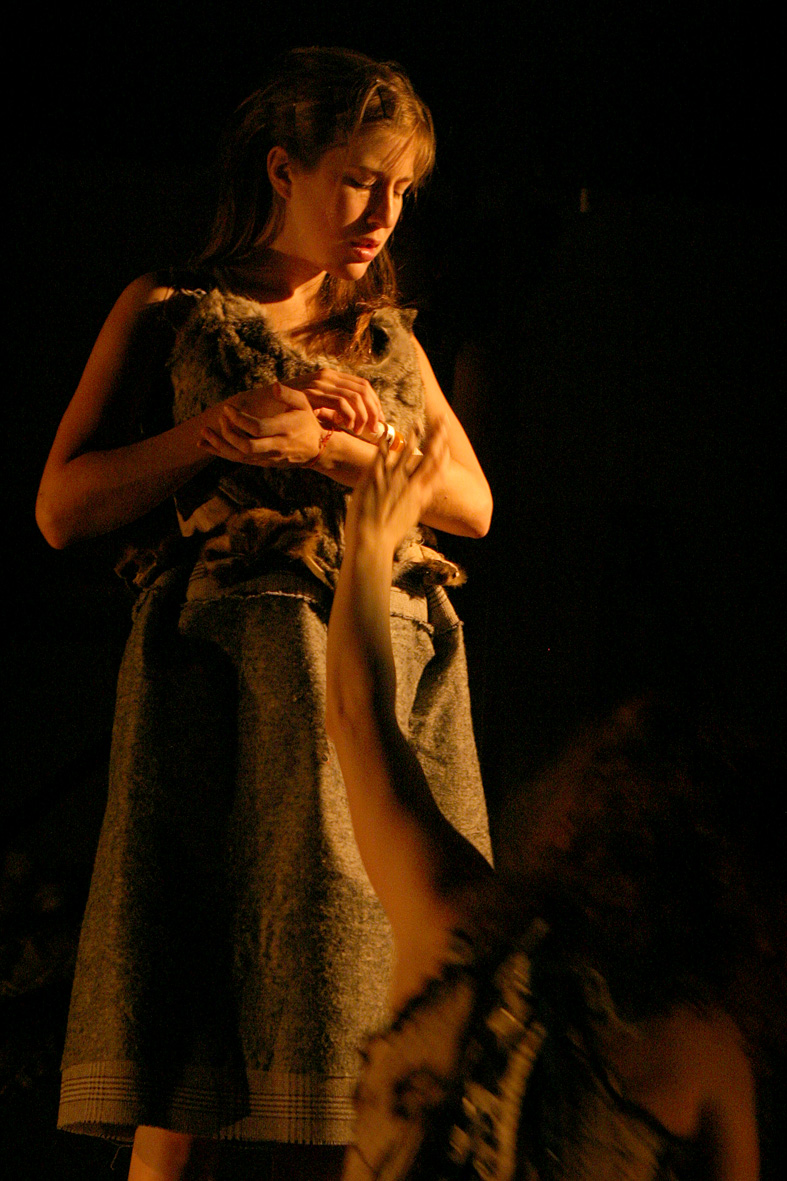
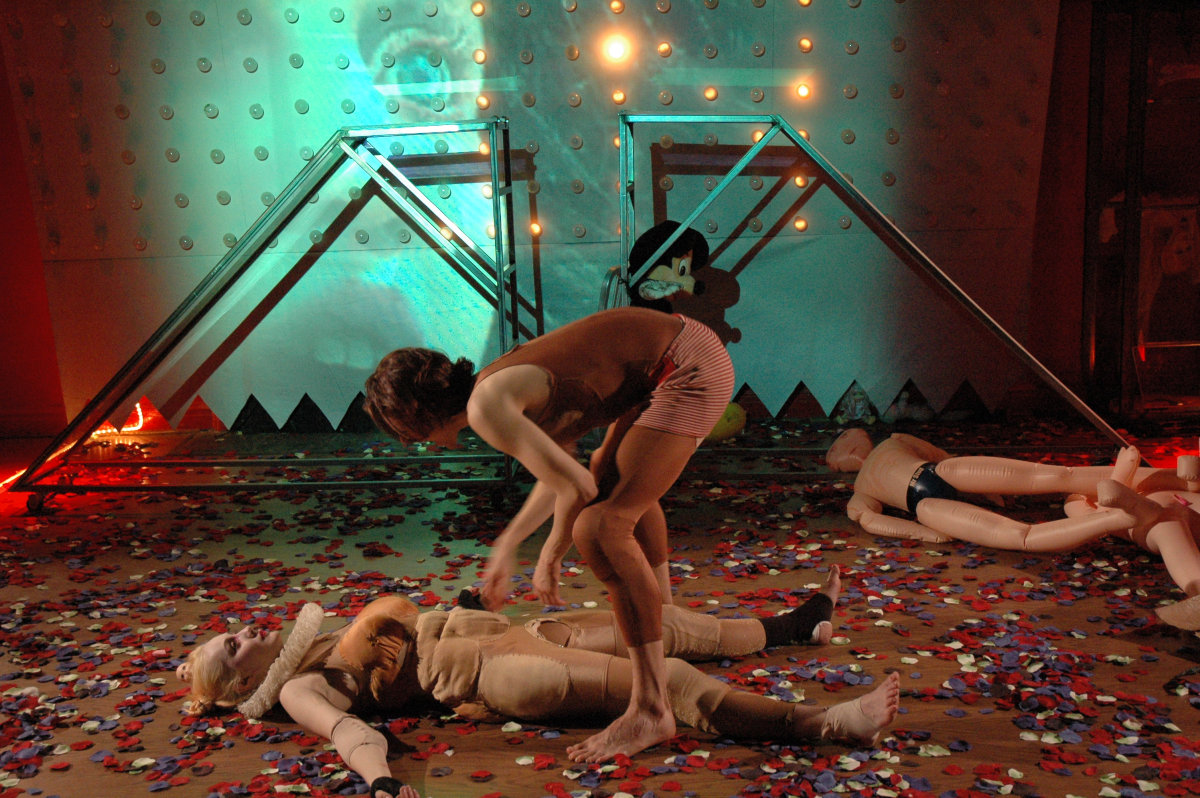
Not really. I simply wanted to write princess plays, maybe because there were Werner Schwab’s feces plays, his so-called Kings’ Plays.[i] So I thought, I’d really like to write princess plays now, a man would never do that. The princess is a pre-stage of femininity, so to speak, and then of the woman. Mary Stuart represents the Royal stage, princesses are the pre-stage, something that’s not yet settled.

Was there a chronology to your writing?

The first one was Snow White, of course. Then came Sleeping Beauty, naturally, because these are the best known fairy tales. Rosamunde was the only one that was commissioned, by the Berlin Philharmonic. And then, of course, I also read the libretto by Helmina von Chézy and I thought, one just simply has to thrash that, one has to play with that, change roles, exchange the male role. Then came Jackie, obviously, another woman in that kind of stage between. Just yesterday I spoke to a musician about how Onassis succeeded to destroy Callas as a creative person, as an artist, by marrying Jackie, who ultimately is a sexless icon, though I am sure she also attracted Ari with her sexuality.

So there is Jackie, all calculation, a very smart, educated woman, talented too, she could have had a Vogue Fellowship immediately—Sylvia Plath almost gave her life for her fellowship at Mademoiselle. Becoming a poet means everything to one, to the other it’s just an obstacle. With this total focus on the right husband everything is caught up in an intermediate stage, so to speak. So Jackie belonged with those plays. I already had written a short text about Diana, when she died. So, as a conclusion I wanted to show what became of all this: of the intellectual or creative upswing of women, of Ingeborg Bachmann, Sylvia Plath, Madelin Haushofer. That’s then the pessimistic ending—that all those upswings are ridiculous in the end.

In your case too?

Yes.

Was that always that way?

Yes. That’s the role patriarchy has provided for women. When a woman risks transgressing it, as it were, she becomes ridiculous or they make her ridiculous. What I experienced after this award, unbelievable as it was, is a confirmation of my view.

When I hear and read people’s reactions, I think they resent that you don’t allow them to have pity for you.

Mhm.

I sense that even with women.

Well, women are happy about the award.

There are also the others. There is the envy –

Yes, that too. But the men are really malicious. Henryk Broder, an editor of Der Spiegel, attacked me on his web site. I haven’t read it but it must have been really bad, because people responded voicing their objections. That’s no way to treat anyone. Yes, there is this incredible hatred. Stefan Matuschek, in Der Spiegel called me a “Cashmere Communist.” They would have left me alone had I not received the Nobel Prize—most probably they’d have either been a bit more considerate or they wouldn’t have noticed me at all. I’d prefer that anyway. But this way one gets dragged into the public and then one is subjected to that kind of thing. I am determined more or less to retreat.


[i] “Kings’ Plays” also is the German term for Shakespeare’s histories
Team
Beth Morrison Projects
Seoul Performing Arts Festival
Seoul, South Korea

Director: Yana Ross

Scenography and Costumes: Zane Pihlstrom

Lighting: Ralf Scholz

Sound: Burke Brown

Sep 202008
 

Mackbet 08

Yana Ross:

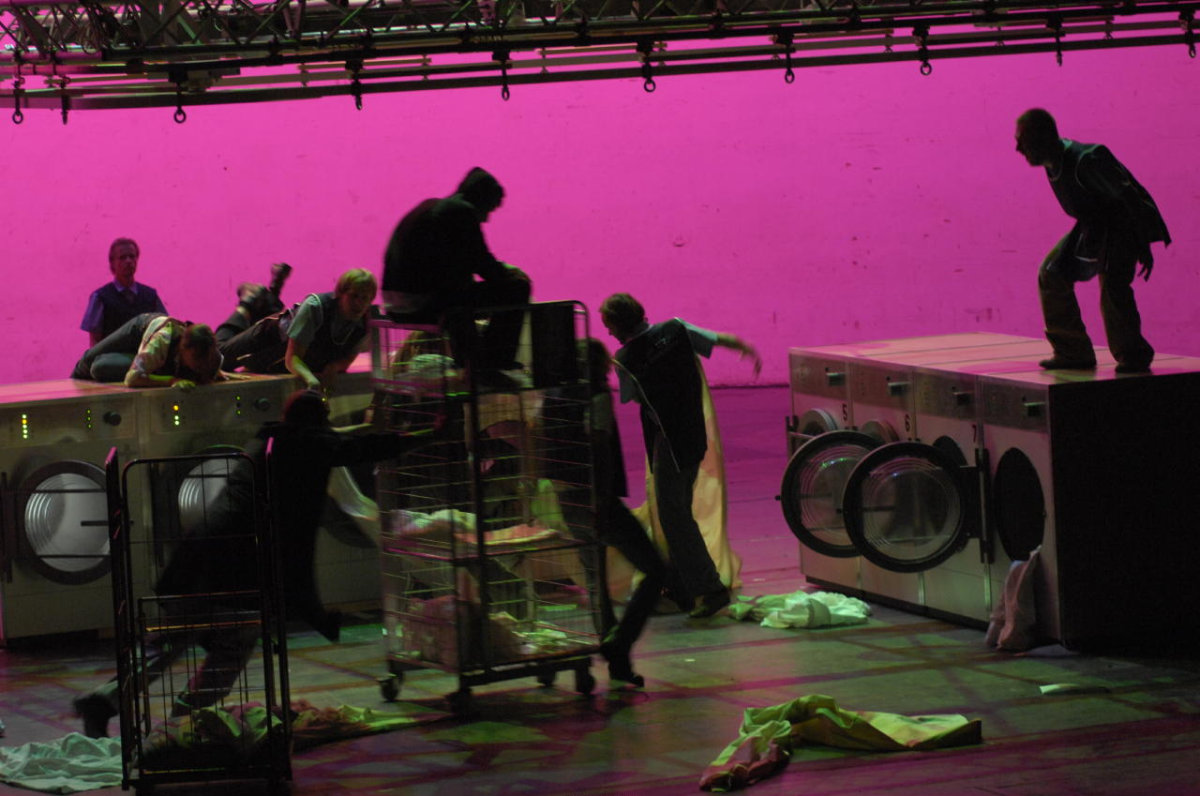
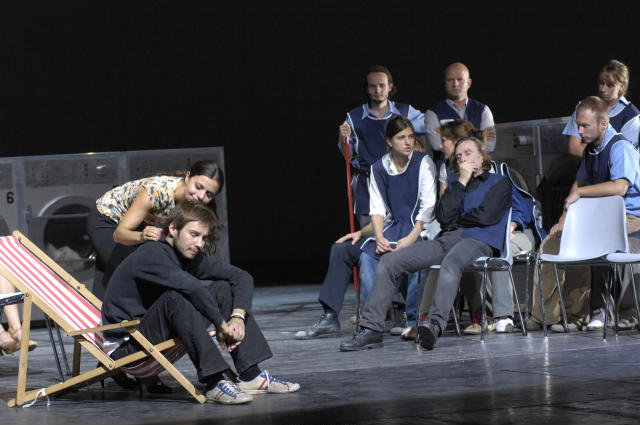
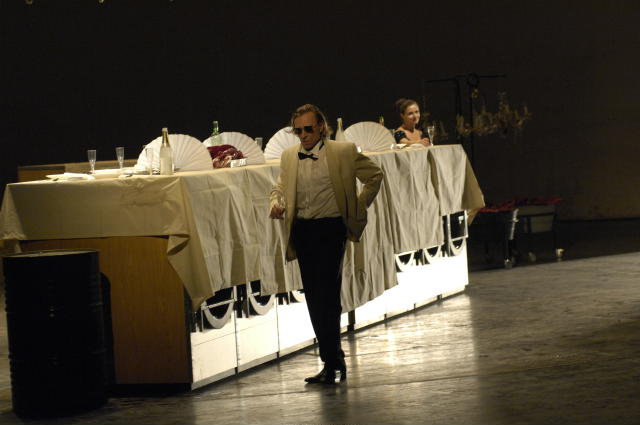
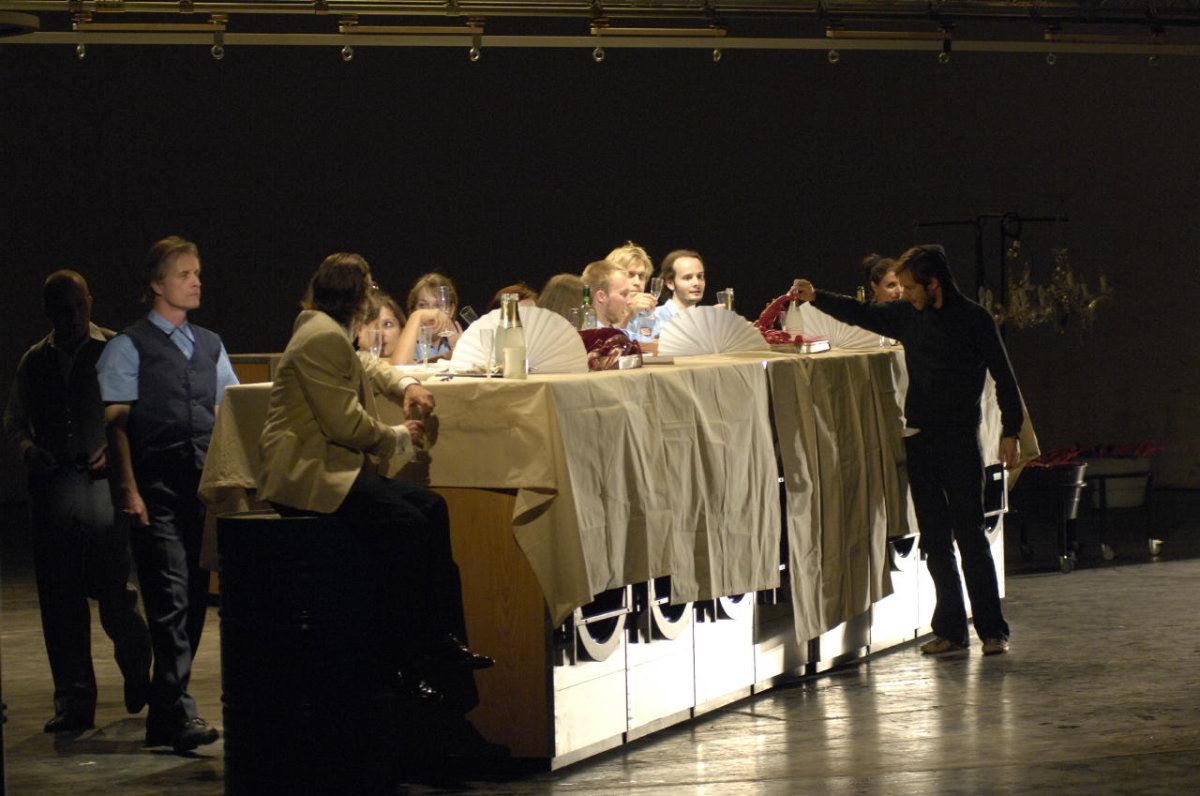
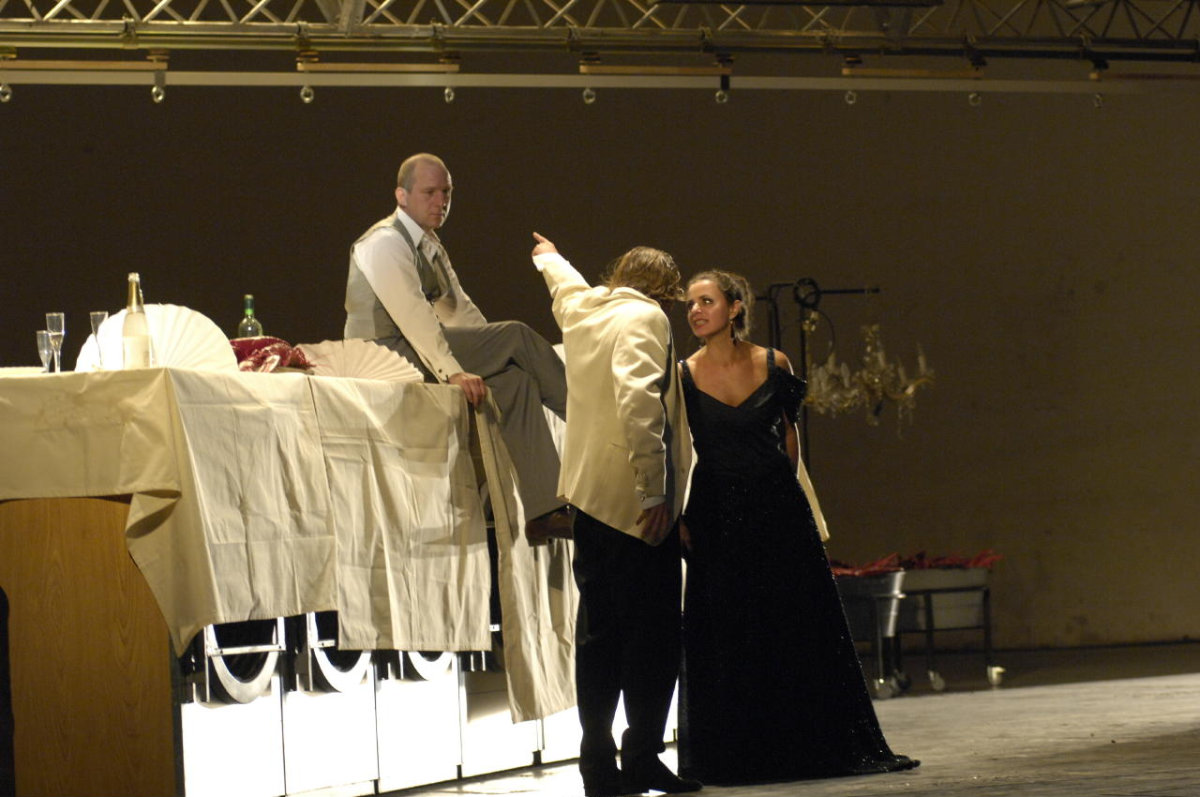
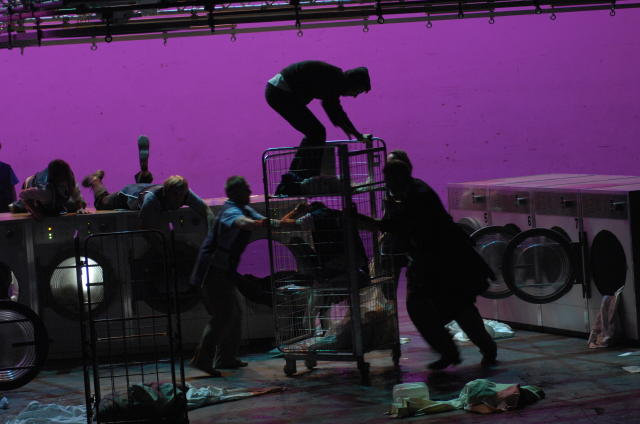
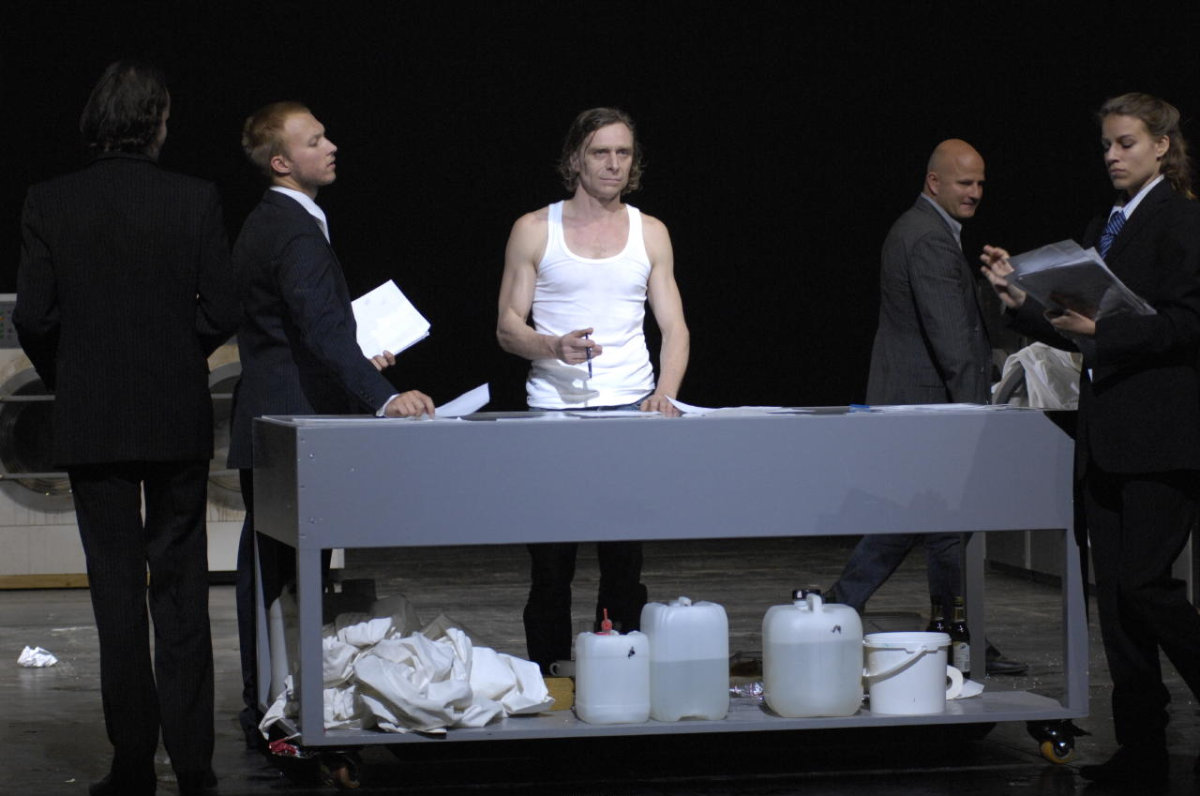
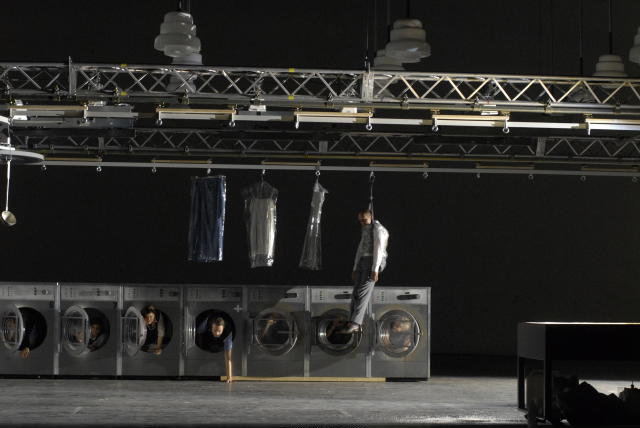
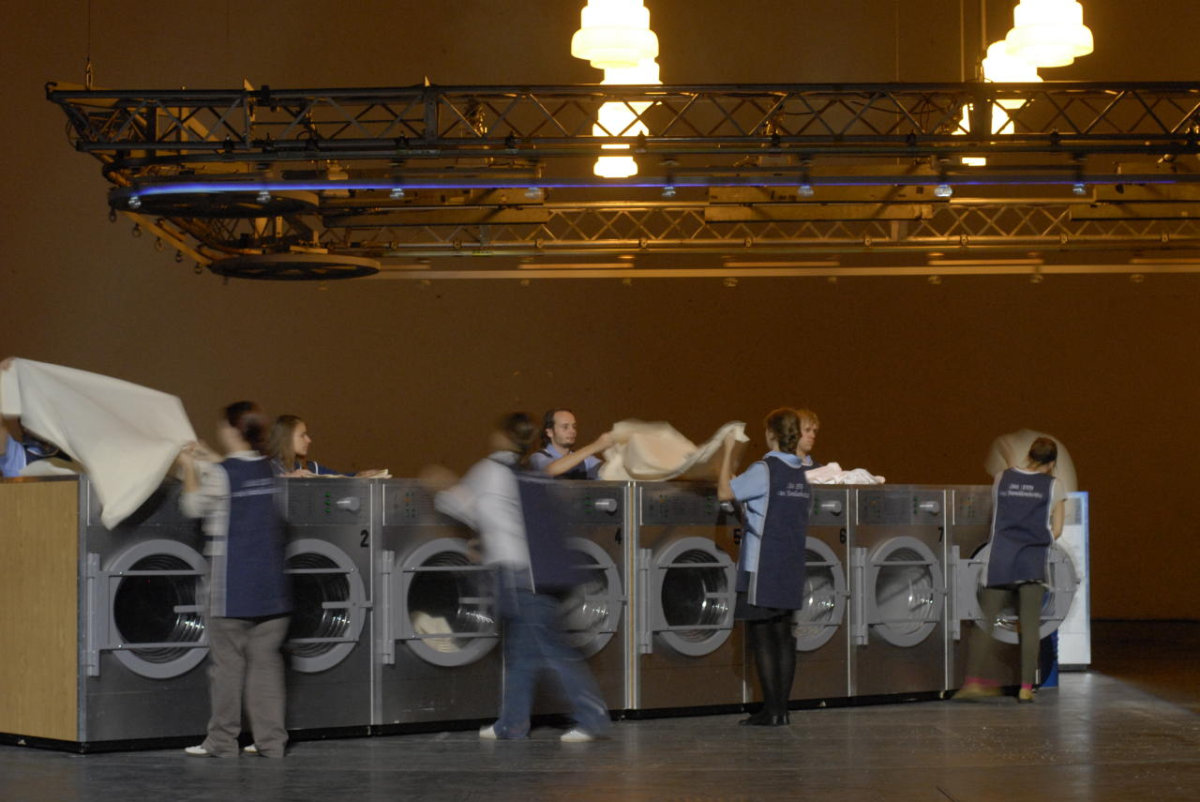
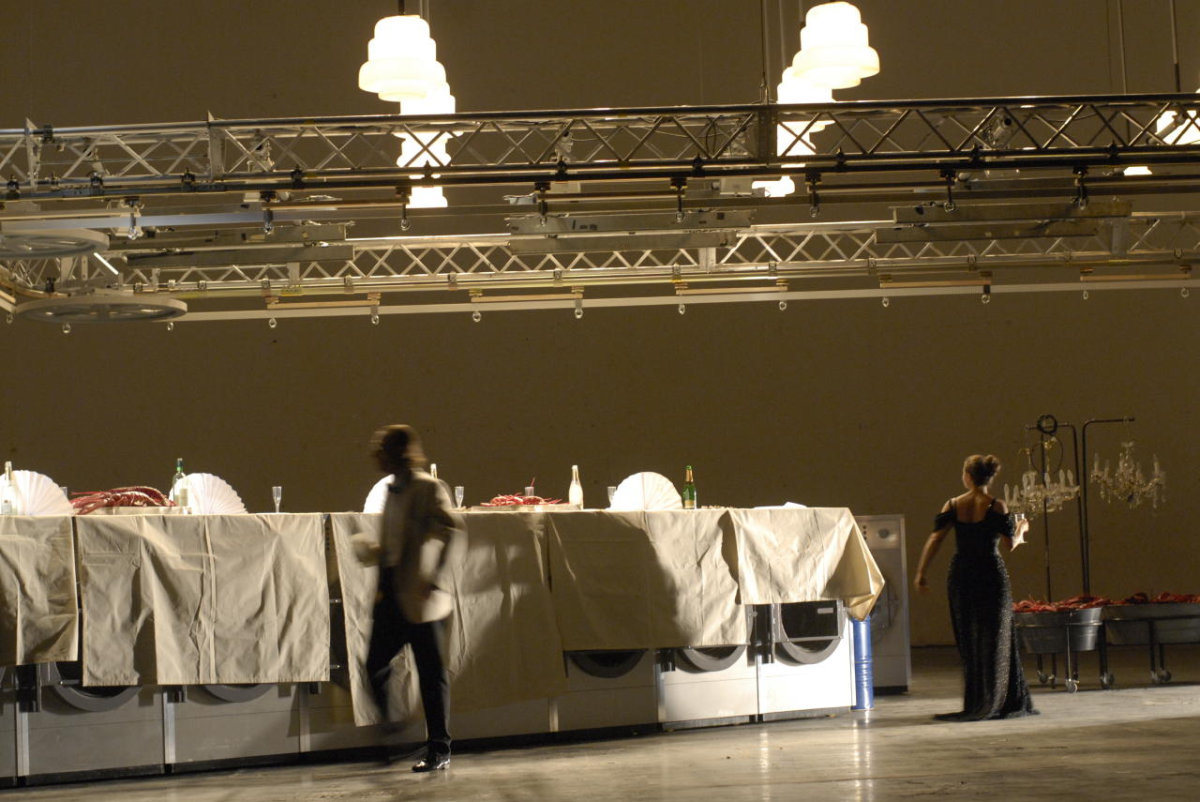
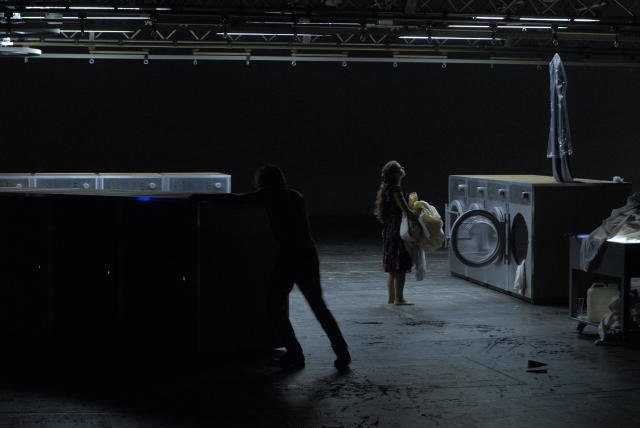
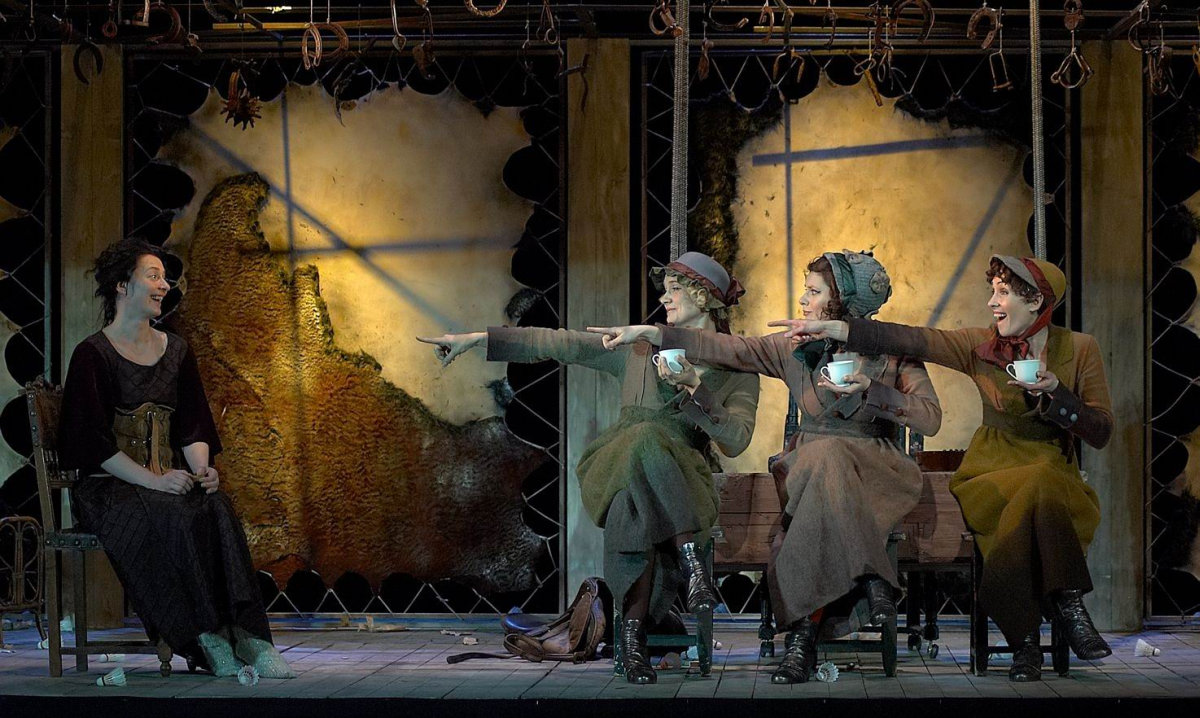
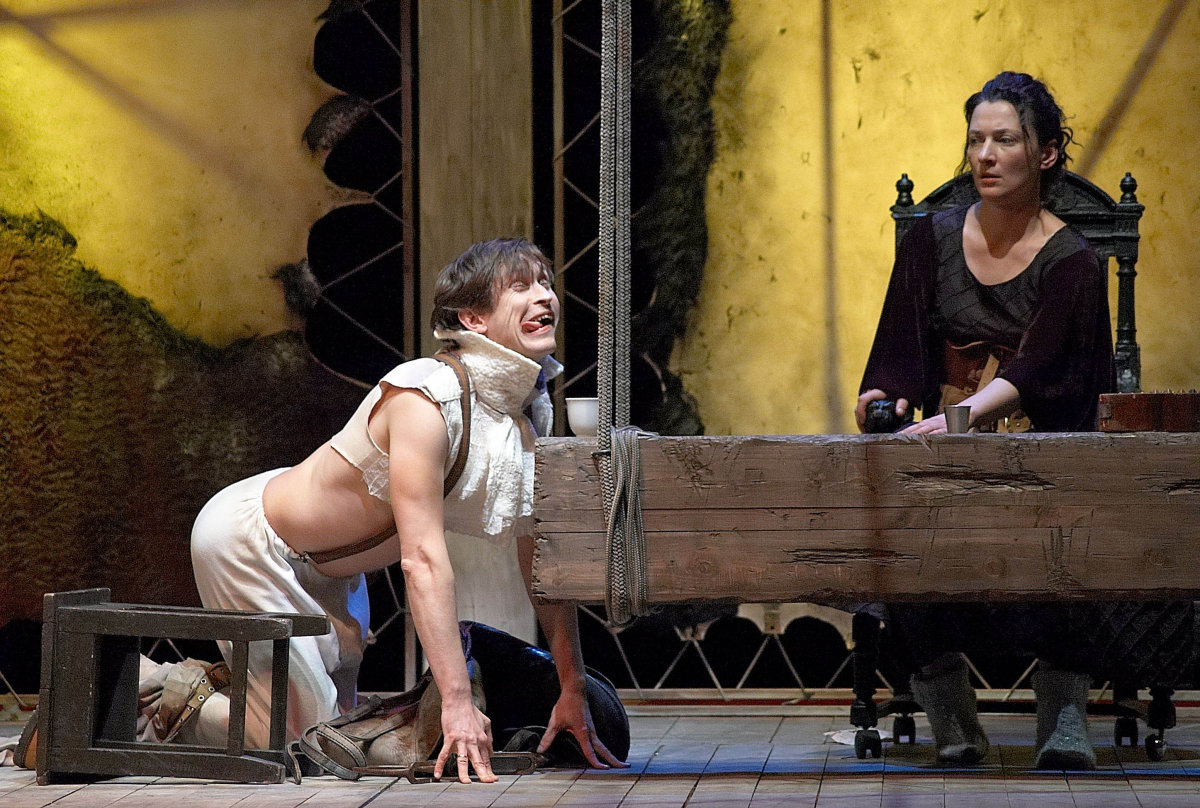
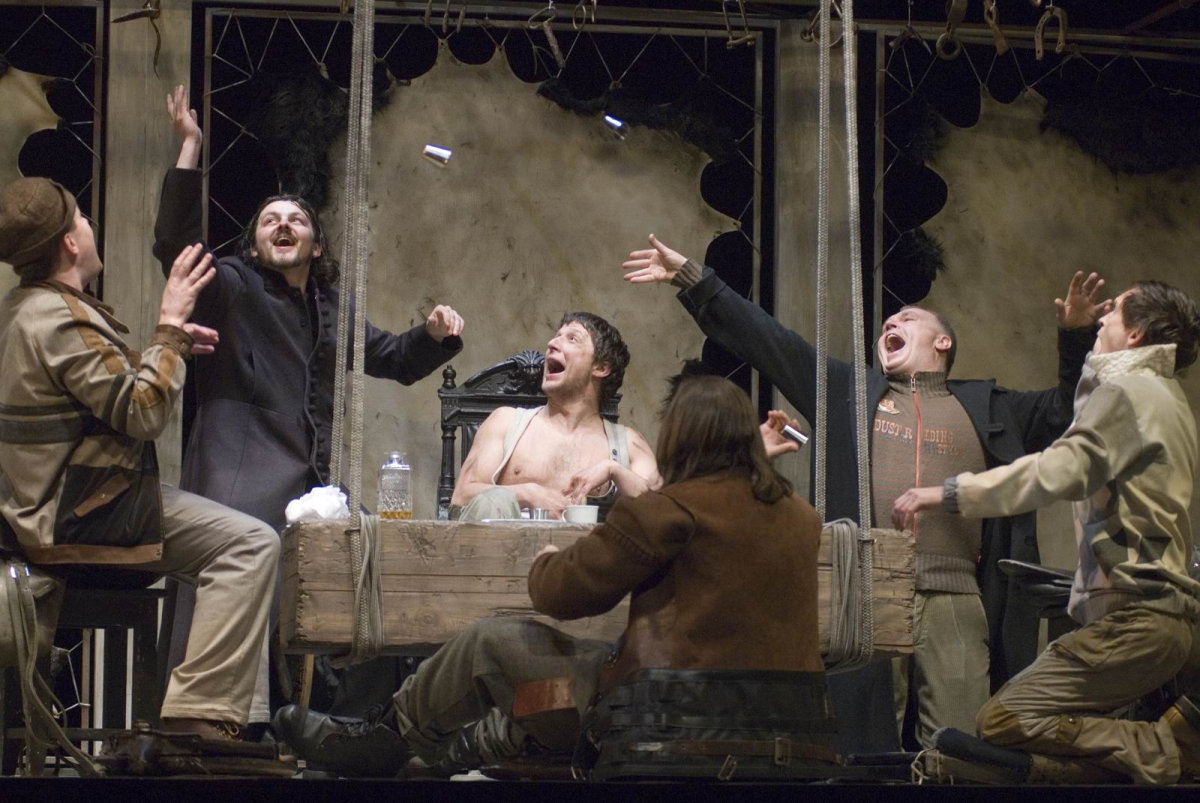
Family. Business. Jealousy. Greed. When all you want is what the other has got, how far will you go? The boss of the family-operated laundry mat built up his business from scratch. Now he just takes the profit, trusting his cousins will do a good job managing the place. But when comes a threat of a corporate take over, the family is divided: the young want to sell out and the manager will do anything to make it his own.

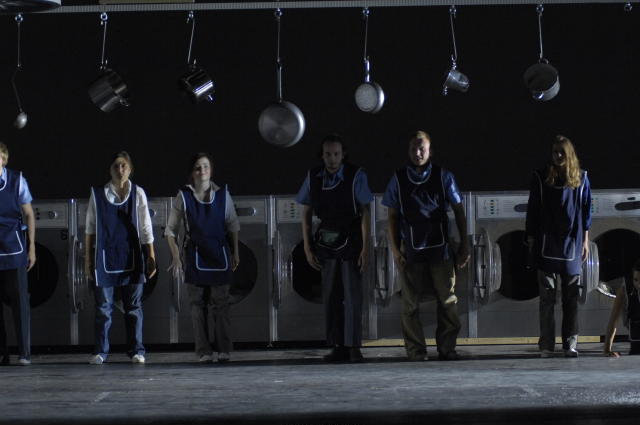
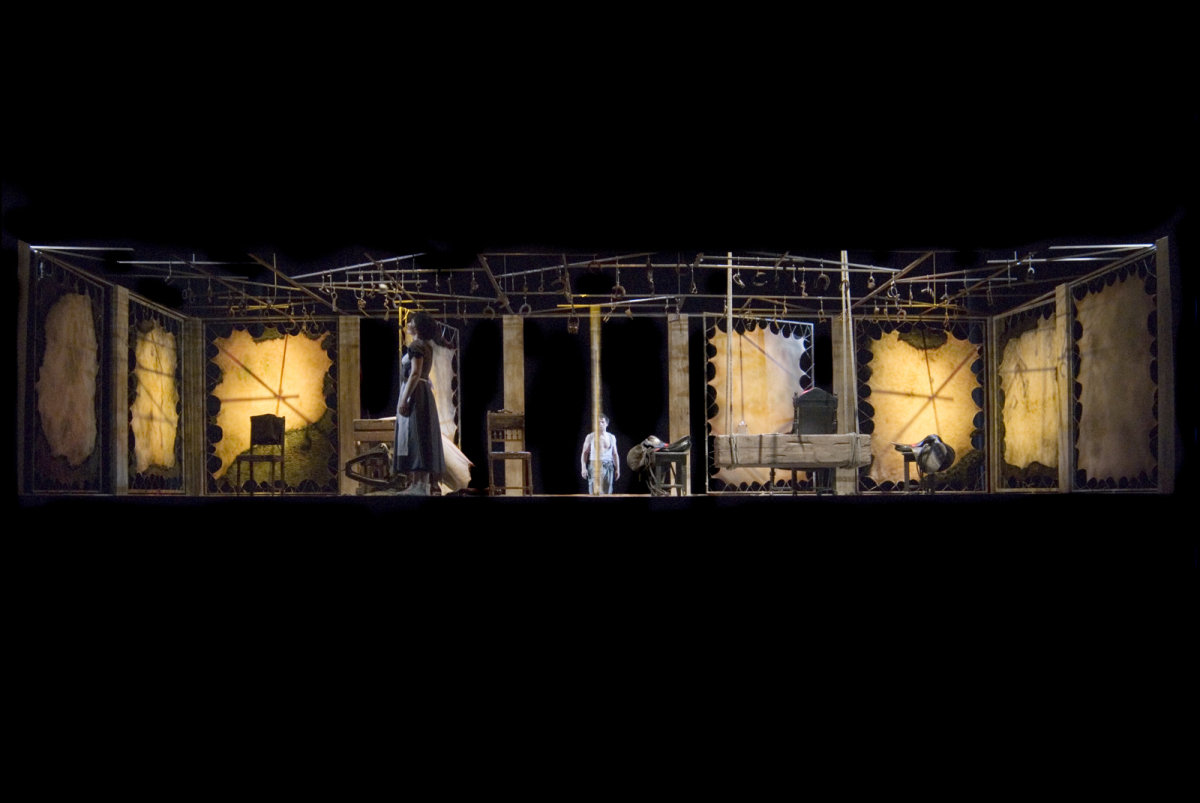
Rough and gritty, the industrial setting still accommodates private orders, and Mrs. M. spends her time trying-on her clients’ clothes, testing the glamour she could have if the money was hers. Cousins and brothers service large industries, pressing uniforms of Toyota mechanics and high-end restaurateurs. In such social strata with little education and great economic pressure, the family members learn by doing. There is never an option of breaking out; success is measured by control and responsibility, ownership and cash.

The basic security measures at night are the Doberman pinchers. These animals guard the gates and become the first image of aggression, premonition and Fate at the start of the play. The mystery of supernatural travels through the animal bodies and it is up to the audience to decide how real is what happens to them. Are they just dogs that get the bone or do they really have something to say?  Although, once Macbeth takes matters into his own hands, the animals placate and stay near him — no longer wild but timid.

As the world of desire and betrayal welcomes death, Duncan and Banquo come back to play among the living. They become the messengers of Fate and have a lot of fun fucking up Macbeths’. They take on other characters, joking with Mrs. M, pretending to be a Doctor and a Nurse, or telling Mac she’s dead while she is still fighting for her life.

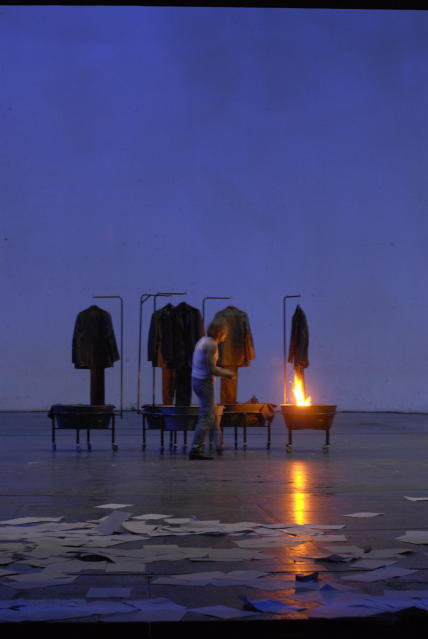
The family business at the end goes corporate. The youngest, Malcolm makes a deal with the franchise lawyers to sell out. The old-school proletariat is too slow to adapt to   “Globalization”, and “Americanization.” Burned to the ground, “Double Bubble” is a carcass of charred metal and the last rack of men’s trousers goes up in flames on the empty stage.


Team
Volksbühne Am Rosa Luxemburg-Platz

Berlin, Germany
September 2008

Director: Yana Ross

Dramaturgy: Katrin Wächter and Katrin Beushausen

Costumes and Scenography: Zane Pihlstrom

Lighting: Ralf Scholz

Music: Sir Henry
Cast:
Steffen Gräbner
Sebastian König
Naomi Krauss
Inka Löwendorf
Uwe Preuss
Jorres Risse
Uwe Schmieder
Axel Wandtke

More info: http://www.volksbuehne-berlin.de/praxis/macbeth/

Nov 052007


Bremen Freiheit 08

From the interview in IEVA magazine


Why did you choose Fassbinder’s Bremen Freedom?

I always loved Fassbinder’s work for the theater because it often speaks about social issues but doesn’t leave behind the human nature and he uses intense feelings and emotion to convey social injustice. This play caught my eye because a strong woman was at the center and she fought viciously for her existence and her right to have everything she wanted. Also, her choices were hard and paradoxical and I think it’s true of many ambitious people to face a choice and to make a leap to reach their dream in life.

What is the play about?

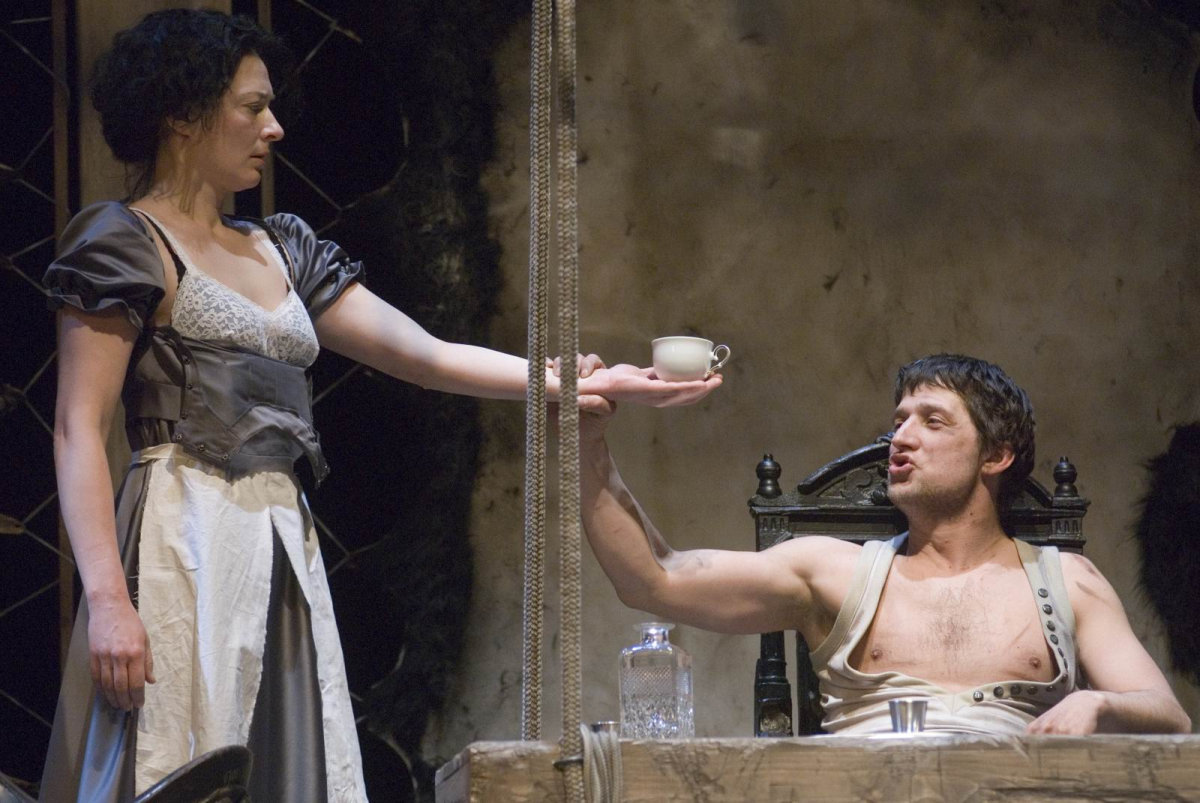
The story takes place in a small German town in the 19th century where a housewife tries to radically change her life and take what she wants from it. She wants tremendous love, she wants success, she wants to be ahead of her time and she doesn’t want to obey any social laws of propriety or behavior. She’s a rebel and a dangerous one, but I love her passion for life and her great desire to be happy. I have to say that this woman kills many people close to her, who stand in her way, and this will be hard for the audience to decide whether she is right or wrong. There is no excuse for murder but there’s also a question of freedom and the price one has to pay to find it. I admire her courage and I don’t take the story literally, it’s a parable, a lesson about uncontrolled desire and passion, a lesson of what woman is capable of in spite of what everyone else thinks.
Why do you think it will be interesting for audience?

I believe there’s still a lot of tension in how men and women stereotype each other, how women are still expected to cook and men are expected to build with their hands and these stereotypes are important to us, the play examines our differences and how our modern society covers up these stereotypes with “politically correct” terms. The play is a mix of passionate love, murder mystery and obsession for total success.  It is interesting that Fassbinder based his play on documentary events, this woman, Geesche Gottfried lived in Germany and her life was an inspiration for this play.

The main hero in this play is a woman. Would you elaborate some of your ideas about this woman? What is she like? What does she symbolize? …

This woman does not fit in her middle-class social circle, she’s too smart and too impatient to obey the laws of her society and the oppressive will of her parents; she fights for her own happiness, love and independence but by what means, is at the center of play. How much is too much? How much does a human being want to be free and what is the price one has to pay to achieve happiness? It’s an open question and at the end of the play, the audience would have to answer it, not us!


Team
ScenographyMarijus JACOVSKIS

Dailininkė: Marta VOSYLIŪTĖ

Composer: Martynas BIALOBŽESKIS


Cast:
Rimantė VALIUKAITĖ (Gešė Gotfryd, woman who became an enterpreneur)
Algirdas GRADAUSKAS
(Miltenbergeris, her first husband)
Vytautas RUMŠAS
/Rimantas BAGDZEVIČIUS (Timas, her father)
Vaiva MAINELYTĖ
(Mother)
Evaldas JARAS
(Gotfrydas, her second husband)
Arūnas VOZBUTAS
(Zimermanas, her friend)
Saulius BALANDIS
(Johanas, her brother)
Džiugas SIAURUSAITIS
(Bomas, her cousin)
Monika BIČIŪNAITĖ
(Luiza Mauer, her friend)
Jurga KALVAITYTĖ
(Luiza Mauer, her friend)
Jūratė VILŪNAITĖ
(Luiza Mauer, her friend)
Mindaugas JUSČIUS
(Artūras)
Mindaugas GRADAUSKAS
(Gešė’s child)
Motiejus Titas KRIVICKAS
(Gešė’s child)
Rimas GIEDRAITIS
(Father Markas, cleric)

Oct 152007
 

Liuce ciuozia 06

Yana Ross

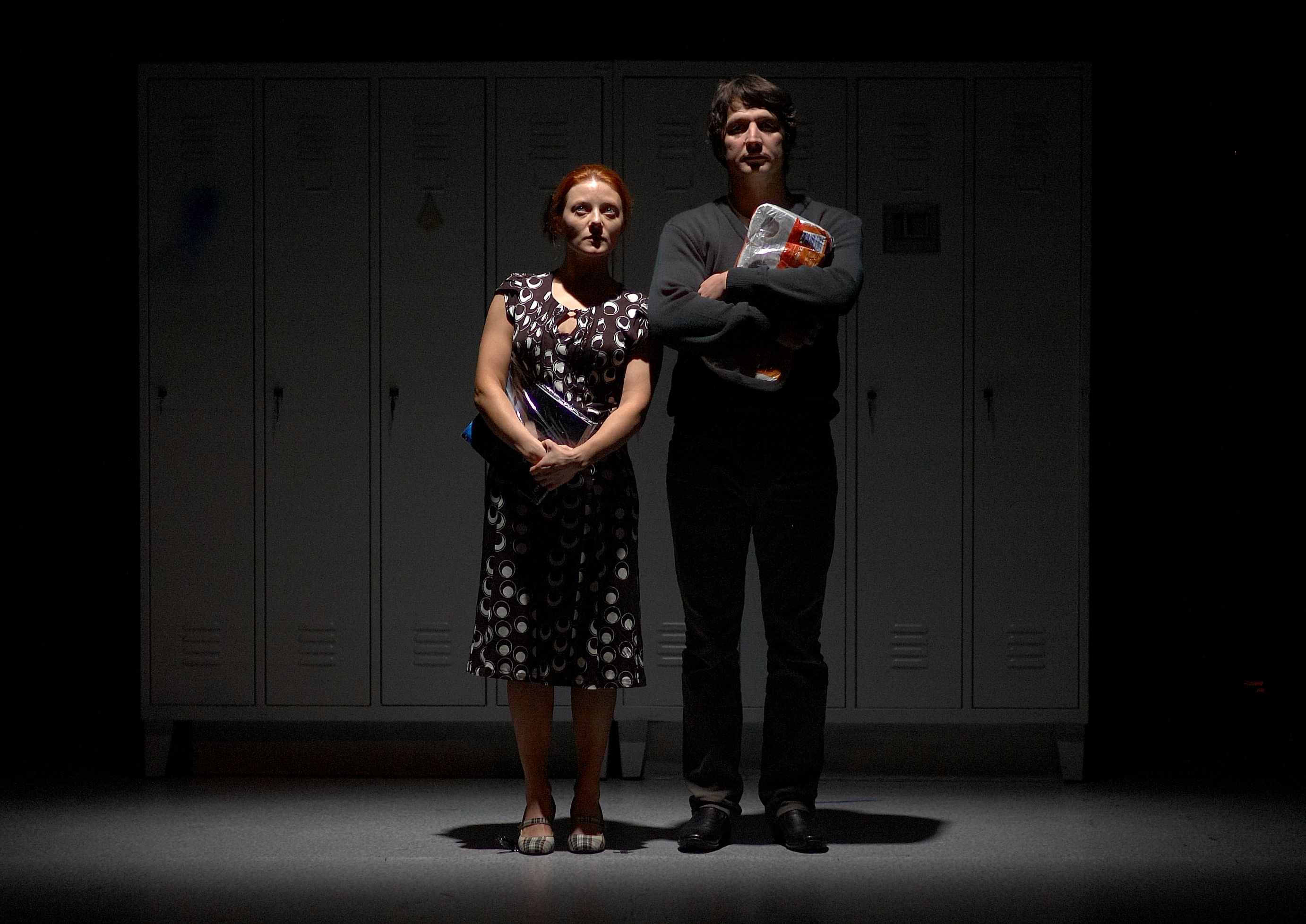
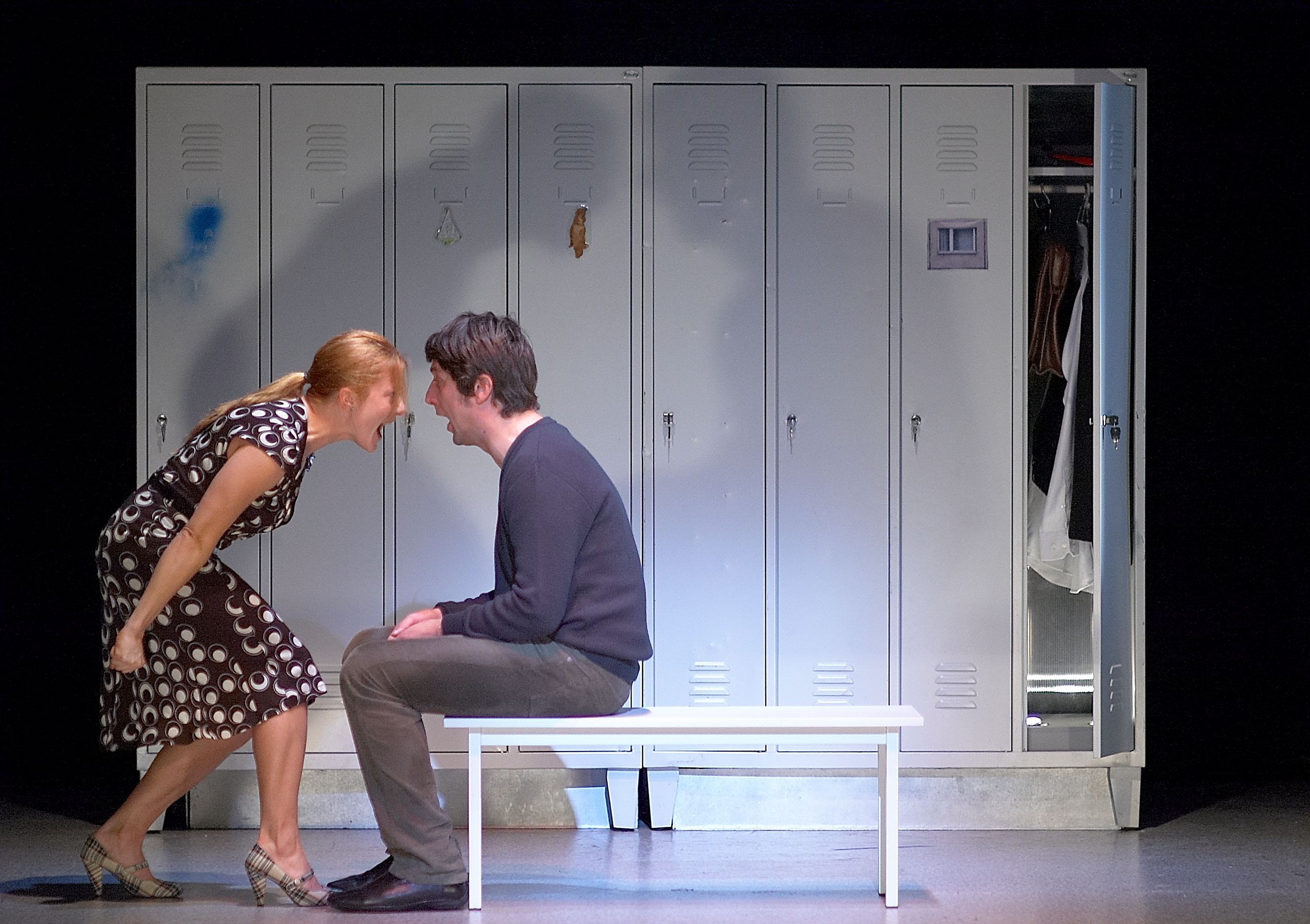
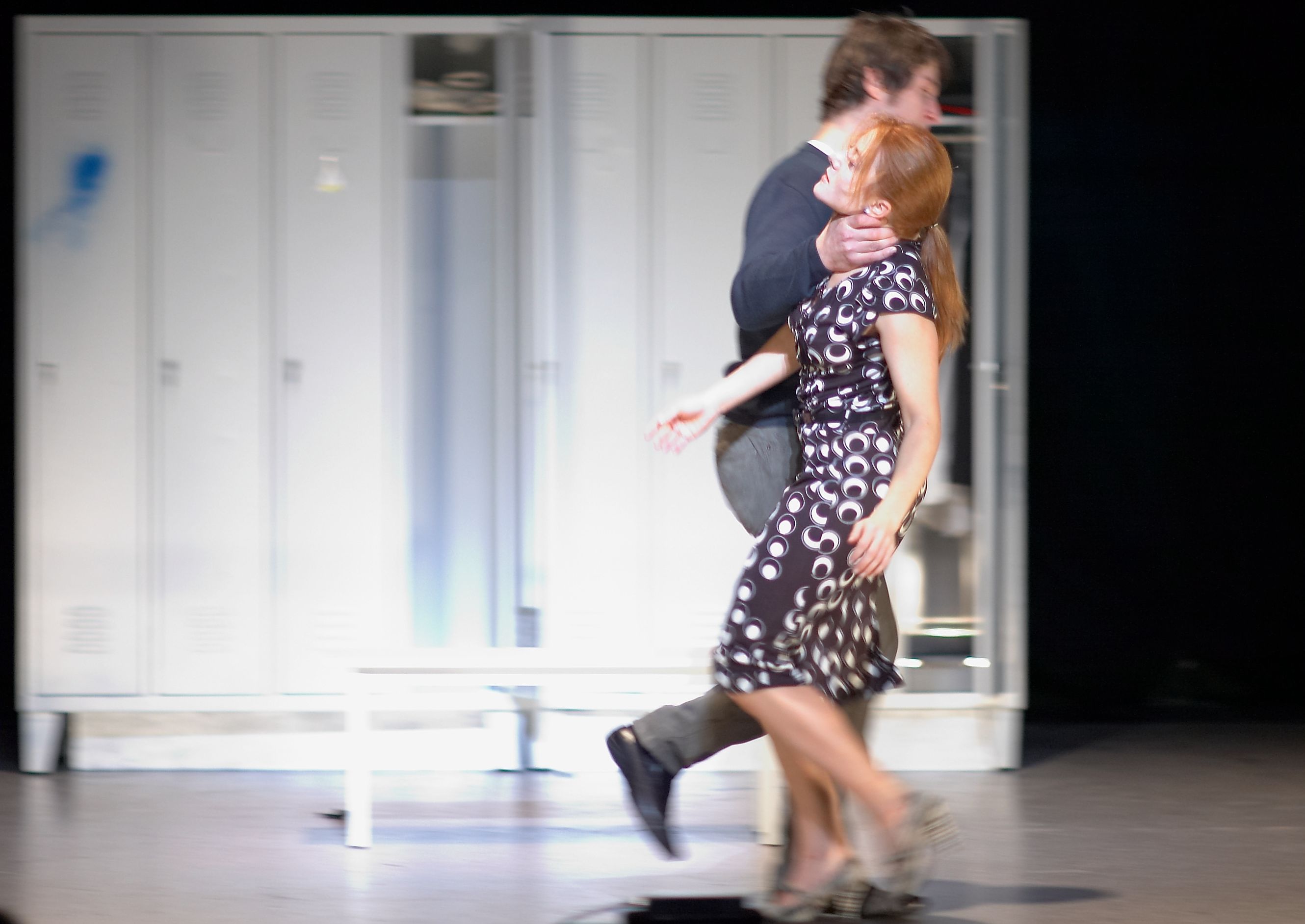
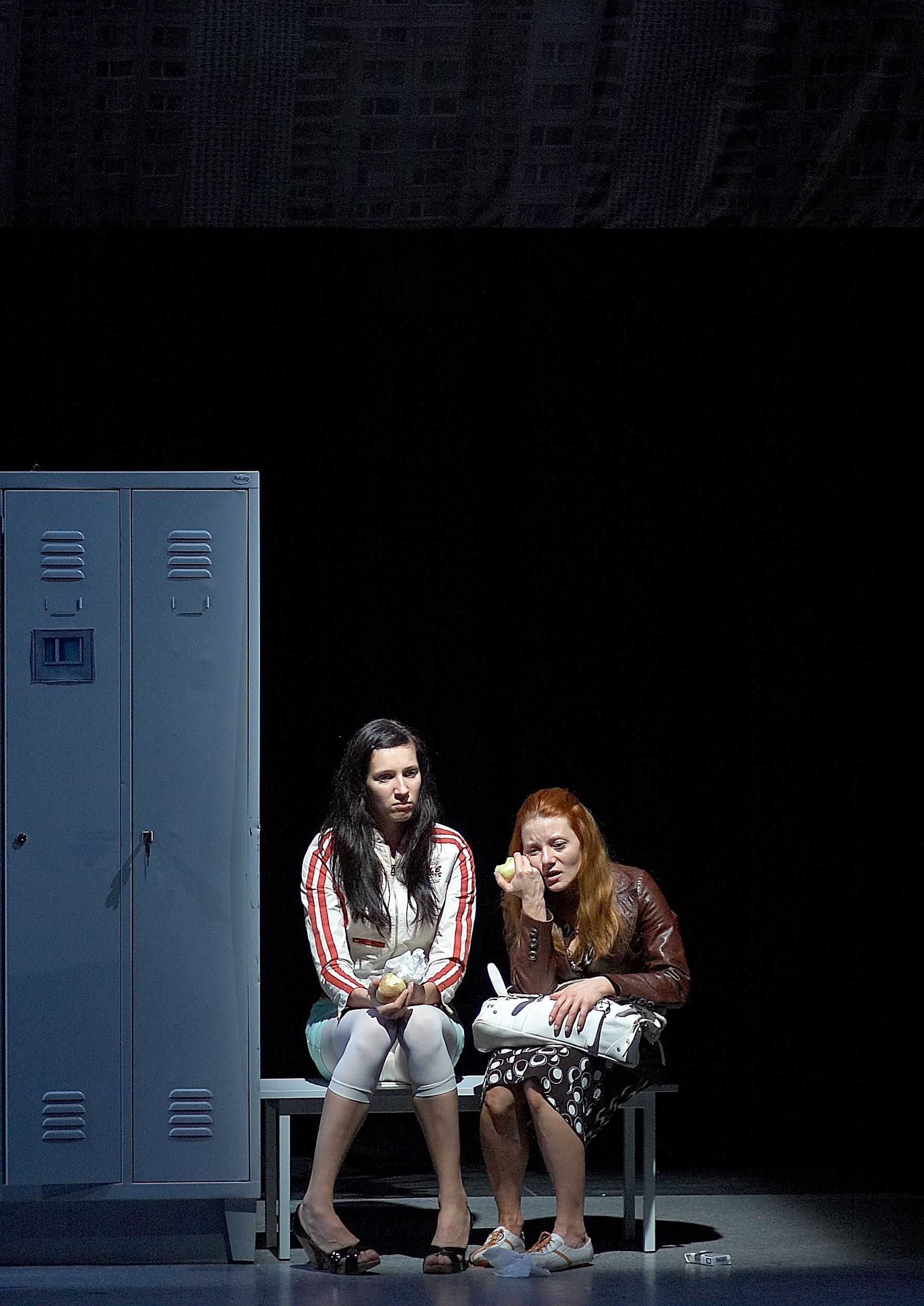
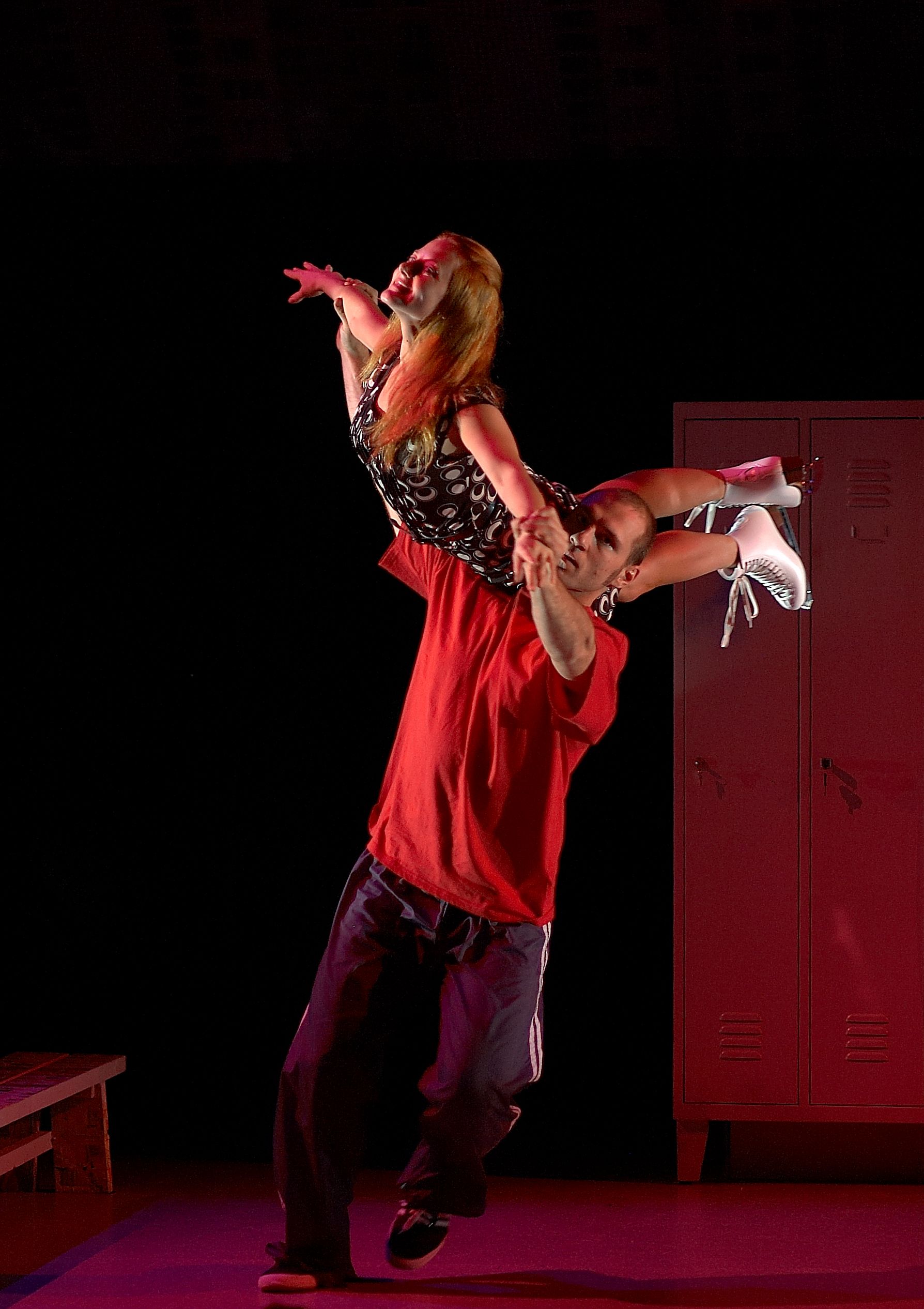
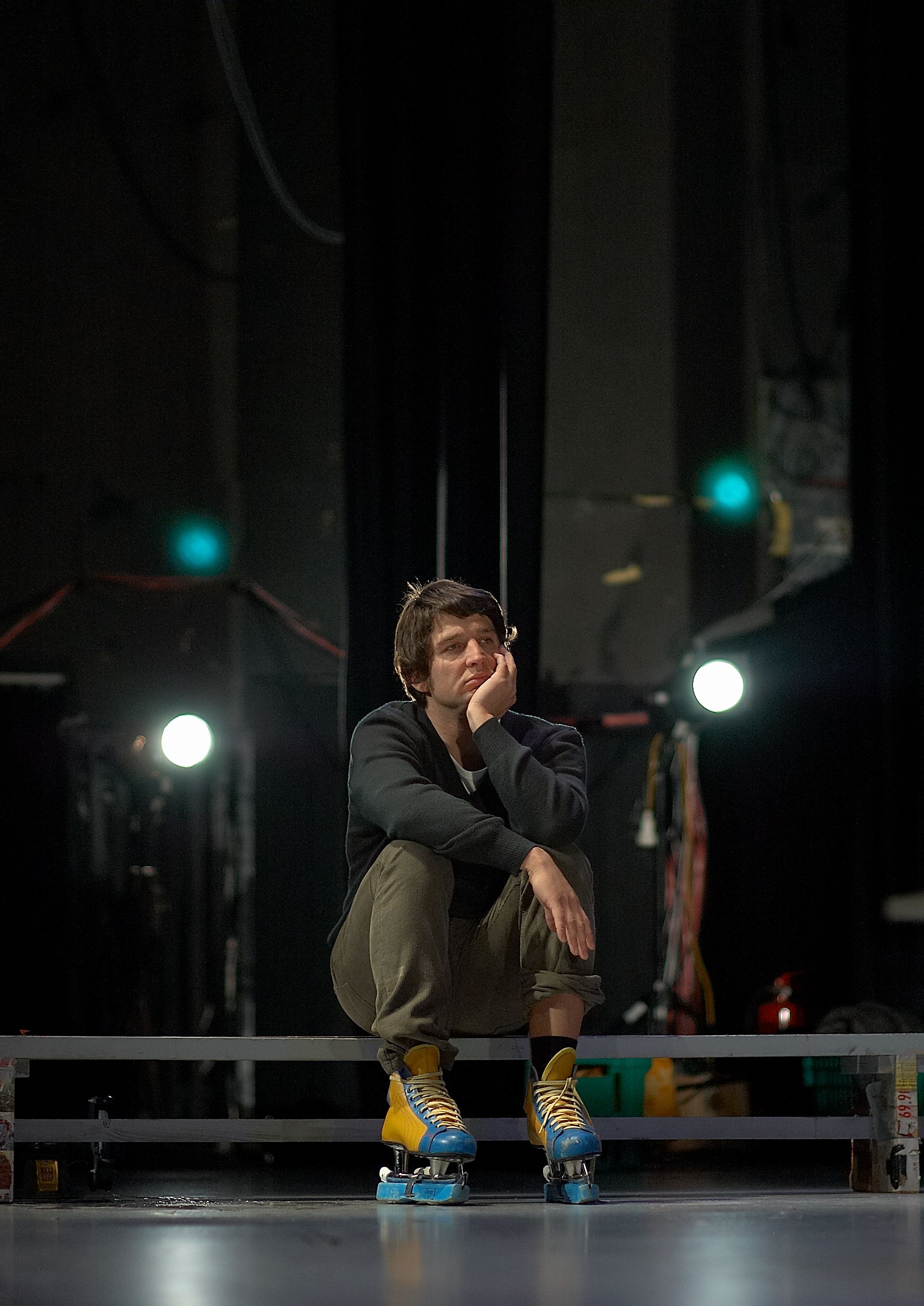
Felix and Lucia are quite ordinary couple. They share happiness and boredom together, fight over toilet paper and spaghetti sauce. But when Lucia decides to leave Felix, he needs to confront his past and face his childhood traumas before he can fall in love with Lucia again. Beautiful, epic and non-linear contemporary family drama with two generations reliving each others mistakes.


Liucia Skates reviews October 2007

Relationship between three families – passionate battle
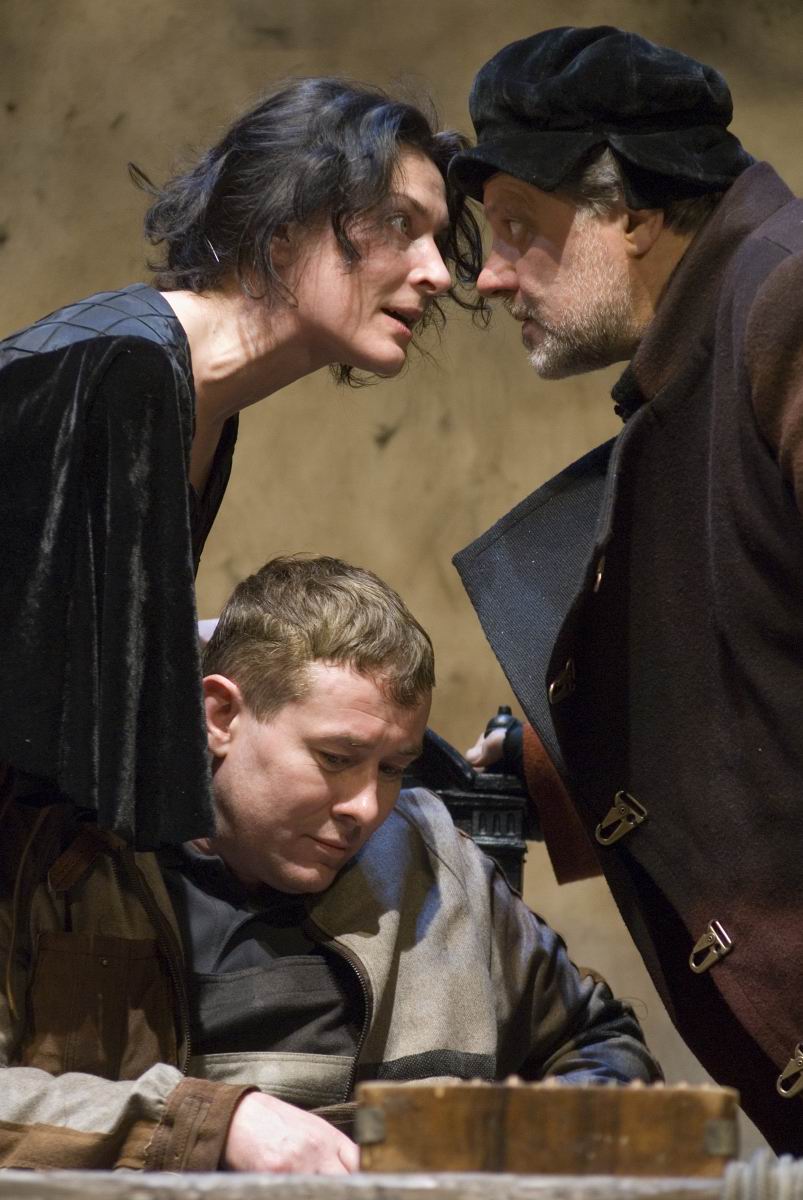
Y.Ross performance  gets actors to extraordinary precise acting, stage design and director’s thoughts get rid of any chance of sentimental reading of the play. Ross reveals the essential pieces of puzzle, a code of human loneliness, strive for answers and persistent search, relationship drama that grows to cosmic proportions.
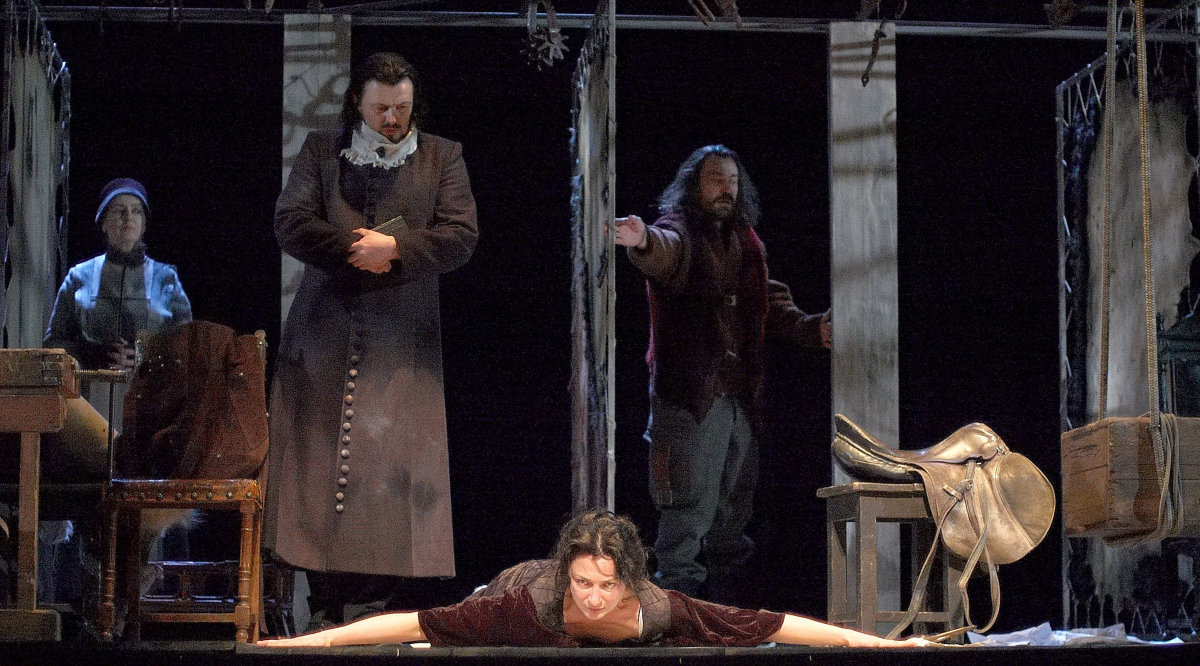
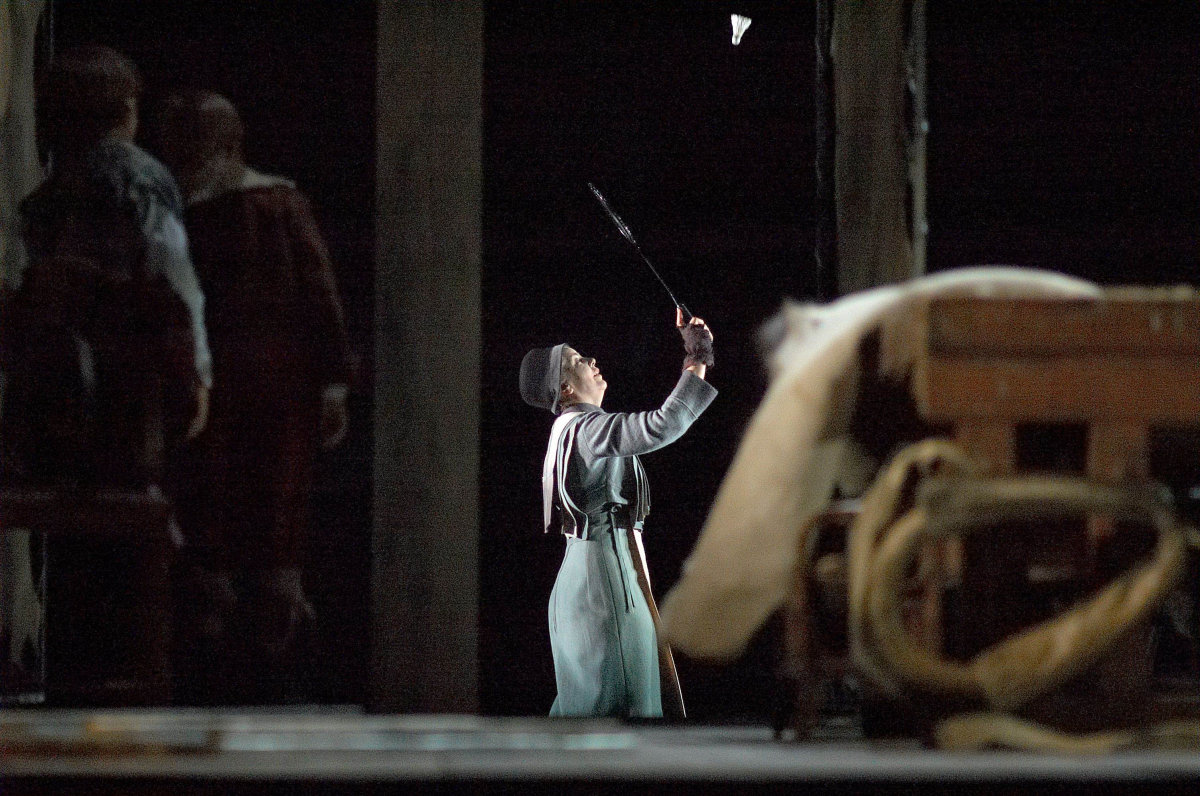
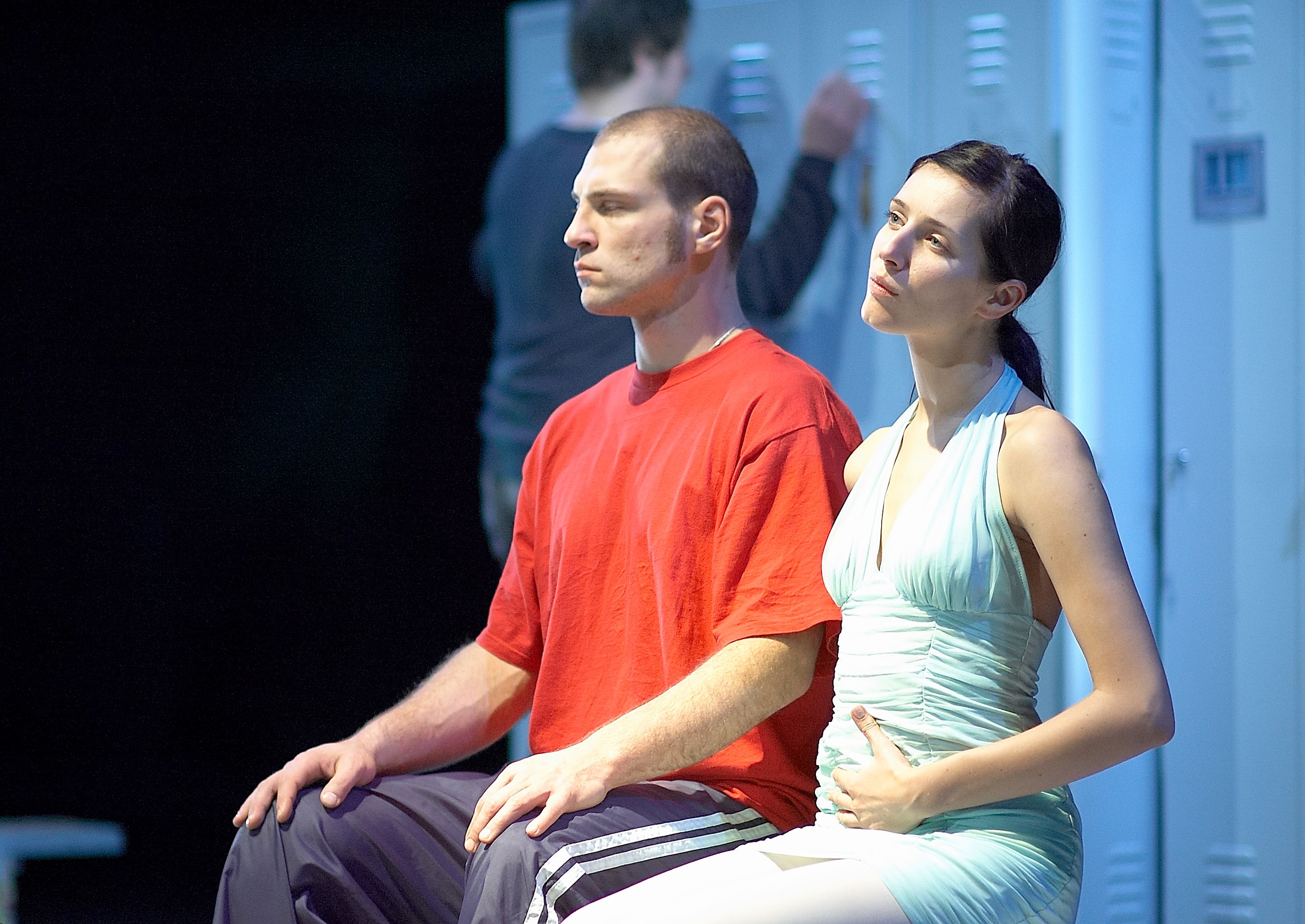
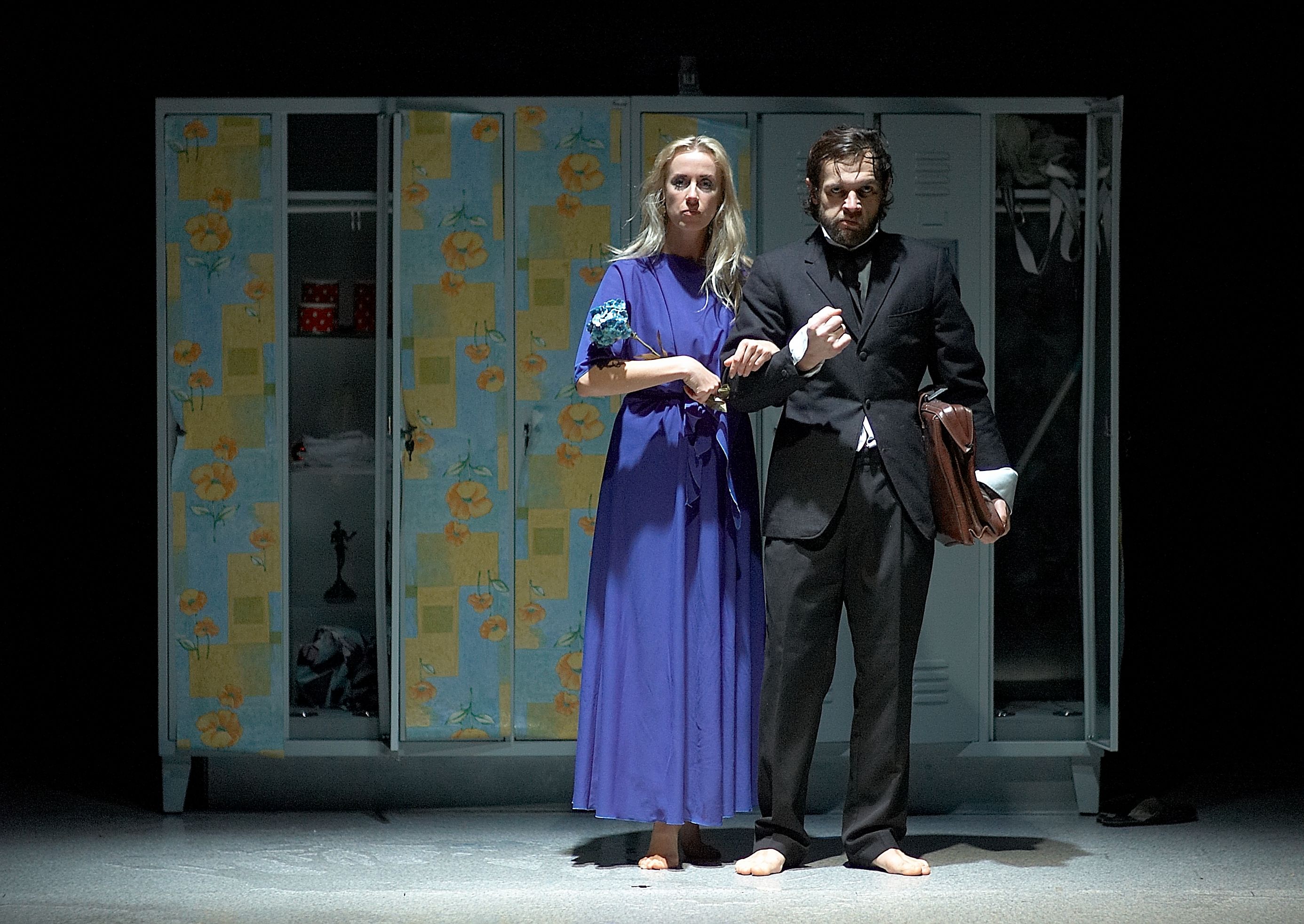
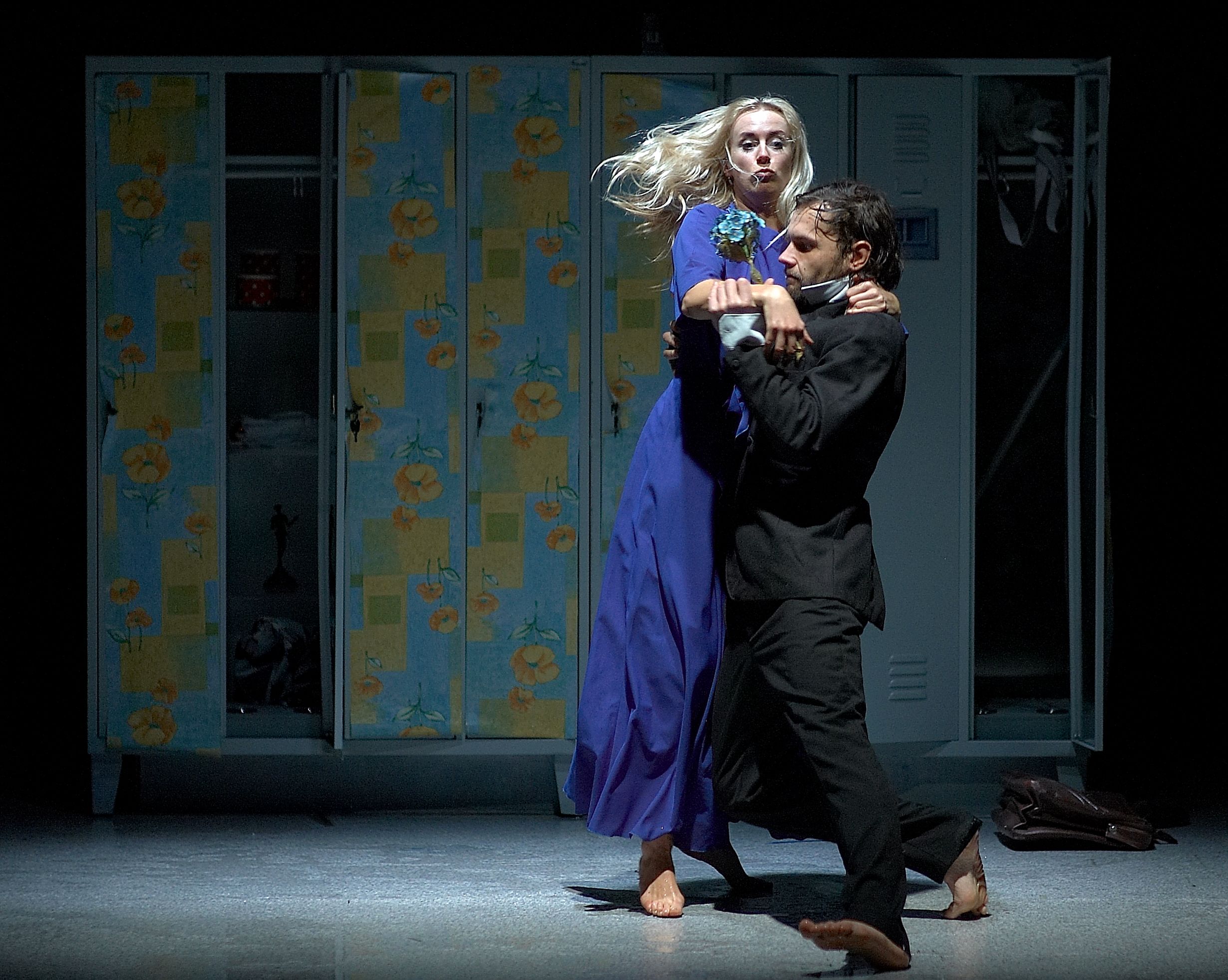
The set is a changing room at the skating ring and each cabinet door opens a world into a different space and also an inner drama of each character, all broken up by stark documentary video work following actors on the real skating ring. The full scale backdrop of the set is a snippet of a local suburbs, sleeping hollows holding our most secrets behind colorful curtains.

Vaiva Grainytė, Lithuanian Daily, 2007 10 24

Team
Director: Yana Ross

Scenography: Marta Vosyliūtė

Lighting: Vilius Vilutis

Video and Audio Design: Andrius Rugevičius

Audio Director: Virginijus Bagdzevičius

Art Director: Oskaras Koršunovas

Assistant Director: Malvina Matickienė

Property master: Edita Martinavičiūtė

Technicians: Mindaugas Repšys, Justas Vitartas

Tech. Director: Gediminas Ušackas

Literature: Alma Braškytė, Ervinas Koršunovas


Cast:
FELIX – Algirdas Gradauskas, Marius Jampolskis
FELIX’S MOTHER – Aurelija Tamulytė
FELIX’S FATHER – Darius Gumauskas
LIUCIA, FELIX’S WIFE – Rasa Samuolytė
WOMAN FROM SHOPPING CENTER – Monika Bičiūnaitė
TANIA, DUDE’S WIFE – Judita Zareckaitė
DUDE, ICE SKATES LESSOR – Petras Lisauskas

Apr 192007
 

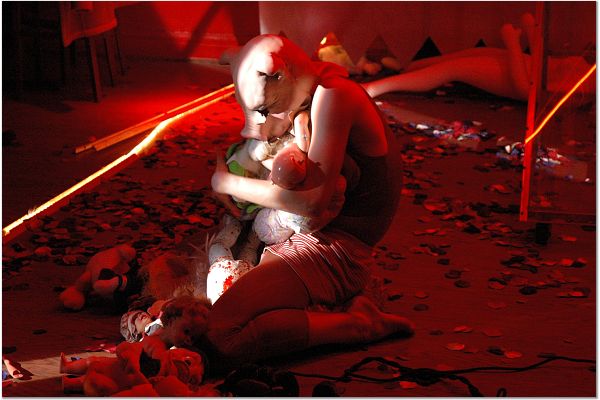
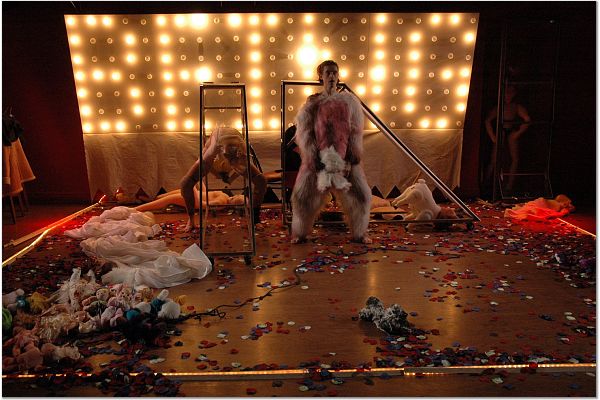
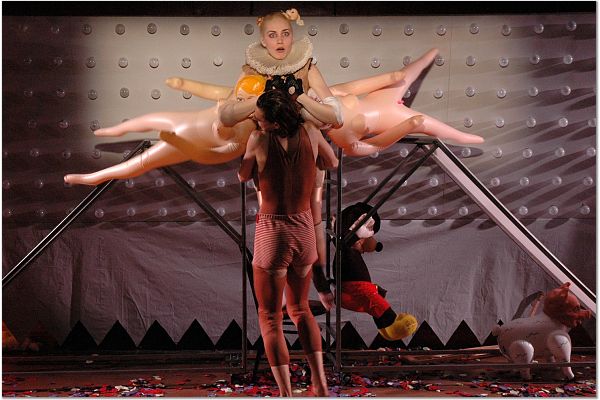
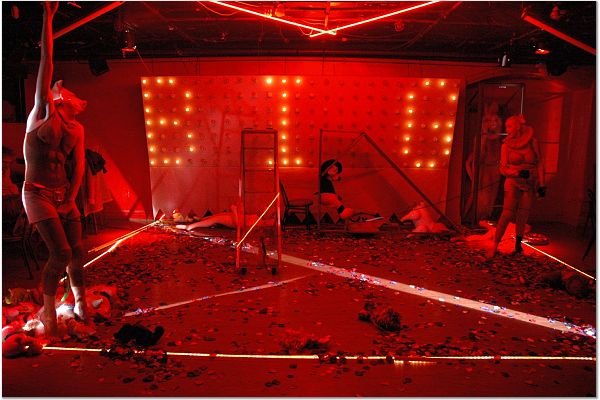
Bembilend_31_d_matvejev

Bambiland reviews April 2007

Illnesses and cure of the fairyland

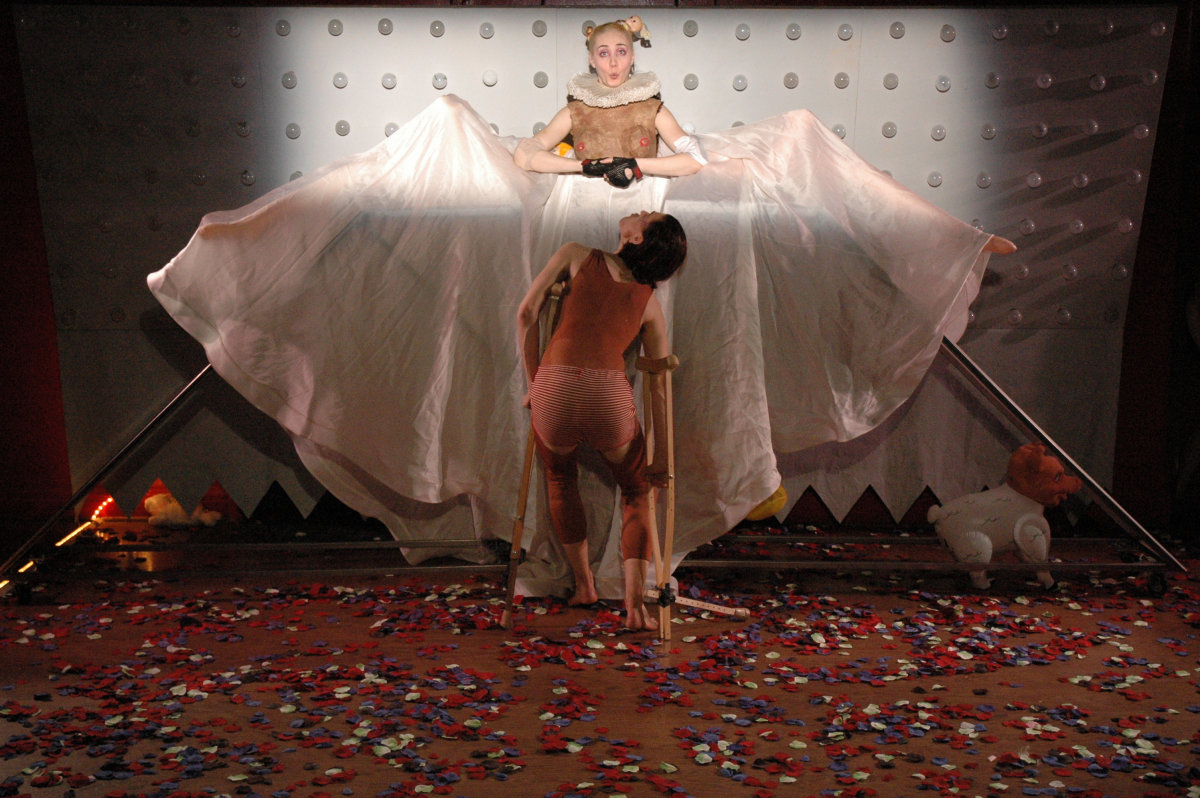
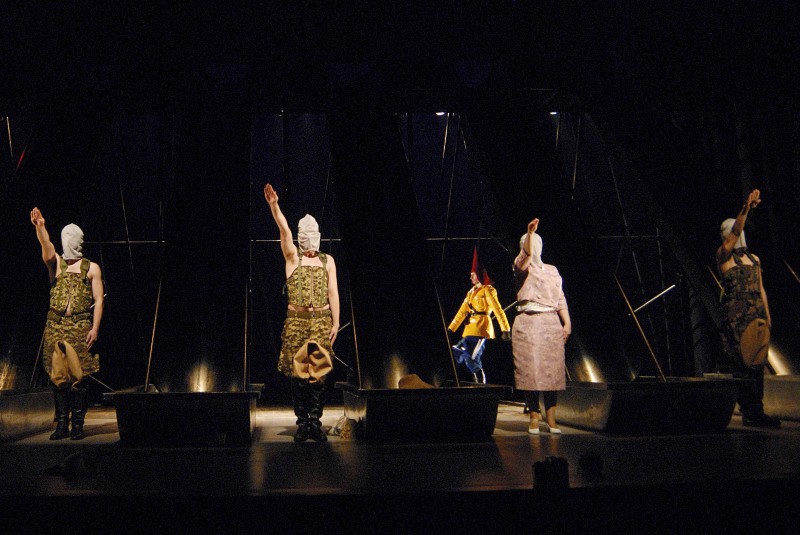
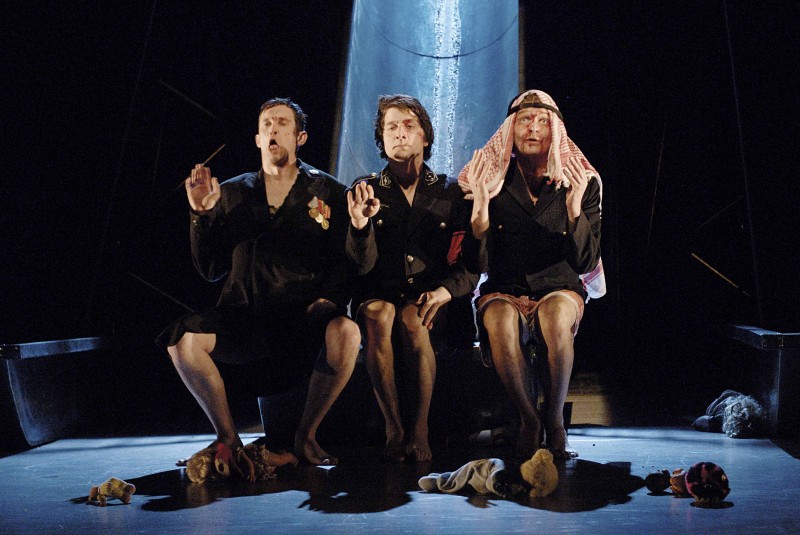
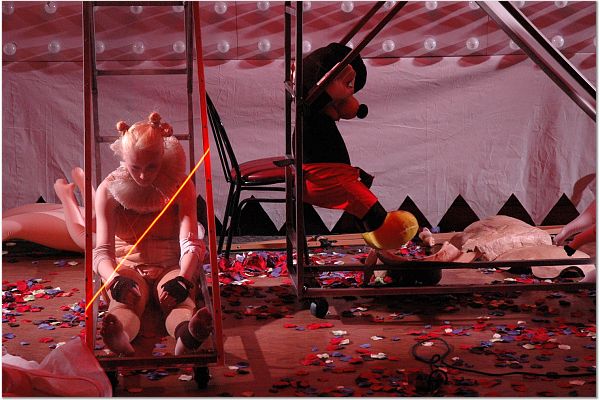
Yana Ross very inventively transformed a solid-monologue text into an epic play. She divided it between contrived characters and provided abstract sentences with concrete and secondary, subtle subtext meanings. A wife talks to her husband about cruise-missile when in fact she reproaches him for his “tomahawk” dick that doesn’t strive for the aim anymore. Elisabeth II (brilliant role of Diana Anevičiūtė; the actress splendidly provides all embodiments of Mother Archetype from the Regent to repenting Mary) talks of British imperialism with a sweet smile and a formal waving of her royal hand.

The essence and religion of this typically American minimalism is that all gears have to move very precisely and, most important, with strong energetic charge. The actors themselves have to become political and grasp that they are taking part not just in some untypical performance of their theatre but rather in some kind of action. And the action is to be rather observed without taking any context into consideration. Contrary to that what usually takes place on this stage of the National theatre.

Vaidas Jauniškis, Business News, 2007 04 27


Team
Director: Yana Ross

Scenography: Jūratė Paulėkaitė

Costume design: Zane Pihlstrom

Composer: Gintaras Sodeika

Lighting: Bryan Keller

Choreography: Yana Ross, Petras Lisauskas

Cast:
Arūnas VOZBUTAS
Jūratė VILŪNAITĖ
Jurga KALVAITYTĖ
Saulius BALANDIS
Algirdas GRADAUSKAS
Diana ANEVIČIŪTĖ
Mindaugas JUSČIUS
Marius JAMPOLSKIS

Sep 192006
 

Kingdom 02

Yana Ross

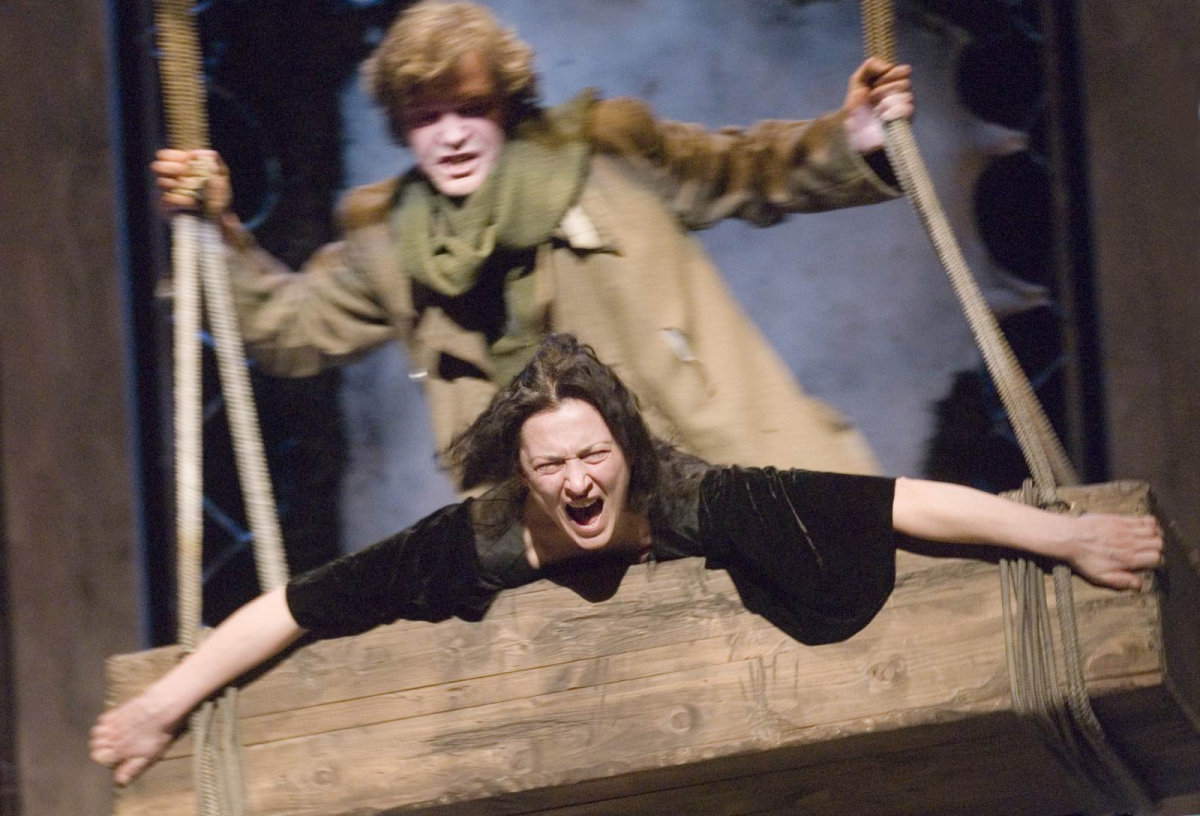
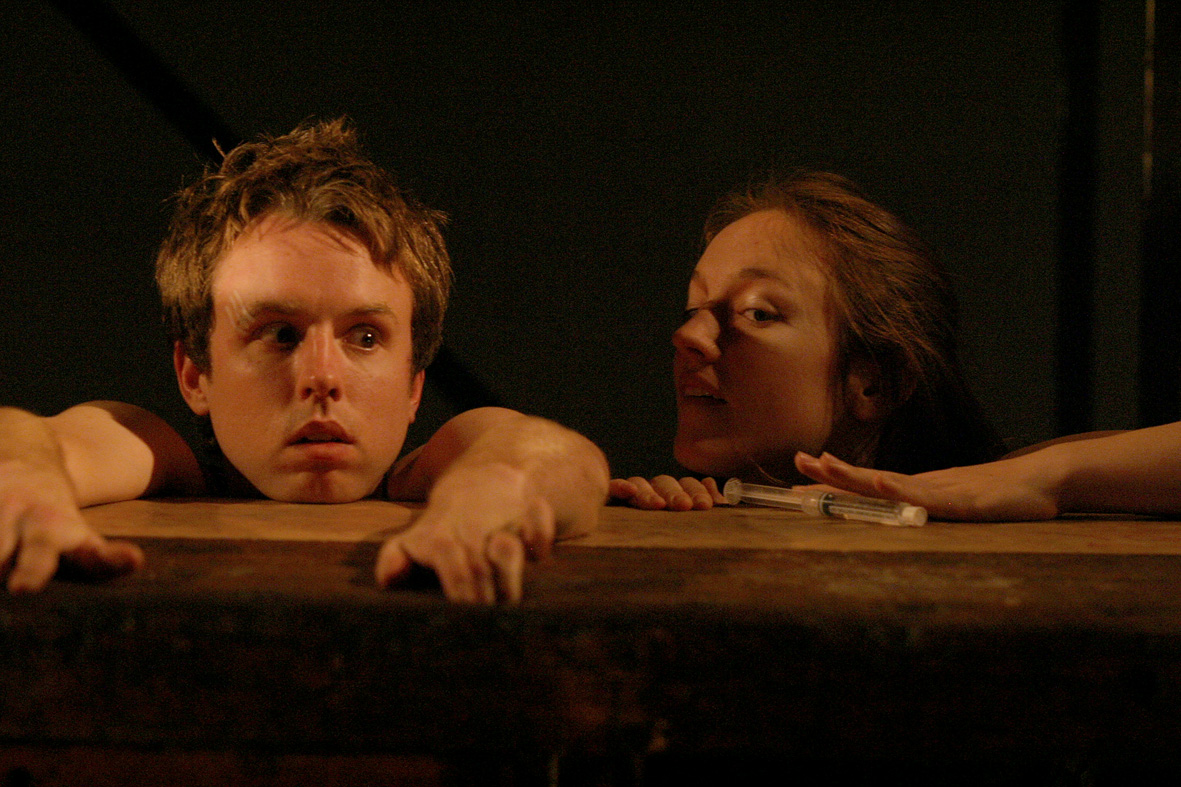
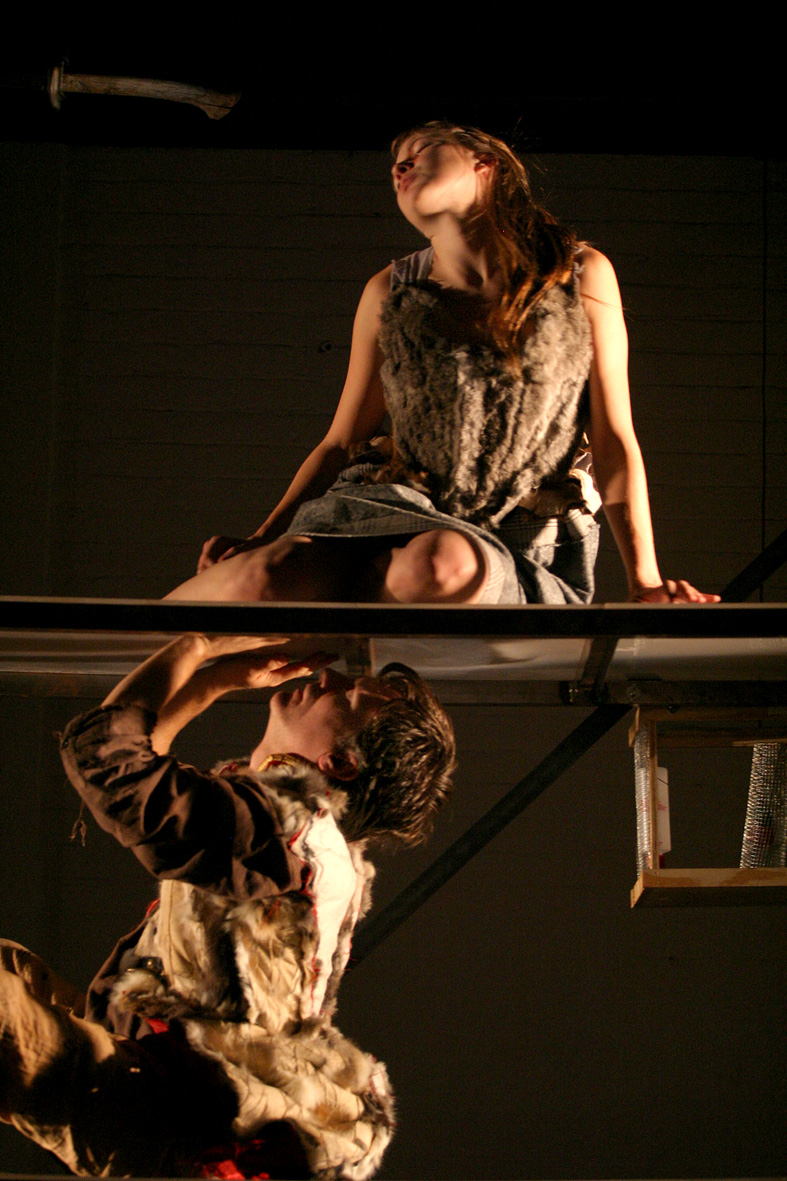
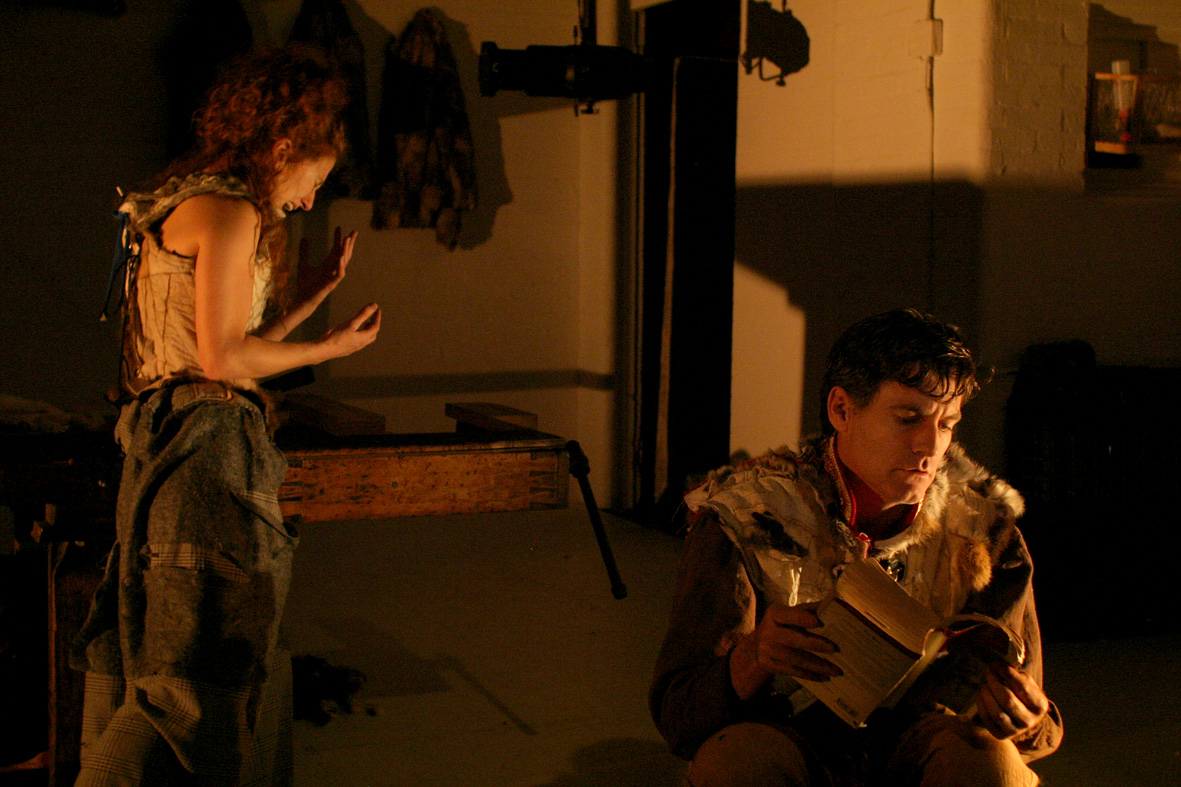
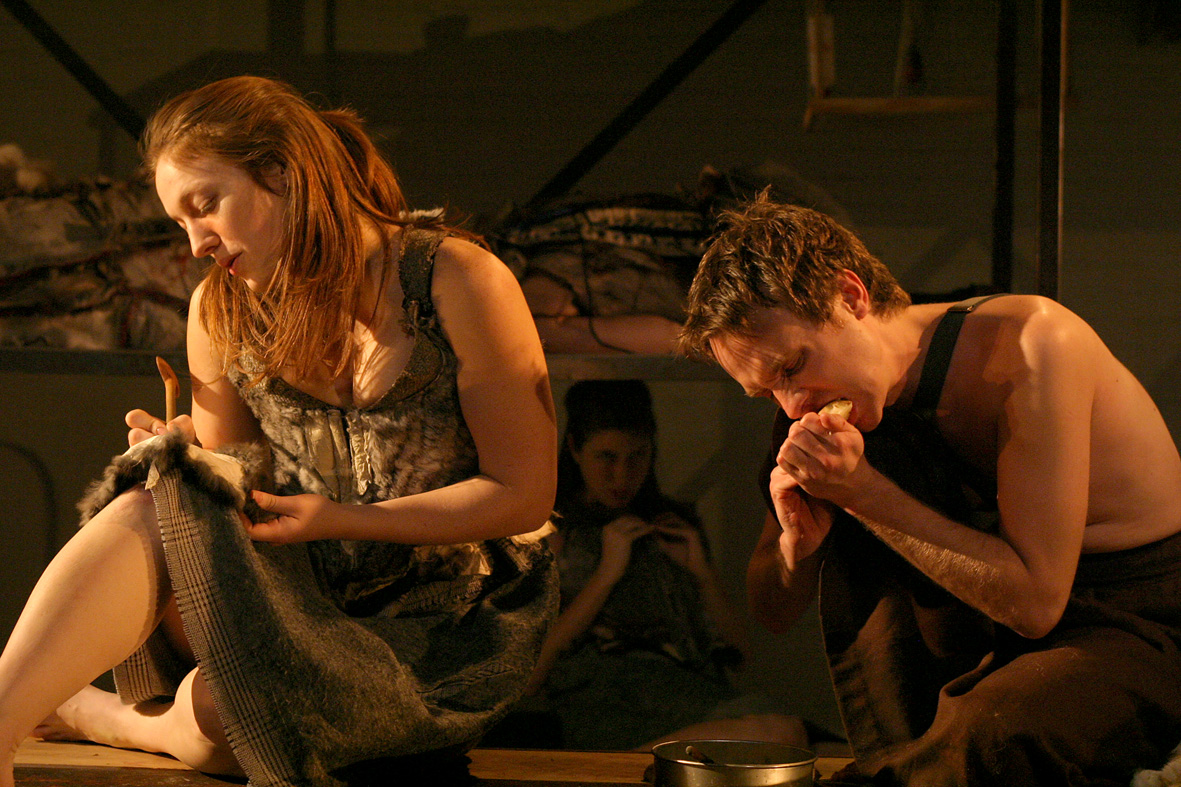
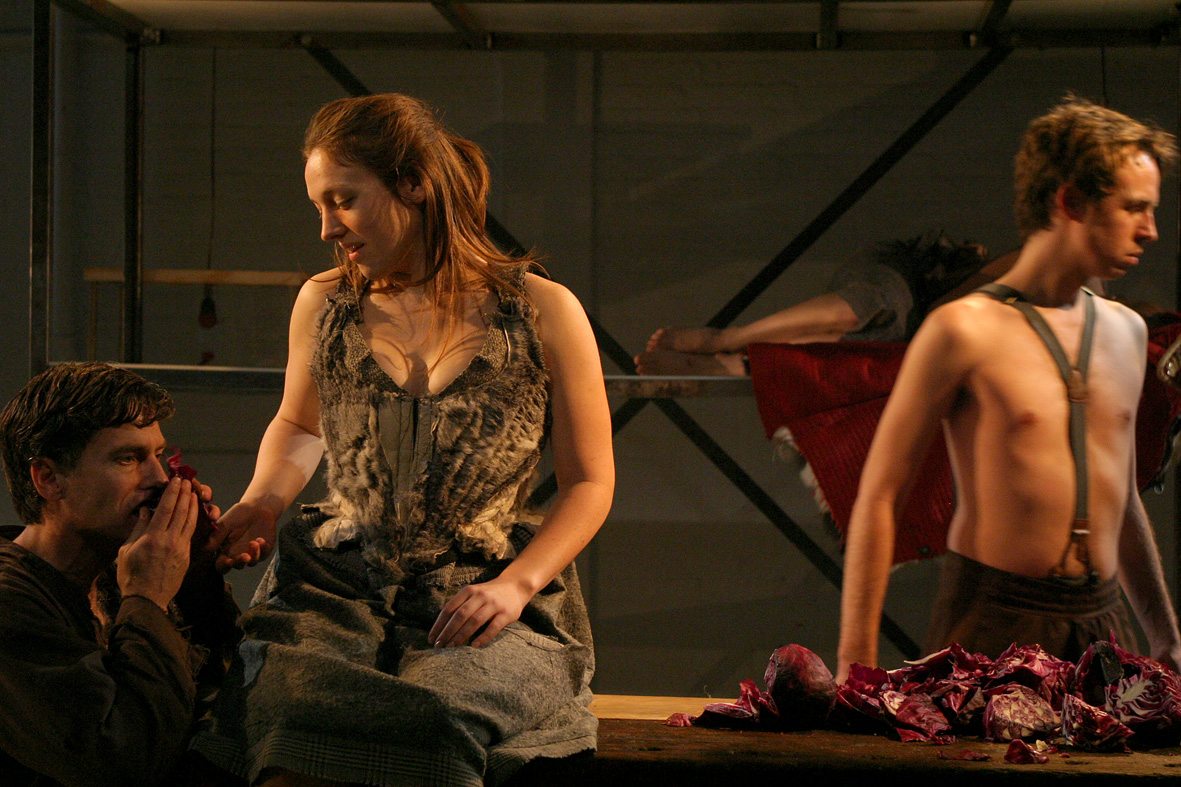
Here’s what I loved about this play when I read it: it’s a fairy tale, a timeless story about human nature, our instincts to survive. The world these “characters” live in (and I’m putting the word in brackets as they are really archetypes and not characters, they are “larger-than-life” figures who represent the cycle of life: birth, love, death) is post-apocalyptic, it’s post-global warming, post-nuclear, post-Iraq and Lebanon, a world that has come to an end but is still breathing and will continue to breathe because people are as ambiguous as nature itself. We have a tremendous capacity for love and compassion as much as we do for hate and violence. The way I see this family is that Mom and Dad are brother and sister who, perhaps, in order to procreate, keep the farm and their rabbits going, decided to have children; the first boy was too much, they knew it was wrong and they tried to get rid of him, but with time, two more kids came and this is their life. Two sisters discover the lost brother and bring him home. The cycle will continue as Dad “loves” his daughter the same way he loves his sister/wife and the daughters are falling for their brother without knowing who he is. Slowly some of this horrible yet banal incest unfolds and the mother realized who this new-found boy is – she can’t take it and kills herself; the father takes her body mangled by wolves for a bear and serves her as a meal. Think Peter Greenaway and a very stylized movie “The Cook, the Thief, the Wife and her Lover,” think post-apocalyptic world where all of the above actions have no consequences and what might appear bizarre to us is absolutely normal for them – the reason is, what we take for normal and standard right now might seam utterly barbaric to people who lived before us or for those to come. It’s a timeless fable that talks about human connections, our rights and our needs, but most of all, it’s a cycle of rejuvenation and it’s a vicious cycle: the brother and sister at the end are taking the place of mother and father, thus the play starts all over again…


A Kingdom in the Snow reviews November 2006

Correction Appended

A Kingdom, a Country or a Wasteland, in the Snow,” by Lola Arias, a post-apocalyptic drama about a terrible family secret, also begins with a grappling match. The sisters Lisa (Andrea Moro Winslow) and Luba (Hayli Henderson), who live in a chilly wasteland with their parents, toss each other across the stage with abandon.

The sibling rivalry heats up when, while hunting for rabbits, the sisters find an orphan boy whom they see as husband material. This development worries their father (James Lloyd Reynolds) whose guilty face indicates that he knows something about the orphan that he’s not telling us.

Ms. Arias, whose writing has a tactile, sensual quality, sneaks in images of fetuses and drowning idiots to prepare you for the horrors to come. And even if the play’s shocks are hardly original, the director, Yana Ross, finds clever ways to stage them.

Jason Zinoman, The New York Times, Nov. 13 2006

Team
Director: Yana Ross

Text: Lola Arias

Design: Zane Pihlstrom

Sound: Sharath Patel

Light: Bryan Keller


Cast:

Heather Lea Anderson
James Lloyd Reynolds
Brian McManamon
Andrea Moro Winslow
Hayli Henderson