Sep 152014
 

2014_2

Yana Ross

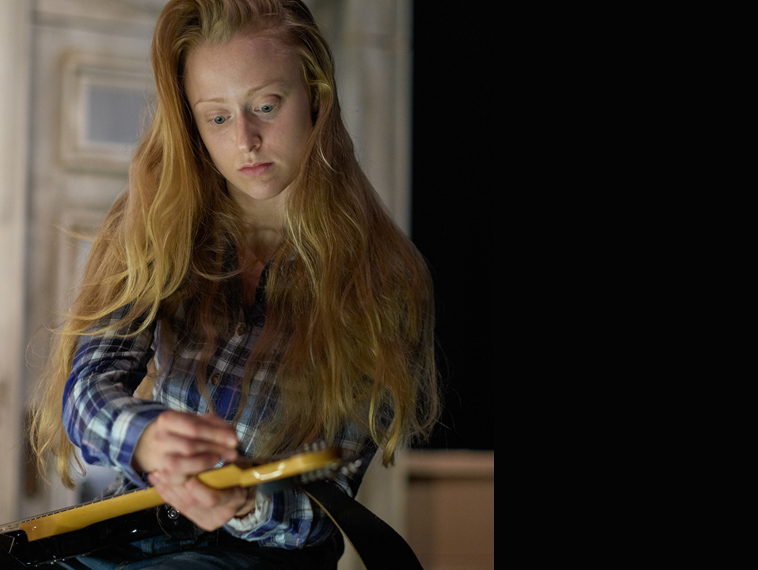
What makes Vanya sharp and contemporary writing now? The economic shift and industrial progress in our society suggests opportunities are bigger and brighter than 100 years ago but our nature is the same, we sit and complain and fear to make a simple change. What stops us from challenging ourselves, challenging our fate? Breaking up, falling in love, moving away? What a great comfort to sit around in the company of pseudo- friends and complain about time slipping through our fingers! How easy to become a slave to routine mortgage payments and mandatory martinis at the end of the day?


Uncle Vanya reviews January 2015

Abstract

Anton Chekhov’s Uncle Vanya has traditionally relied on its melancholic and claustrophobic atmosphere for the development of its themes on self-fulfillment, the decline of the landed gentry and the dichotomies between cosmopolitan and rural living. In Yana Ross’s new production at the Uppsala Stadsteater this atmosphere has been both intensified and reinterpreted, providing a contemporary reading that offers alternative understandings of kinship, desire and relationships. Ross, a graduate of Moscow’s prestigious theatre academy GITIS and the Yale School of Drama, has quickly developed a reputation for radical adaptations of classic texts and contentious stagings of contemporary playwrights such as Elfriede Jelinek, Sarah Ruhl and Gabrielė Labanauskaitė. Her provocative and confrontational production of Tadeusz Słobodzianek’s Our Class (Nasza klasa) in 2013 at the Lithuanian National Drama Theatre that dealt with contested histories of anti-Semitism and Soviet-imposed communism captured the attention of European theatre directors and critics, prompting commissions from national and city theatres in Hungary, Sweden, Iceland, Finland and Poland. 

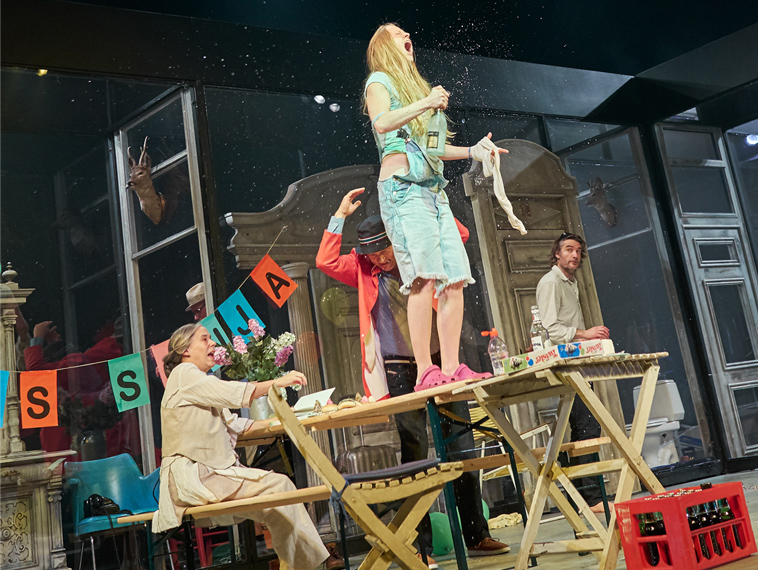
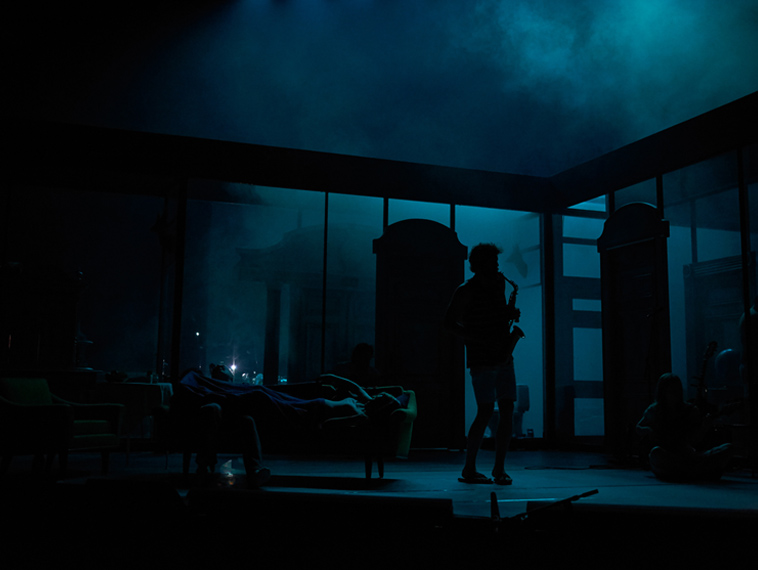
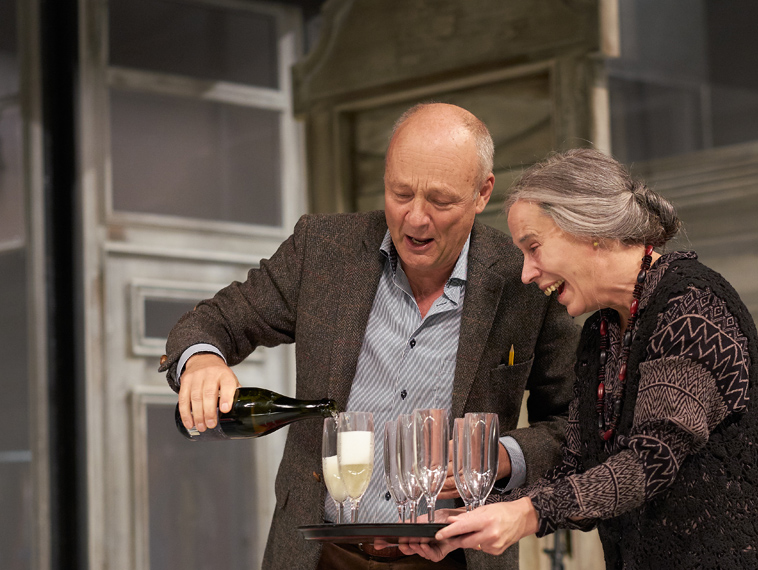
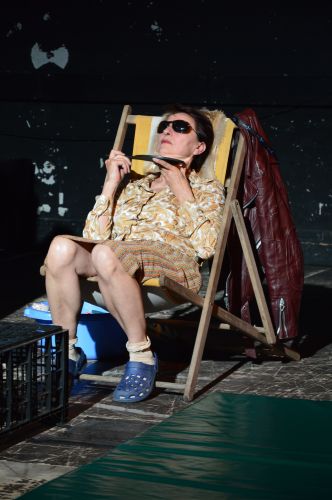
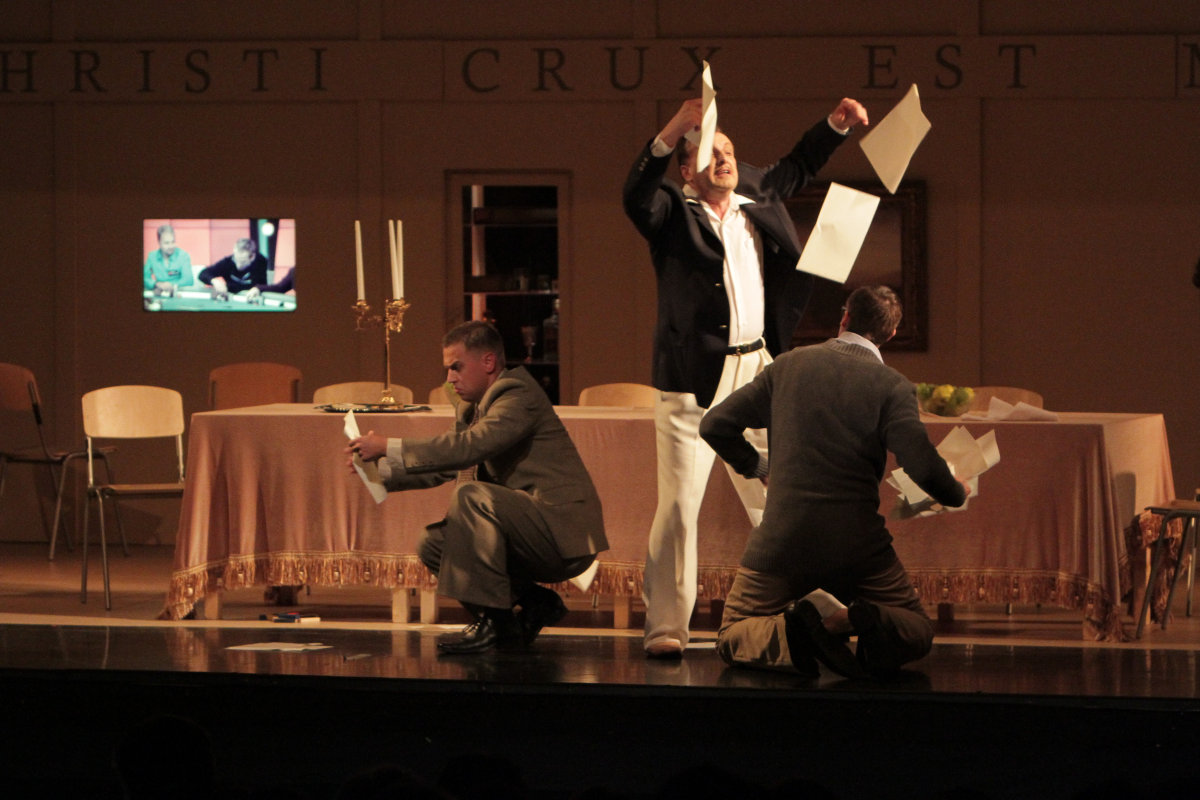
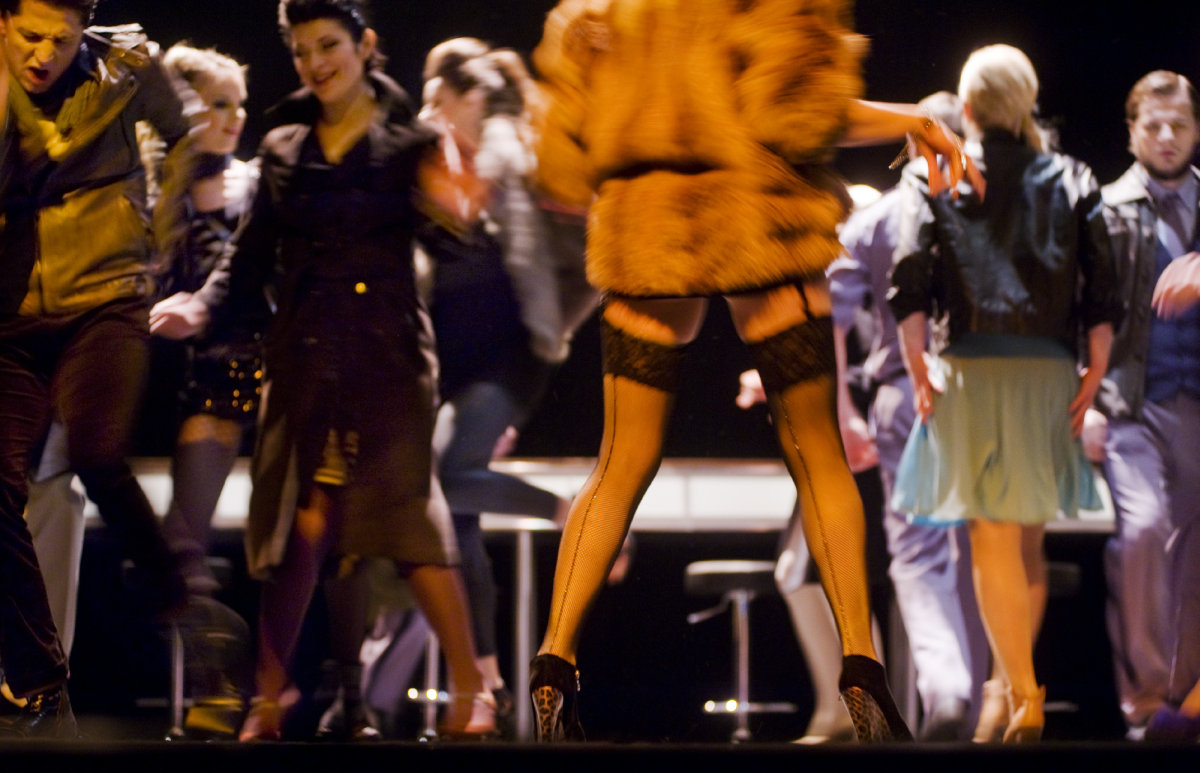
Ross’ adaptation of Vanya opens with Sonya’s garden birthday party on a sultry summer’s afternoon. The combination of amber-coloured lighting, fog machine, and the flirtatious frivolities of the perspiring actors evoked a carnal mood more reminiscent of Tennessee Williams than Chekhov. The Stadsteater’s powerful surround sound system, a more familiar feature in cinemas than theatres, amplified the normally dulcet background sounds of the natural world to the point of anxiety–the aggressive swarming of wasps and flies filled the theatre, while birdsong was rendered cacophonous and unfriendly. This hostile encroachment of nature reinforced the libidinous tensions at work within the Serebryakov country estate, transposed as a bed and breakfast in a Swedish country manor house. Correspondingly, Astrov’s concern over the preservation of local forests was augmented to the point of a conspiracy theory. This drew a parallel between modern anxieties about environmental disaster and broader experiences of social division and economic instability, which lead to misdirected sexual and emotional attachments. 

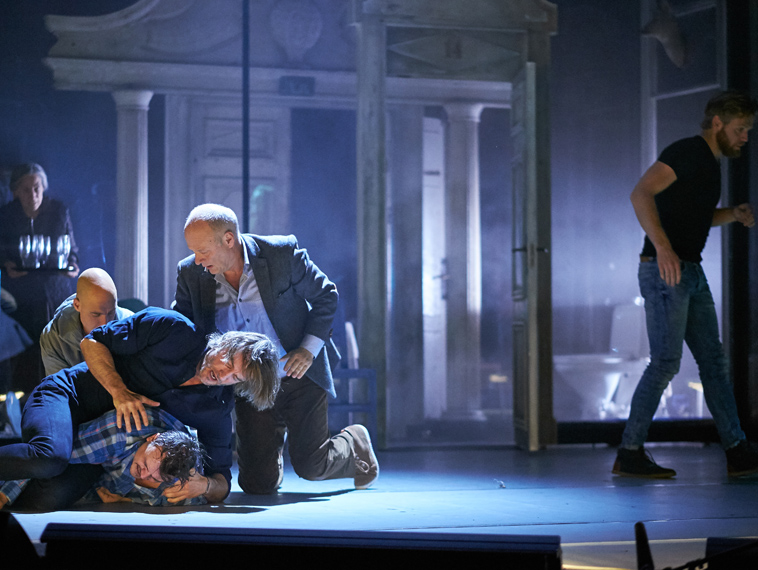
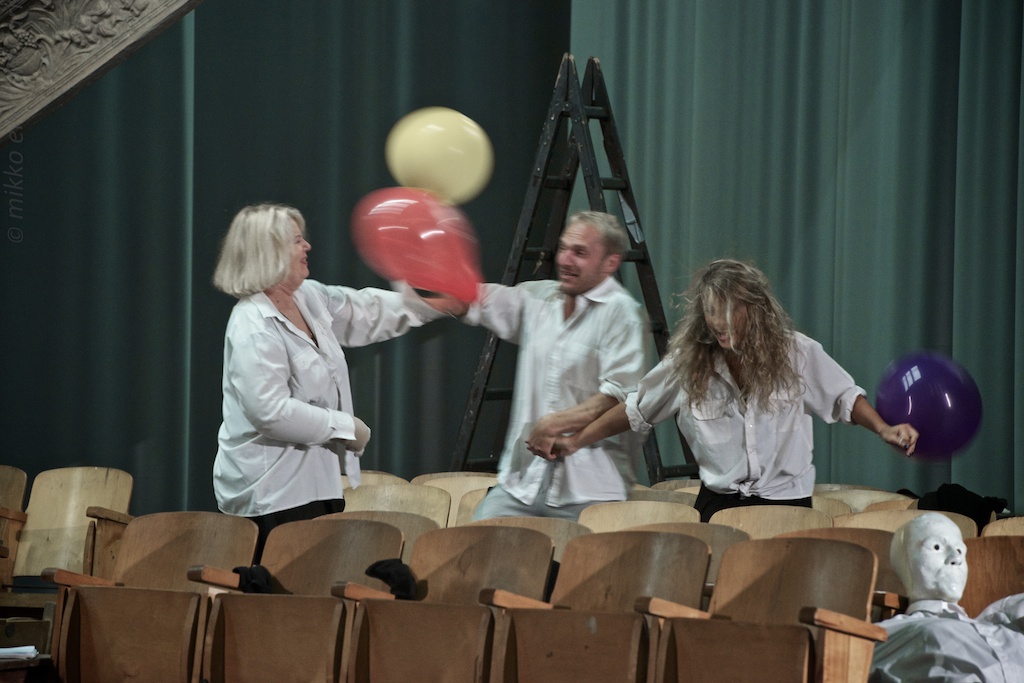
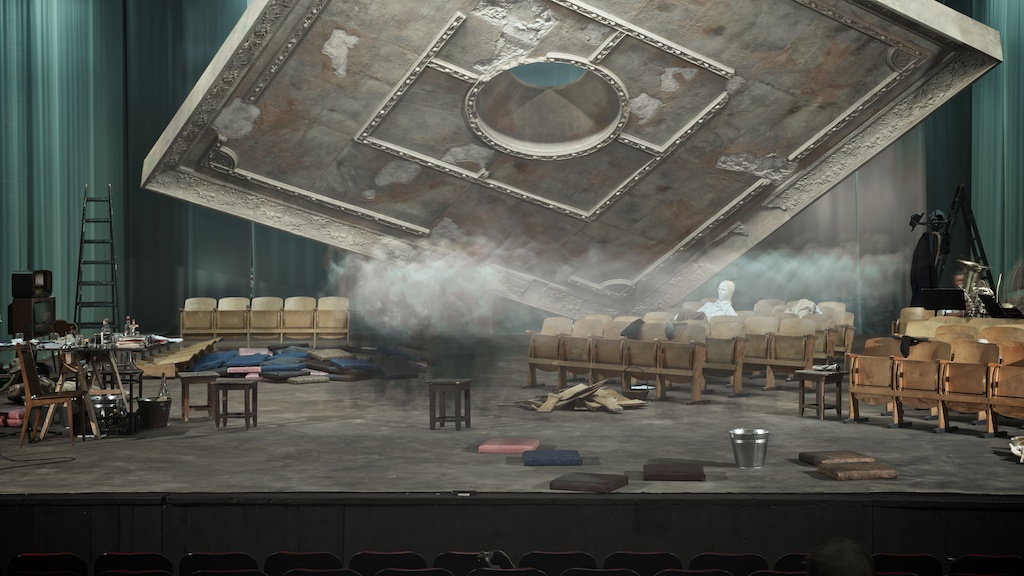
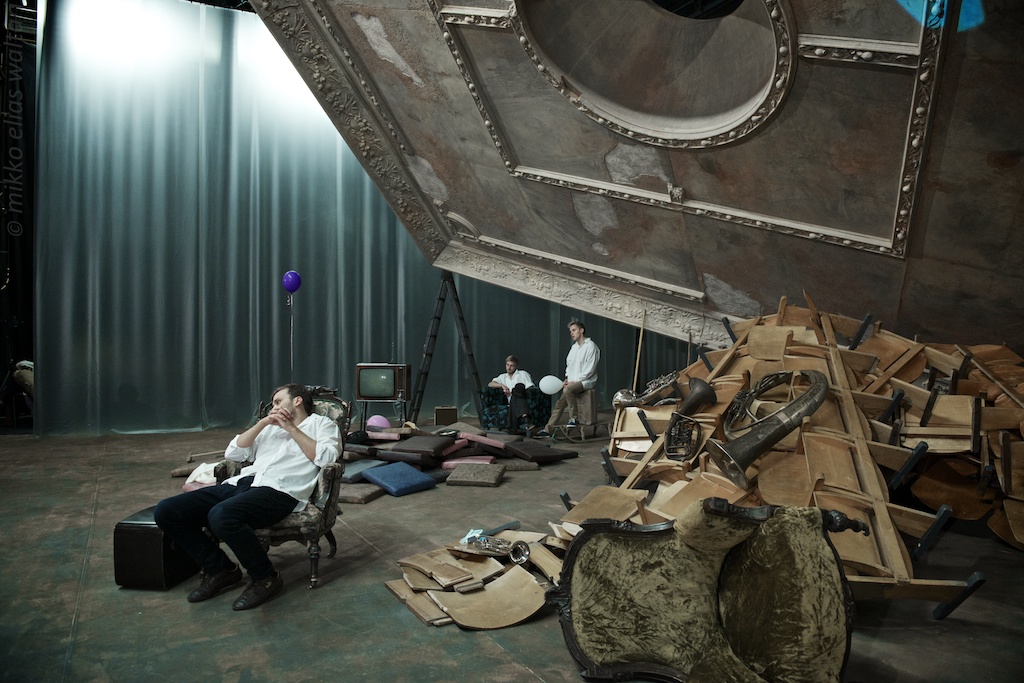
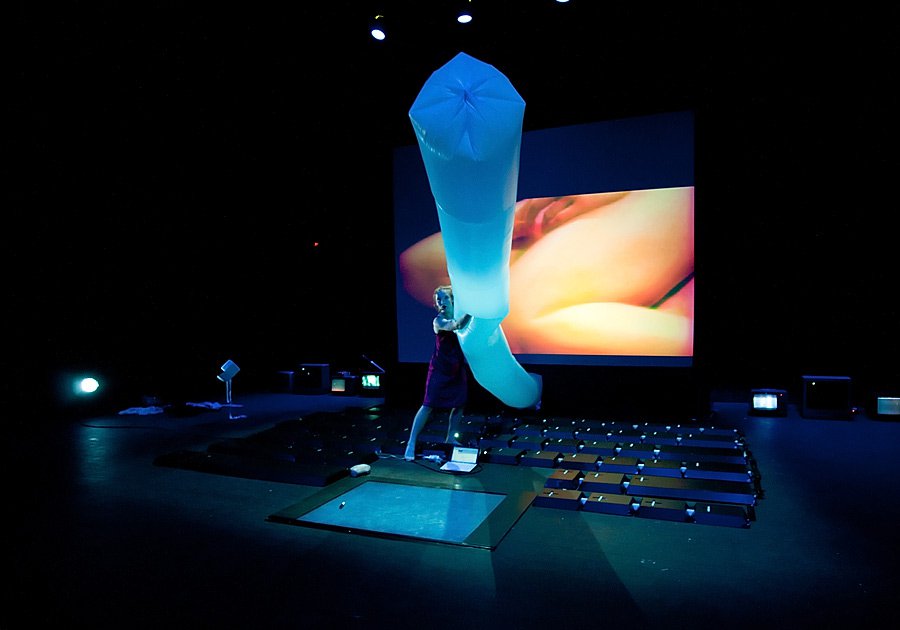
At an early stage in production, Ross and New-York based scenic designer Zane Philstrom were inspired by the American artist Gordon Matta-Clark, known for his ‘building cuts’ series in the 1970s that deconstructed family homes through the removal of walls and the dissection of ceilings, staircases and floors. Philstrom built the Serebryakov’s house from plexiglass, allowing the audience to peer inside the house’s more ambiguous spaces. Matta-Clarke’s critique of the American dream to become landed gentry through the purchase of private property provided another lens for performance analysis of the pretensions of Aleksandr Serebryakov, the retired university professor whose ambitions to be a wealthy landowner are finally destroyed at the conclusion of the play. While the transparent glass walls opened up multiple and simultaneous perspectives on bedrooms, hallways and the kitchen, the exposure of the bathroom was frequently the most revealing and resulted in a number of unexpected and comical interactions. A strong example of this was Astrov’s seduction of Yelena, a brief but energetic sexual encounter choreographed in time to the rumble of the taxi that waited to return Yelena and Aleksandr to their more glamorous cosmopolitan lives in the city. The sudden eruption of white mist behind the glass walls in moments of tension and 

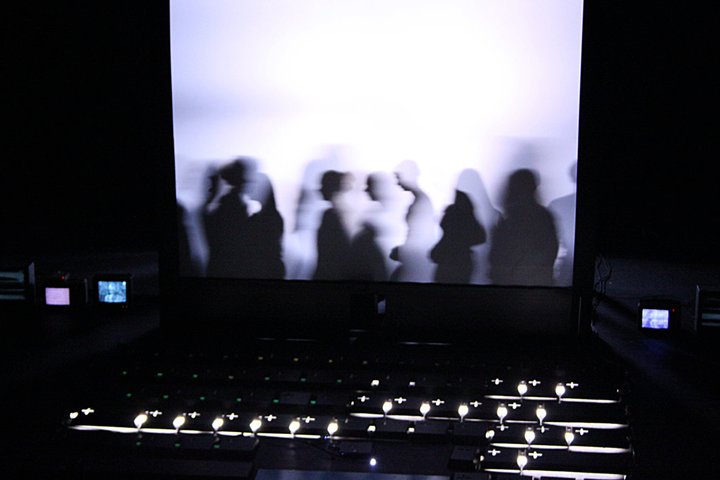
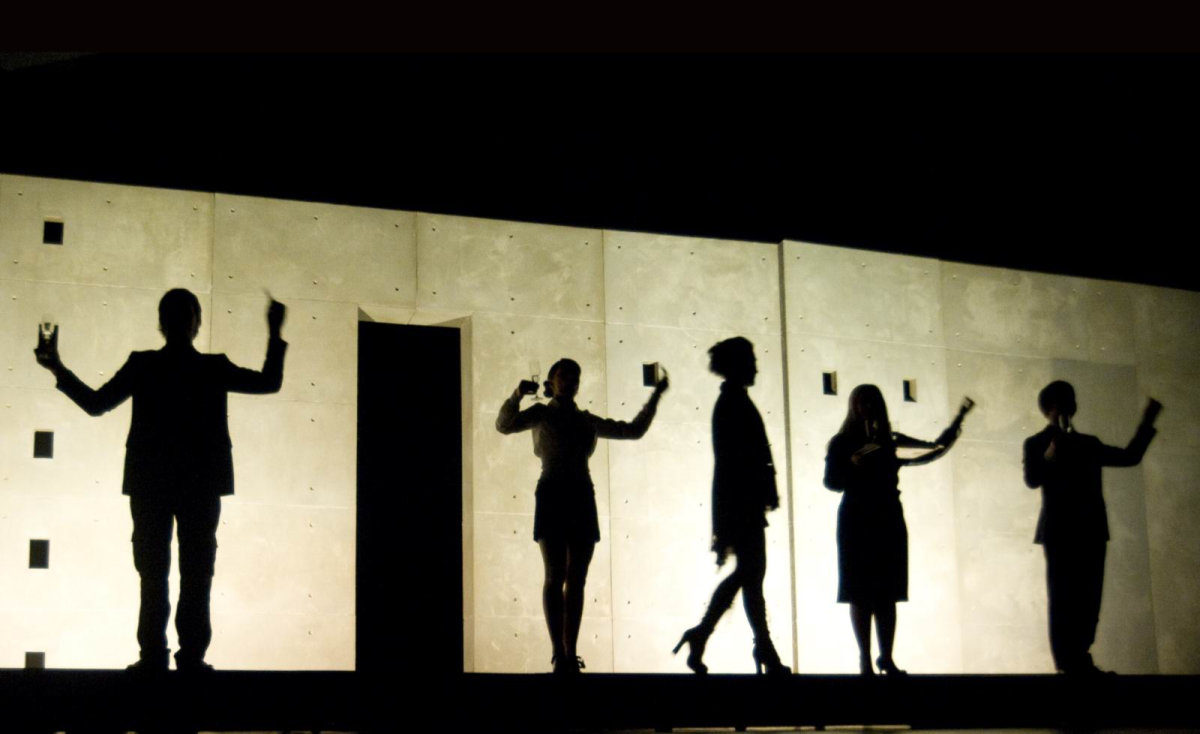
arousal was strongly suggestive of British artist Anthony Gormley’s 2007 participatory exhibition Blind Light in which spectators walked through UV-purified steam in a glass tank illuminated by fluorescent lights. One suspects that Gormley’s intention to produce a feeling of disorientation and euphoria for participants also chimes with the furtive encounters occurring in the Serebryakov household. In both Gormley’s installation and Ross’ production, the silhouettes produced through the use of steam and fog were suggestive of social encounters that are both intimate and alienating in unpredictable turns. 

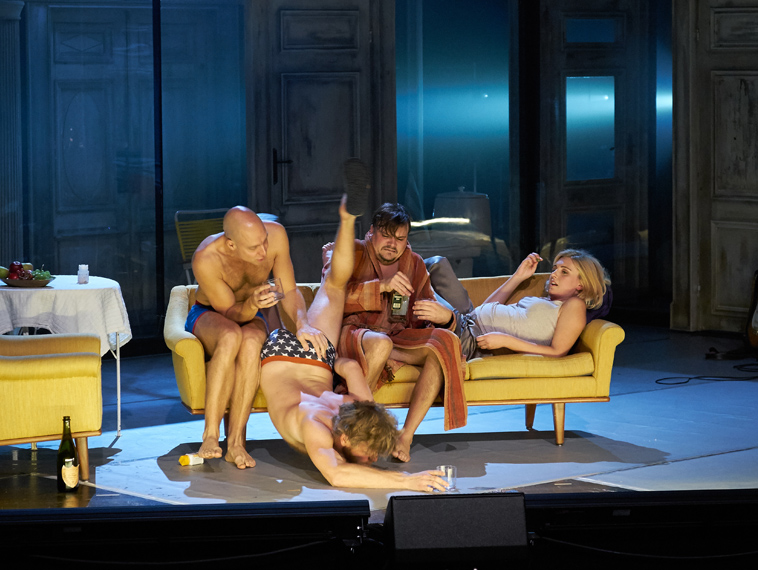
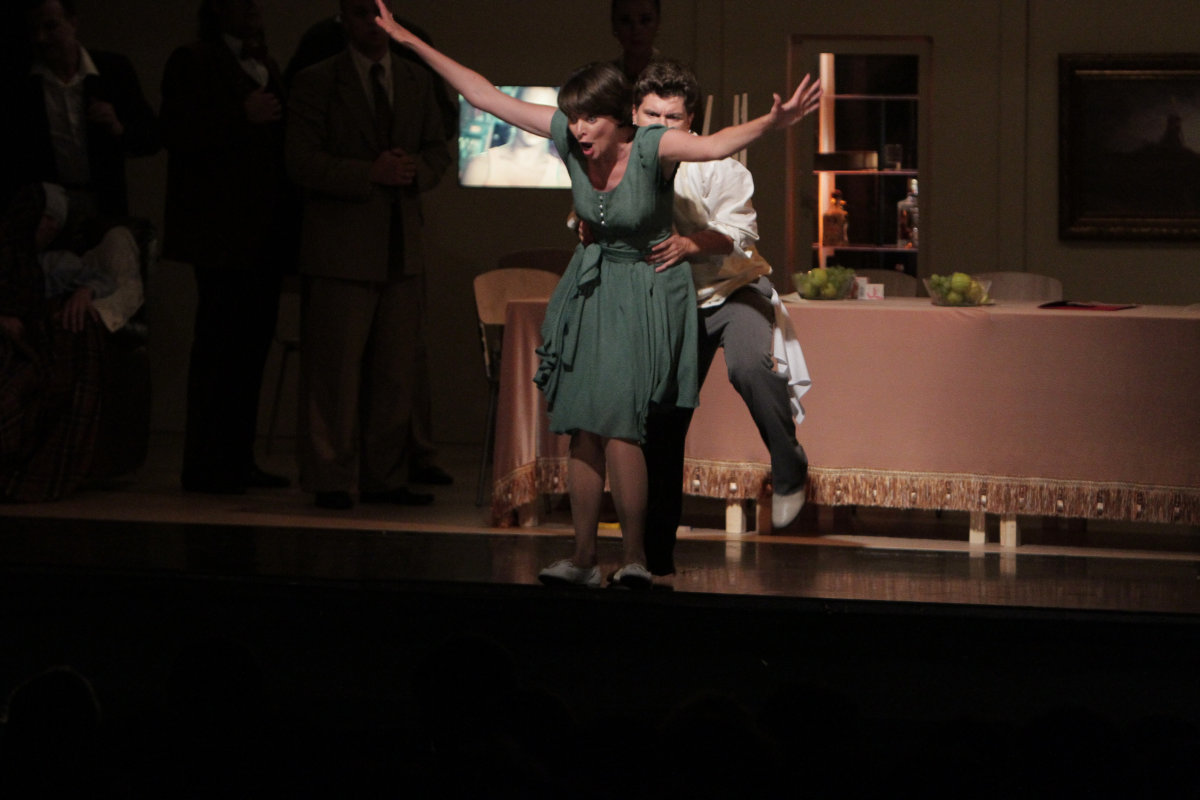
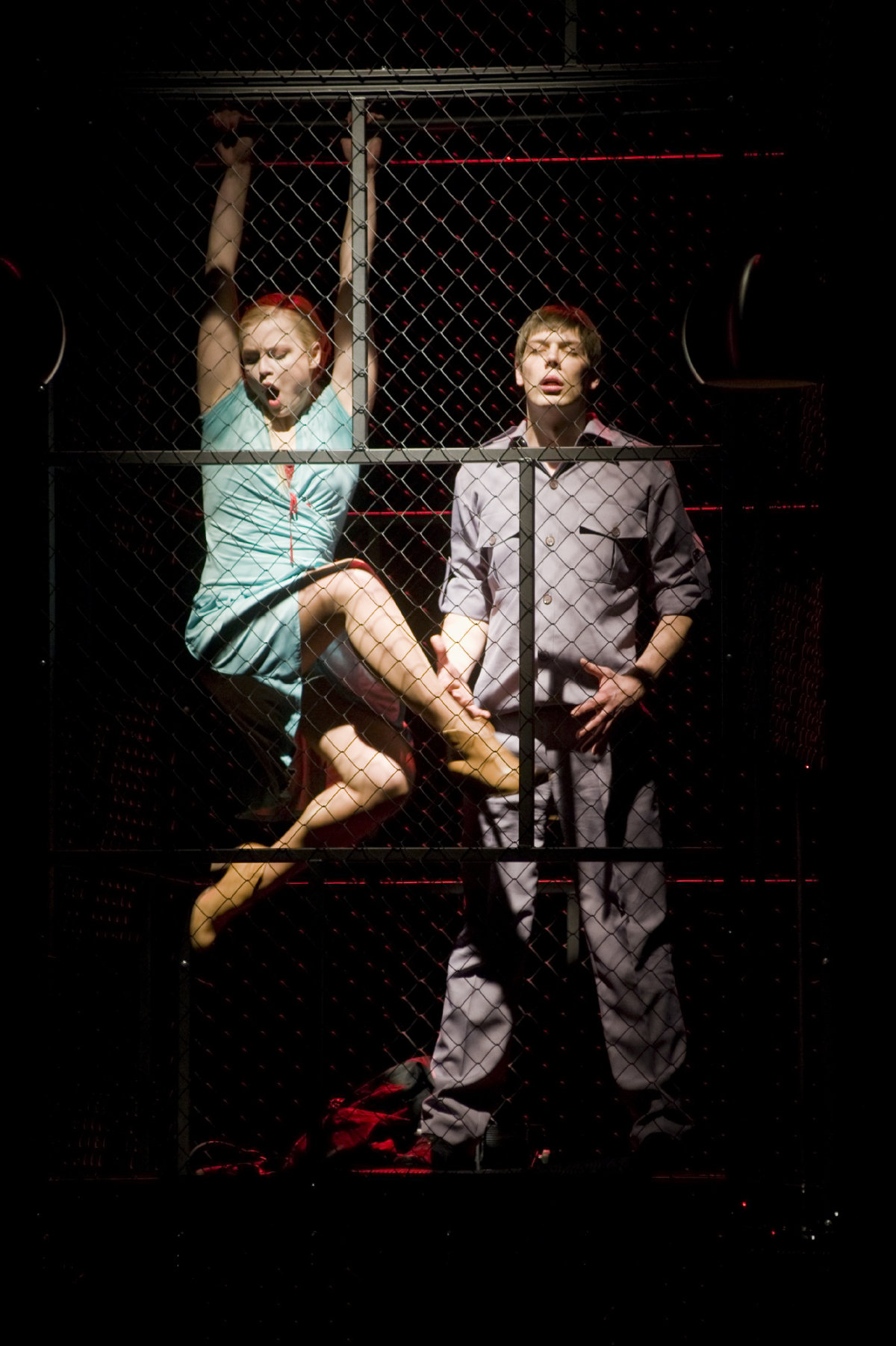
Littering the stage with electric guitars, a tambourine, a piano, a drum set and a children’s xylophone allowed the actors to make music at will. Ilya, the impoverished landowner, and Marina, the elderly nurse, were reimagined as a young gay couple staying in the bed and breakfast. The couple’s flirtations and spats were punctuated by the soundtrack they produced live on stage, which ranged from the sexual libratory, drug-induced rhythms of The Doors to the recurrent motif of teenage longing in Lana Del Rey’s Summertime Sadness. The arrangement of these musical elements problematized the extravagant unhappiness that normally sits at the heart of this play. Instead of bemoaning the tedium of provincial life, Ross restaged Chekhovian ennui as a drunken, marijuana and vodka-fuelled nihilism, silly and fleeting as the effects of the stimulants the characters regularly consume. While there is the impression that the members of the household might cheer up as soon as they sober up, the final image undoes this easy conclusion. The ‘final rest’ Sonya believes will exonerate human suffering in the source text is here translated as an unconscious state produced through the destructive repetitions of unfulfilled aspiration. While Vanya prepares the B&B accounts by reading out an interminable list of necessary supplies, Sonja throws herself repeatedly at the plexiglass wall of the house, behind which Astrov preens himself in the bathroom mirror. The violence of this repeated action leaves the glass covered in blood and Sonja passed out amongst the hotel provisions. Juxtaposing monotonous occupational duties with the repetitive quality of stymied desire, Ross challenges the underlying assumption of the salvationary character of labour in the play, which is exemplified by Sonja’s earlier claim that only work is fulfilling. Work is portrayed as the soulless administration of a bored clerk, checking lists and adding up accounts; while sexual longing is transitory and unrewarding. Concluding with this image, the melancholy of Uncle Vanya remerges suddenly and with unexpected force.

Bryce Lease, London, 2015 

Team
Director: Yana Ross

Dramaturgue: Marie Persson Hedenius

Scenography & Costumes: Zane Pihlström

Make up: Angelica Ekeberg

Lighting: Mats Öhlin

Composer: Antanas Jasenka

Video design: Eglė Eigirdaitė


Cast:

Yngve Dahlberg
Eli Ingvarsson
Linda Kulle/Moa Silén
Gustav Levin
Åsa Forsblad Morisse
Crister Olsson
Mathias Olsson
Logi Tulinius
Emelie Wallberg

More information: http://www.uppsalastadsteater.se/morbror-vanja/
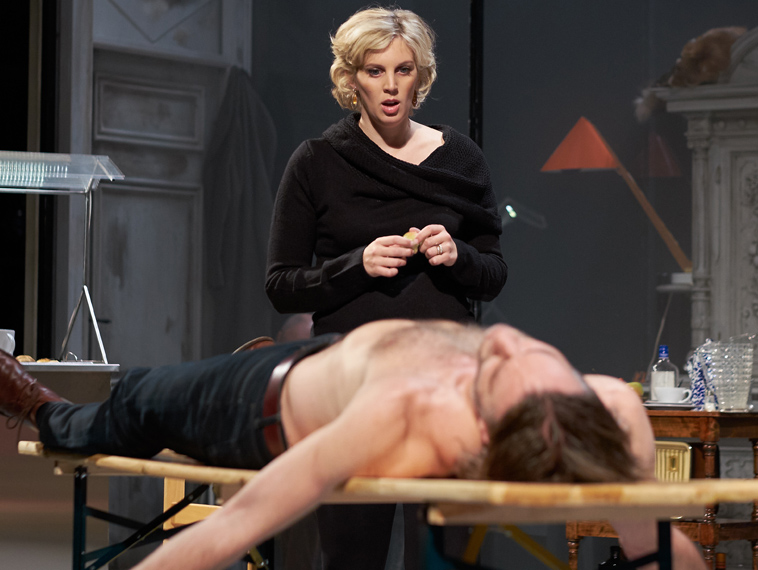
Sep 152014


DSC_0418 (1)

Yana Ross:

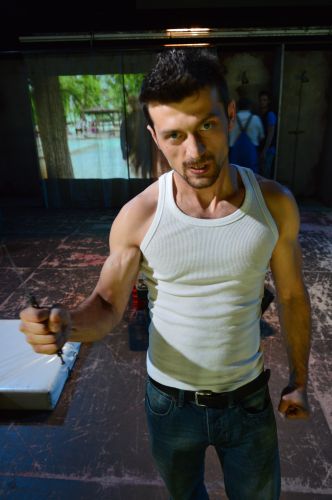
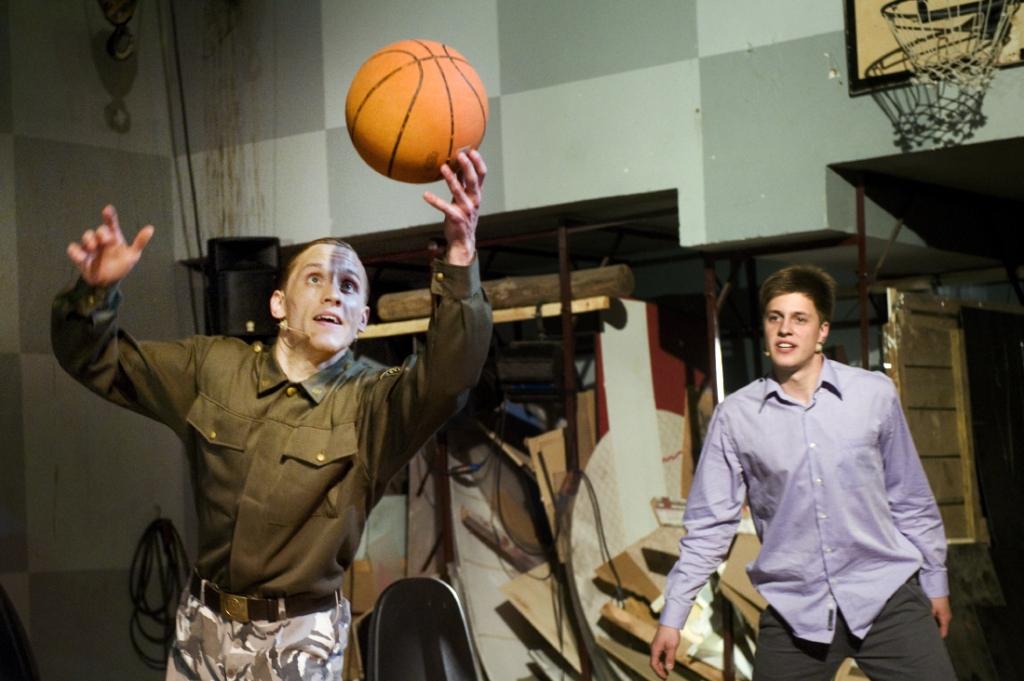
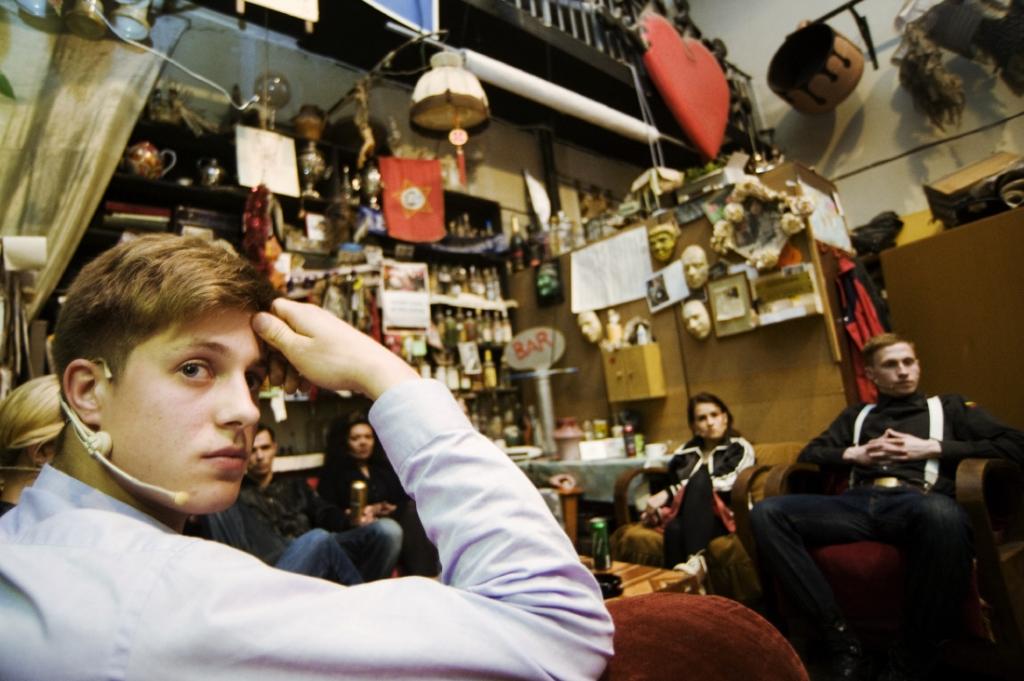
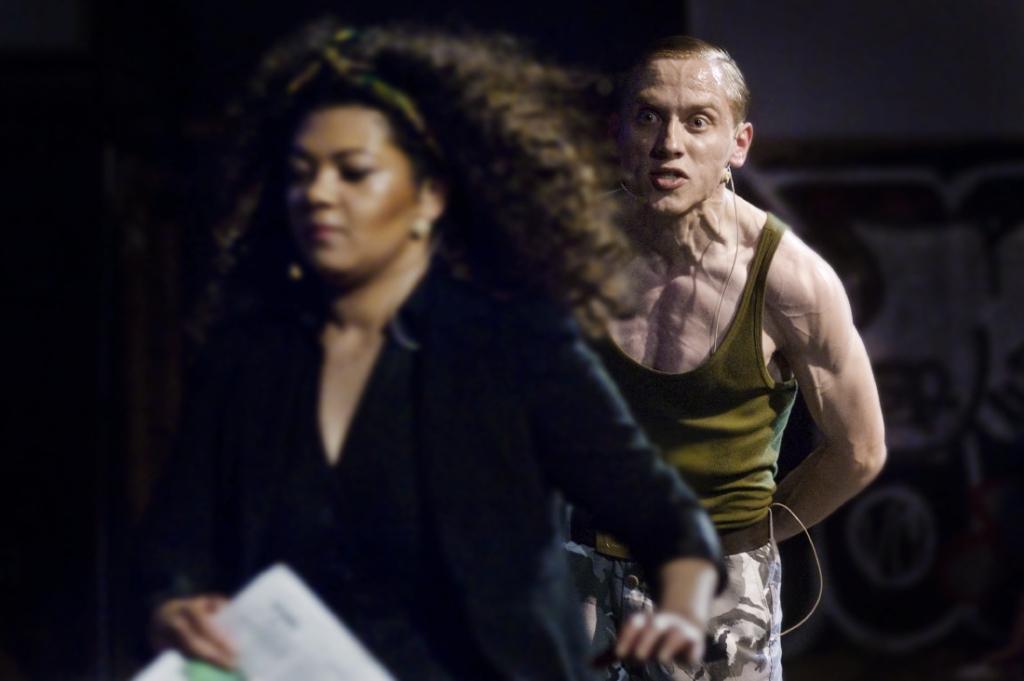
Cutting-edge dark thriller, comming-of-age tale of passion and angst with Faith. New Raskolnikov of 21st Century. Ethics and moral grounds for mortal sins. To kill, to keep one‘s word, to survive? New generation looking for moral grounds and building stamina to survive. New drama keeps audience on the edge of their seats, what-happens-next mode works wonders together with brutal energy of young actors. Generation gap and similarities with parents, falling in love and making the ends meet—all is packed tight in this fast and furious 1 hour 20 minute performance.

The Killer reviews 2014

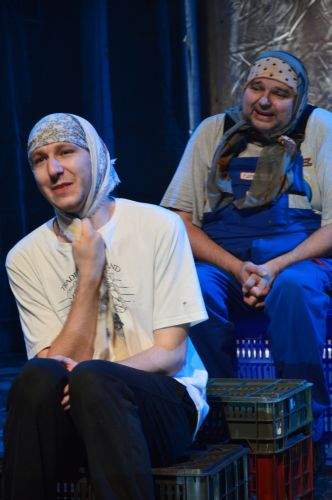
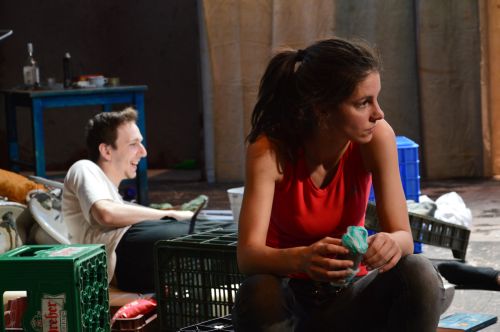
“ The Killer is a Russian contemporary drama focused on futureless life of teenagers at the countryside. Ross interpreted the piece as a road-movie and easily adapted the usage of video. The piece has a narrative structure with long monologues. Director’s creation resulted in drastic changes in dramaturgy – re-cutting the text in a more situational form and substituting some parts with video projections, scenes played entirely as a film scenes.

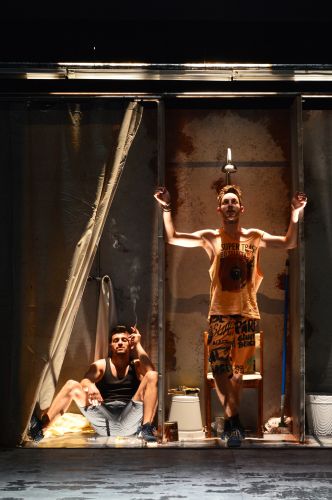
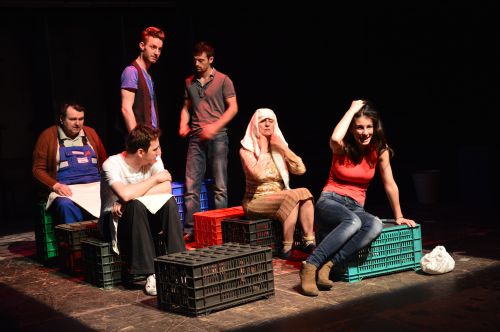
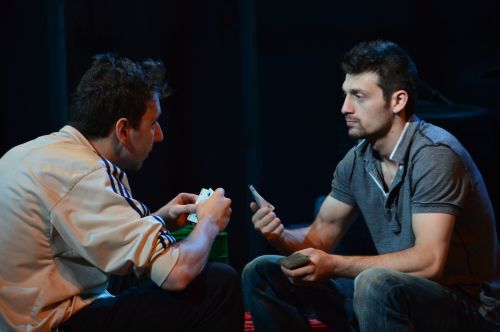
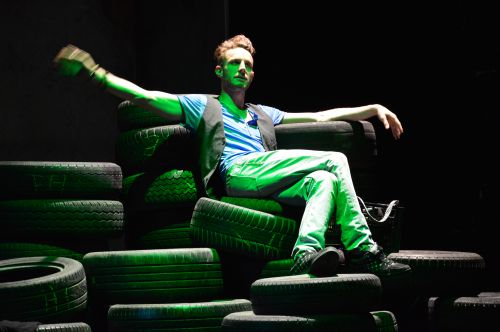
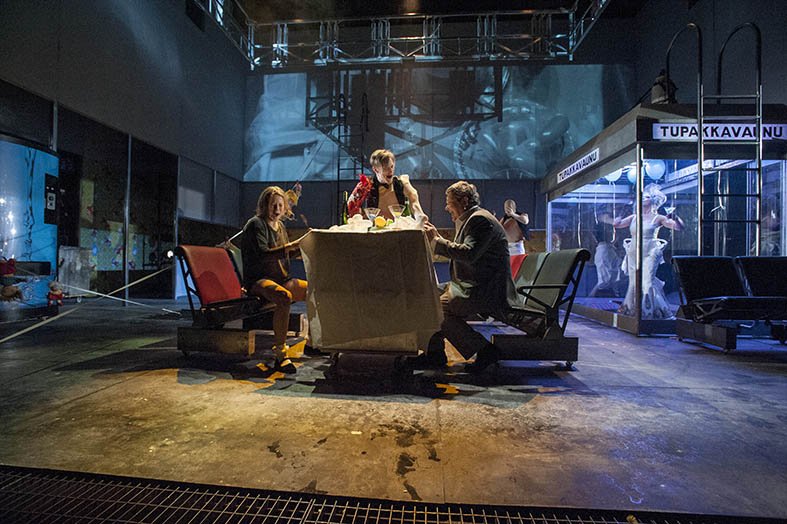
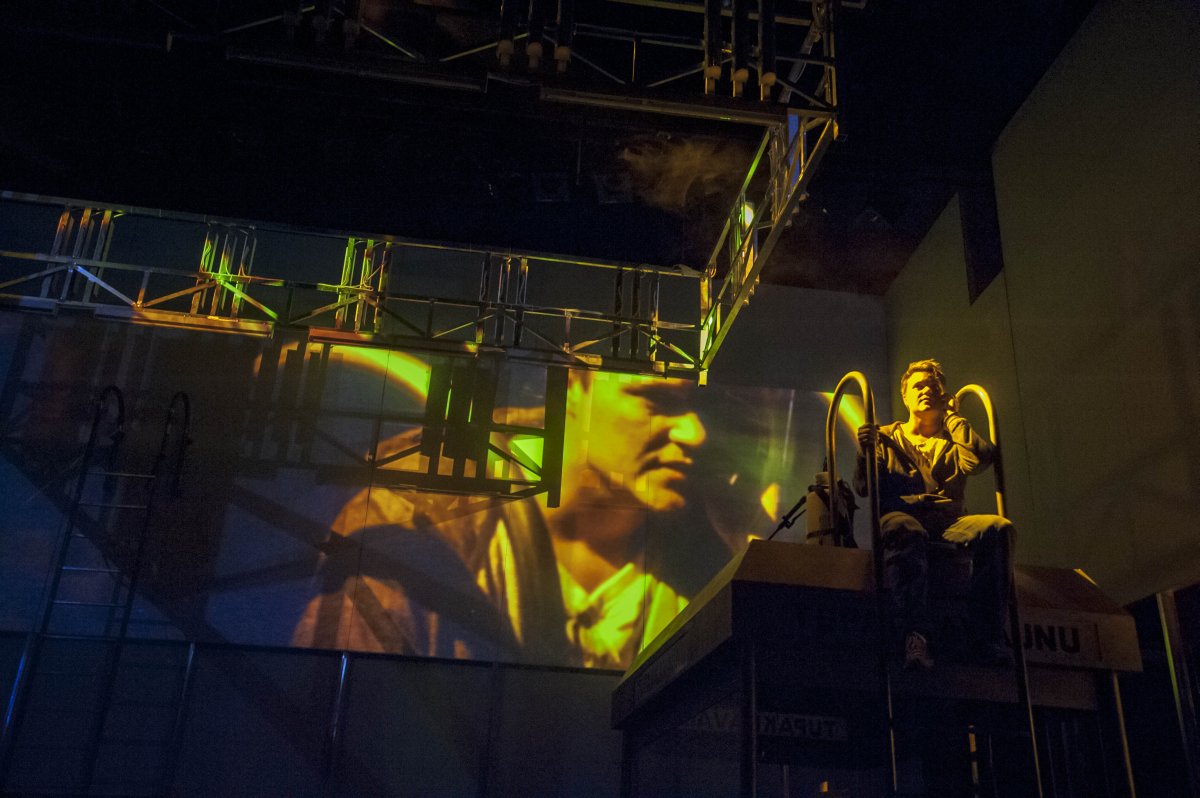
A road movie is grounded in multiple locations which were solved partly with a non-realistic set design filled with multifunctional props (like boxes, tires and shower cabins), partly with projecting exterior locations (a bus stop, highways, hills, a village, etc.). The background videos projected on shower curtains determined the changing of locations and through this the rhythm of storytelling and the whole performance flowed naturally. Moreover, they gave an extra layer to the plot, namely repositioning the story into Hungary instead of Russia. The videos showed an image of Budapest and the Hungarian countryside and rhymed this way with other hints of the performance (like singing Hungarian folk-songs and playing a Hungarian card game).

The final destination of the road was shown on video. At a playground the protagonist meets his destiny, the leader of local mafia played by Kornél Mundurczó. With this reference Ross linked the performance not only to Hungarian reality but also the Hungarian theatre scene, where as she suggests the young generation should take over the place.”

Ármin Szabó-Székely 

Team
Director Yana Ross

Text: Alexaner Molchanov

Design: Marijus Jacovskis

Music: Monori András

Video: Török Marcell

Dramaturg: Szabó-Sékely Ármin


Cast:

Berger Balázs
Szabó Erika
Rózsa Kristián
Varjú Olga
Gados Béla
Domokos Zsolt

Special thanks: Mundruczó Kornél

Sep 142013
 

Our Class

Although the play has been staged in Europe and North America, our production is addressed at the painful taboos of the present Lithuania. Performance is raising an urgent question of national collective memory and the aftermath of WWII. Ordinary daily heroism vs. betrayal and collaboration with Nazis during the war.

Our Class is based on real events taking place between 1925-2003; a small town neighbors are born, raised and murdered, trapped between Soviet and Nazi regime. The aftermath of a single day massacre haunts both living and dead in a brilliant dramatic interpretation by Tadeusz Slobodzanek, winner of the NIKE book prize 2010, the highest literary award in Poland.

The innocence of youth is overwhelming from the school bench to the first kiss, from a Catholic prayer to the first stone cast in the back of the “”other.” The loss of innocence is tangible, it happens right before our eyes. Children become warriors and at the end of the game, their fragile bodies return to the state of childhood’s immobility, lack of strength and lucidity.

Small town neighbors, Jews and Poles, face each other in sickness and in health, till death do them part. A story of a single town, a story of the nation and the whole race. Every human being is faced with a choice. What is the true face of human nature? Is our only tangible instinct to survive? Or to love?  Love. Salvation. Faith. Choice. Our production focusees on humanity, the extreme circumstances call for strength of the human spirit, faith and compassion. The question is, do we still have it?


Team
Scenography: Marijus JACOVSKIS

Composer: Antanas JASENKA

Video design: Eglė EIGIRDAITĖ

Lighting: Vilius VILUTIS

Costume design: Zane PIHLSTROM (USA)

Translation(From Polish): Rolandas RASTAUSKAS

Musicians: Darius BAŽANOVAS, Edvardas JUCIUS, Algirdas JANUŠEVIČIUS, Julius RAČKAUSKAS, Darius ŽYLĖ

Assistant Director: Mindaugas JUSČIUS


Cast:

Dora (1920-1941)Miglė POLIKEVIČIŪTĖ/Toma VAŠKEVIČIŪTĖ
Zocha (1919-1985)Rimantė VALIUKAITĖ/Vaiva MAINELYTĖ/Monika BIČIŪNAITĖ
Rachelka / Mariana (1920-2002)Monika VAIČIULYTĖ/Aldona JANUŠAUSKAITĖ
Jokūbas Kacas (1919-1941)Daumantas CIUNIS
Rysekas (1919-1942)Dainius JANKAUSKAS
Menachemas (1919-1975)Tadas GRYN
Zigmuntas (1918-1977)Ramūnas CICĖNAS
Henekas (1919-2001)Paulius TAMOLĖ/Gediminas GIRDVAINIS
Vladekas (1919-2001)Algirdas GRADAUSKAS/Tomas ŽAIBUS/Valerijus JEVSEJEVAS
Abraomas (1920-2003)Marius REPŠYS 

This  premiere is presented as part of International Festival Sirenos, Vilnius 2013

Nov 242012
 

Eurydike_07

Yana Ross

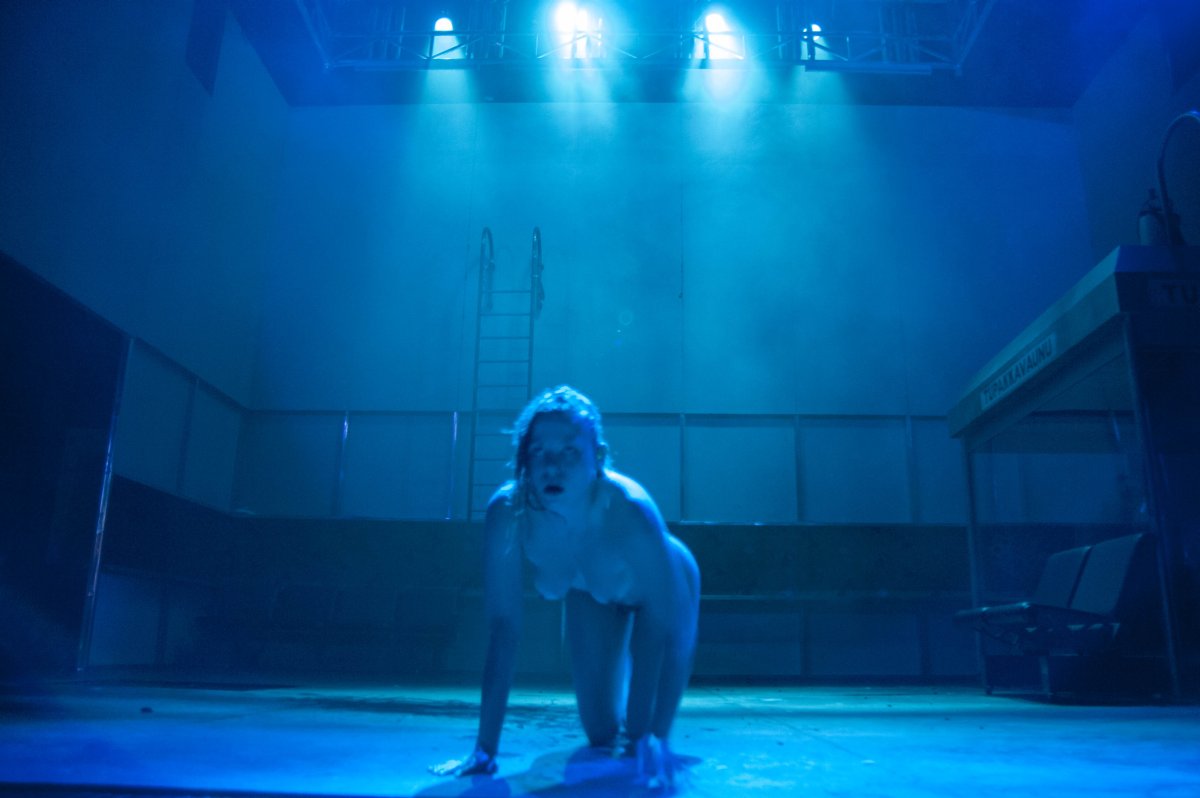
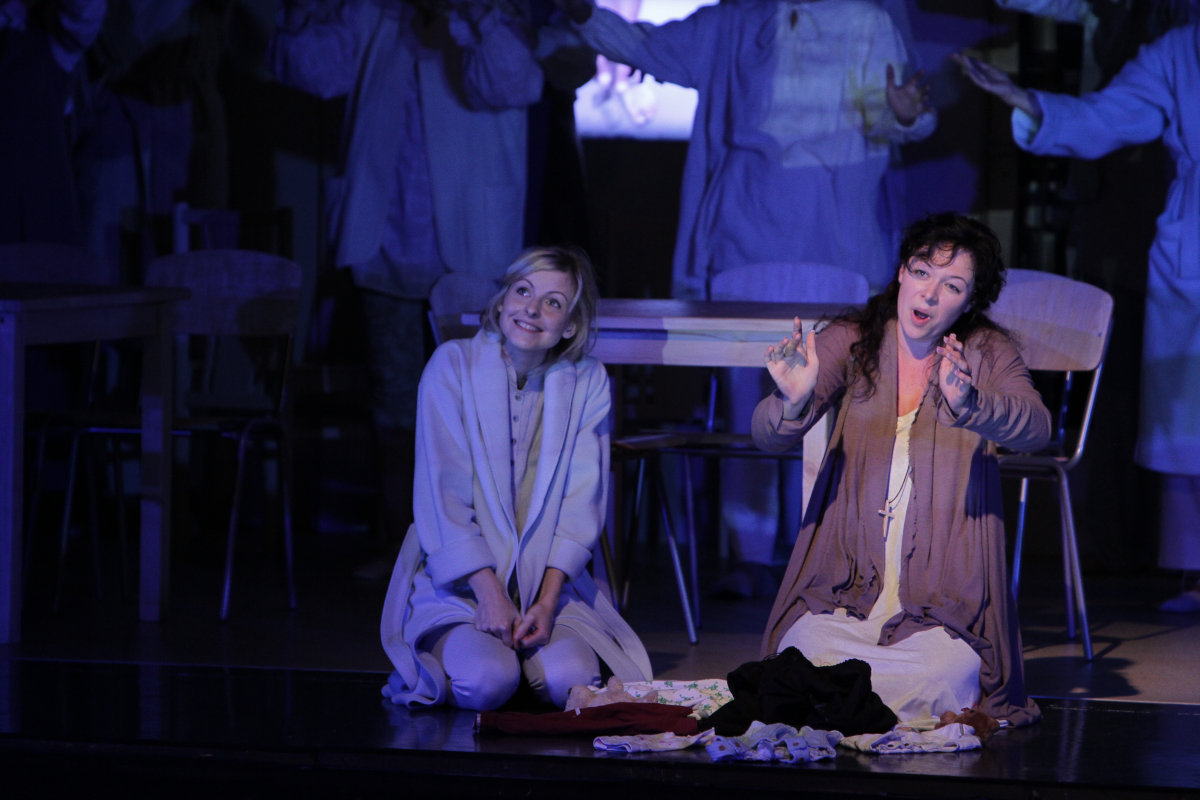
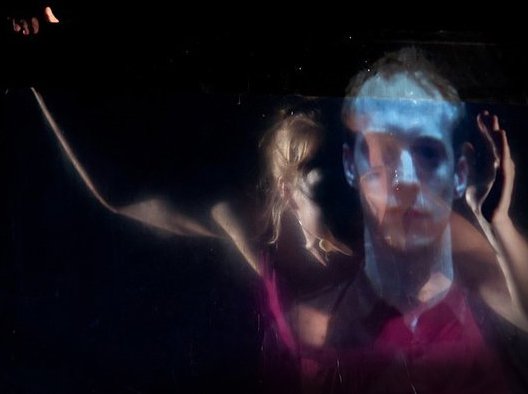
I am inviting our audience on a rollercoaster ride every person experiences when encounters a deep meaningful relationship. Two people together — in a family bond or a passion of love will determine if the ride turns exhilarating or mortifying…

Sarah Ruhl has a unique contemporary voice. She calls simple things to our attention but uses irony and humor to zoom-in on often tragic consequences a choice can bring. The world of her play is enormous and fantastical, one minute it is ordinary and seemingly real, then turns larger-then-life and hallucinatory. It is a parable, a modern and sharp discourse with the audience, a probe into moral and ethical responsibility we carry for those we love.

I believe cognition, memory, and ability to evoke a certain feeling from the past is what makes us human. Our extraordinary emotional storage from which things can be pulled up on a memory “screen” or stored away in an “archive” becomes fragile with time. We all face our memories: beautiful and horrifying, erotic and repulsive, comforting and curious…

Eurydice reviews February – March 2013

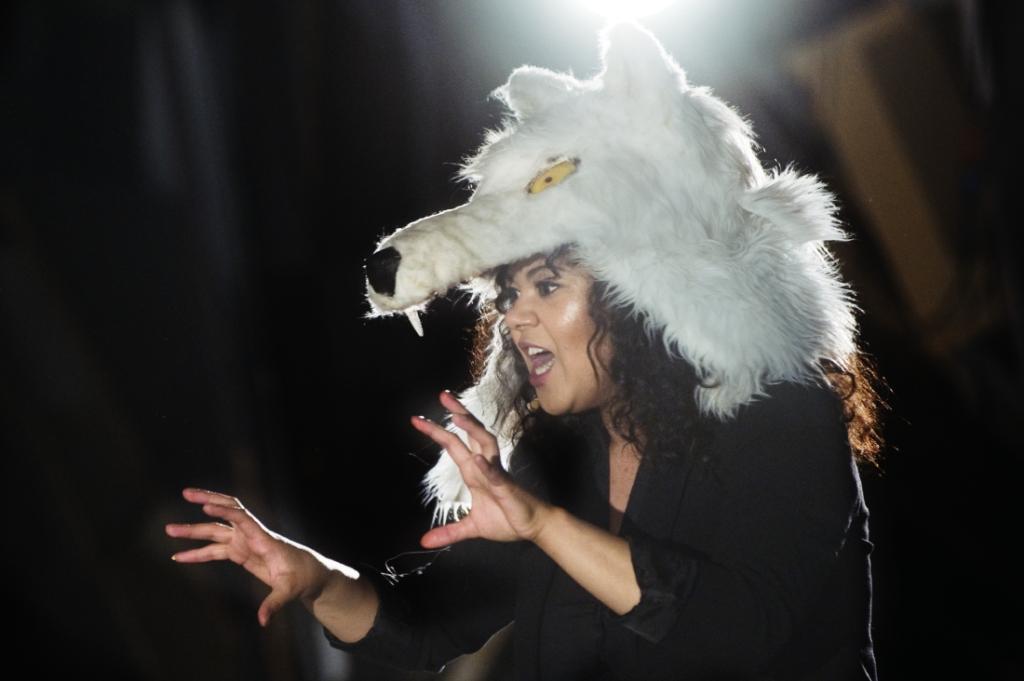
Eurydice: Yana Ross’ impressive magical kaleidoscope. Emmi Parviainen shines in the main role.

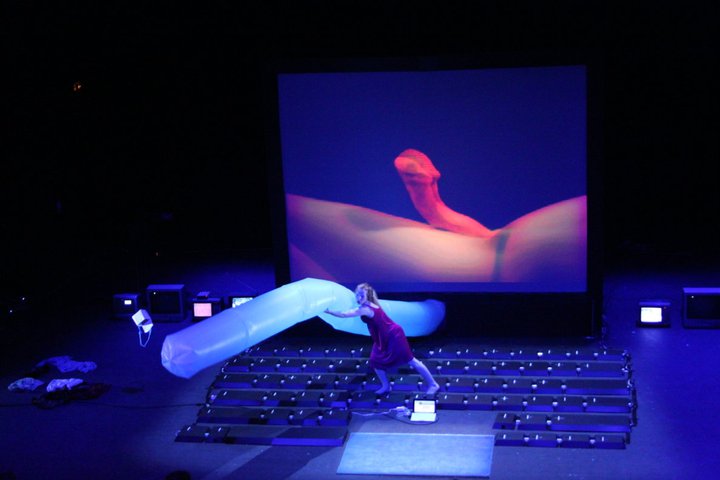
American director Yana Ross’ creation for the Finnish National Theatre is unquestionably the leading theatre event of the season. Ross’ style is unique and in fact impossible to pigeonhole. The performance is like a brilliant kaleidoscope: lyrical drama, absurd theatre, dance, video narrative, unusual music and playfulness.

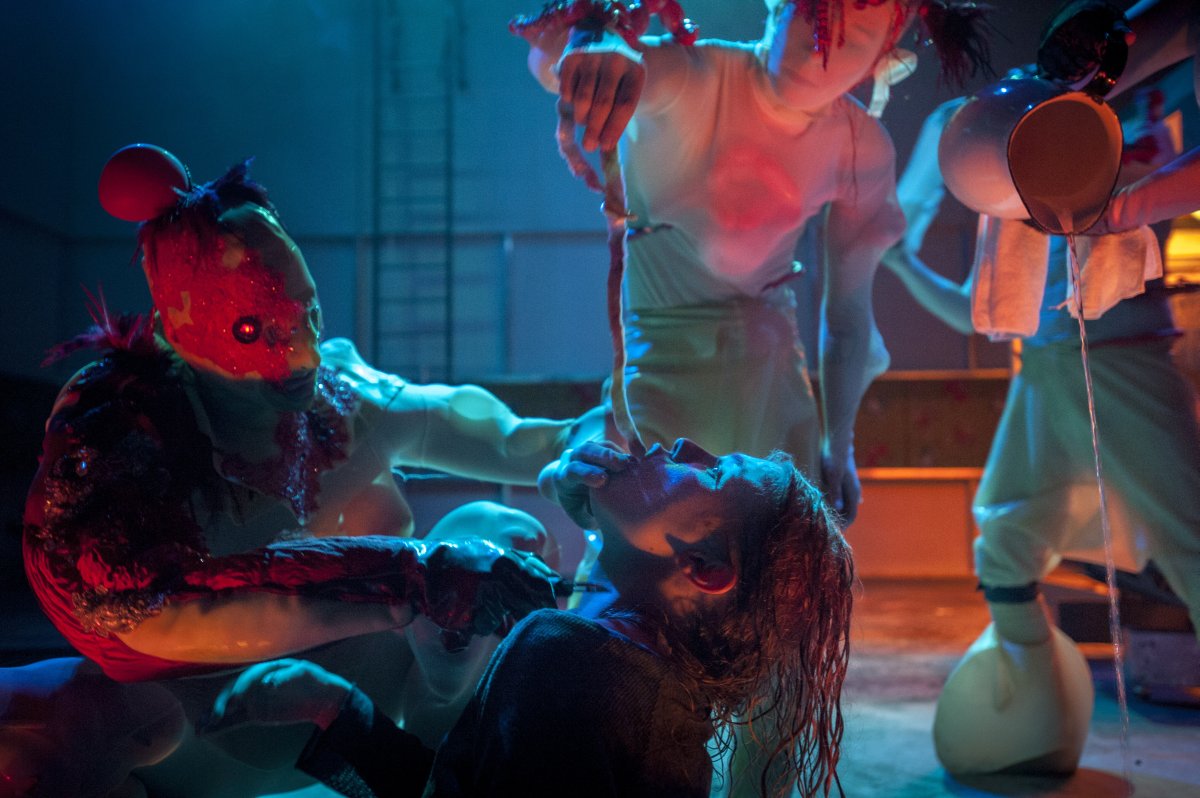
Ross’ vision of the Underworld is full of flights of the imagination, frightening images and Antanas Yasenka’s by turns melancholic and jarring musical accompaniment. The craziest, funniest characters are the Underworld chorus or ‘three stones’ (Antti Pääkkönen, Saska Pulkkinen and Jesse Vinnari). Their distressed looks, which allow the stones to play with their form, are designed by Zane Pihlstrom.

The performance leaves a strong impression, stirring many emotions. The visual brilliance and the dynamic energy of the art-work as whole stays in the mind for a long time. In the show, humour and absurdity unexpectedly combine with sadness and longing. Yana Ross and her team have created an amazing theatrical experience, one which leaves the audience both awestruck and grateful.

Martti Mäkelä, Skenet, 28.2.2013


The wisdom of myth endures

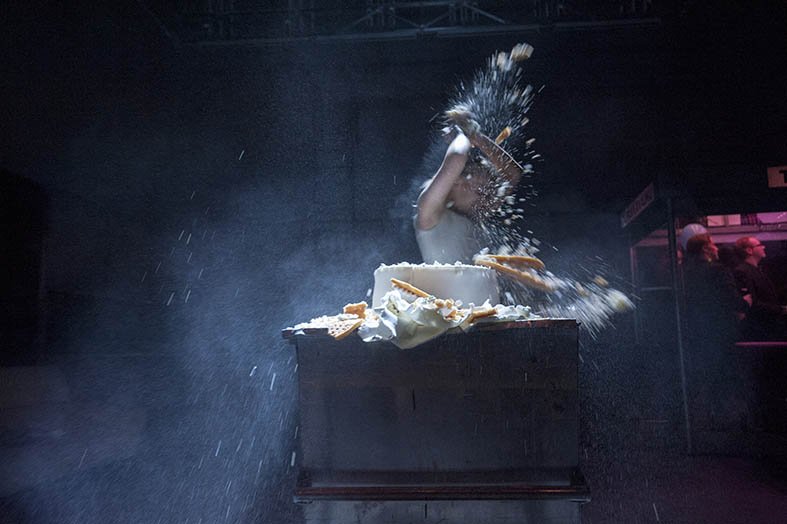
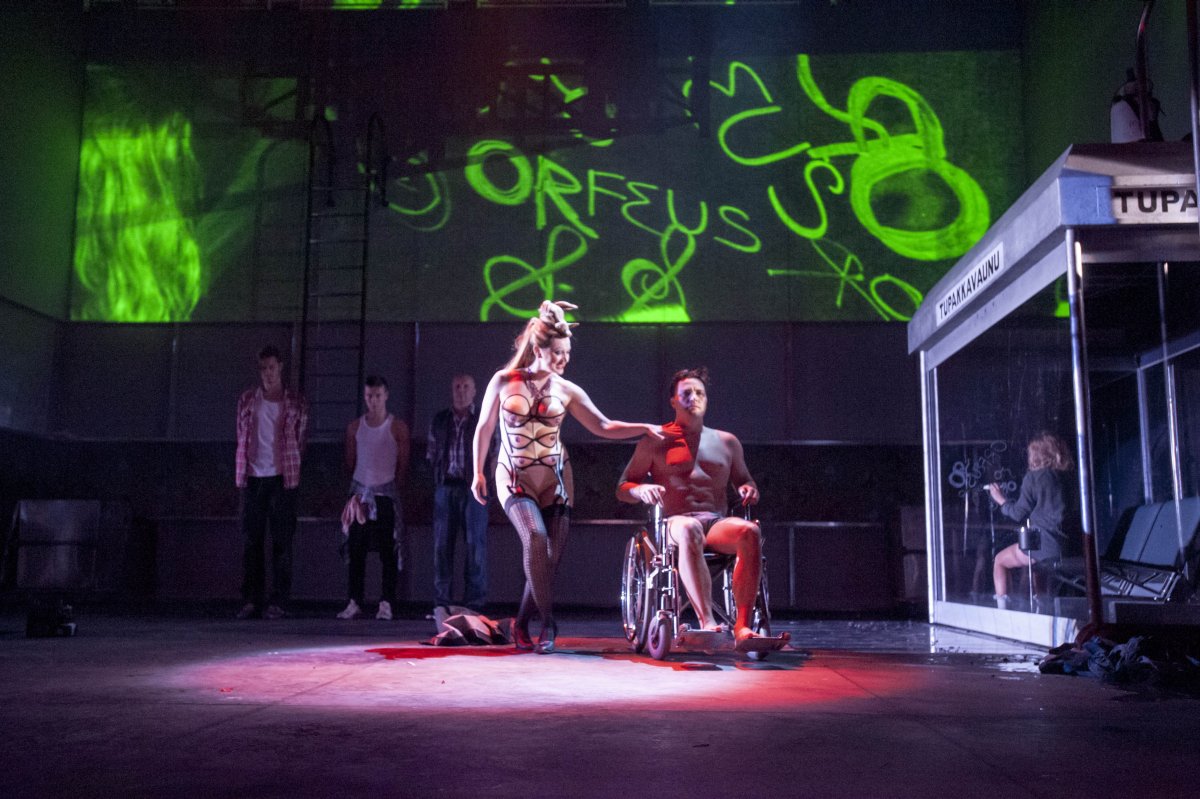
American director Yana Ross treats Sarah Ruhl’s text with the boldness of post-dramatic theatre, playing with danger of contradictions. Ross fills the performance with metaphoric hints, hooks and deep allusions. She allows plenty of time for action and thought, and trusts in her audience’s ability to make associations. Accompanied by Anatanas’ Jasenka’s inventive music, striking and powerful images take over the stage: Orpheus (Harri Nousiainen) balancing on a strip of real fire or Eurydice (EmmiParviainen) destroying her enormous freshly baked wedding cake, make a deep and disturbing impression.

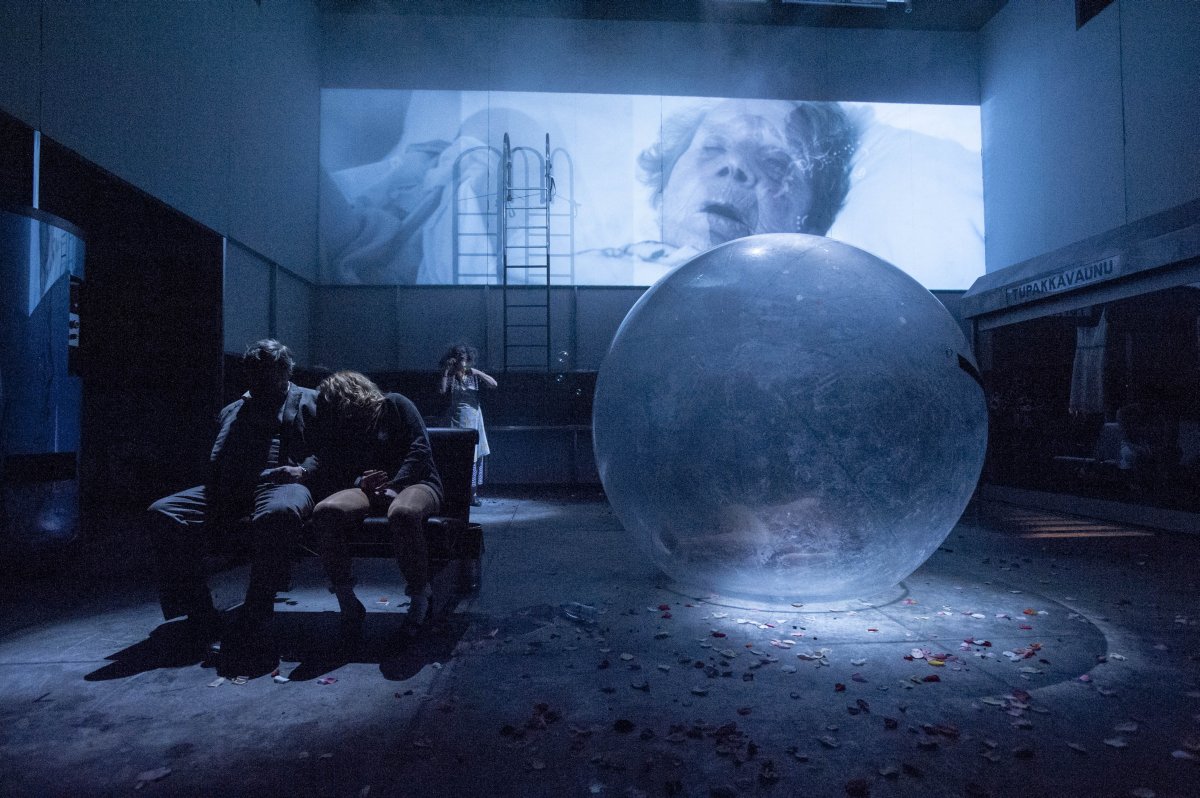
Eurydice’s grandmother’s (Terhi Panula) presence on stage is a wonderful dream-like image reminding us of the continuity of generations. Brilliant Petri Manninen captures a fairy-tale ambivalence as the Lord of the Underworld. Sharply focused and balanced scenes between the lovers as well as father and daughter are unquestionably the performance’s high emotionaal and touching scenes. The eternal themes of love, death and remembrance are so alive in these moments with great spontaneity and without pathos. Emmi Parviainen is convincing and organic, always on the edge and above all Harri Nousiainen’s intensive sorrow and Juha Muje’s affection really carry this spectacular performance with force.

Maria Säkö Helsingin Sanomat (Helsinki News) 22.2.2013


From antiquity to real time

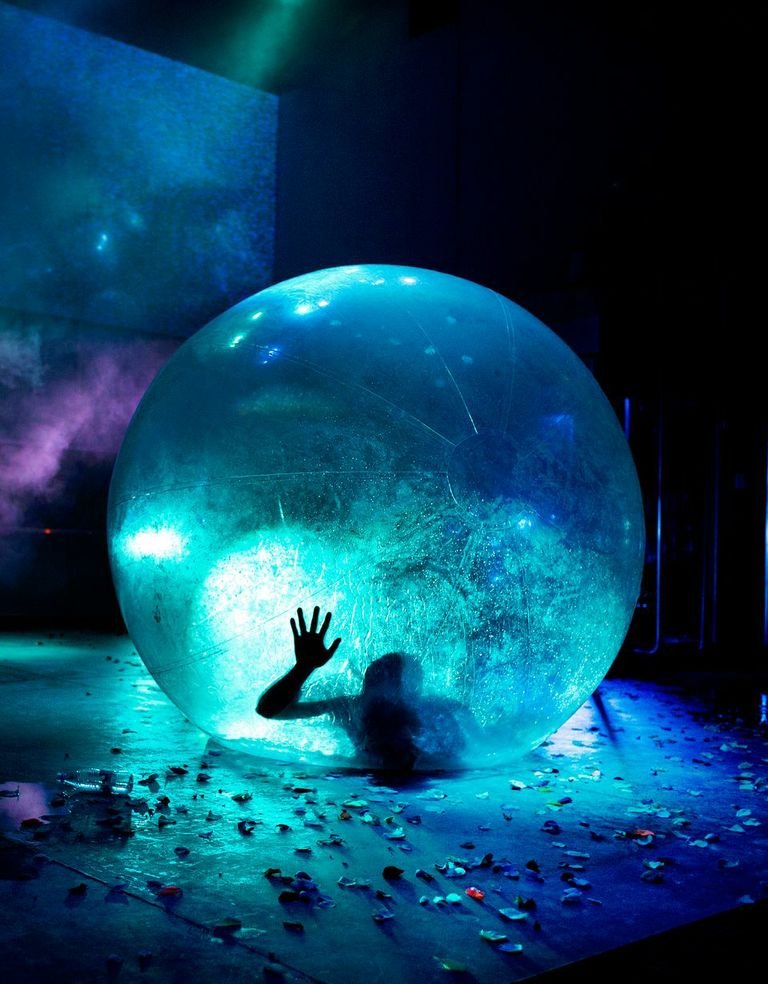
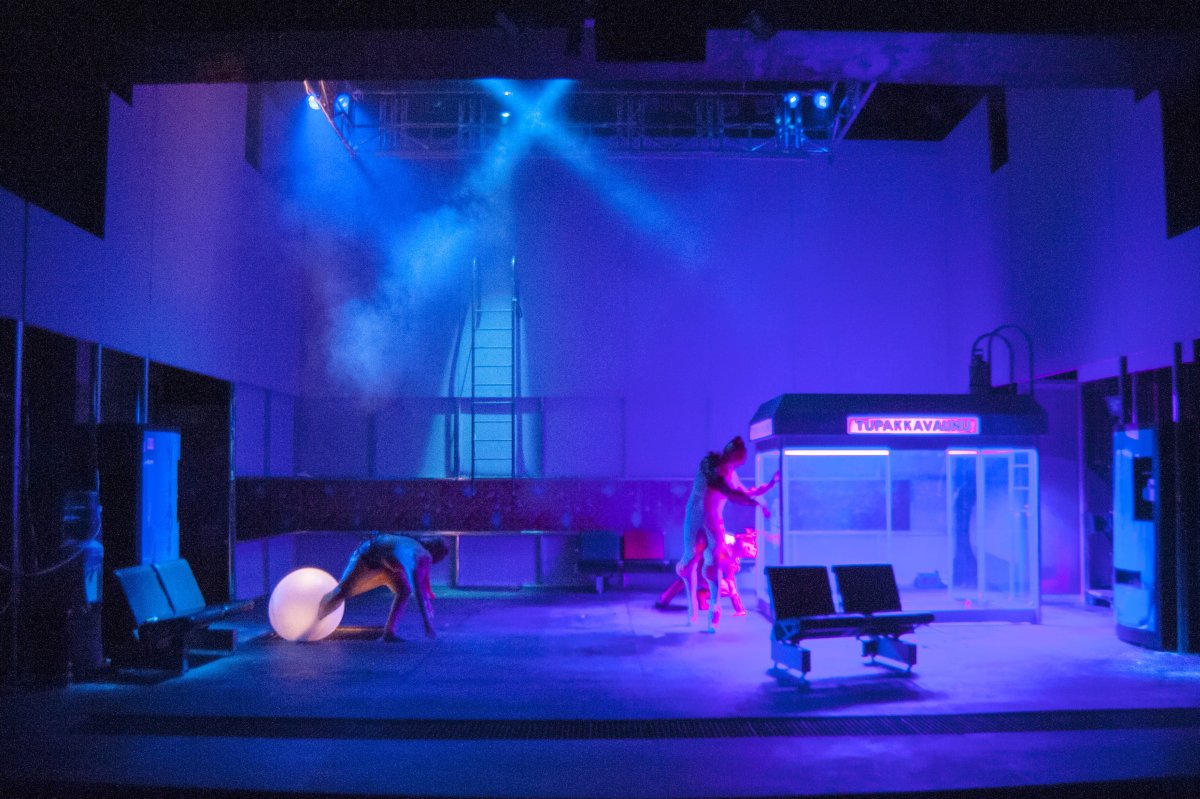
The visual whole is magnificent, the artistic team have given us an unforgettable trip to the underworld. Watch, listen and wonder! This whole marvelous fiction with its weird – in a good sense– costumes, musical accompaniment, clever dialogue, surprising twists and colourful, glowing set is theatre in real time.

Kaarina Naski, Länsi-Uusimaa, 25.2.2013


Loves me, loves me not?

This tragedy spiked with humour, this abundantly imaginative, cryptic interpretation has the audience hooked. But even as this whirlwind sweeps the stage, the storyline is never lost: it runs through the dialogue with poetry and clarity.

Fortunately the video camera, also live, is used sparingly, and the text and action enrich one another. The music doesn’t steal the action but underlines and carries it. Themes of forgetting, remembering, choice and destiny are caught in many astonishingly beautiful moments. This colourful fabric of fates ends with a thought-provoking collage of photographs by Dutch photographer Edith Gerritsma, about birth, death and the fragility of life.

Soila Lehtonen, Aamulehti, 23.2.2013


There’s no life without recognition

Eurydice, based on the Orpheus myth, turns out to be a mind-blowing experience, spell-binding in its surrealistic images. Incredibly creative work.

..Ruhl’s text is at once magically beautiful and deeply tragic. Luckily it also contains the relief of laughter, as in death Eurydice is initiated into the ways of the Underworld by an amusing chorus of stones. As with all good stories, the play can be taken in many different ways. It works simply as a fairy-tale for grown-ups, but it also contains many layers of allegory. Through the fates of Orpheus and Eurydice, Ross for example ponders the difficulties of memory, forgetting and family relationships. Eurydice meets her father (Juha Muje) on the other side, but no longer recognizes him..This sense of loss, which pervades the play, can also be seen as a picture of our times. When we lose the ability to recognize one another’s feelings, we lose the ability to communicate.EmmiParviainen has a powerful presence as Eurydice, at once effortless and touching in a physically demanding role. The same dream-like ease can be found in Harri Nousiainen’s Orpheus, who ends up having a petty fight with his beloved as soon as he gets her back.

Ilkka Kuosmanen, Keskisuomalainen, 23.2.2013


Hold on

Sometimes when you’re sitting in the audience, you know you are watching a historically importantevent, such as Yana Ross’ interpretations of Sarah Ruhl’s Eurydice at the Finnish National Theatre. Time doesn’t matter – 2500 years ago or now. What matters is how true, effortless and intensive this tale of passion, memory and love’s loss still is for us.

Raila Kinnunen, Apu 2013/9


Eurydice – an astonishing theatre experience

Sometimes you can be lucky enough to experience a theatre performance which shakes you up, fills you with gladness, lifts your spirit and stays with you after you leave the theatre. Eurydice, written by award-winning playwright Sarah Ruhl and directed by Yana Ross, is exactly that kind of performance. Innovative, tragic and comic at the same time, different… The staging is rich in idea and incident – thanks to director Ross!.. Entertaining are the Underworld’s speaking stones, who comically punctuate the action. A slick idea of Ruhl’s which is well served by Ross’ direction. The acting is enjoyable all round, a special mention goes to the scenes between Eurydice and her father. The performance asks: what will we remember to forget? I would like to twist that question and ask what will we remember not to forget? The answer is easy: this performance of Eurydice.

Ulf Persson, Recensenterna, 24.2.2013

Team
Director Yana Ross

Set and Costume: Zane Pihlstrom

Music: Antanas Jasenka

Video: Petri Tarkianen

Lights: Ville Tokka, Yana Ross


Cast:
Antti Pääkkönen
Harri Nousiainen
Juha Muje
Petri Manninen
Pirjo Luoma-aho
Terhi Panula
Emmi Parviainen
Saska Pulkkinen
Jesse Vinnari

More info: http://www.kansallisteatteri.fi/esitykset/eurydike

Apr 202012
 

Red Laces 05

Yana Ross

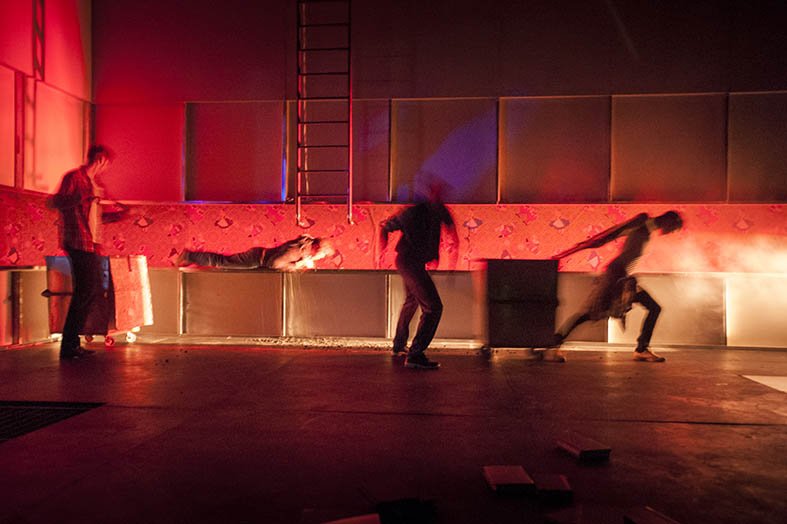
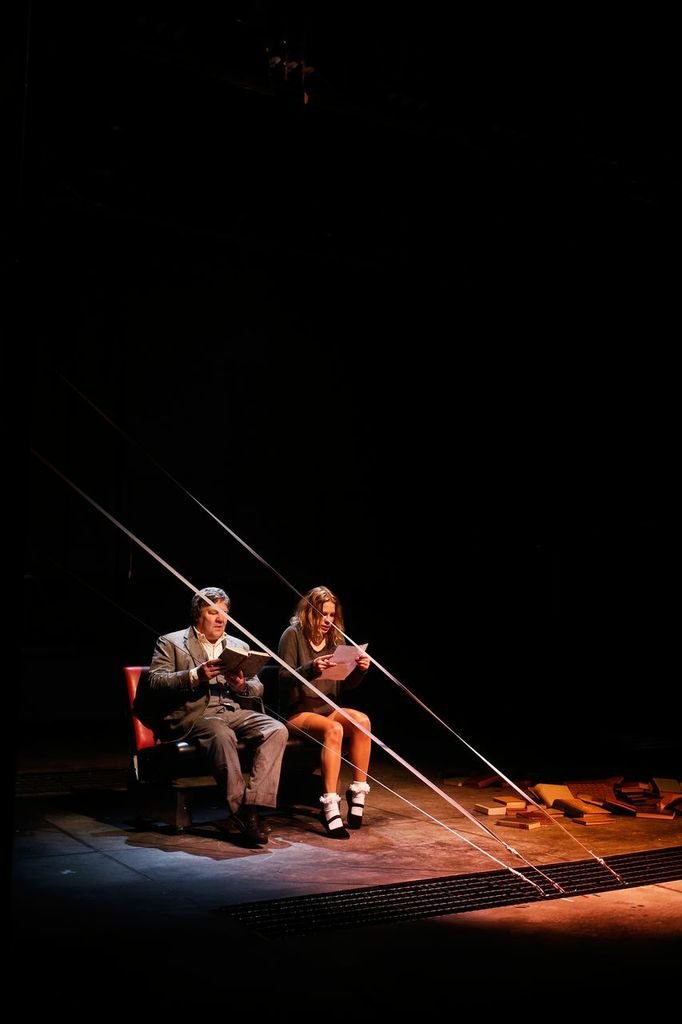
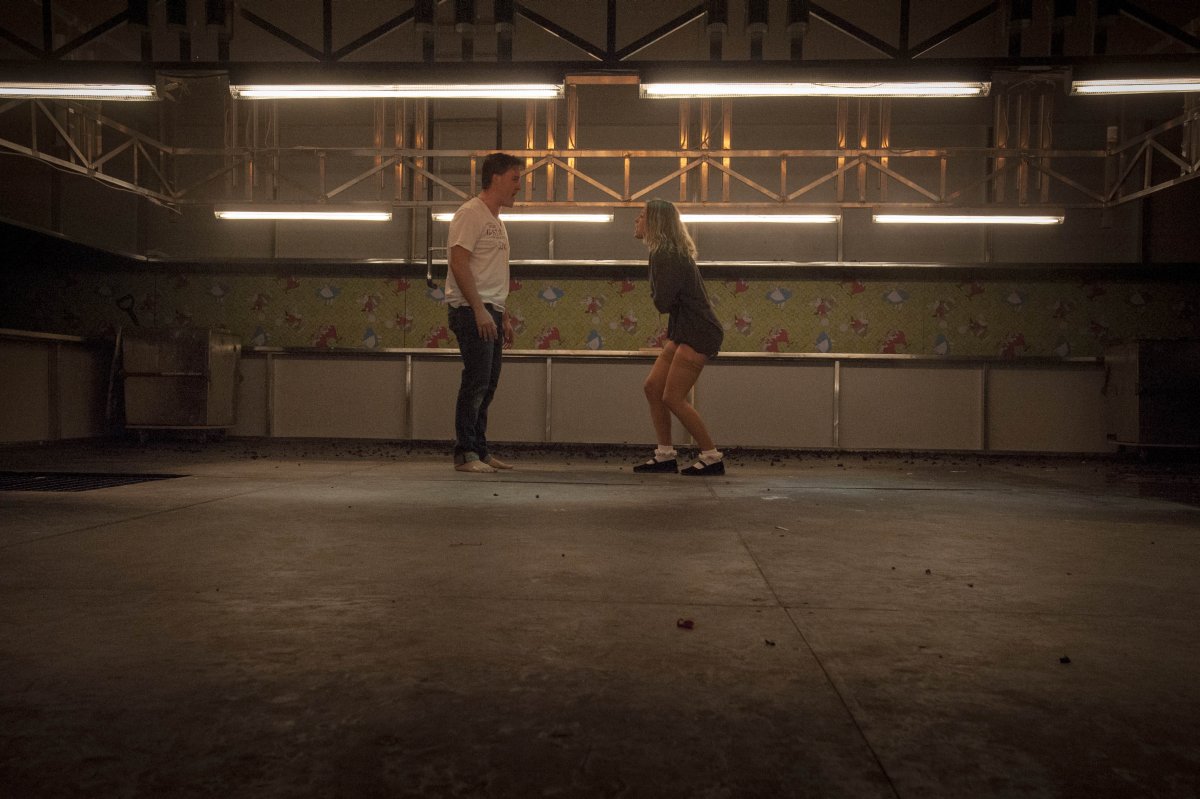
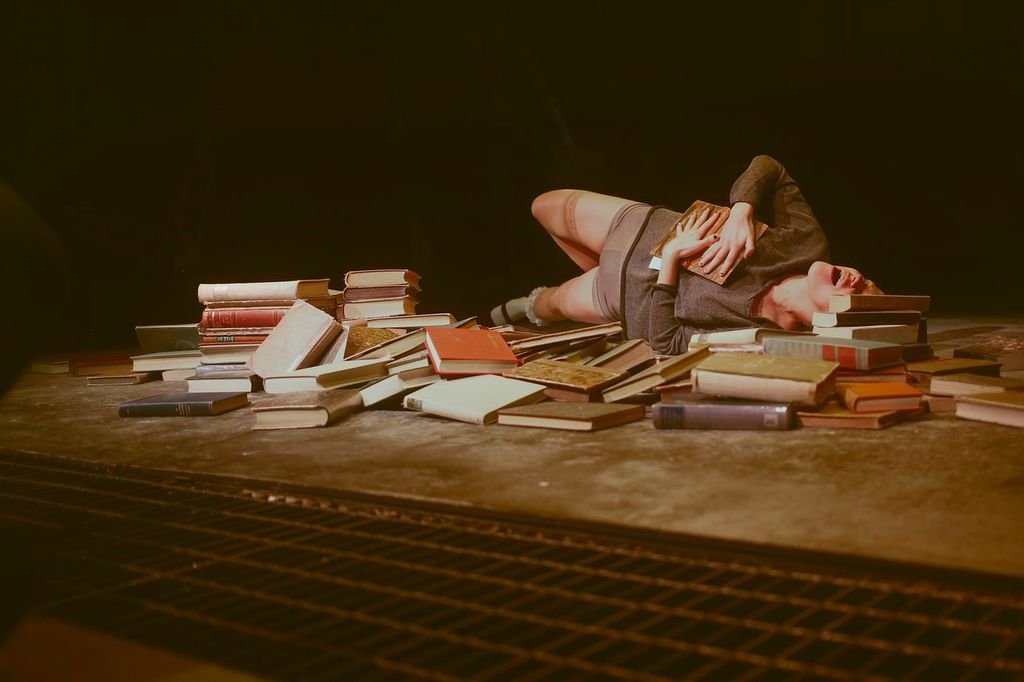
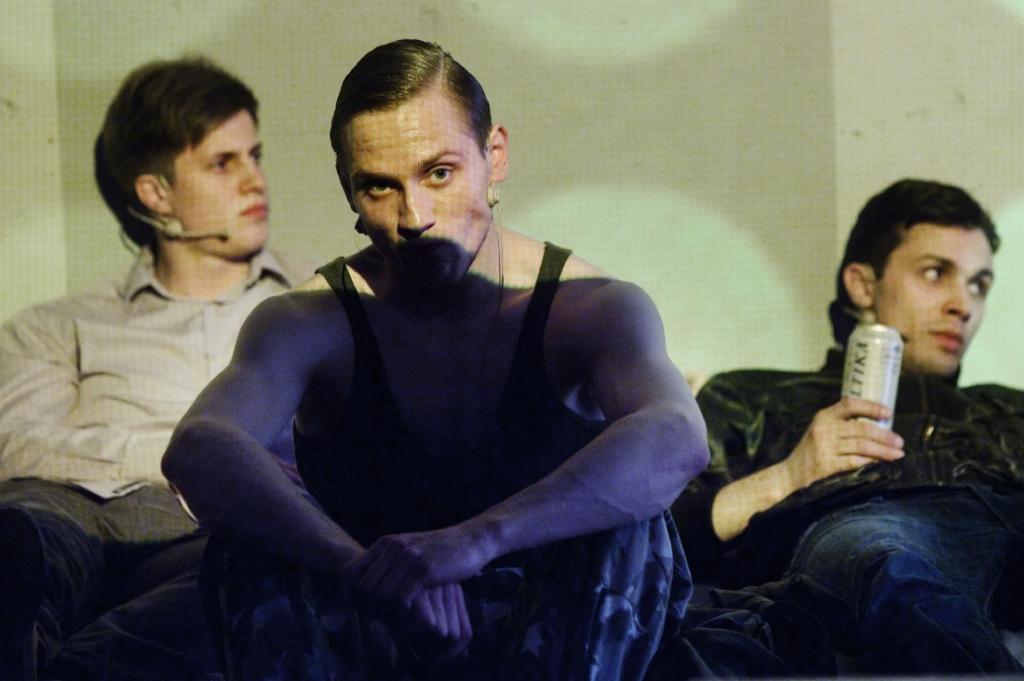
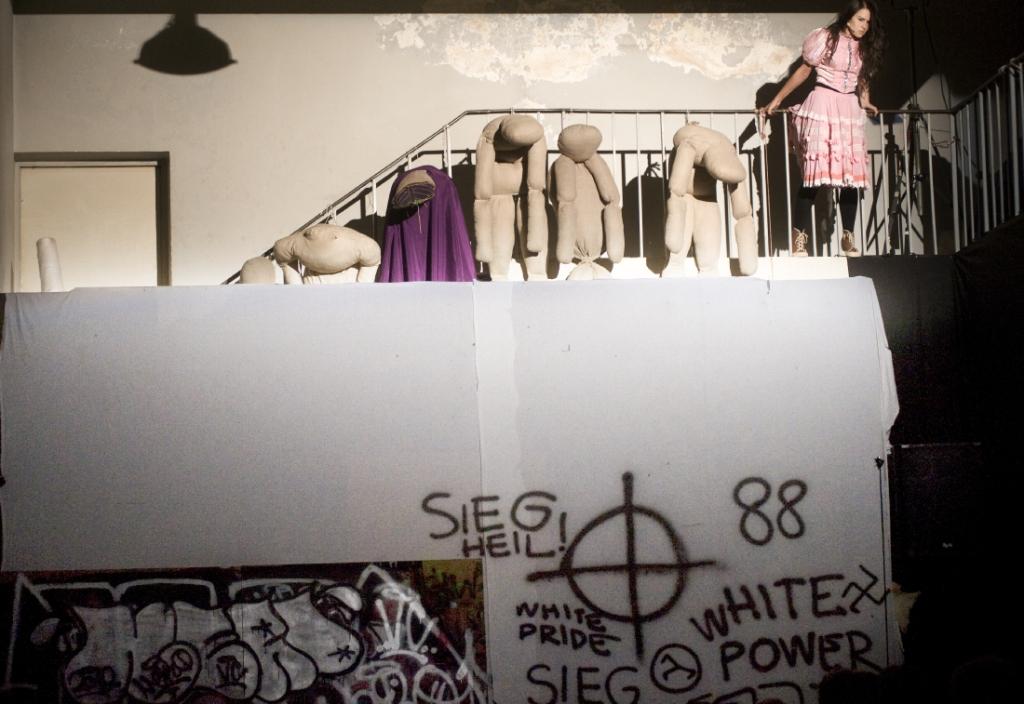
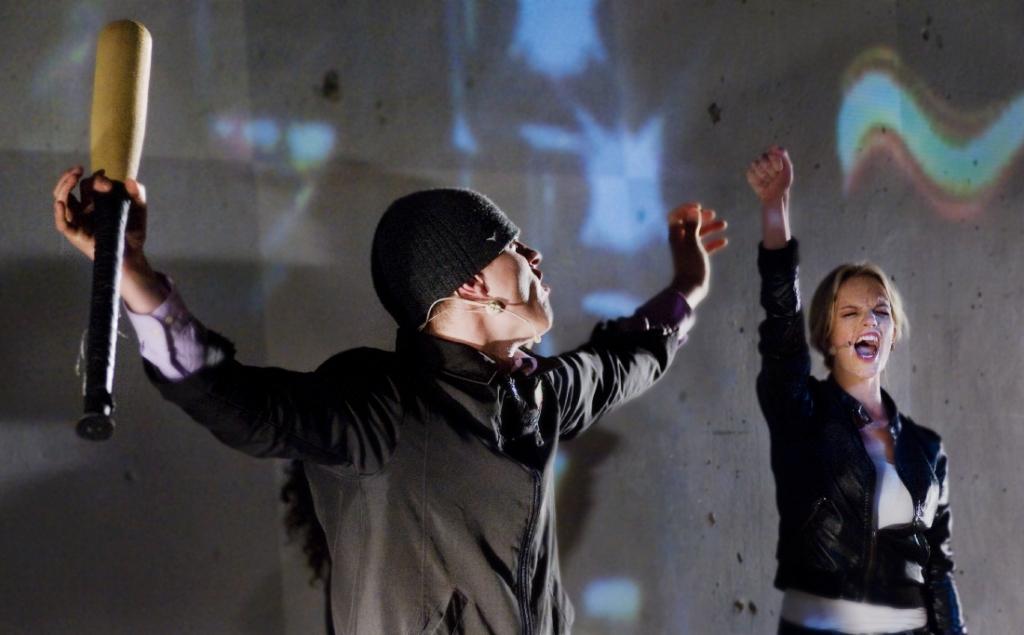
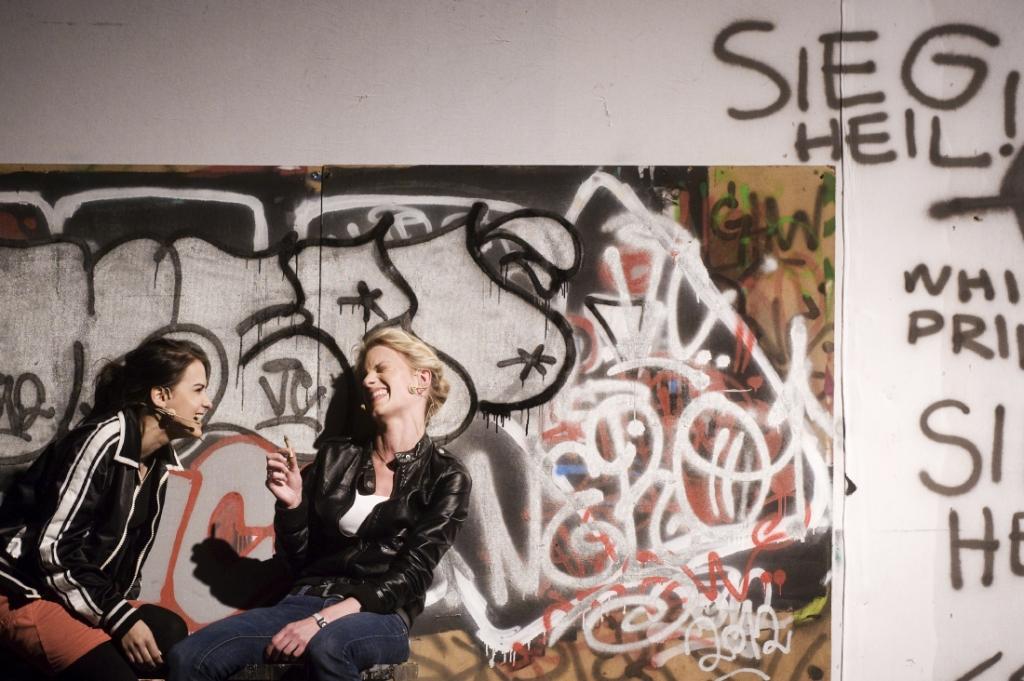
Red Laces is a new play addressing young generation of Lithuania. Two brothers chose different paths after a rough village childhood, one turns a skinhead and neo-nazi and the other computer geek hiding his gay identity. When egos and fears collide, blood is shed to clear the way. American History_X and Cain/Abbel in a one-hour furry of environmental theater, using every corner of the scenic shop at National Theater in Vilnius.


Team
Director: Yana Ross

Text: Gabrielė Labanauskaitė

Design: Yana Ross 

Video: Eglė Eigirdaitė

Lights: Vilius Vilutis


Cast:

Juozas – Dainius Jankauskas
Jonas – Julius Paškevičius
Marija – Adelė Teresiūtė
Adas – Marius Čižauskas
Kajus – Martynas Vaidotas
Laisvė – Oneida Kunsunga
Nina – Raminta Verseckaitė

Dec 202011
 

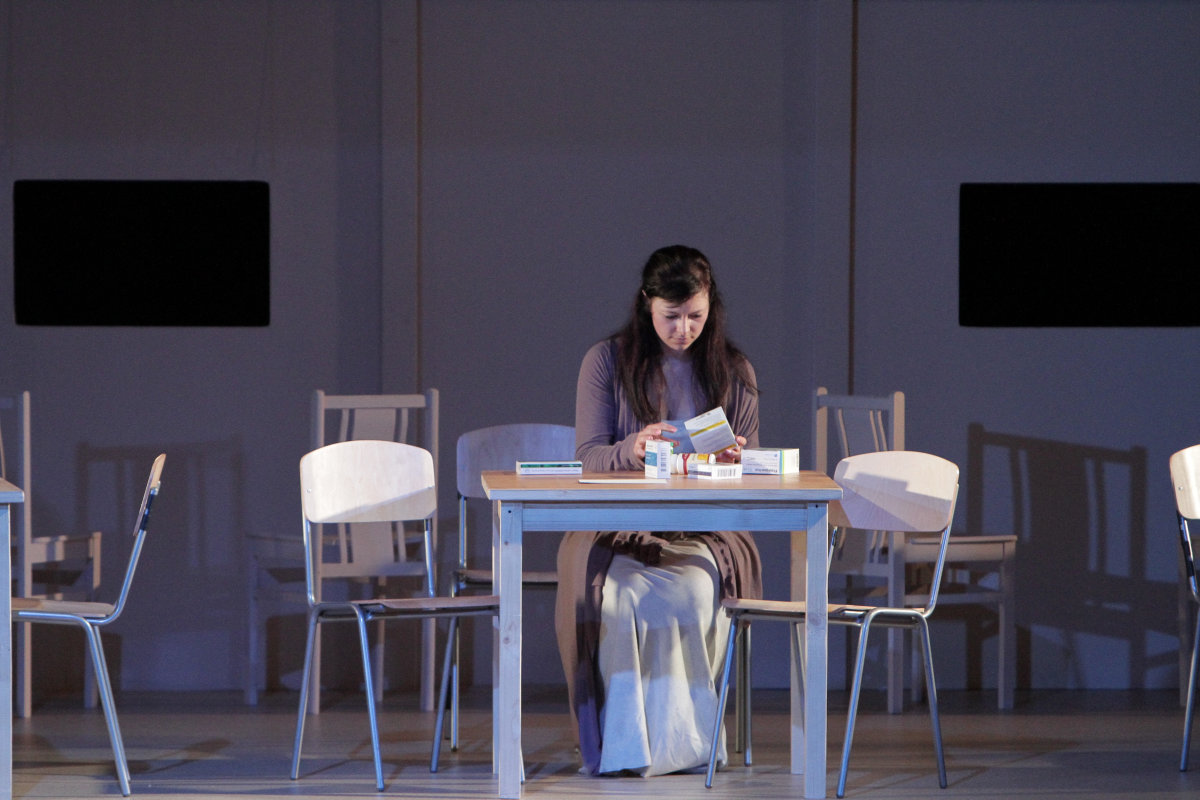
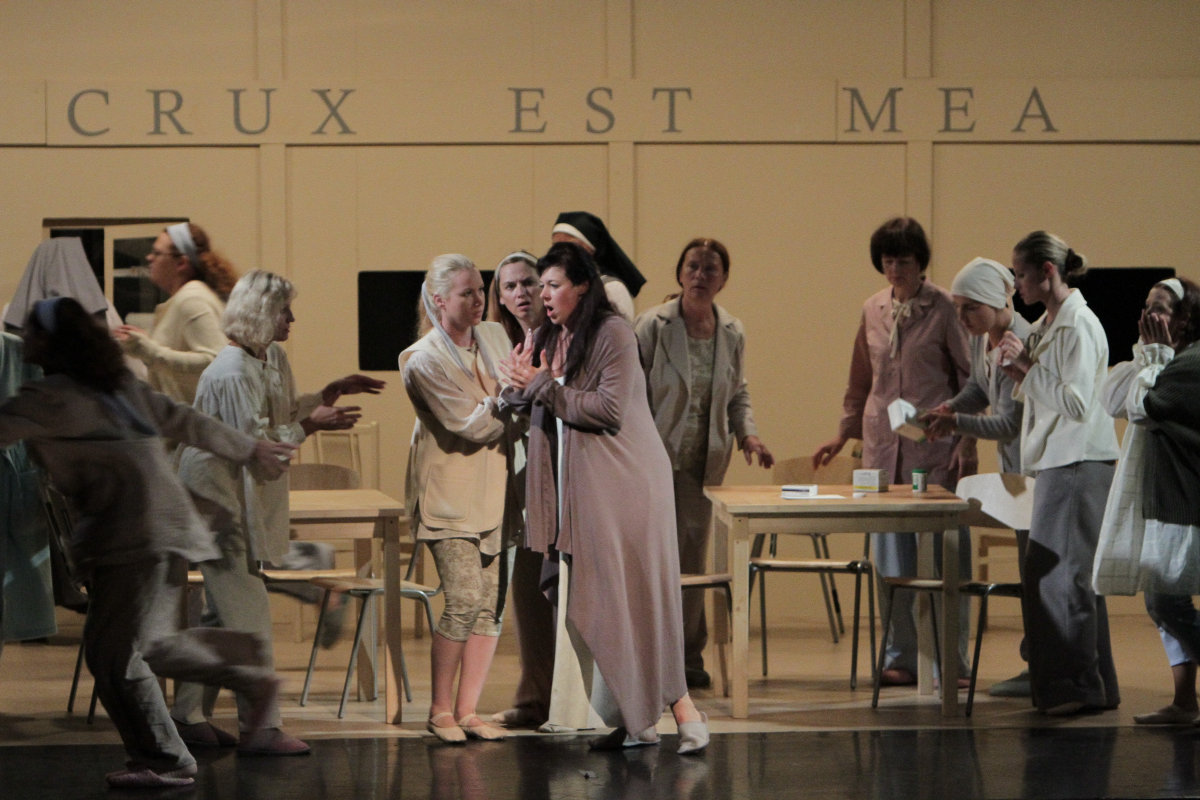
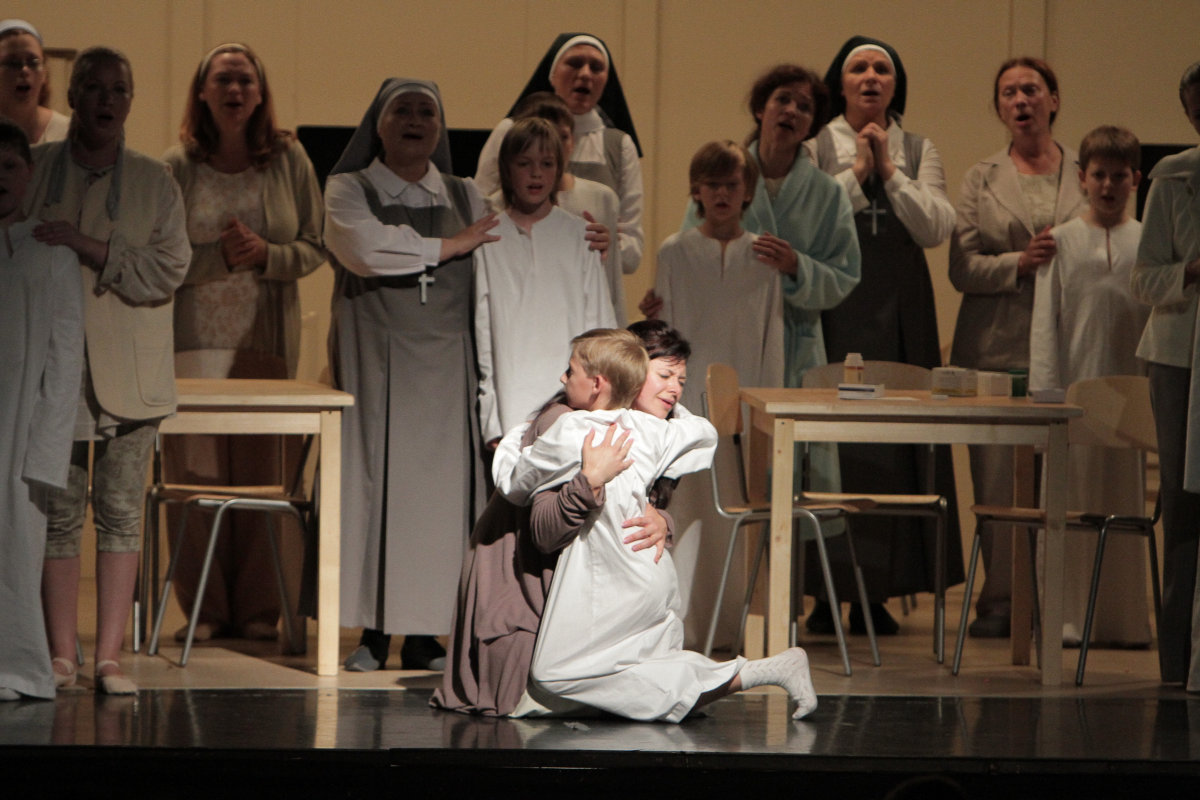
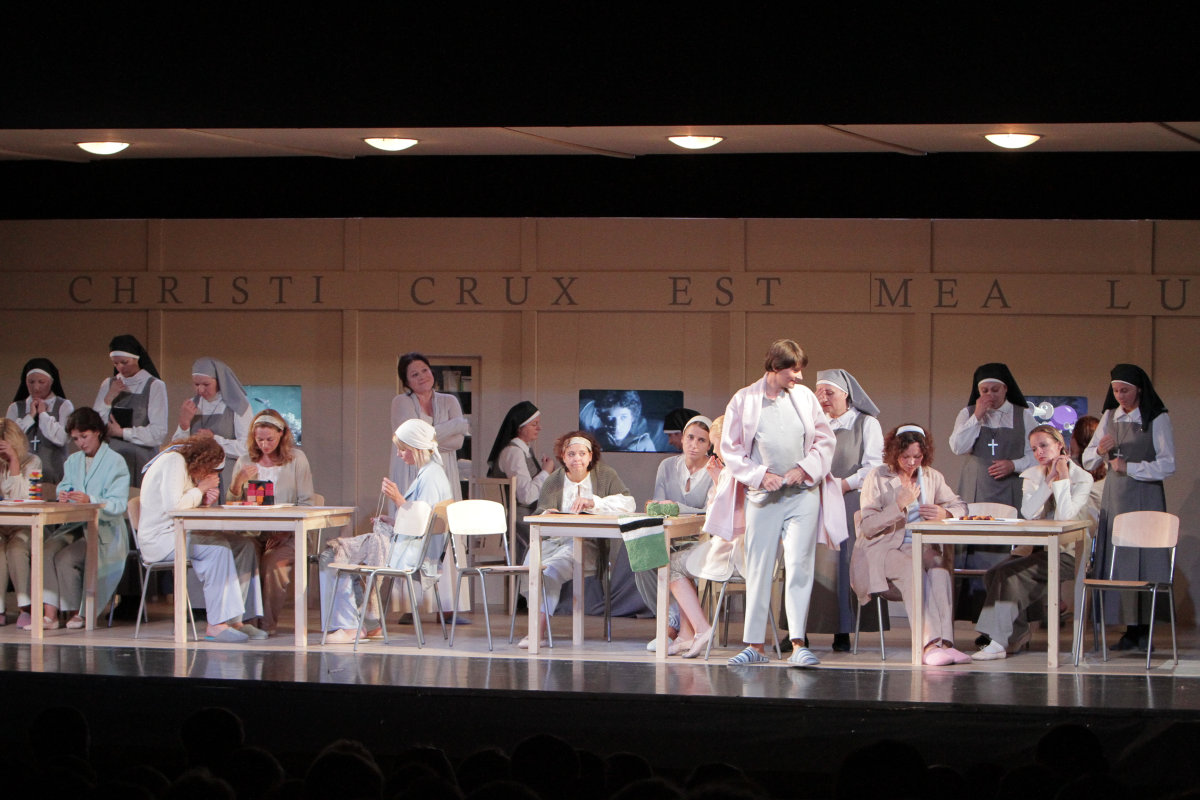
Gianni Schicchi 03

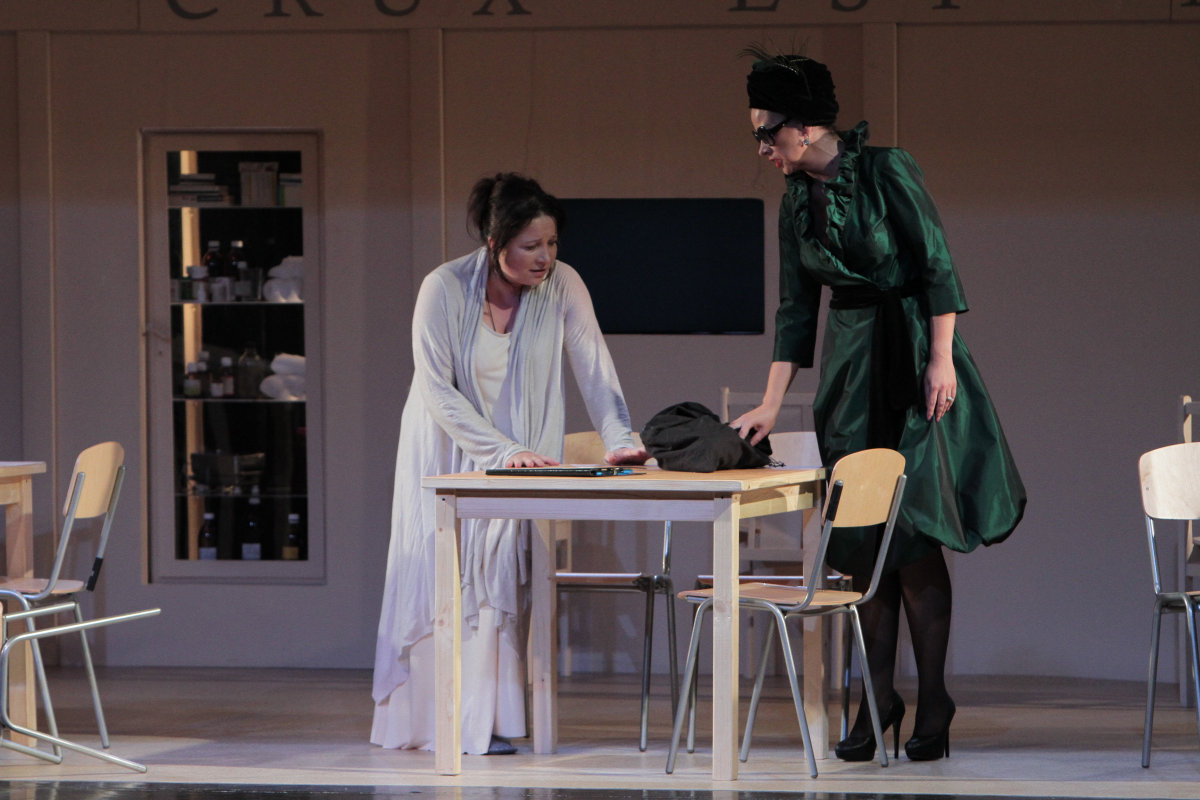
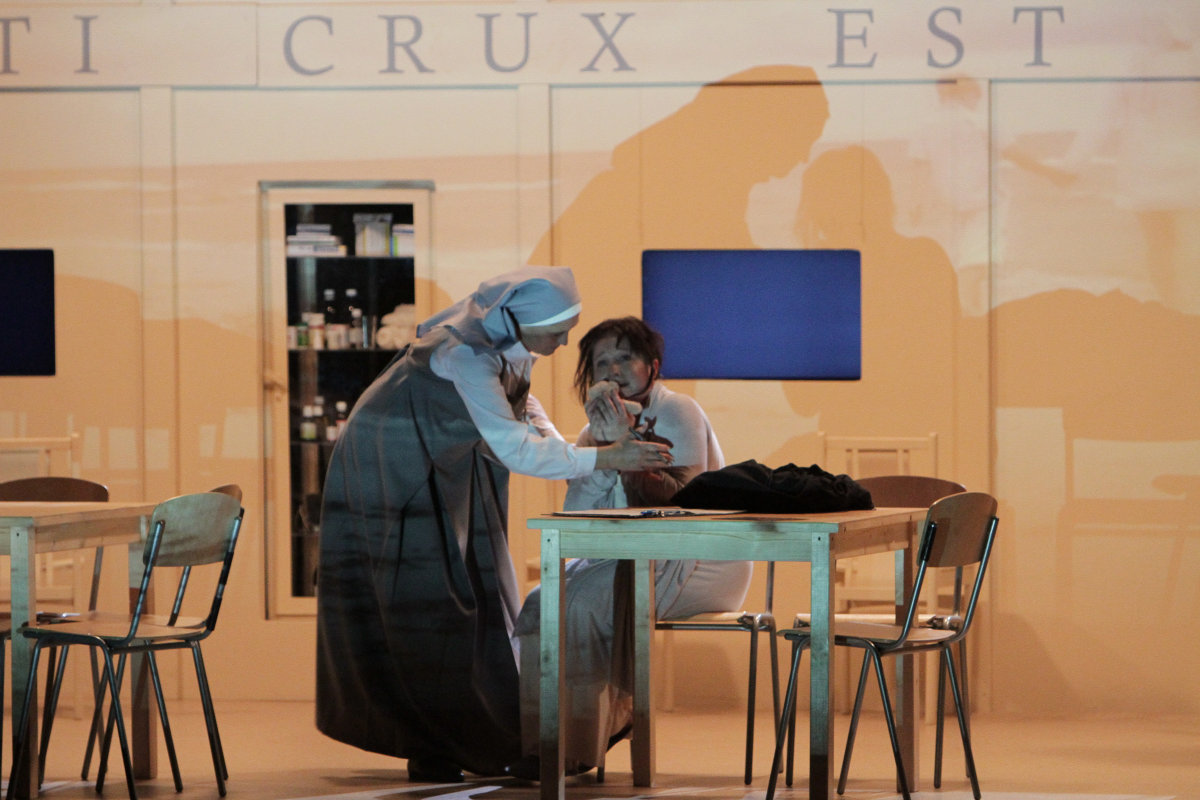
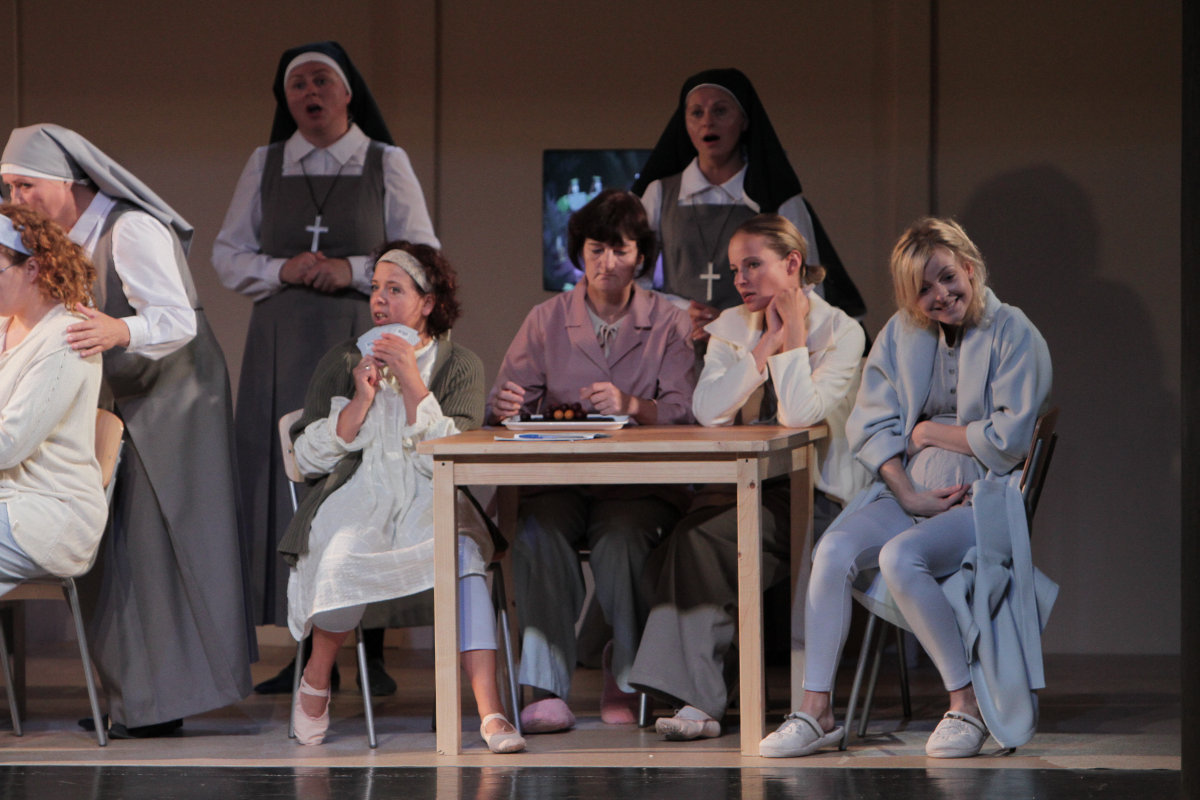
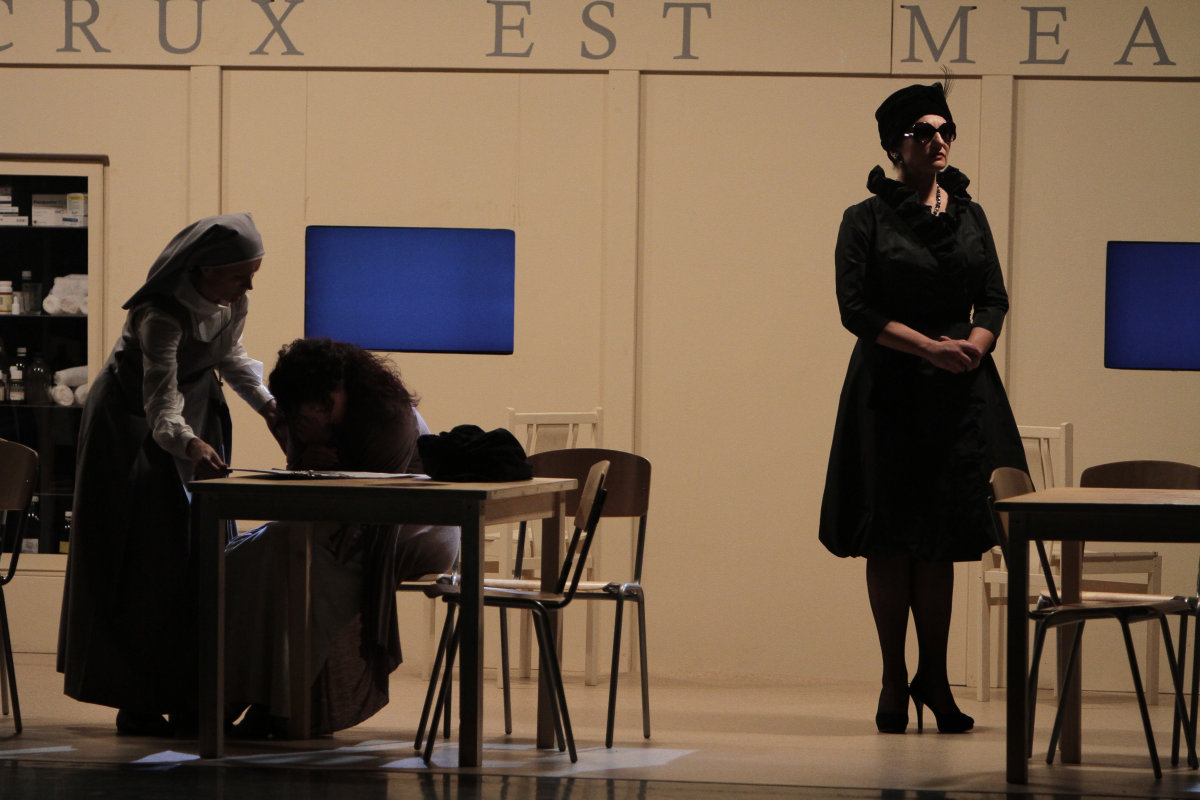
Team
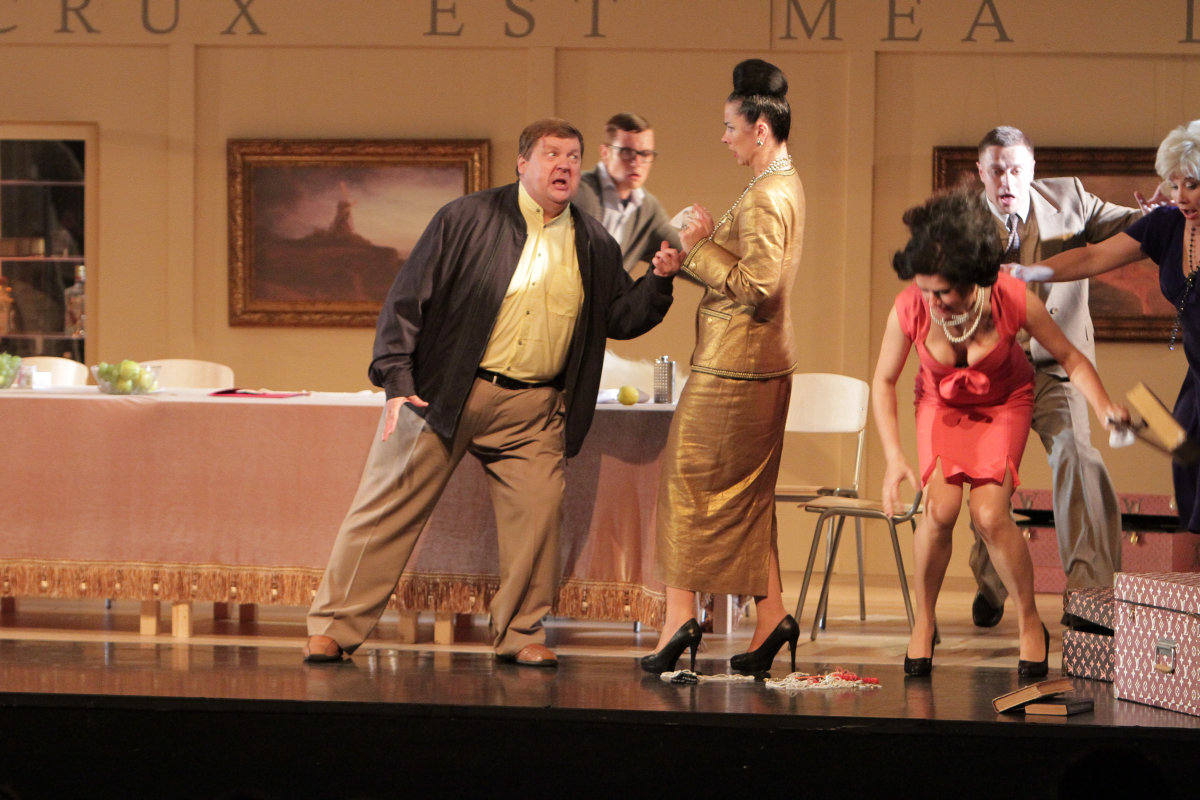
Director:
Yana ROSS
Conductor:
Scenography :
Marijus JACOVSKIS
Costumes:
Video design:
Eglė EIGIRDAITĖ
Assistant Director:
Assistant Conductor:
Cast:
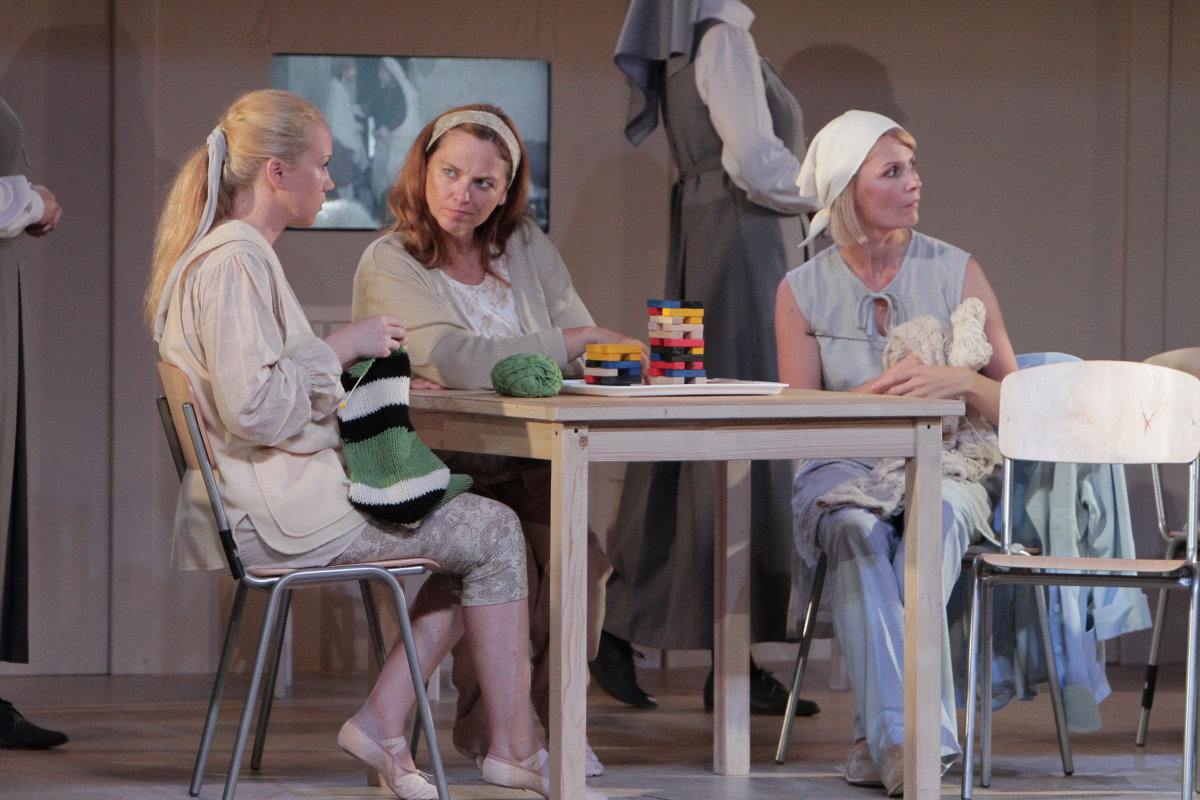
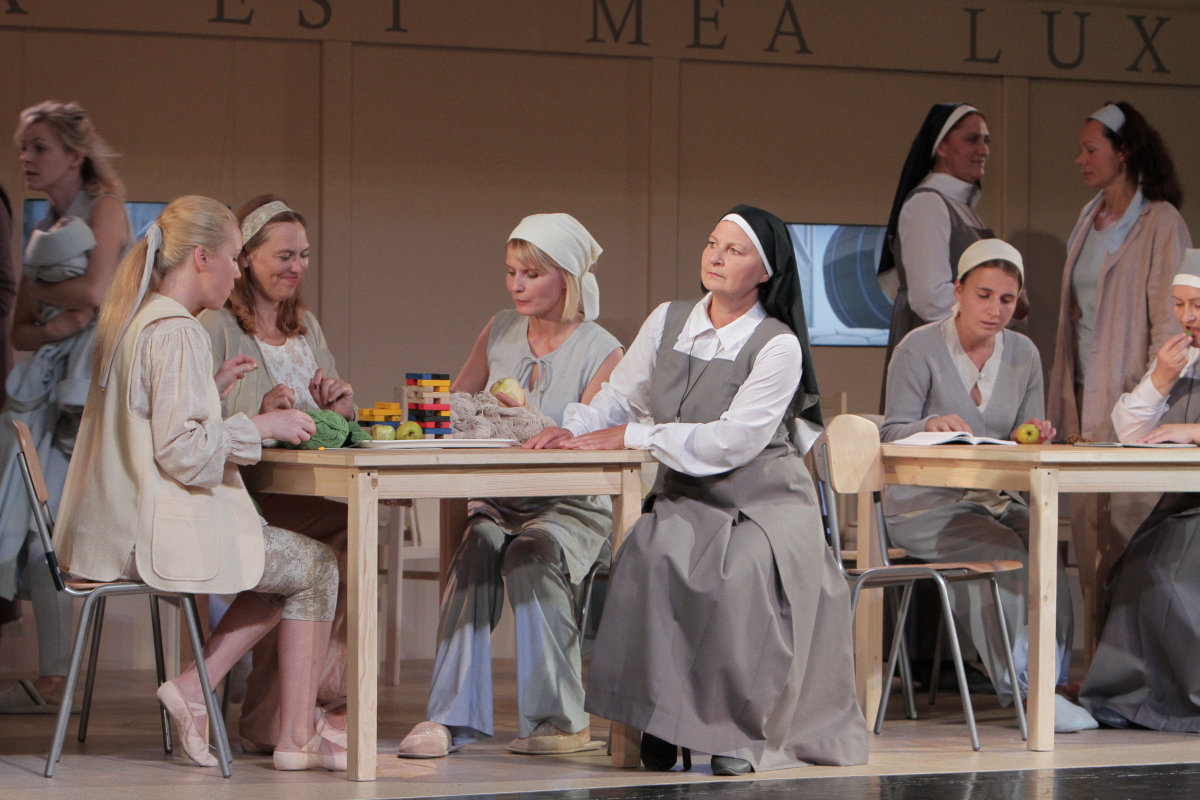
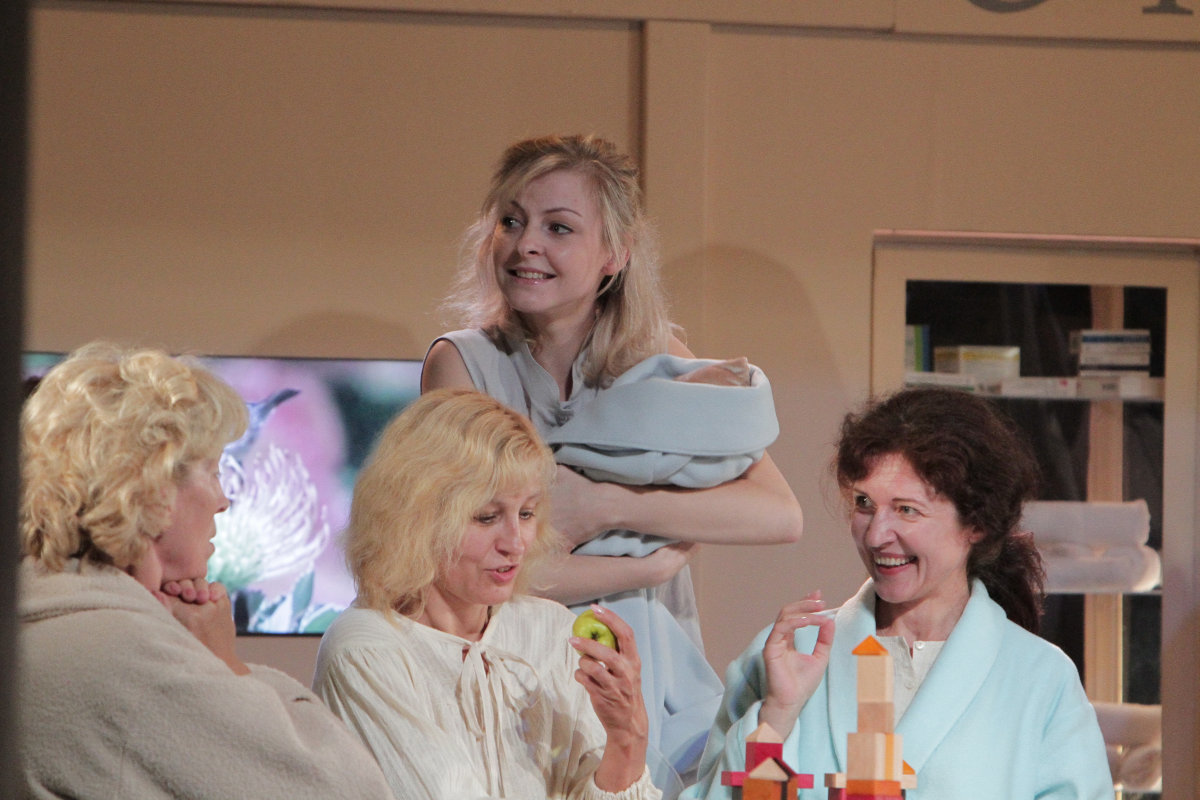
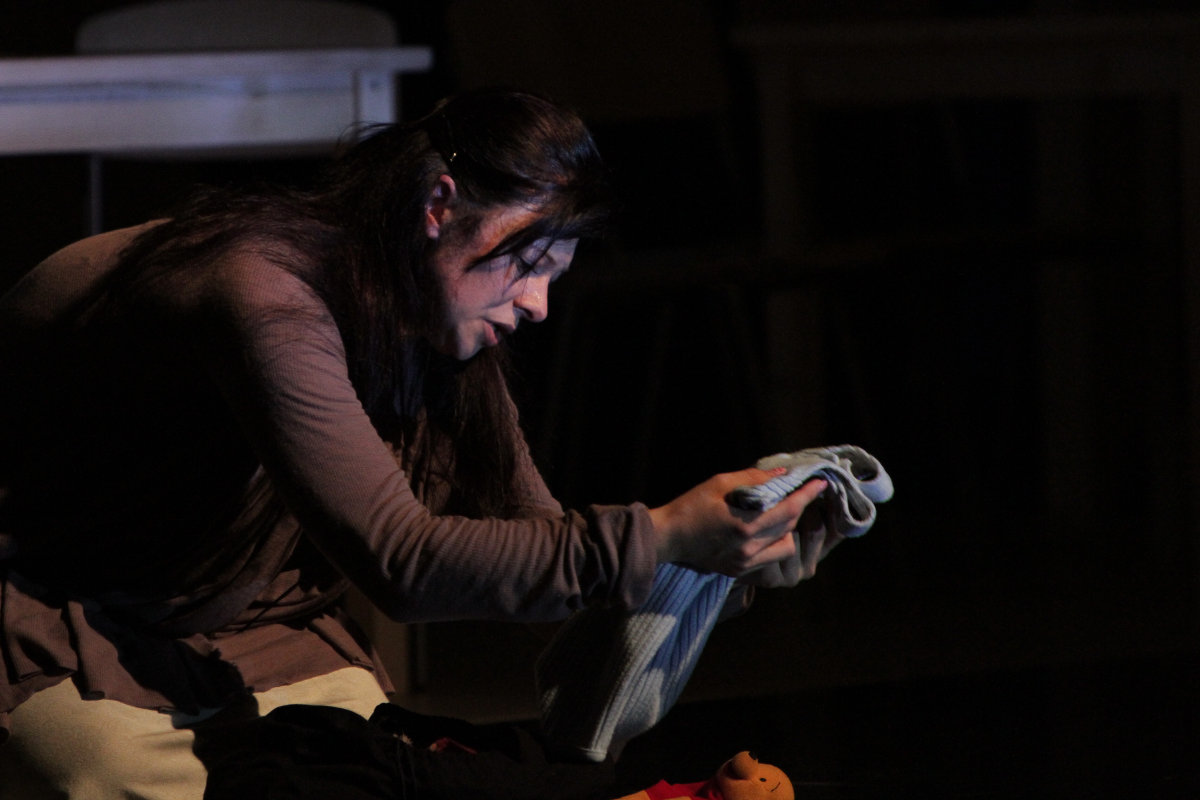
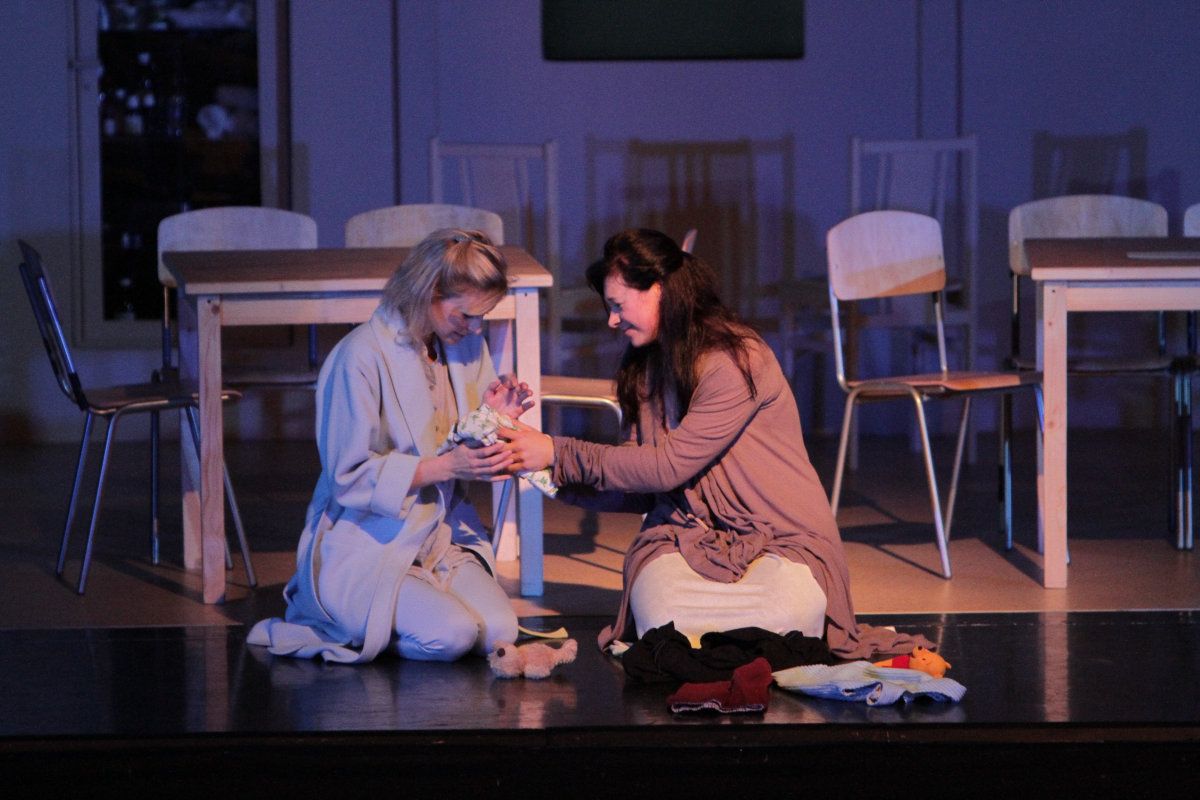
„Suor Angelica“ 
Sister Andželika
Loreta KARKAUSKAITĖ
Aistė ŠIRVINSKAITĖ
Rasa JUZUKONYTĖ
Rūta VENCKUTĖ
Aunt duchess
Abbess
Natalija URNIKIENĖ
Alma BRUŽIENĖ
Sister Dzelatričė
Alina TAMOŠAUSKIENĖ
Newcomers teacher
Pranciška KURMANSKIENĖ
Sister Dženoviefa
Sister Osmina
Liuda MONTRIMIENĖ
Vaida VALENTAITĖ-IVANOVA
Sister Dolčina
Aistė ŠIRVINSKAITĖ
Sister sanitarė
Reda JUCEVIČIENĖ
I Sister worker
Ingrida GIRDVAINIENĖ
Rima KASTANAVIČIENĖ
II Sister worker
Dalia SKURDAUSKYTĖ
Laimutė ŽUKAUSKIENĖ
Newcomers
Lina LUKAUSKIENĖ
Vitalija TRINKĖ
Nuns who
commited a foul
Rima KASTANAVIČIENĖ
Vitalija TRINKĖ
Rasa KALVĖNIENĖ
Lina ČARIENĖ
 „Gianni Schicchi“ 
Džanis Skikis
Arūnas MALIKĖNAS (kviestinis)
Rokas ŠVEISTERIS
Laureta
Dzita
Rinučis
Deivydas NORVILAS
Aurimas RAULINAVIČIUS
Gerardas
Arūnas RAMELIS
Nela
Gerardinas
Bartas GEDMINAS
Ignatij SEMIONOV
Julius EŽERSKIS
Martas LINGVENIS
Betas di
Sinjas
Rokas SPALINSKAS
Simonas
Tadas GIRININKAS (kviestinis)
Markas
Vytautas BYTAUTAS
Čieska
Natalija URNIKIENĖ
Maestro Spineločis,
doctar
Vytautas BYTAUTAS
Valdas KAZLAUSKAS
Seras Amantijus
di Nikolajus, notary
Rolandas EINIKIS
Pinelinas I witness
Arūnas SIPAS
Gučis II witness
Arūnas JACKUS
Vaclovas ZUBĖ
Buozas Donaitis
Arūnas JACKUS
Arūnas SIPAS
Oct 112011
 

Chaosas 01

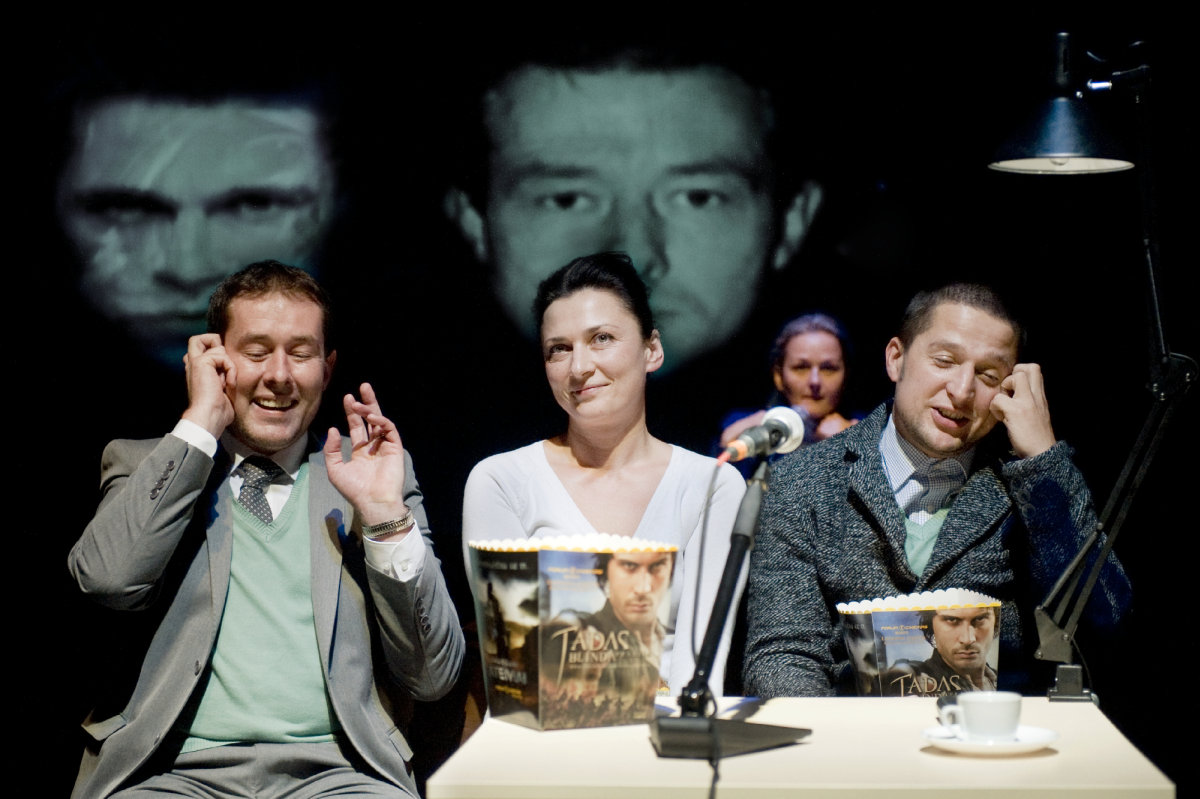
Two months ago a fatal shooting took place in a movie theater in Latvia. During a film screening, a man was too loud eating popcorn and was shot dead in front of his fourteen-year-old daughter by a fellow moviegoer…  Our production of CHAOS is an investigation into a psyche of a contemporary human being who appears to have everything under control but in reality are only few steps away from a nervous breakdown and outburst of violence.

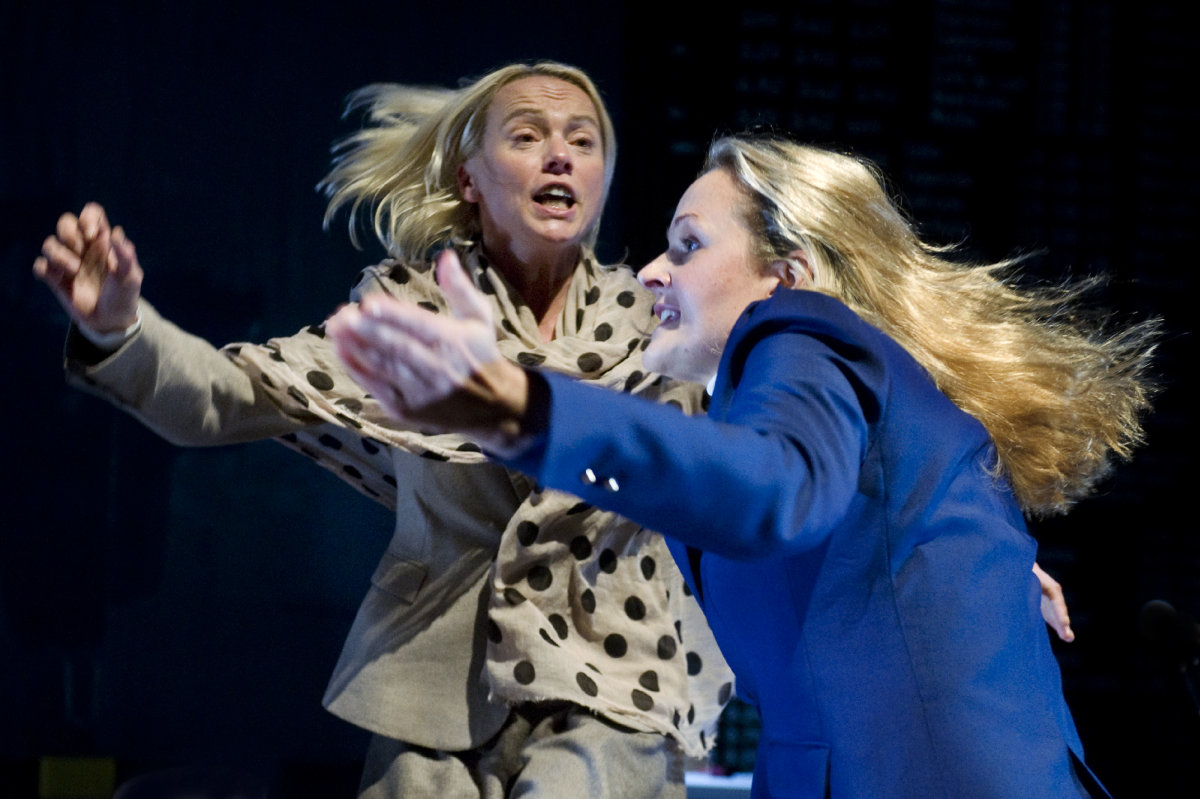
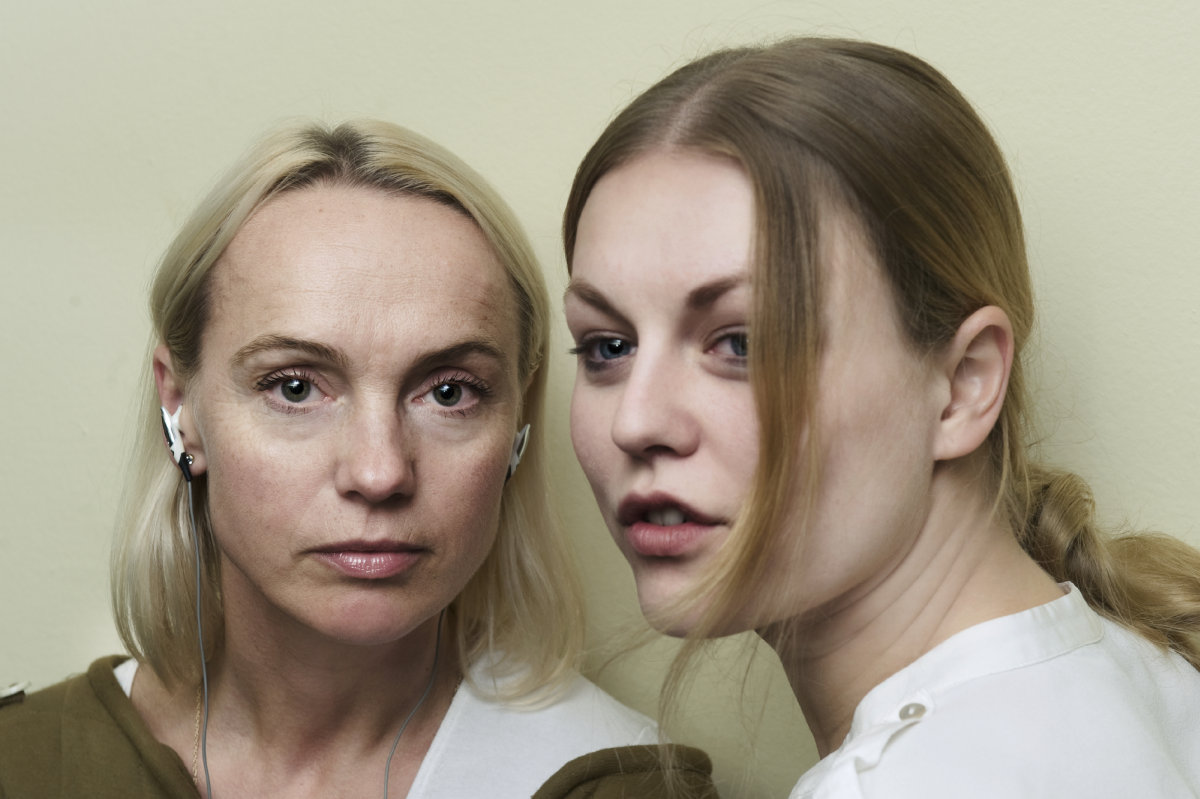
Sofia is a teacher whose school is being closed. Julia, a therapist, is having an affair with a patient. Emmi is a reporter in the middle of a custody battle… Over the course of one winter and spring, their lives are completely shaken up, making them feel like they’re losing control.

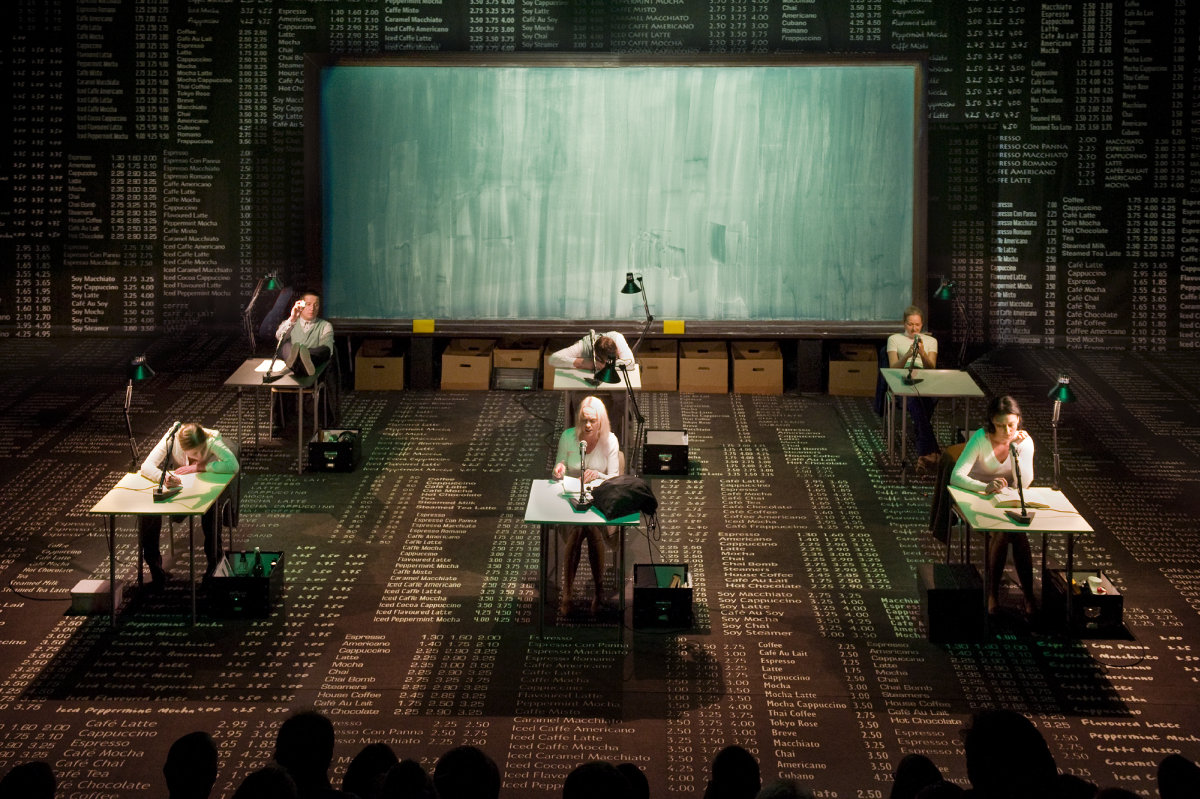
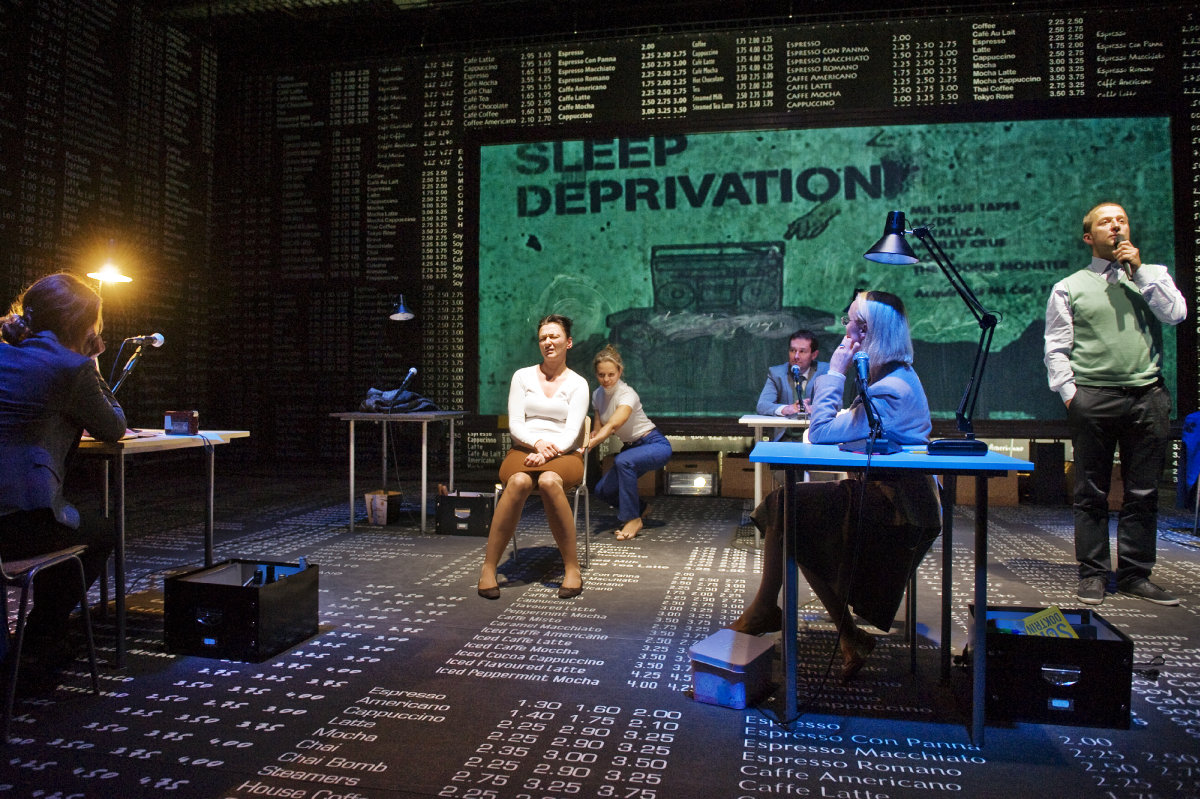
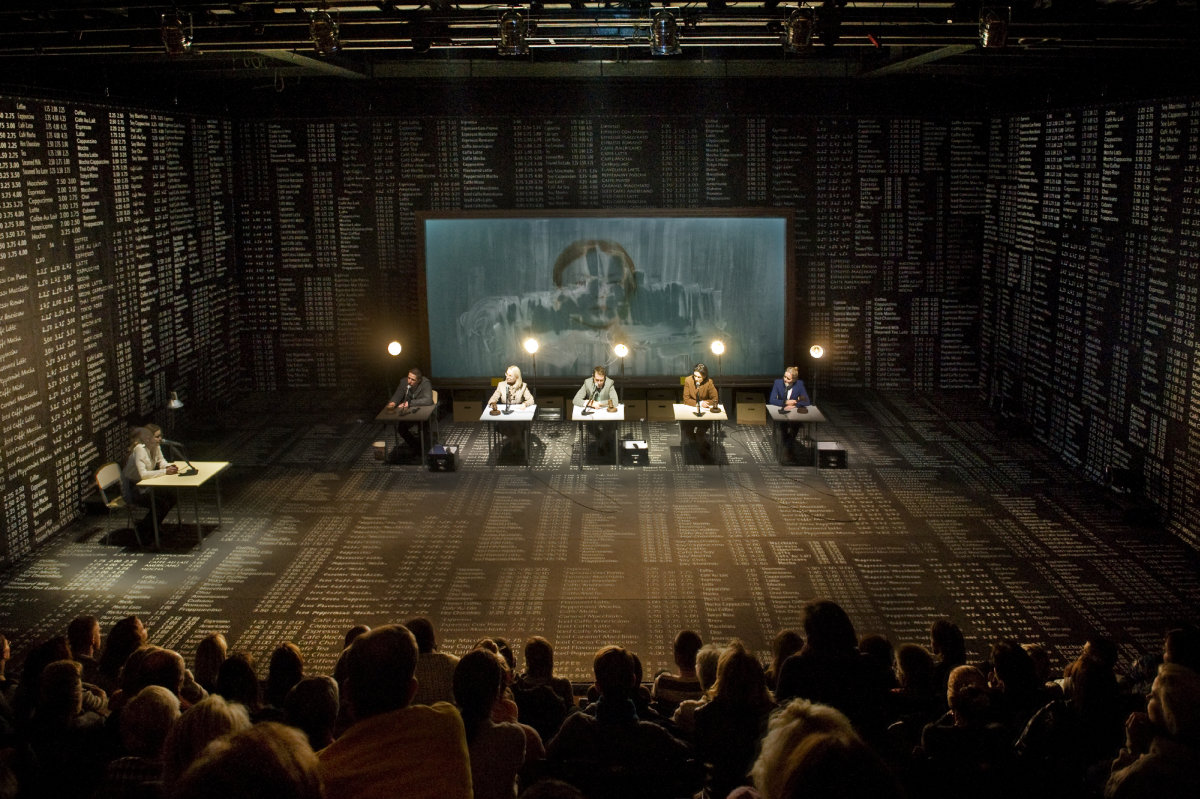
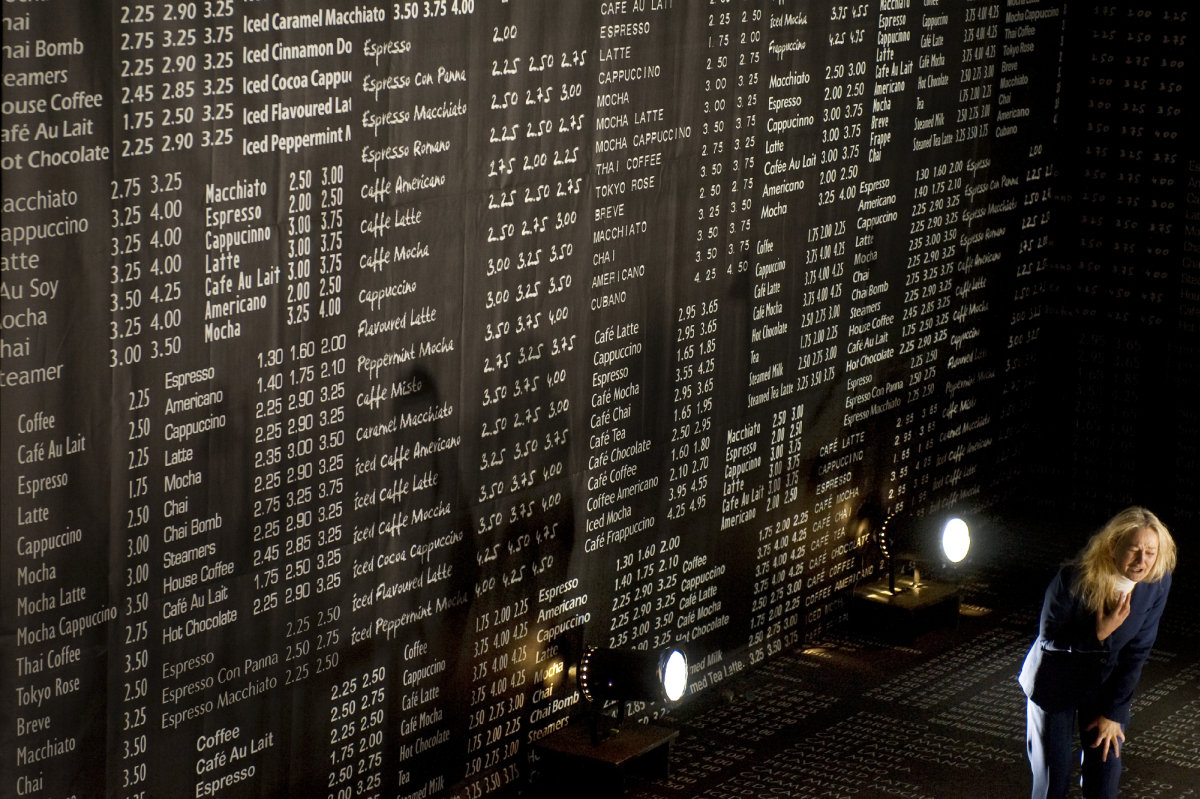
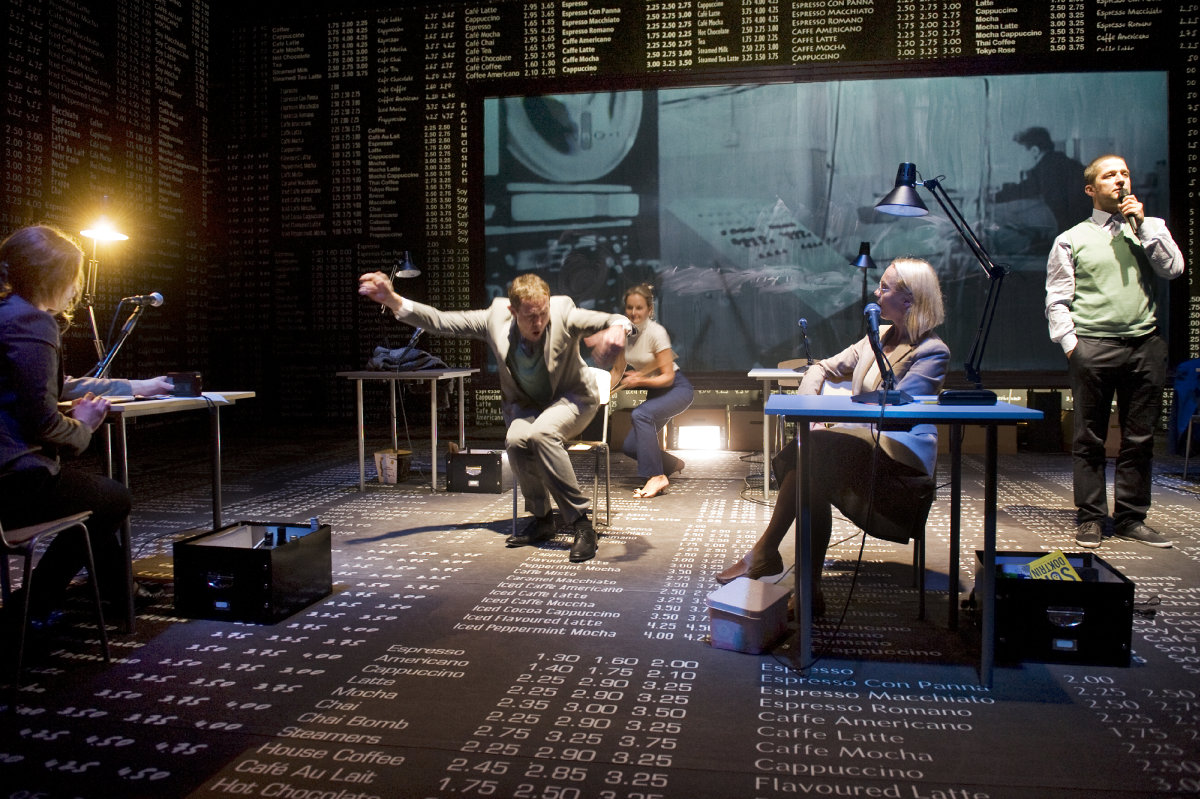
Reality doubles and triples through means of live camera in performance and pre-recoded images. We explore a chain of events leading characters to violence, imminent pressure is constantly looming over them as we comment on brutality of our daily quotidian struggle. We speak about shifting priorities in family values and career demands, the cost of the fragile balancing act.  The stage is filled with menu options for a modern consumer. A trillion options for a simple coffee multiplied on every wall and the words are small enough to make your vision blur. A giant class-room board is a place to write down your complaints and commentaries, draw a roadmap of a character and stress a lifelong learning process of becoming a human being.


Sep 202011
 

Opera ID 11

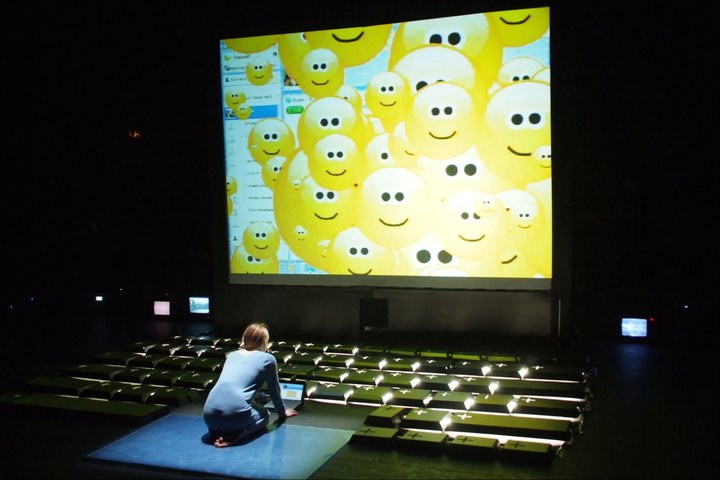
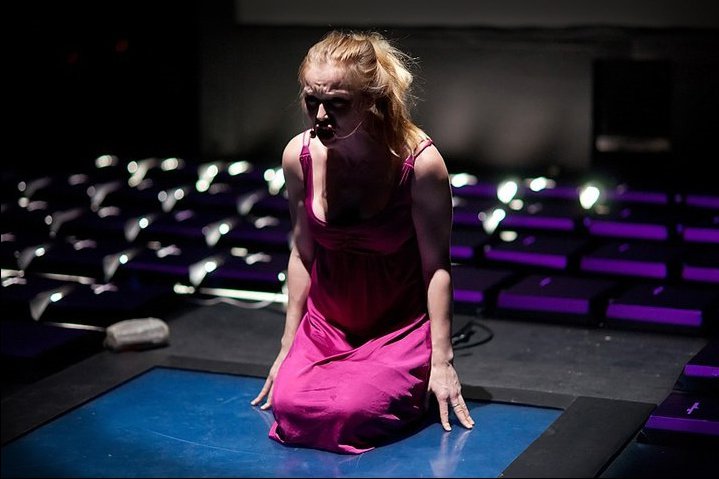
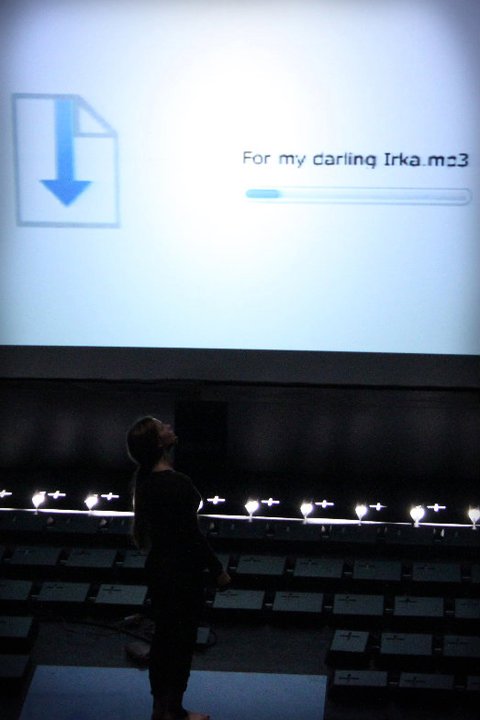
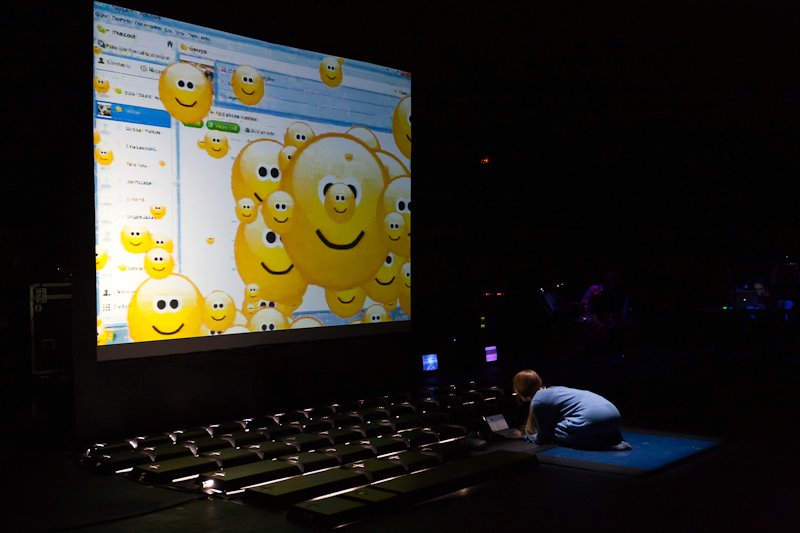
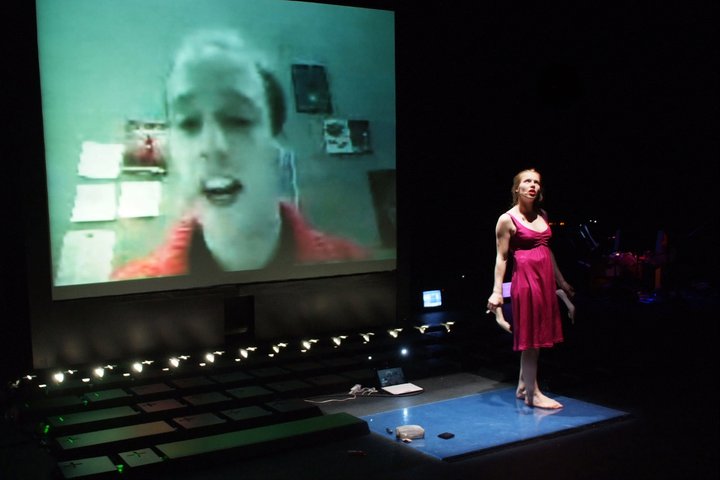
A Lithuanian girl Irka, meets George, a young man from the United Kingdom over “Skype”. Their digital language evloved from smily faces to elaborate songs and as soon as they start to understand each other better paranoja and jealousy takes over.  Irka falls in love with George and dives into her own fantasy world, where she struggles to distinguish between dreams, fantasies and reality, between the real life and the virtual one.

This performance/experimental opera was comissioned by NOA, New Opera Action Festival in Vilnius, Lithuania and was created through a number of workshops among international collaborators from Lithuania, Belgium, Chech Republic, Norway and and USA.

PART 1/3

PART 2/3

PART 3/3

Team
Director: Yana Ross

Libretto authors: Creativity group „Kliudžiau“

Composer: Rūta Vitkauskaitė

Scenography: Simona Biekšaitė

Video design: Mykolas Budraitis

Animators: Jan Hajdelak  and Lingailė Žiūkaitė

Audio design: Christian Francois

Lighting: Vilius Vilutis

Multi Instrumentalists: Rūta Vitkauskaitė and Andrius Maslekovas


Cast:

Irka – Irina Lavrinovič
George – George Holloway

Mar 052010
 

10 dialogu 14

Mad World
Gary Jules (cover of Tears for Fears)

All around me are familiar faces
Worn out places, worn out faces
Bright and early for their daily races
Going nowhere, going nowhere

Their tears are filling up their glasses
No expression, no expression
Hide my head I want to drown my sorrow
No tomorrow, no tomorrow

And I find it kind of funny
I find it kind of sad
The dreams in which I’m dying
Are the best I’ve ever had
I find it hard to tell you
I find it hard to take
When people run in circles
It’s a very, very
Mad World
Mad world

Team
Director: Yana Ross

Scenography: Marijus JACOVSKIS

Costume design: Jolanta RIMKUTĖ

Composer: Faustas LATĖNAS


Cast:
Dalia MICHELEVIČIŪTĖ (Prostitute)
Paulius TAMOLĖ (Security Guard)
Toma VAŠKEVIČIŪTĖ (Housemaid)

Algirdas GRADAUSKAS (Photographer)
Monika BIČIŪNAITĖ (Hotel owner)
Rimantas BAGDZEVIČIUS (Hotel owner)
Aurelija TAMULYTĖ (Gorgeous being)
Algirdas DAINAVIČIUS (Writer)
Rimantė VALIUKAITĖ (Actor)
Evaldas JARAS (Rich man)
Donata KIELAITĖ (Girl from bar)
Gintarė SABALIAUSKAITĖ (Girl from bar)
Raminta VERSECKAITĖ (Girl from bar)
Robertas BALČIŪNAS (Barman)
Arūnas VOZBUTAS (Barman)
Mindaugas JUSČIUS (Liftboy)
Rokas VALUNTONIS (Pianist)

Sep 202009
 

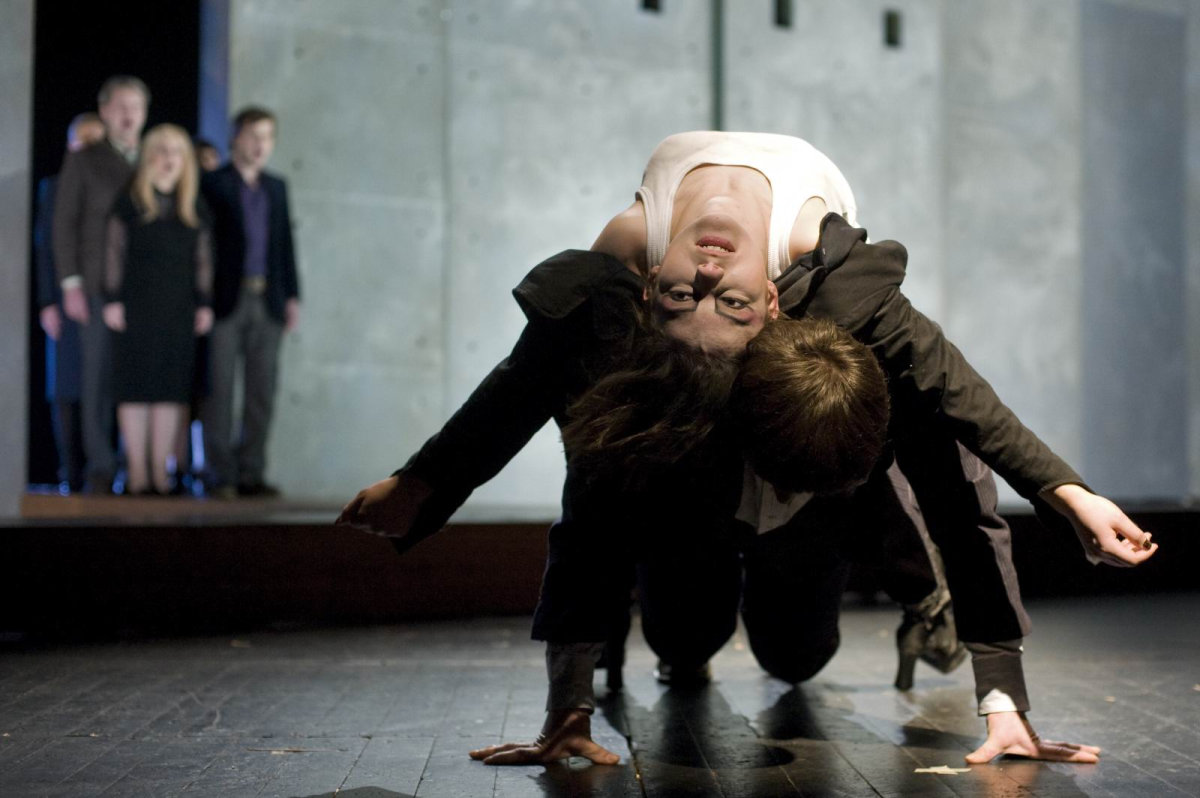
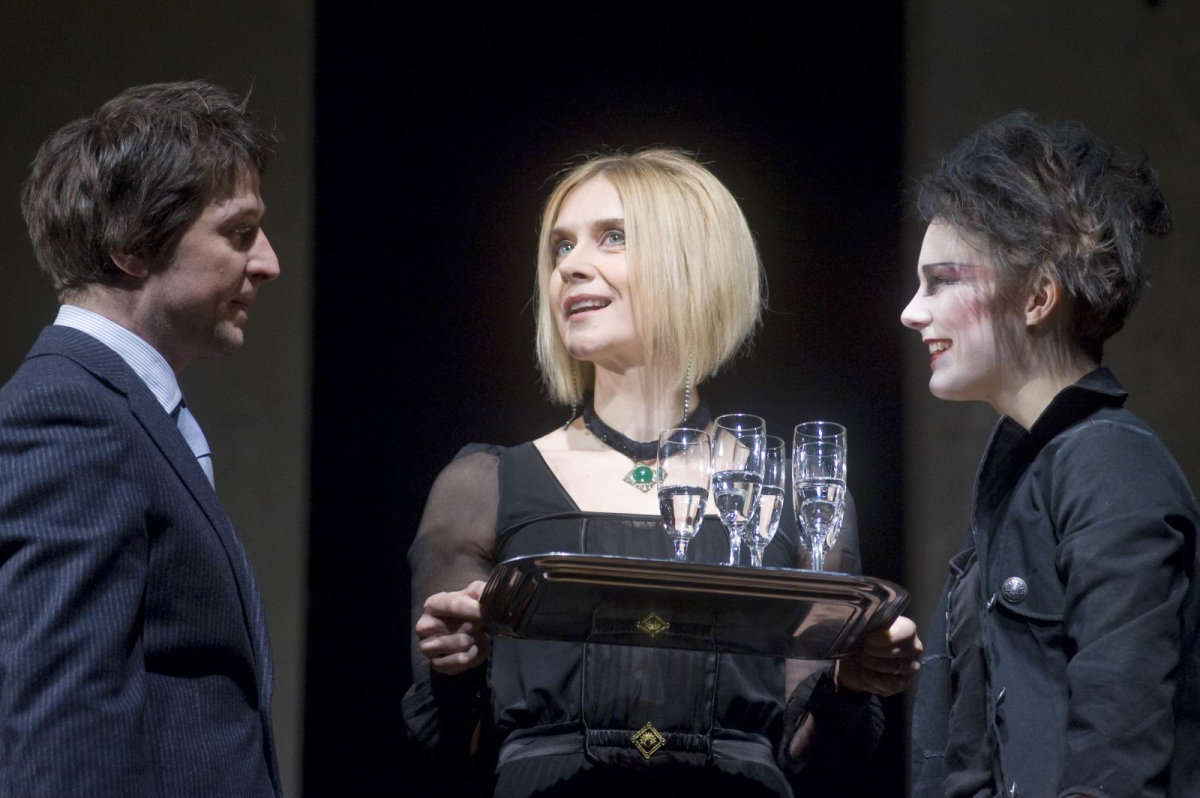
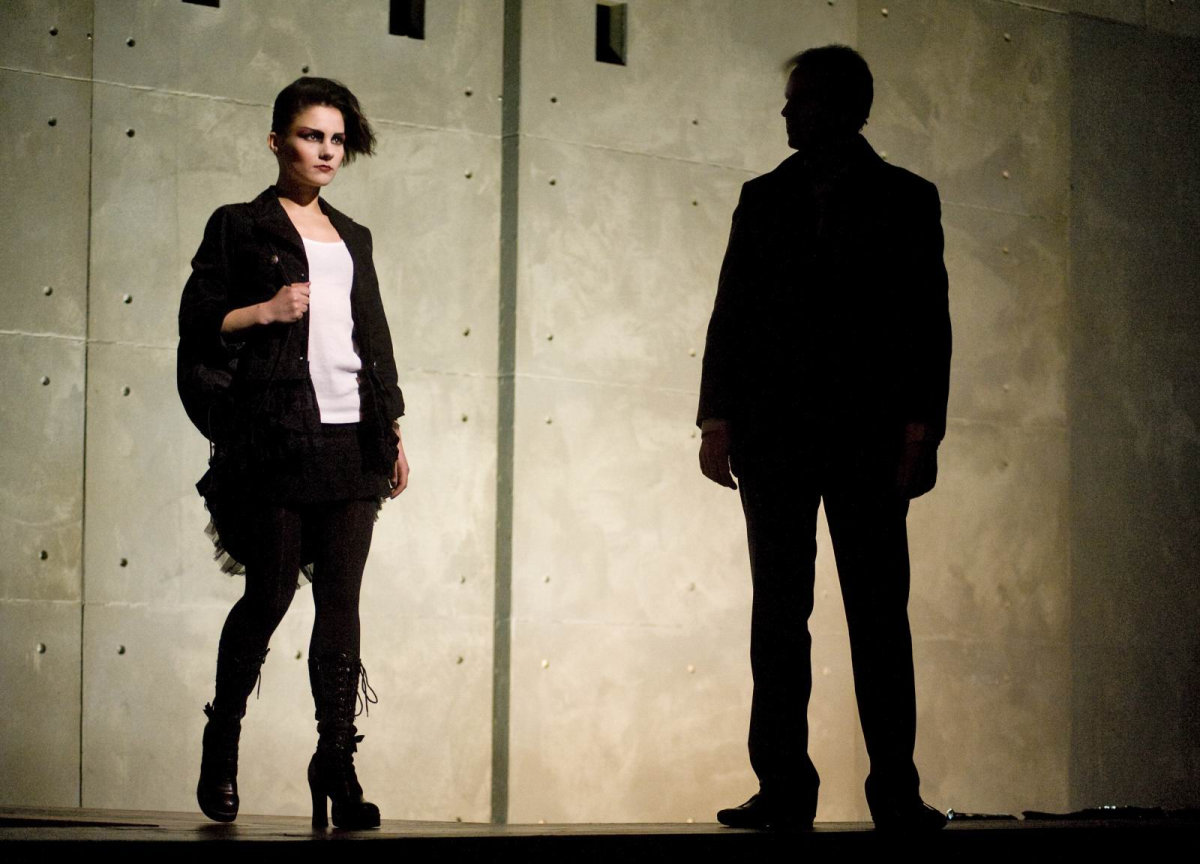
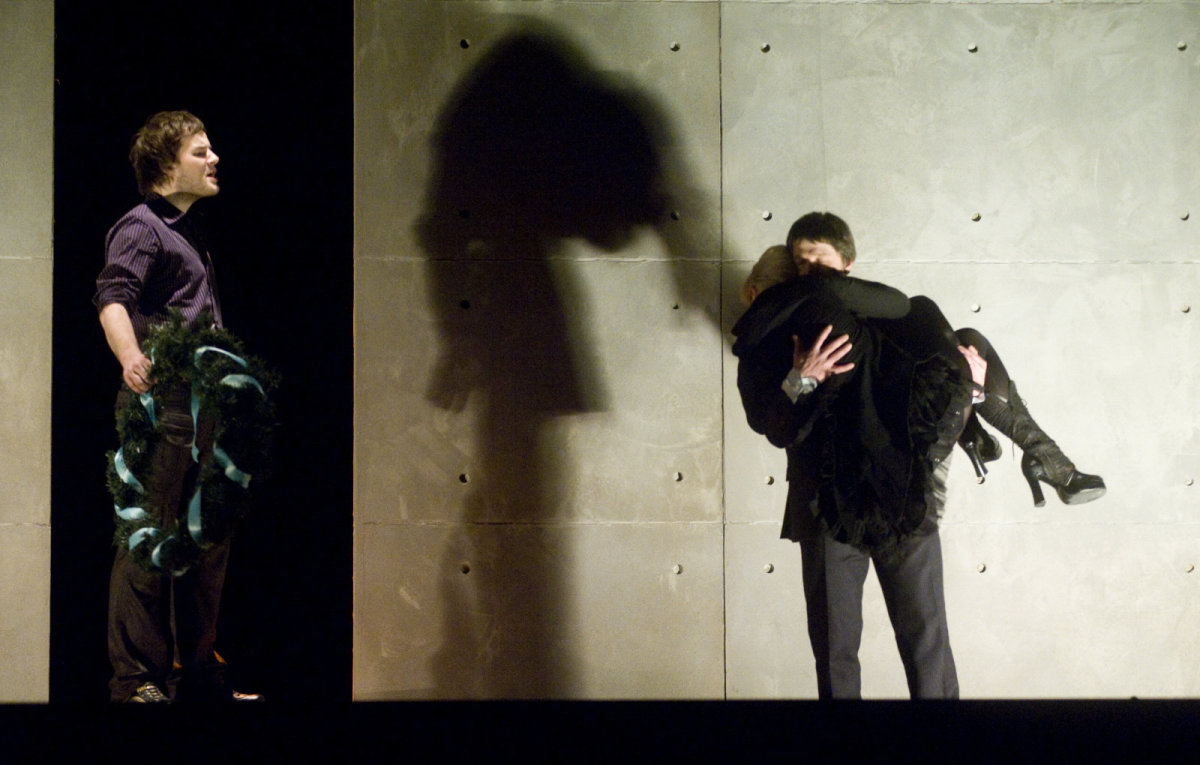
Master Solness 03

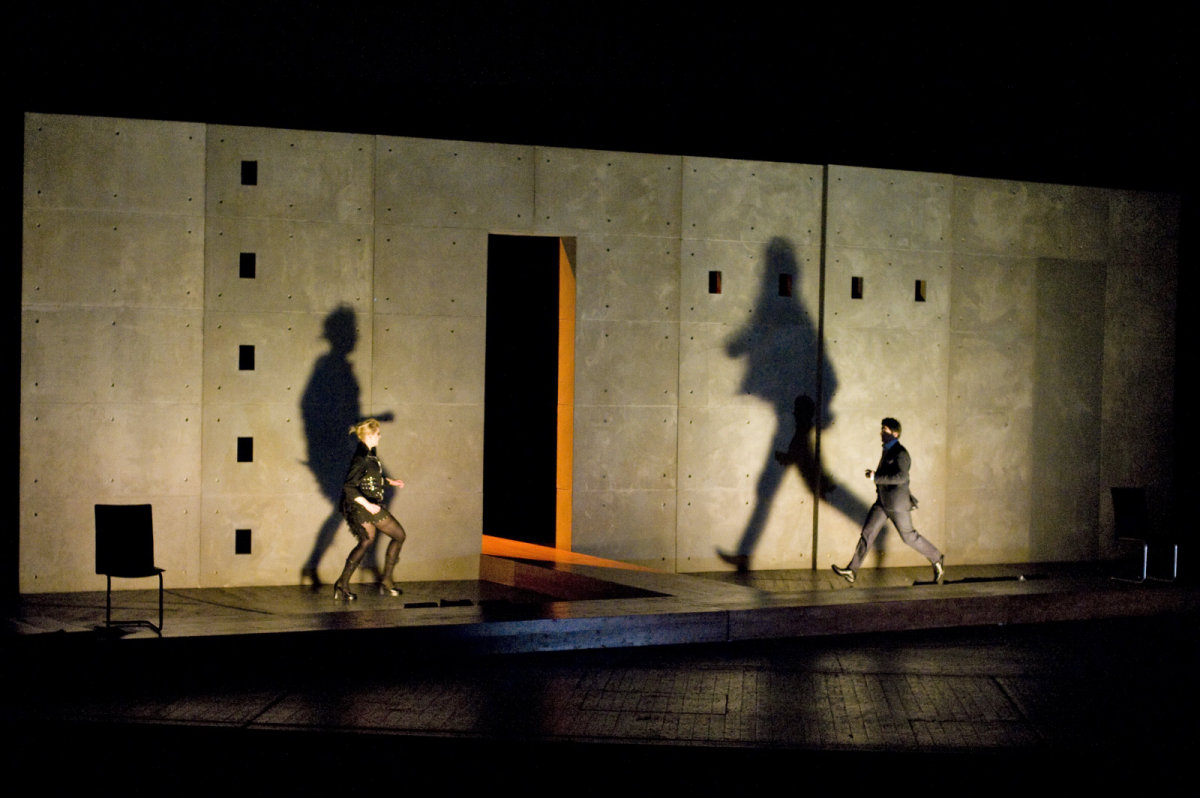
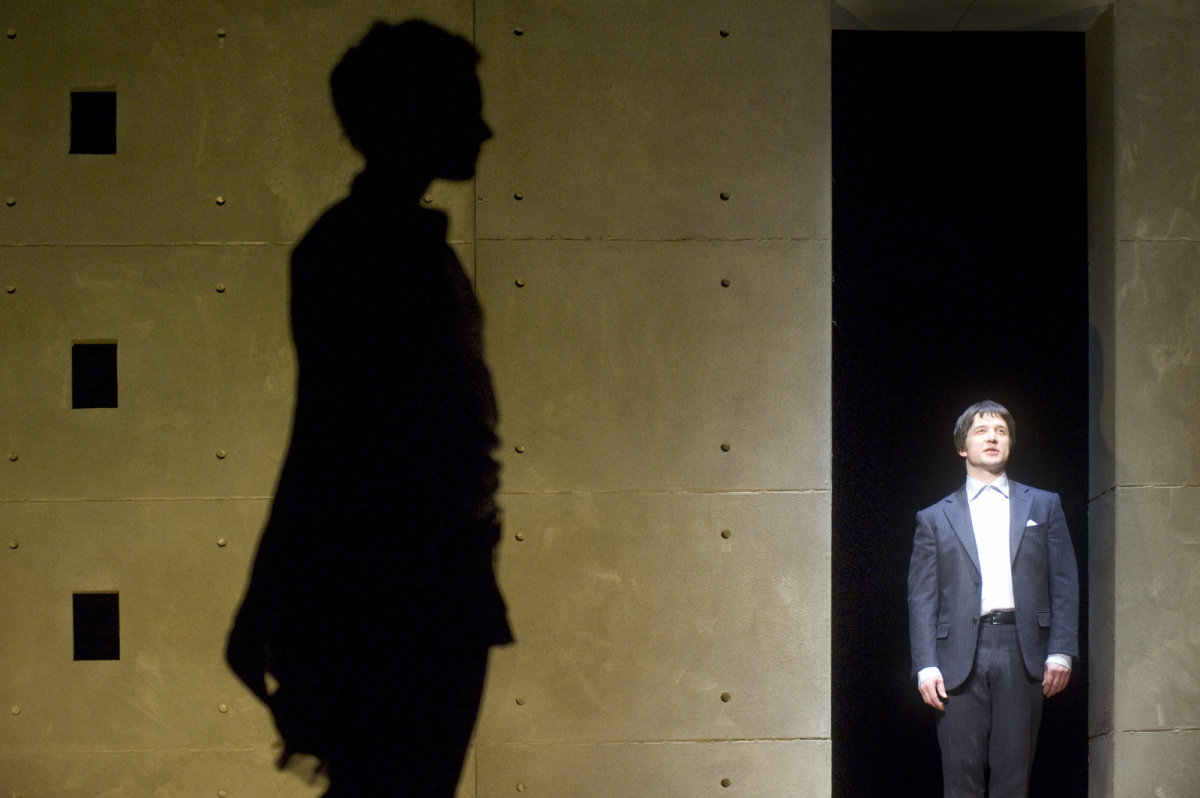
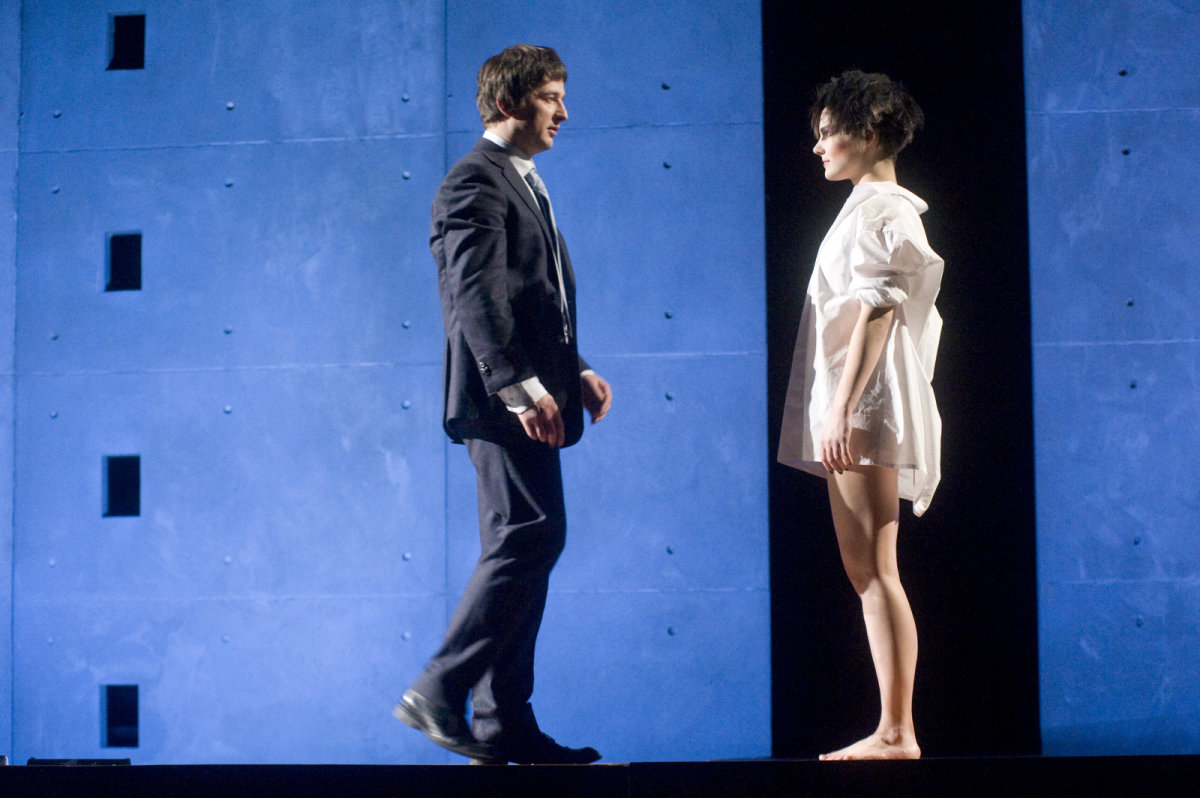
Yana Ross

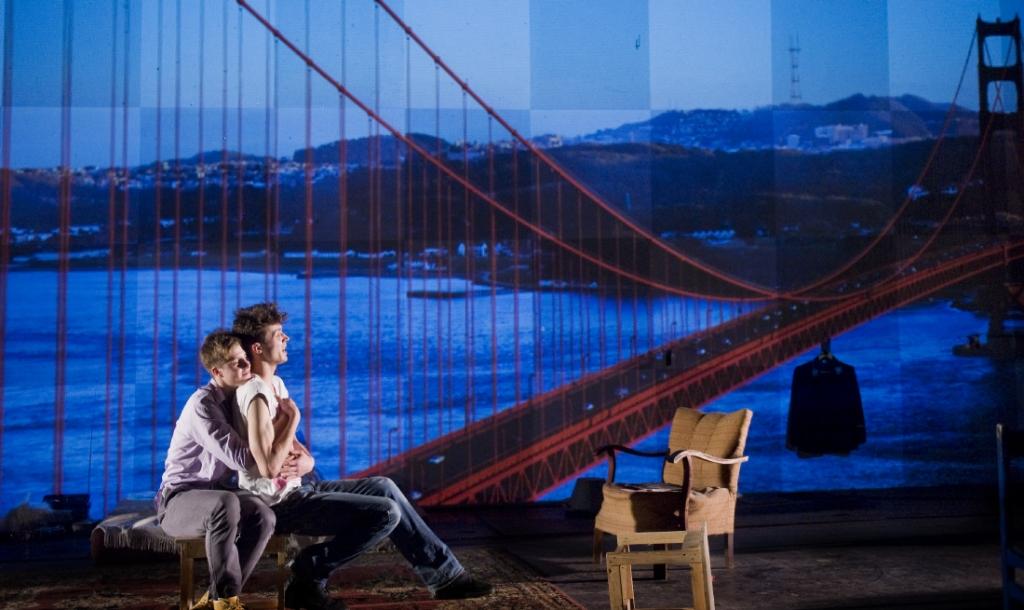
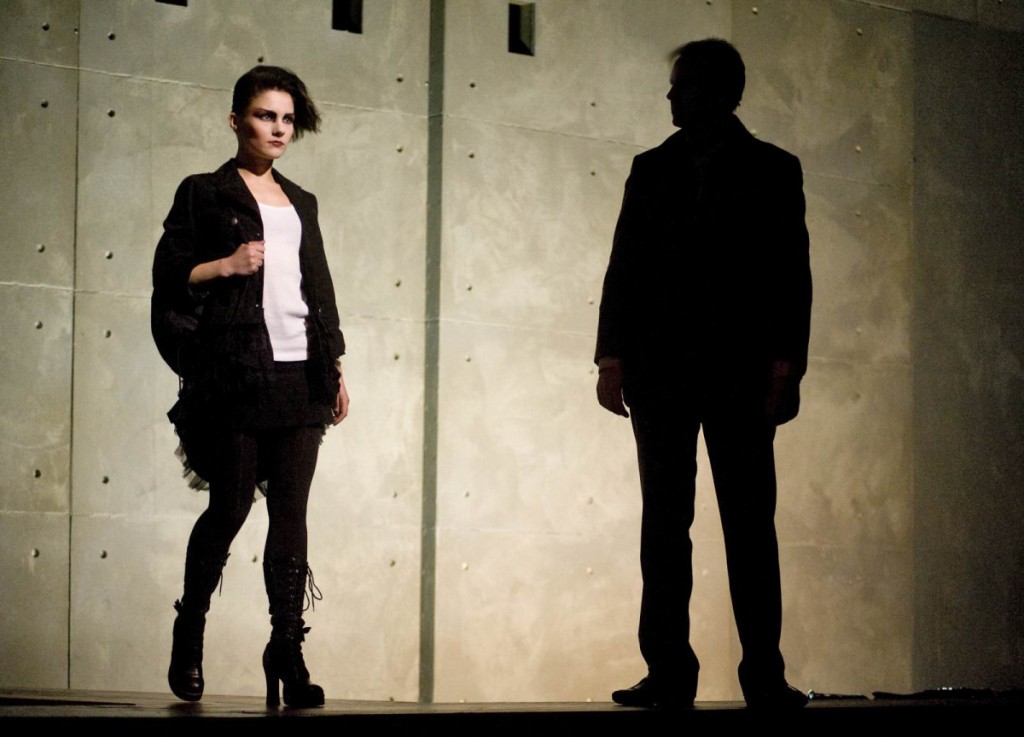
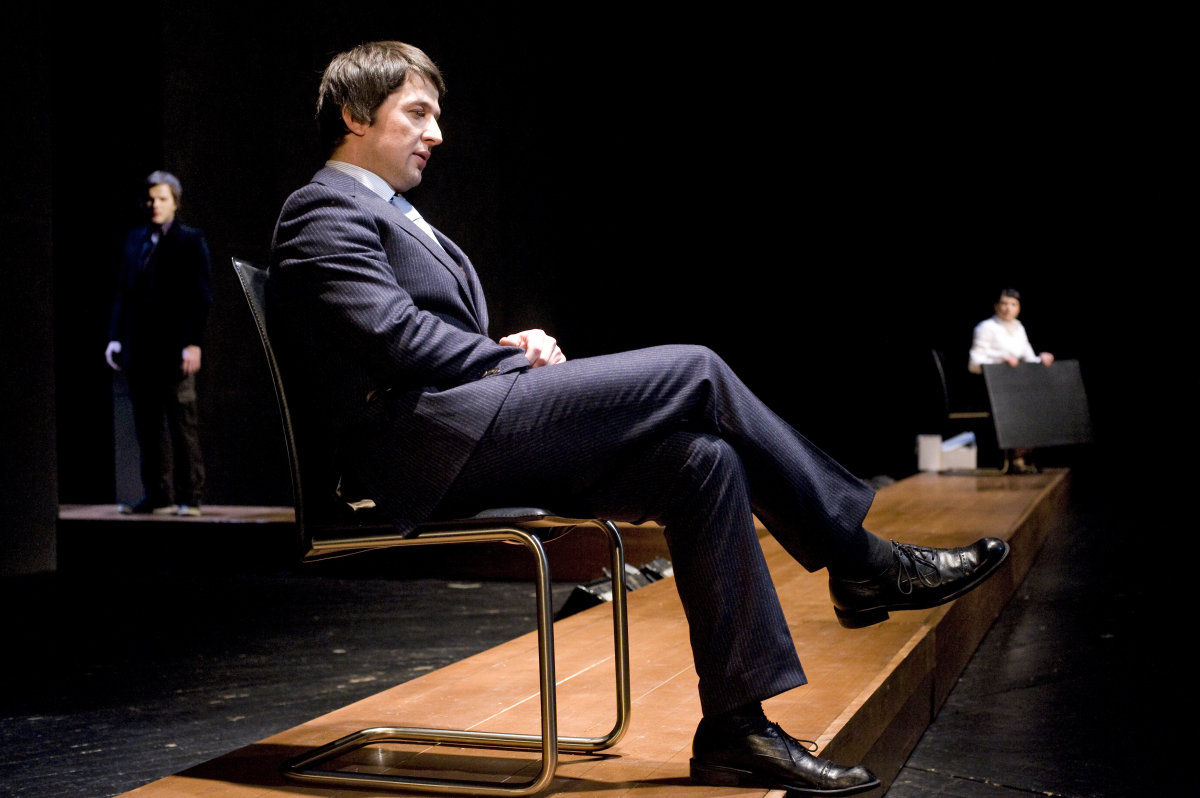
For Ibsen’s audience, what we call a “mid-life crisis” came late in life. An accomplished man in his 60s could afford a grand spiritual turmoil, but in the XXI century it comes much earlier. In this production, Solness is barely forty. He’s got it all on the surface: family, career, beautiful house he designed and legendary memories of ambitious past. Let the young woman whisk it all away…


Baumeister Solness reviews March 2009

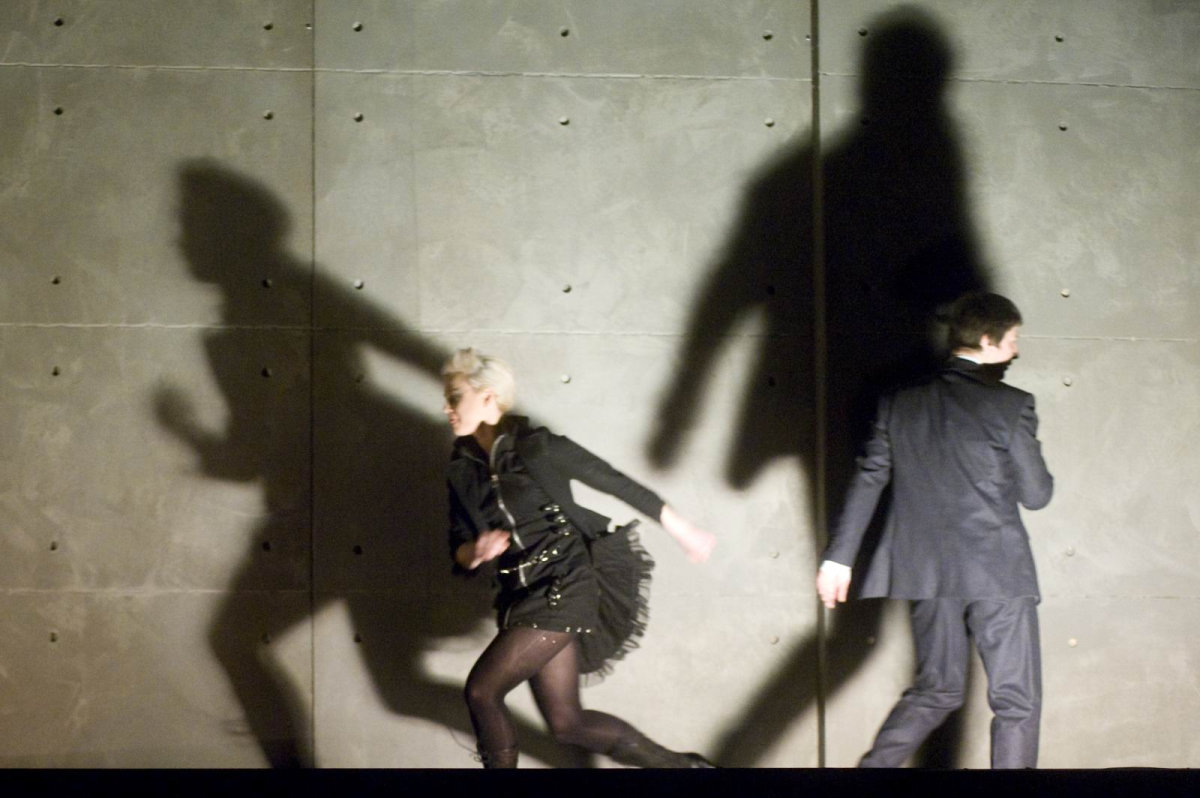
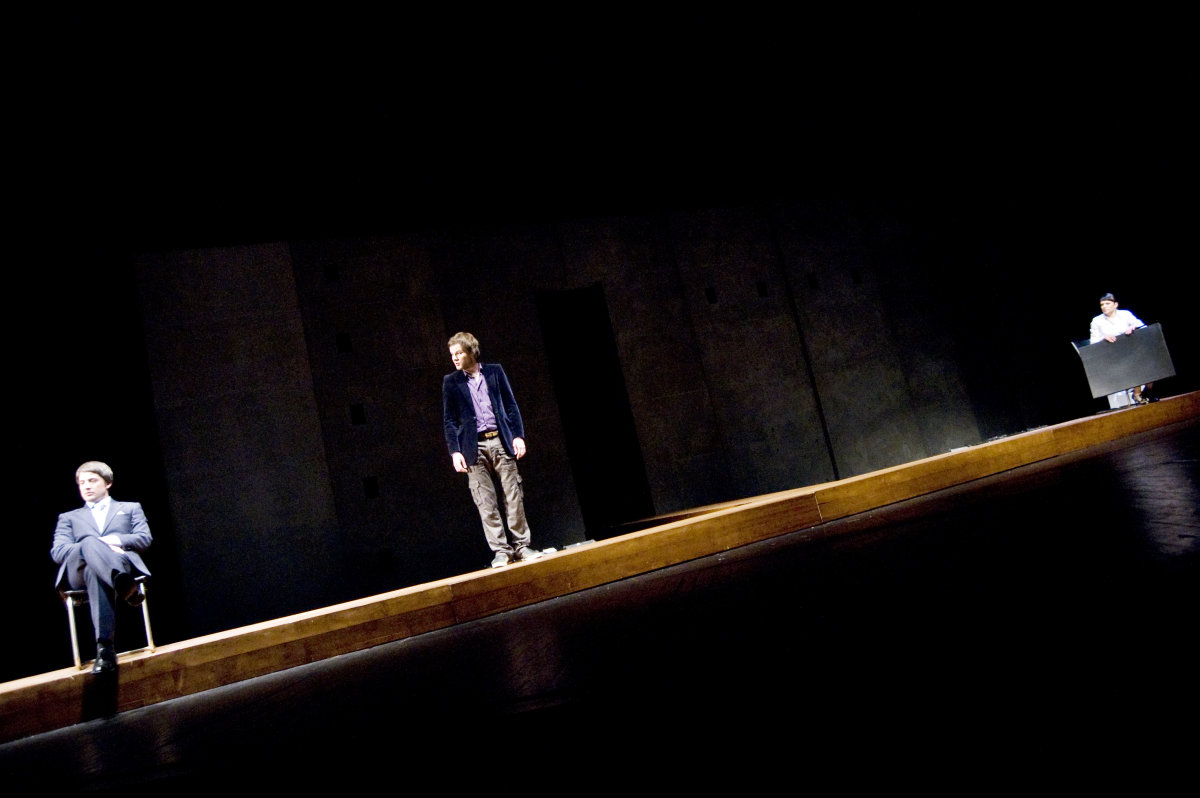
This time, the risk Ross taking on pushing Ibsen to ascetic modern setting and playing with extreme minimalistic approach, creating shadow play of metaphysics doesn’t deliver the same striking result as before her bold form and charged acting did in Bambiland and other earlier performances

Rasa Vasinauskaite, 2009 03 13